
Ant Season in Kansas: When Ants Come Indoors
4 ants documented here, the carpenter ant swarm window as Nebraska Extension publishes it, and the three characters that separate a winged ant from a termite.
Published window opens March 1, about 137 days outThe Kansas ant year
Published calendars, not a forecastKansas is outside the documented range of both the Argentine ant and the tawny crazy ant and off the federal fire ant list, which keeps its indoor ant story short and its outdoor one shorter.
When carpenter ants swarm in Kansas
Nebraska Extension reports black carpenter ant swarms most commonly from March through June, and separately notes that red carpenter ant swarms have been reported in Nebraska during winter warm spells.
That window is Nebraska Extension’s, published for the Plains, not for Kansas. No Kansas extension service publishes its own, so this is the nearest published calendar rather than a Kansas figure. Read it as the shape of the season, not as a date to plan around. Nebraska Extension names the months itself, so the bar above is simply those months.
Carpenter ant mating flights are triggered by photoperiod and by changes in temperature rather than by any particular temperature being reached. That is why no agency publishes a number.UF/IFAS Extension, SP486C
There is no temperature that starts ant season. Across roughly twenty land grant extension services, not one publishes a numeric air or soil temperature threshold for carpenter ant swarming. The numbers that circulate online trace back to pest control marketing rather than to any agency. The live soil temperature tool shows how far spring has come where you are.
Is it a flying ant or a termite?
This is the most useful thing on the page and it takes about fifteen seconds. Both insects swarm in spring, both look like a small dark winged thing at a windowsill, and Colorado State University Extension notes plainly that winged carpenter ants are routinely mistaken for termites. Three characters separate them, and you can check all three on a phone photo.
| Look at | Ant | Termite |
|---|---|---|
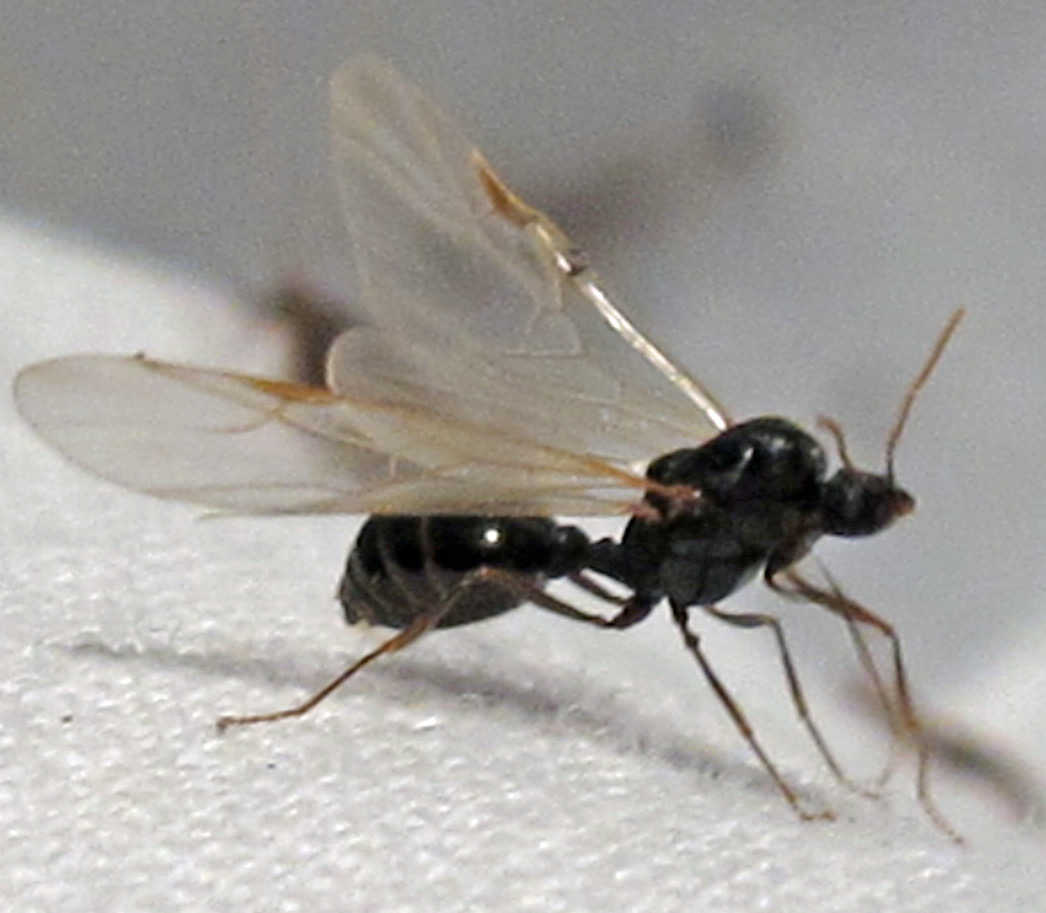
| Antennae | Elbowed. They bend sharply partway along, like a jointed arm. The fastest of the three, and it works on a dead specimen under a phone camera. | Straight, made of small beadlike segments, and flexible along their whole length. |
| Waist | Narrowly pinched. Every ant has the wasp waist, and on a swarmer it is obvious. Colorado State singles this one out as the most telling of the three. | Broad. The abdomen joins the thorax in a straight line with no pinch at all. |
| Wings | Four wings of unequal length. The front pair is clearly longer than the hind pair. Read the silhouette rather than counting. Both insects have four wings. | Four wings of roughly equal length, and long, around twice the length of the body. |
Established and published by Penn State Extension, Colorado State University Extension, and University of Maryland Extension. Stated here in our own words; follow the links for each institution’s own guidance.
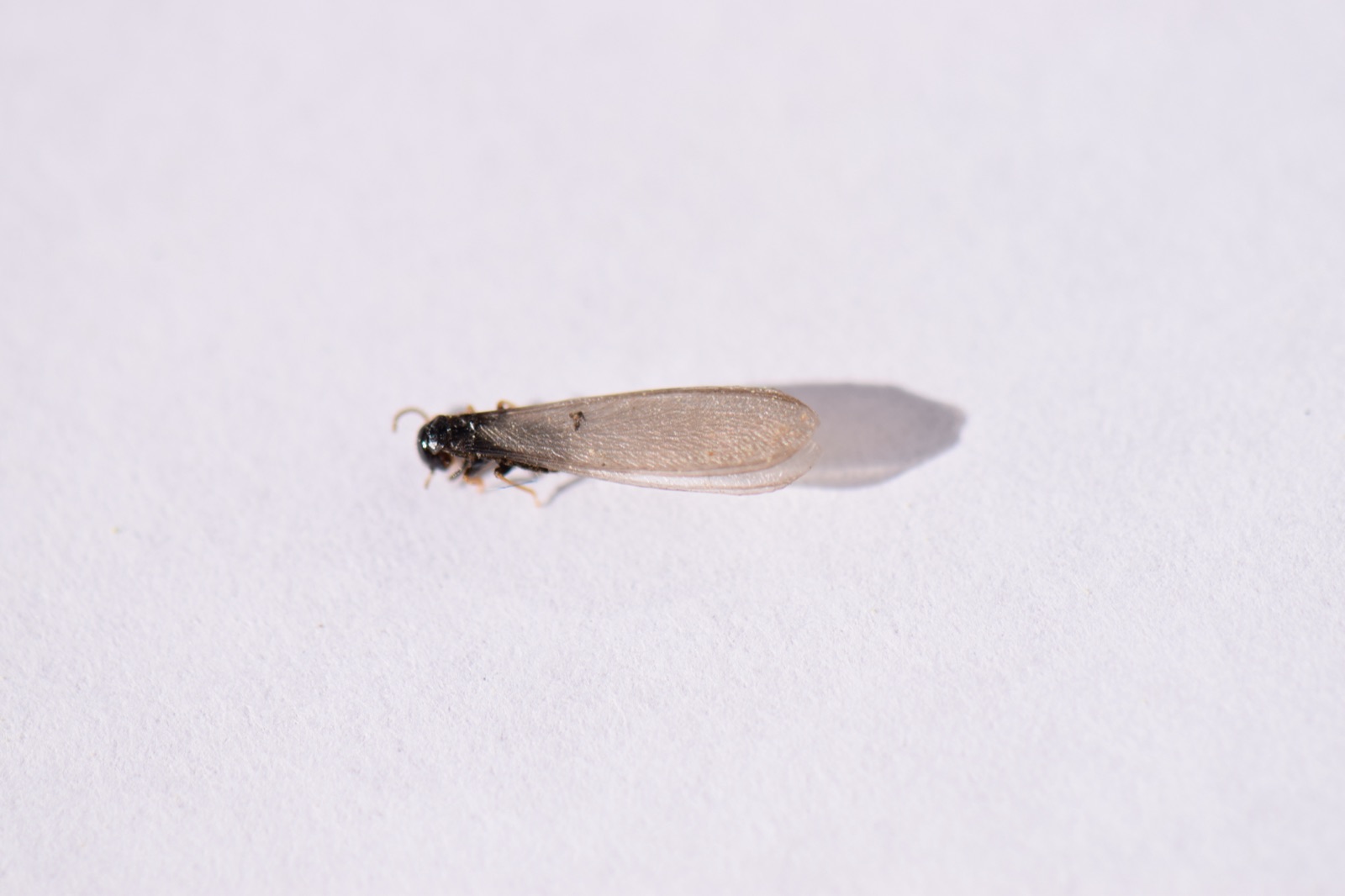
A pile of identical discarded wings of EQUAL length, usually on a windowsill or in a bathtub, points to termites. Do not run the inference backwards: sources disagree about how quickly carpenter ants drop theirs, so wings still attached settle nothing on their own.Wing shedding is covered by Ohio State University Extension and Mississippi State University Extension, which do not fully agree on it, which is why this page claims only the half they both support.
If it turns out to be a termite, the answer is a different page: termite swarm season in Kansas has the species, the windows and the infestation probability zone. Getting this call right decides everything that follows it, including how much anyone should be quoting you.
Winged ants indoors, and what they actually tell you
Winged reproductives emerging in numbers inside a building point to a nest inside it, underneath it, or immediately against it. An emergence during winter or early spring points that way most strongly of all, because nothing outdoors is flying then.
Swarmers found outdoors, on a porch, on siding, or on the outside of a window, usually mean a colony nearby in the yard rather than one in the house.
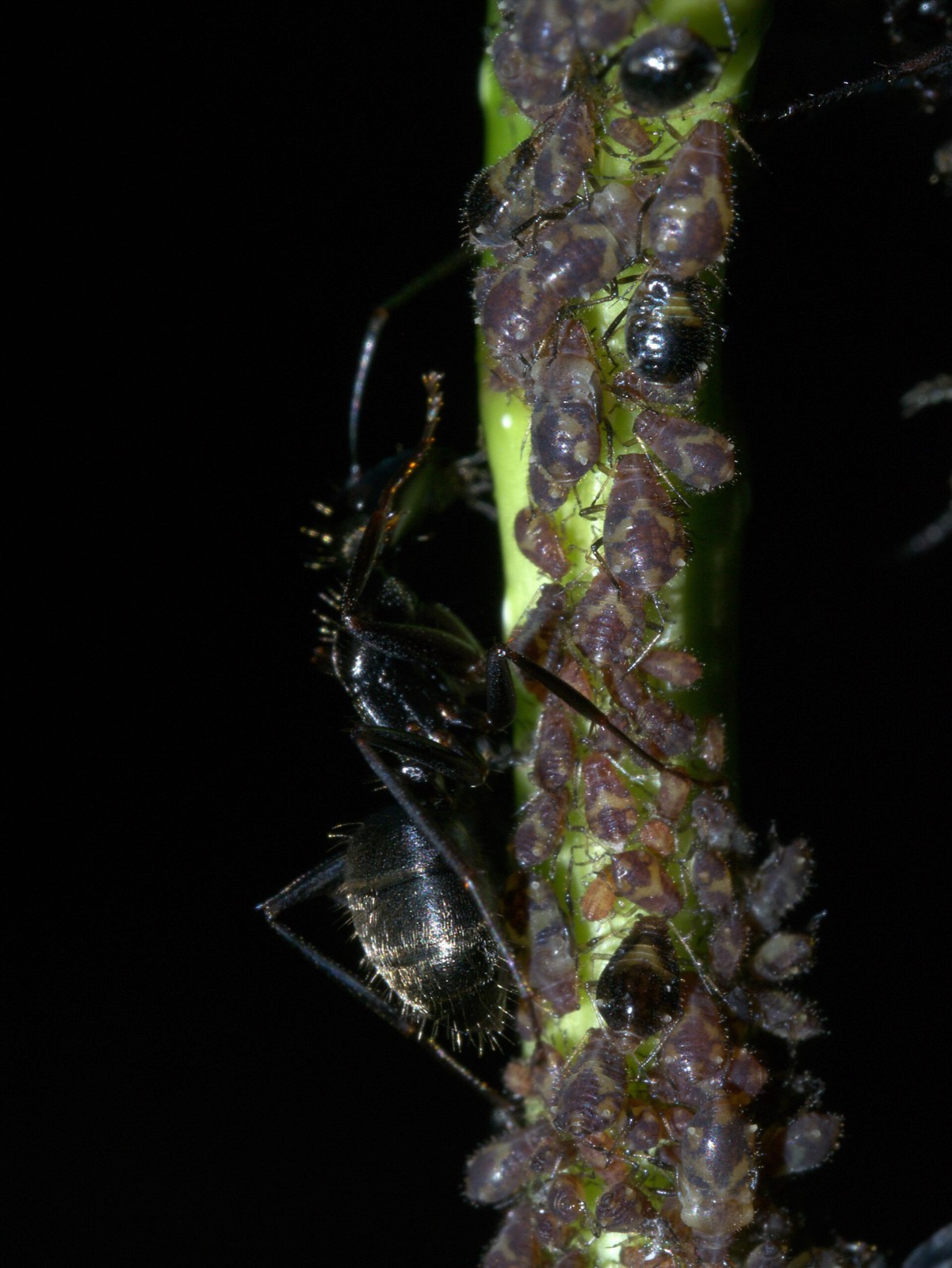
Seeing carpenter ants indoors does not by itself mean the house is infested. One or two winged queens in spring are usually mated females that wandered in from outside looking for somewhere to nest. It is large numbers, and out of season numbers, that mean something.The caution is Nebraska Extension’s, and it ships with the claim every time. One winged queen on a sill is not an infestation.
Established by UF/IFAS Extension, NC State Extension, Texas A&M AgriLife Extension, and Colorado State University Extension.
The ants documented in Kansas
Presence here follows published range statements, which is why some states show fewer ants than a national list would.
Carpenter ant
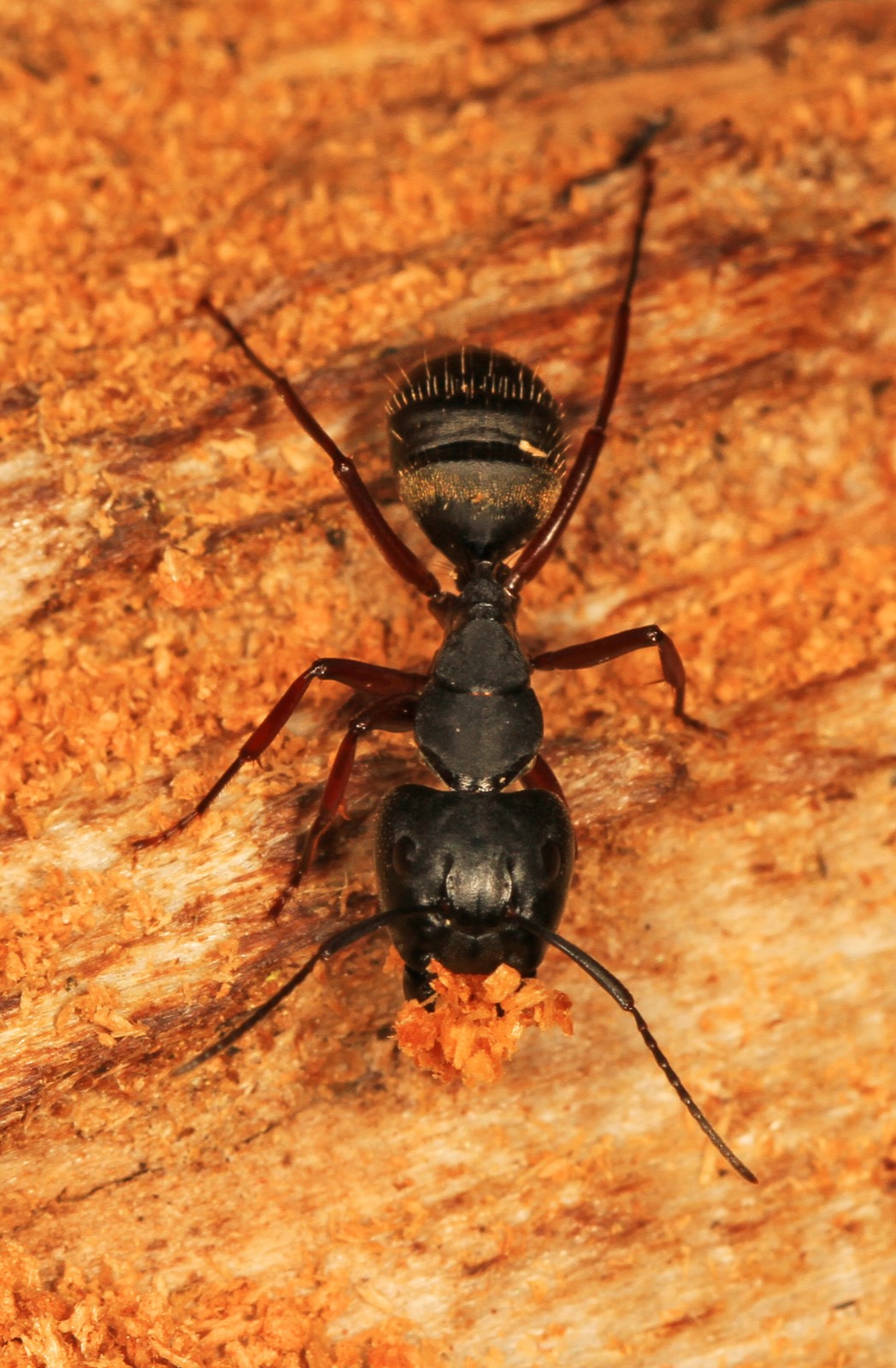
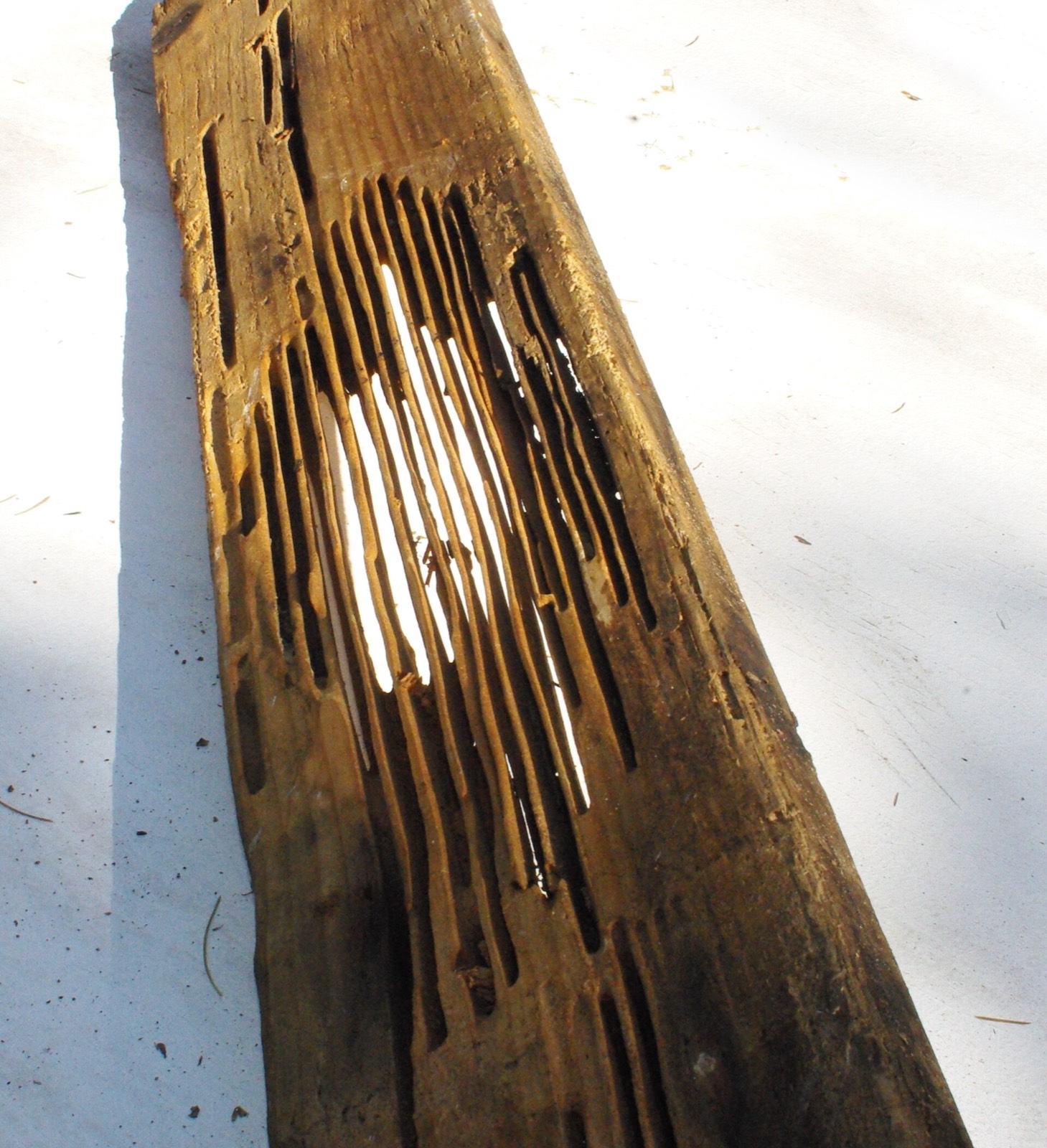
Camponotus speciesThe structural one, and the expensive one. Carpenter ants hollow smooth galleries in damp or decayed wood to nest in it. They do not eat it, which is why the pile of coarse sawdust underneath is the giveaway.
Indoors: Foragers turn up year round, but the thing that matters is a spring flight of winged reproductives at an indoor window.
Range: Camponotus species occur in every state. Which species, and when it flies, is what changes across the country, and the windows on these pages come from each region's own extension service.
Odorous house ant
Tapinoma sessileThe one most likely to actually be the ant on your counter, and the easiest to identify anywhere: crush one and it smells, strongly and unpleasantly. That is the fastest field check in this entire vertical.
Indoors: Nests indoors in wall voids and around warmth and moisture, and will settle into wood that termites have already damaged.
Range: Native across most of the United States, from Canada down into Mexico. Penn State Extension
Pharaoh ant
Monomorium pharaonisTiny, indoor, and on no calendar whatsoever. It breeds year round inside heated buildings, and it is the reason hospitals and care homes keep an entomologist on speed dial.
Indoors: Never leaves. Nests in wall voids, inside appliances, and in spaces small enough to be measured in thimbles.
Range: A major indoor pest throughout the United States, carried everywhere by commerce. It does not nest outdoors except at southern latitudes, and in colder climates it lives entirely inside heated buildings, so there is no meaningful outdoor range map to draw. UF/IFAS Extension
Pavement ant
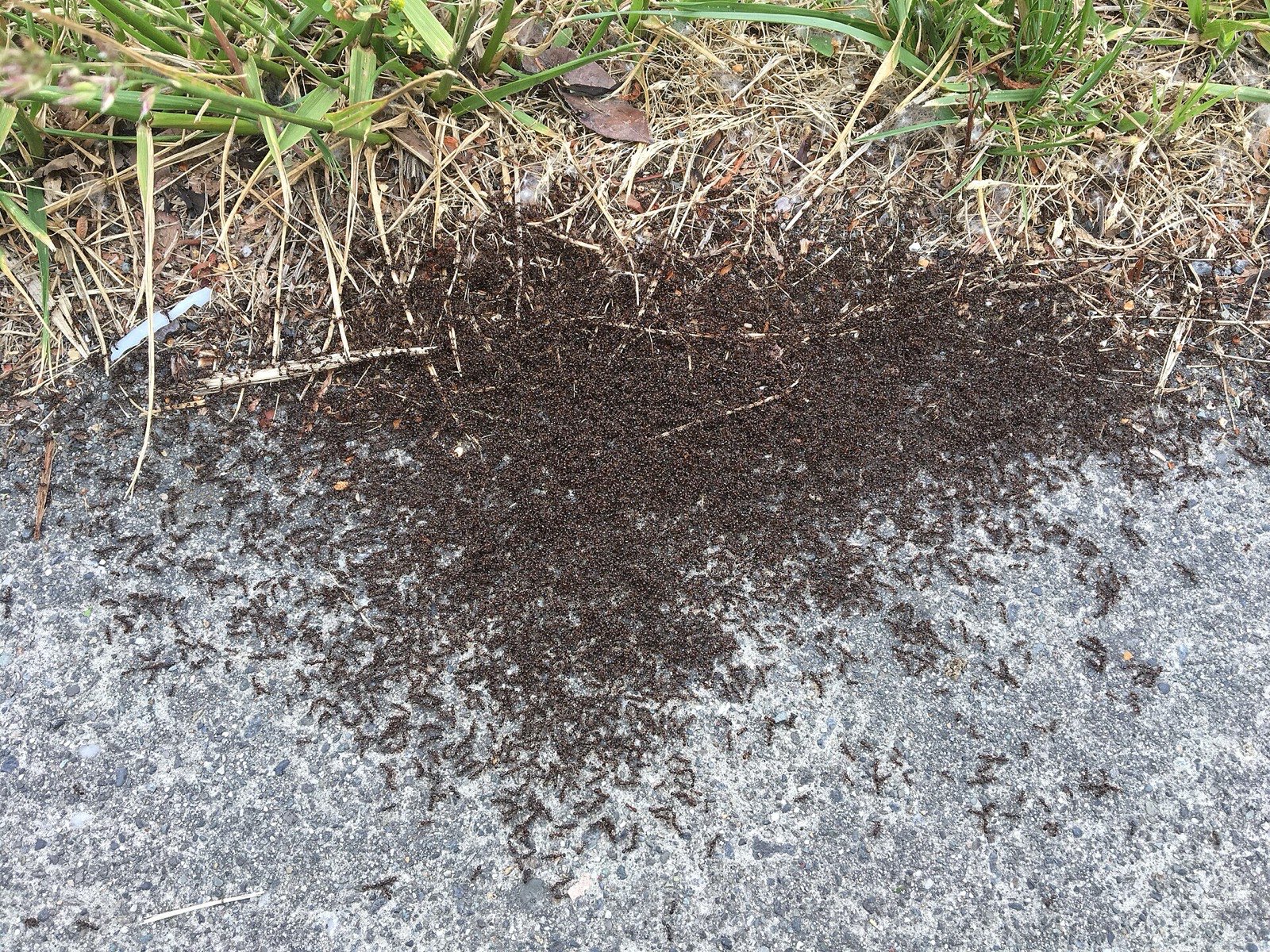
Tetramorium immigransThe sidewalk ant, and the source of the strangest thing you can watch in a city in spring: two neighbouring colonies fighting a pitched battle across a paving slab, thousands of ants deep.
Indoors: Nests under slabs, walkways and patios, then follows cracks in the foundation or the interior slab inside.
Range: Established from New England through the Midwest and south through the Mid-Atlantic as far as Tennessee, plus parts of California and Washington. No qualifying source documents it across the Deep South, so these pages do not claim it there. Penn State Extension
Keeping ants out of a Kansas house
Prevention here starts with inspection and with fixing the conditions that make a building attractive, not with a scheduled pesticide application. That is the extension position.NC State Extension
- Dry the wood out. Excess moisture is what makes a building attractive in the first place. Fix leaks at attic vents, at pipes and sinks, and around chimneys and skylights, and replace wood that water has already damaged. UGA Extension
- Move water away from the house. Dry a crawl space with a vapor barrier and foundation vents, keep gutters clear, and set downspouts so water runs away from the building rather than against it. UGA Extension
- Break the bridges. Do not let vegetation touch the house. Evergreen shrubs and tree limbs against siding or eaves are a direct route in that skips the foundation entirely. Penn State Extension
- How much clearance is enough. Trim trees and shrubs back so there is at least a foot of clear space between planting and the building walls or roof line. PNW Extension
- Firewood. Store firewood away from the house and off the ground, and carry it inside as you burn it rather than stacking it indoors. Penn State Extension
- Clear the nurseries. Stumps, logs and waste wood near the building are where parent colonies live. Penn State puts the working radius at 100 yards. Penn State Extension
- Seal the ways in. Seal the holes where pipes and wires pass through the exterior, and around utility line penetrations generally. Penn State Extension
- Ventilate. Keep crawl spaces well ventilated, and avoid wood to soil contact anywhere on the structure. Washington State University
Nothing on this page recommends a bait, a spray, an active ingredient or a brand. Treatment is a licensed activity in every state. The one warning here comes from an agency: with pharaoh ants specifically, a repellent contact spray can split one colony into several inside the same building and leave you worse off than you started.
If you want the underlying reason all of this is about water rather than about ants: Carpenter ants do not normally attack sound wood. Penn State Extension puts the practical line at a moisture content below about 15 percent, and UF/IFAS says flatly that they will not excavate galleries in sound wood at all.
Kansas ant season FAQ
More Kansas pest timing
Ant season across the Midwest
Swarm windows are climatological typicals published by land grant cooperative extension services, named on this page and linked. Extension publications are copyrighted, so their findings are stated here in our own words rather than reproduced. Federal material, meaning the Code of Federal Regulations and USDA APHIS, is public domain and is quoted directly. Fire ant figures were read from USDA on 2026-08-28 and the quarantine changes, so check APHIS before acting on them.Kansas extension service: www.ksre.k-state.edu. National picture: ant season across all 50 states
Hero image: “Camponotus pennsylvanicus P1330519a” by xpda, CC BY-SA 4.0