Skip to content
Pacific salmon and steelhead · California

When Salmon and Steelhead Run in California

California has four separate runs of Chinook in one river system, named for the season they enter fresh water, and one of them is in the river for eight months of the year. No other state splits its salmon this finely.

6
Runs on this page
each with the sentence it came from
3
Species
Chinook, Coho, Steelhead
10
Rivers read live
USGS gauges
2
In window today
Fall run Chinook, Coho

Seasons, limits and licence rules are set by your state agency.

The calendar

California run by run

Each bar below spans January to December, with today marked, and draws the quoted sentence underneath it. Where an agency describes a run by season rather than by month, the card carries the sentence without a bar.

Fall run Chinook

In the window now
July 1 to December 31

The abundant one, and the fish behind almost every Central Valley and coastal Chinook story.

Fall-run Chinook Salmon migrate upstream as adults from July through December and spawn from early October through late December.
California Department of Fish and Wildlife

Late fall run Chinook

Opens within three weeks
October 15 to December 31

A separate run that overlaps the tail of the fall fish and then spawns through the winter.

Late-fall-run Chinook Salmon migrate into the rivers from mid-October through December and spawn from January through mid-April.
California Department of Fish and Wildlife

Spring run Chinook

Window has passed
March 20 to September 30

Comes in early and then does nothing all summer, holding in the coldest water it can find until autumn. Butte, Deer and Mill creeks carry the last wild ones.

Spring-run Chinook Salmon enter the Sacramento River from late March through September.
California Department of Fish and Wildlife

Winter run Chinook

Later in the year
December 1 to August 10

Endangered, found nowhere else on earth, and the only salmon run in the world named for winter. The state tracks it under the Golden Gate.

Adult Sacramento River (SR) winter-run Chinook Salmon pass under the Golden Gate Bridge from November through May, and pass into the Sacramento River from December through early August.
California Department of Fish and Wildlife

Coho

In the window now
September 1 to January 31

On the short coastal streams the run cannot start until the winter surf and the river together break the sand bar across the mouth. Until that happens the fish wait outside.

Coho Salmon move upstream after heavy rains open the sand bars that can form at the mouths of many California coastal streams, but may enter larger rivers earlier.
California Department of Fish and Wildlife

Winter steelhead

Later in the year
November 1 to April 30

California steelhead are almost all winter fish, moving on the same storms that open the coastal river mouths.

Winter-run Steelhead return from the ocean at age 4 or 5 years, and travel to their spawning grounds from November to April.
NOAA Fisheries, West Coast Region
Advertisement
Right now

What California rivers are doing today

Live water temperature and discharge from USGS gauges, with the time each reading was taken. These are river conditions, not fish counts.
RiverWater tempFlowMeasured
Klamath Rivernear KlamathLoadingLoading
Trinity Riverat HoopaLoadingLoading
Trinity Riverat Douglas CityLoadingLoading
Sacramento Riverat FreeportLoadingLoading
American Riverat Fair OaksLoadingLoading
Russian Riverat Hacienda BridgeLoadingLoading
Eel Riverat Fort SewardLoadingLoading
Butte Creeknear ChicoLoadingLoading
Deer Creeknear VinaLoadingLoading
Mill Creeknear Los MolinosLoadingLoading

Source: USGS Water Services (National Water Information System). Instantaneous values service. U.S. Geological Survey data are works of the United States Government and are in the public domain. Gauge list verified 2026-08-24.

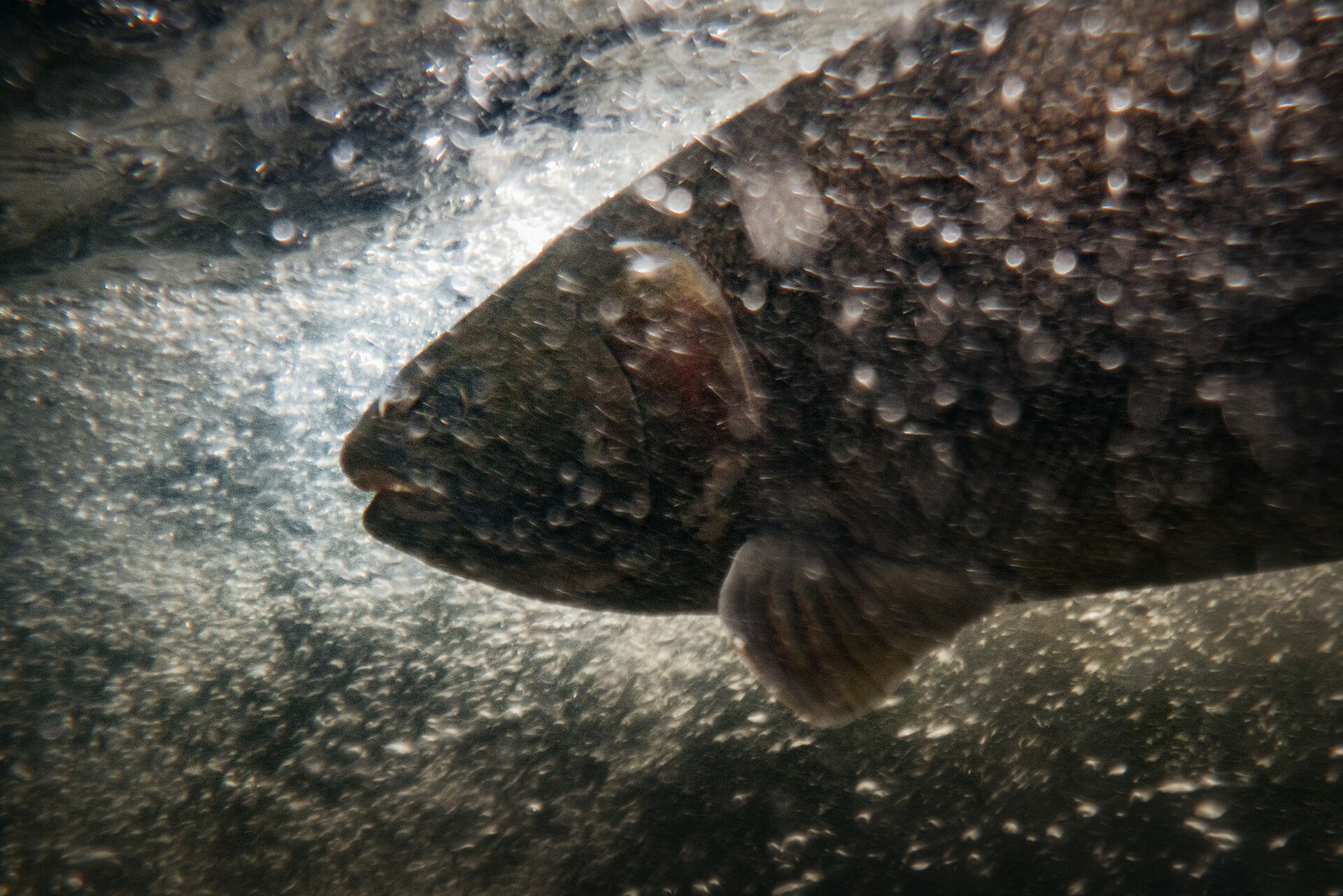
A salmon held in fast white water full of bubbles, photographed from underwater at the foot of a fish passage structure
A coho at the base of a fish ladder at Lower Lake Creek Falls in Oregon, in water so aerated it reads as static. Every dam between the sea and the spawning gravel is a place where a run can stall, which is one reason flow matters as much as the calendar does. “The Greatest Journey (52547039906)” — BLM Oregon & Washington — Public Domain
The rivers themselves

What is particular about California

On the north coast the Park Service gives a tighter window than the state does: in the Redwood parks the fish come back to the streams from November through February. In the Klamath and the Eel, the state puts coho spawning specifically in November and December.

Most of these fish spend the majority of their lives in the ocean, but during November through February, they return to the streams for spawning.
National Park Service, Redwood National and State Parks
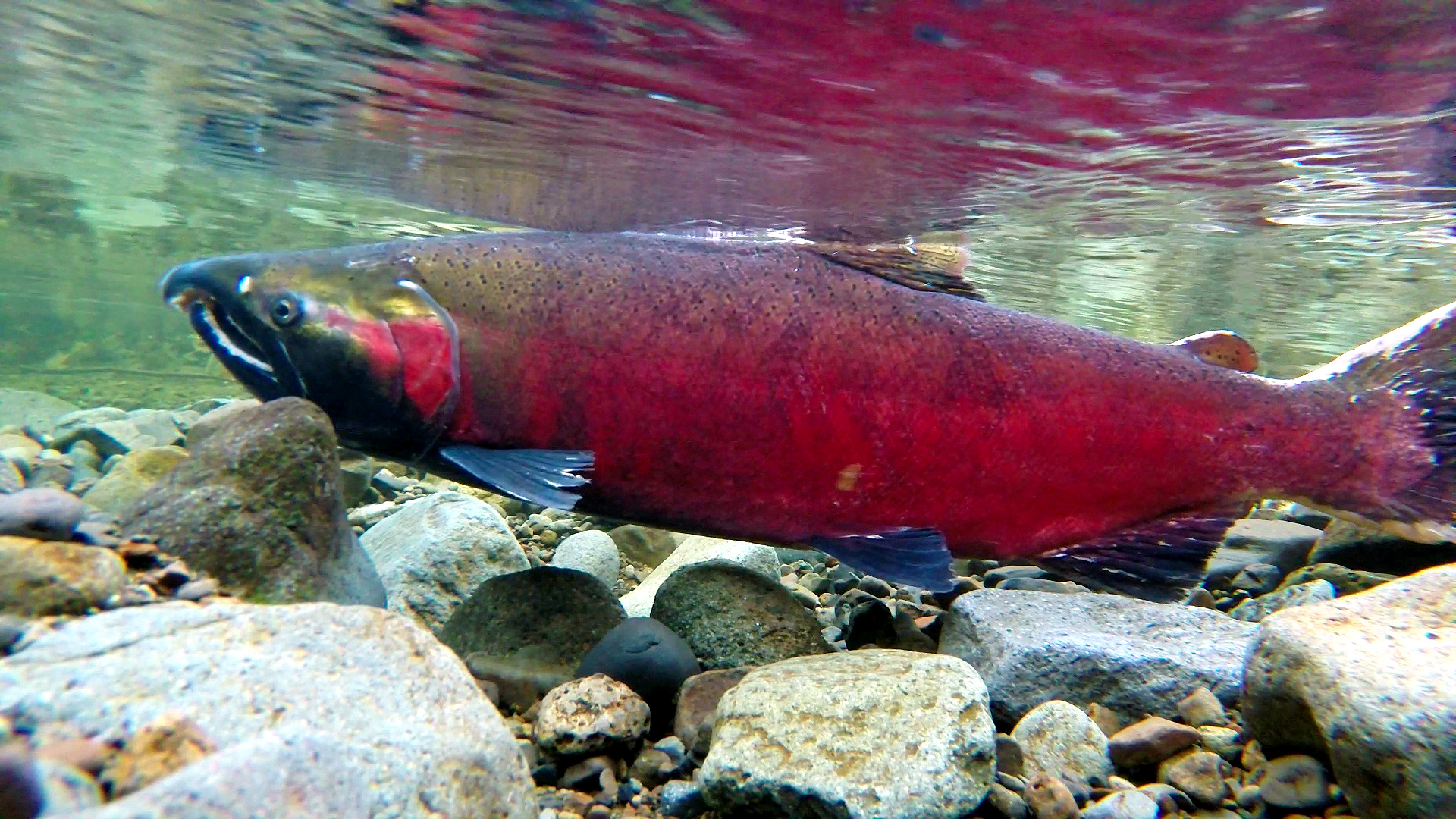
A deep red coho salmon with a dark green hooked head, photographed underwater just above a bed of pale gravel
A coho on the spawning gravel, photographed by the Bureau of Land Management on the Salmon River in Oregon. The colour and the hooked jaw are what an adult does to itself after it enters fresh water; the fish that left the ocean a few weeks earlier was plain silver. That change is why a run window and a spawning window are different questions. “Coho Spawning on the Salmon River (16148779468)” — Bureau of Land Management Oregon and Washington — Public Domain
Fish counts

Where to find real fish numbers

Fish passage counts are published by the programmes that run the counting stations, linked below with what each one reports.

No agency publishes a live or near live count on any California river covered here. The live readings above are river conditions, and the agency linked at the top of the page is the source for run reports.

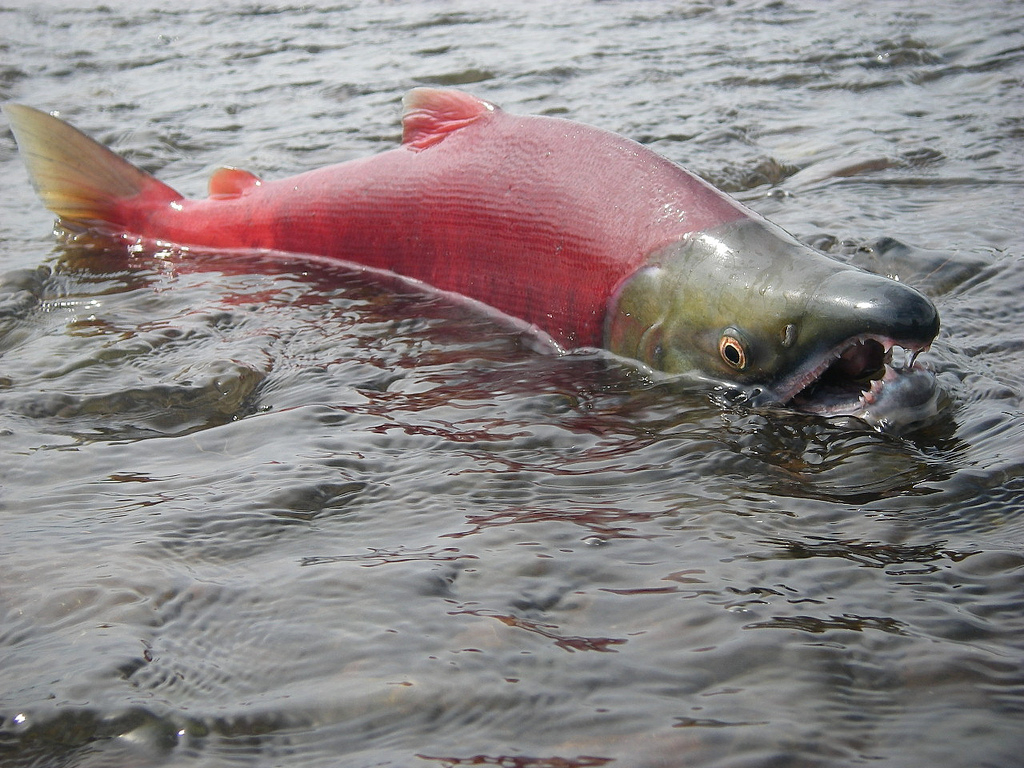
A bright red sockeye salmon with a green head and an open hooked jaw, half out of the water in a shallow stream
A spawning male sockeye. Sockeye are the run that most obviously needs a particular kind of river: they rear as fry in a lake, so a system without one gets no sockeye at all, however good the gravel is. “July 2010, Spawning male sockeye (6990781448)” — US Environmental Protection Agency — Public Domain
Common questions

California salmon run timing FAQ

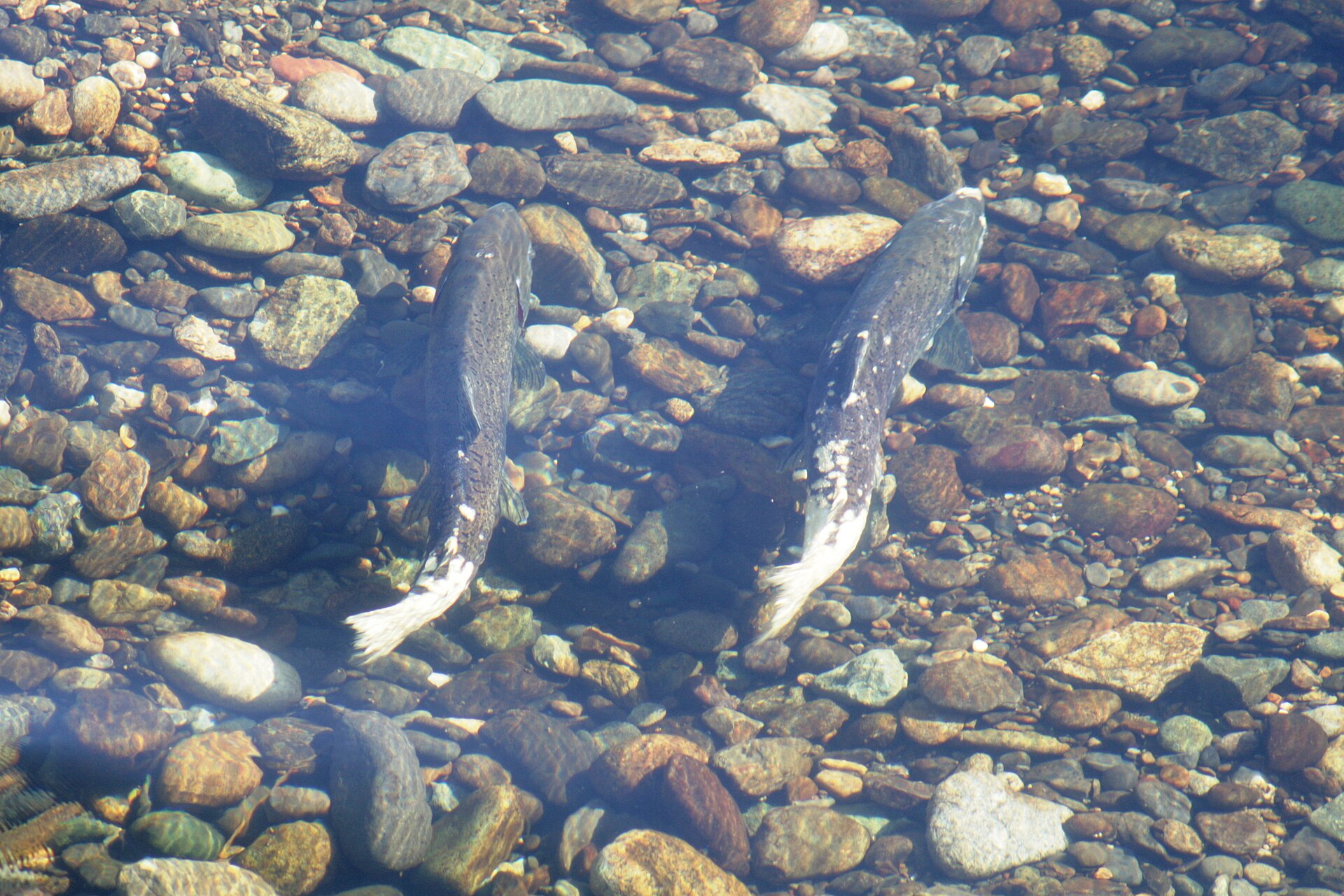
Two large dark salmon seen from above, holding side by side in shallow clear water over pale river cobble
California water. Everything on this page is about the weeks in which fish move through it. “Pair of Chinook salmon” — Dan Cook, U.S. Fish and Wildlife Service — Public Domain
The rest of the California year

Plan the rest of your California calendar

Other Pacific coast states

More West states with a run

Advertisement

Run windows on this page are quoted from the agency named beside each one. River conditions come from the U.S. Geological Survey and are readings, not forecasts and not fish counts. Fishing seasons, bag limits, gear rules and licence requirements for California are set by the agency linked here, and a run window is not an open season. For rules, see California Department of Fish and Wildlife. National picture: every state with a salmon or steelhead run →
Hero image: “Pair of Chinook salmon” — Dan Cook, U.S. Fish and Wildlife Service — Public Domain