Skip to content
Great Lakes salmon and steelhead · Minnesota

When Salmon and Steelhead Run in Minnesota

The Minnesota North Shore is the only steelhead fishery covered here whose season starts with ice going out. Nothing happens until the rivers clear, and the state says so in exactly those terms.

2
Runs on this page
each with the sentence it came from
2
Species
Steelhead, Chinook
3
Rivers read live
USGS gauges
1
In window today
Fall salmonid run

Seasons, limits and licence rules are set by your state agency.

The calendar

Minnesota run by run

Each bar below spans January to December, with today marked, and draws the quoted sentence underneath it. Where an agency describes a run by season rather than by month, the card carries the sentence without a bar.

Spring steelhead run

Window has passed
March 25 to July 31

The start date is not a date. It is ice out, which the state puts anywhere between late March and early May depending on the year.

The adult traps capture annual spawning runs of adult steelhead in the spring (ice-out in late-March or early-April through July)
Minnesota Department of Natural Resources

Fall salmonid run

In the window now
September 1 to November 7

Coho, Chinook, pink salmon and both trout, in the same window, ending when the rivers freeze rather than on a date.

many other adult salmonids (i.e., brook and brown trout, coho, chinook, and pink salmon) that spawn in the fall (September through ice-formation in late-October or early-November)
Minnesota Department of Natural Resources
Advertisement
Right now

What Minnesota rivers are doing today

Live water temperature and discharge from USGS gauges, with the time each reading was taken. These are river conditions, not fish counts.
RiverWater tempFlowMeasured
Knife Rivernear Two HarborsLoadingLoading
St. Louis Riverat ScanlonLoadingLoading
Pigeon Riverat Middle Falls near Grand PortageLoadingLoading

Source: USGS Water Services (National Water Information System). Instantaneous values service. U.S. Geological Survey data are works of the United States Government and are in the public domain. Gauge list verified 2026-08-24.

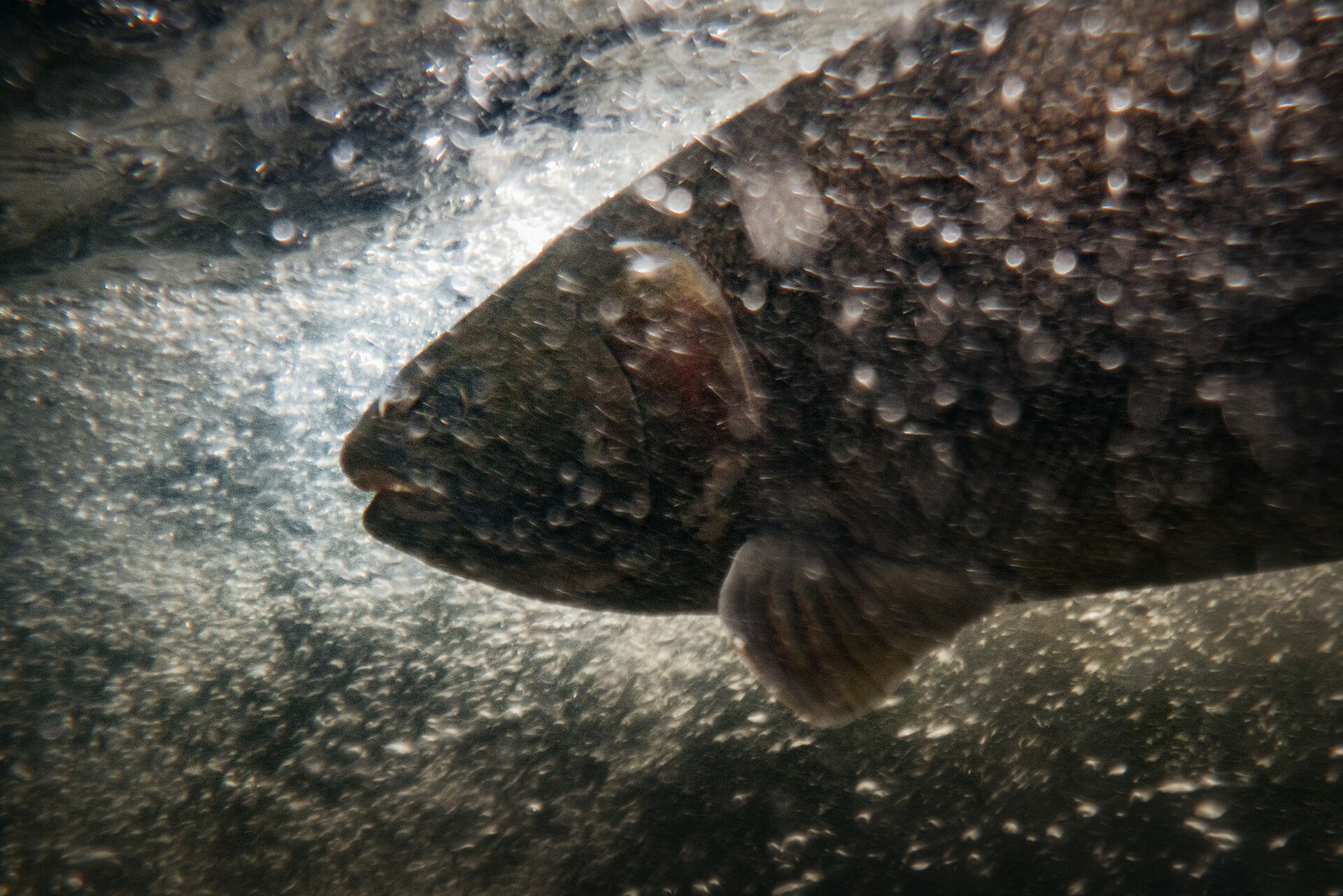
A salmon held in fast white water full of bubbles, photographed from underwater at the foot of a fish passage structure
A coho at the base of a fish ladder at Lower Lake Creek Falls in Oregon, in water so aerated it reads as static. Every dam between the sea and the spawning gravel is a place where a run can stall, which is one reason flow matters as much as the calendar does. “The Greatest Journey (52547039906)” — BLM Oregon & Washington — Public Domain
The rivers themselves

What is particular about Minnesota

Minnesota publishes something no other state covered here does: a written report every Thursday through the spring on how the run is actually going. The 2026 sequence read like a diary of the season, from ice and cold in early April, through high water in the middle of the month, to the run being underway by the twenty third and spawning continuing into mid May. If you want to know what a river is doing this week rather than what it usually does, that is where to look.

Stream conditions and smelt updates, including steelhead run timing, begin once anglers start fishing in North Shore streams. Reports are posted here every Thursday through Memorial Day.
Minnesota Department of Natural Resources
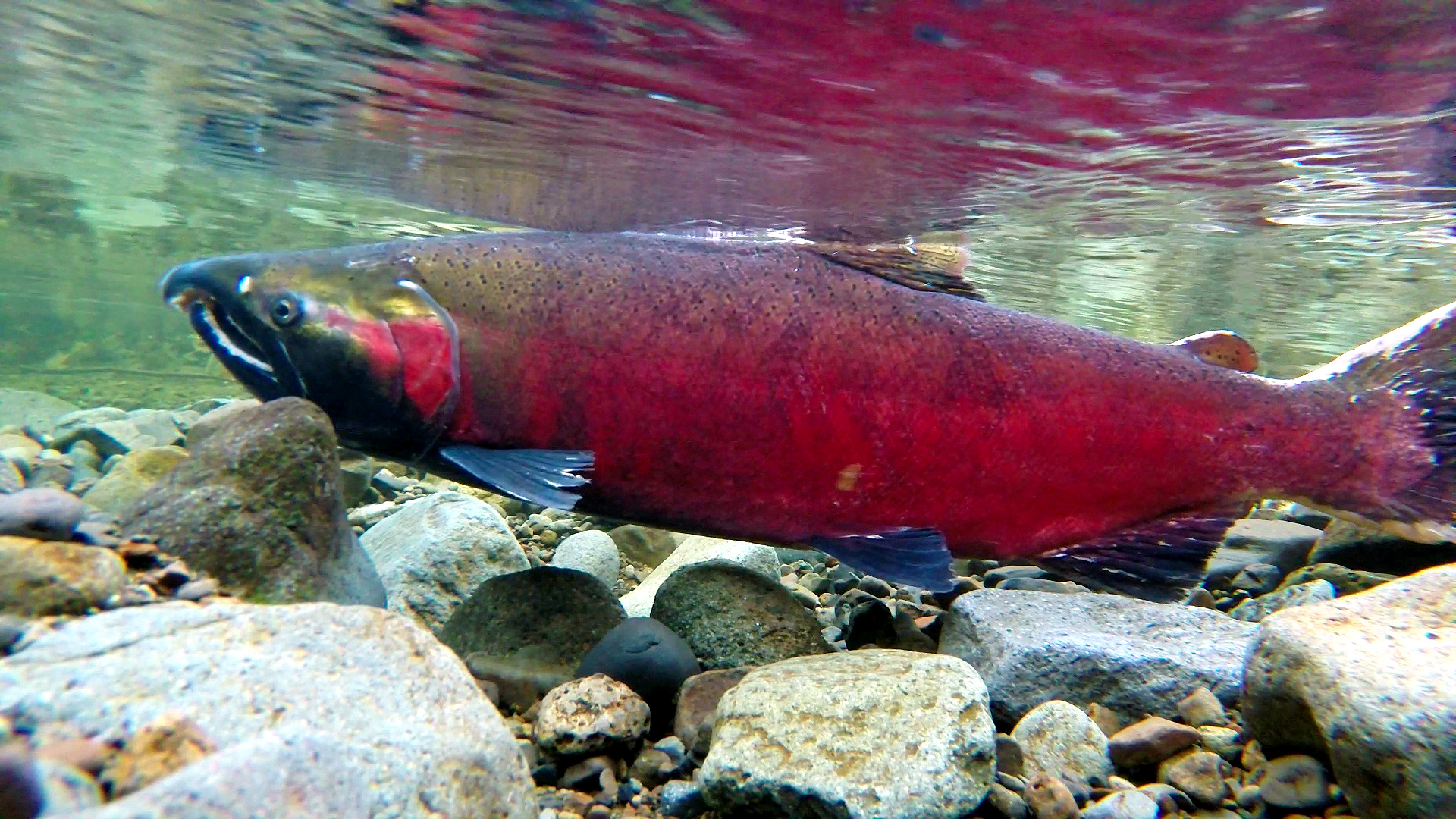
A deep red coho salmon with a dark green hooked head, photographed underwater just above a bed of pale gravel
A coho on the spawning gravel, photographed by the Bureau of Land Management on the Salmon River in Oregon. The colour and the hooked jaw are what an adult does to itself after it enters fresh water; the fish that left the ocean a few weeks earlier was plain silver. That change is why a run window and a spawning window are different questions. “Coho Spawning on the Salmon River (16148779468)” — Bureau of Land Management Oregon and Washington — Public Domain
Fish counts

Where to find real fish numbers

Fish passage counts are published by the programmes that run the counting stations, linked below with what each one reports.

Where the actual fish counts are published

  • Minnesota DNR Lake Superior stream reportsA weekly written report on how the North Shore steelhead run is progressing, posted every Thursday through Memorial Day. Not a count, but the most useful running commentary any agency publishes on a run in progress.
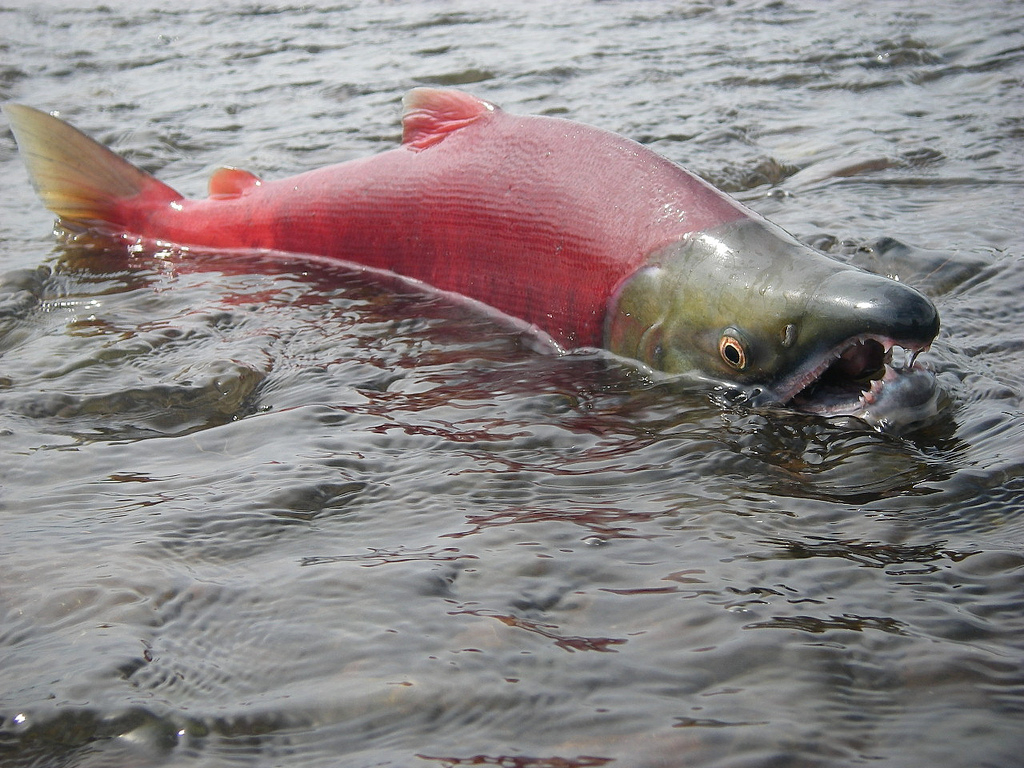
A bright red sockeye salmon with a green head and an open hooked jaw, half out of the water in a shallow stream
A spawning male sockeye. Sockeye are the run that most obviously needs a particular kind of river: they rear as fry in a lake, so a system without one gets no sockeye at all, however good the gravel is. “July 2010, Spawning male sockeye (6990781448)” — US Environmental Protection Agency — Public Domain
Common questions

Minnesota salmon run timing FAQ

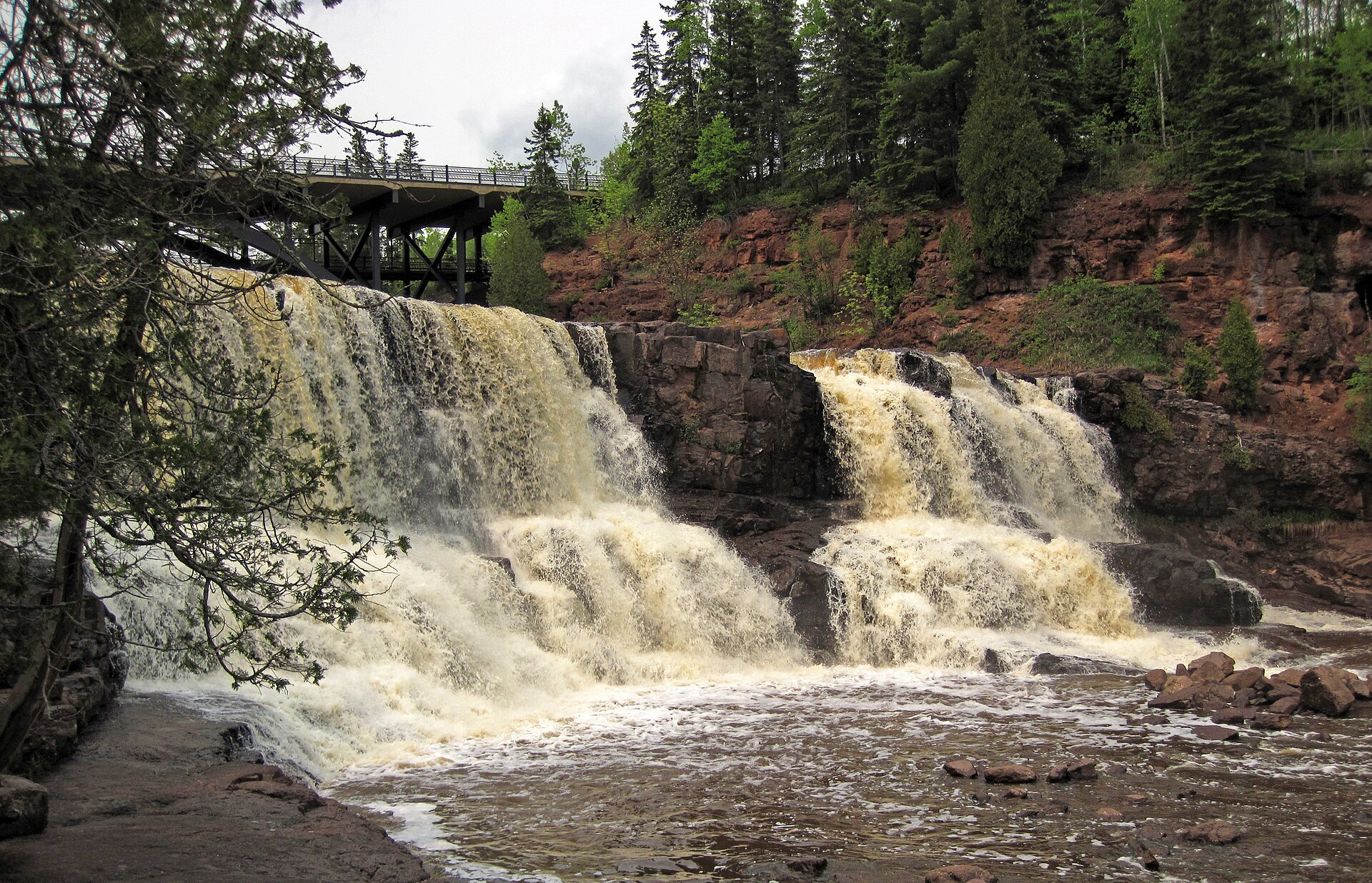
A tea coloured river in high water pouring over two wide rock ledges below a road bridge, in a conifer and birch forest
Minnesota water. Everything on this page is about the weeks in which fish move through it. “Gooseberry Falls, Main Falls, Gooseberry River, North Shore of Lake Superior, Minnesota” by James St. John, CC BY 2.0
The rest of the Minnesota year

Plan the rest of your Minnesota calendar

Other Great Lakes states

More Midwest states with a run

Advertisement

Run windows on this page are quoted from the agency named beside each one. River conditions come from the U.S. Geological Survey and are readings, not forecasts and not fish counts. Fishing seasons, bag limits, gear rules and licence requirements for Minnesota are set by the agency linked here, and a run window is not an open season. For rules, see Minnesota Department of Natural Resources. National picture: every state with a salmon or steelhead run →
Hero image: “Gooseberry Falls, Main Falls, Gooseberry River, North Shore of Lake Superior, Minnesota” by James St. John, CC BY 2.0