Skip to content
Pacific salmon and steelhead · Idaho

When Salmon and Steelhead Run in Idaho

Idaho is the far end of the line. Fish that spawn in the Salmon and the Clearwater have already climbed eight dams and something like nine hundred river miles, and they are the longest running salmon migration left in the lower forty eight.

4
Runs on this page
each with the sentence it came from
2
Species
Chinook, Steelhead
8
Rivers read live
USGS gauges
2
In window today
Fall Chinook, Summer steelhead

Seasons, limits and licence rules are set by your state agency.

The calendar

Idaho run by run

Each bar below spans January to December, with today marked, and draws the quoted sentence underneath it. Where an agency describes a run by season rather than by month, the card carries the sentence without a bar.

Spring Chinook

Window has passed
April 1 to July 31

The fish that leave the ocean earliest, because Idaho is further from the sea than anywhere else they still reach.

The migration from the ocean to their spawning grounds begins in April through July, with peak migration occurring in May.
NOAA Fisheries, West Coast Region

Summer Chinook

Window has passed
June 1 to August 31

The South Fork Salmon fish, and the reason Idaho splits its Chinook three ways rather than two.

Chinook returning to Idaho are classified into three groups or "runs" - spring, summer and fall Chinook - based on when they begin their migration upstream to spawn.
Idaho Department of Fish and Game

Fall Chinook

In the window now
July 25 to December 31

Spawns low, in the Snake below Hells Canyon and the lower Clearwater, rather than up in the headwaters.

The journey to spawning grounds begins in late July, peaking in September, and ends in December.
NOAA Fisheries, West Coast Region

Summer steelhead

In the window now
August 1 to October 31

Every Idaho steelhead is a summer fish. The window here is when they pass Bonneville Dam on the Columbia, four hundred miles downstream; they arrive in Idaho weeks to months later and overwinter in the river before spawning in spring.

They pass Bonneville Dam beginning in August and peaking in October.
Oregon Department of Fish and Wildlife
Advertisement
Right now

What Idaho rivers are doing today

Live water temperature and discharge from USGS gauges, with the time each reading was taken. These are river conditions, not fish counts.
RiverWater tempFlowMeasured
Salmon Riverat White BirdLoadingLoading
Salmon Riverat SalmonLoadingLoading
Little Salmon Riverat RigginsLoadingLoading
Clearwater Riverat SpaldingLoadingLoading
Clearwater Riverat OrofinoLoadingLoading
South Fork Clearwater Riverat StitesLoadingLoading
Selway Rivernear LowellLoadingLoading
Lochsa Rivernear LowellLoadingLoading

Source: USGS Water Services (National Water Information System). Instantaneous values service. U.S. Geological Survey data are works of the United States Government and are in the public domain. Gauge list verified 2026-08-24.

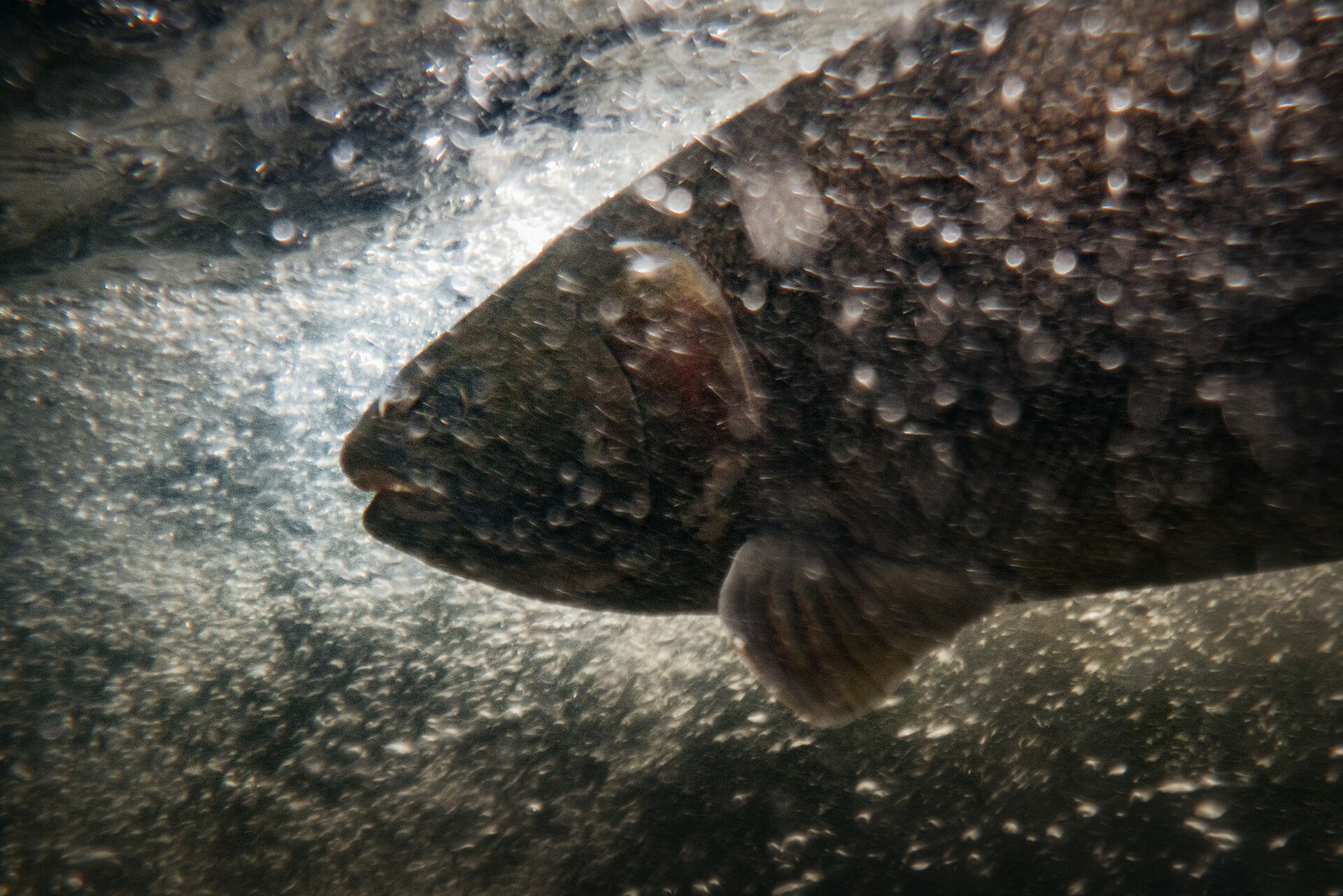
A salmon held in fast white water full of bubbles, photographed from underwater at the foot of a fish passage structure
A coho at the base of a fish ladder at Lower Lake Creek Falls in Oregon, in water so aerated it reads as static. Every dam between the sea and the spawning gravel is a place where a run can stall, which is one reason flow matters as much as the calendar does. “The Greatest Journey (52547039906)” — BLM Oregon & Washington — Public Domain
The rivers themselves

What is particular about Idaho

Idaho steelhead are counted twice before they get here. Managers split them into an A-Index and a larger, later B-Index, most of which are bound for the Clearwater, and the run is called at Bonneville rather than at the state line. Idaho Fish and Game describe the fish reaching the lower Clearwater, Snake and Salmon in autumn and working further up into the South Fork Clearwater, the Little Salmon and the upper Salmon as the season goes on.

The preseason forecast is updated after about 50 percent of the run passes Bonneville Dam, which typically occurs in mid-August for A-Index and mid to late September for B-Index steelhead.
Oregon Department of Fish and Wildlife
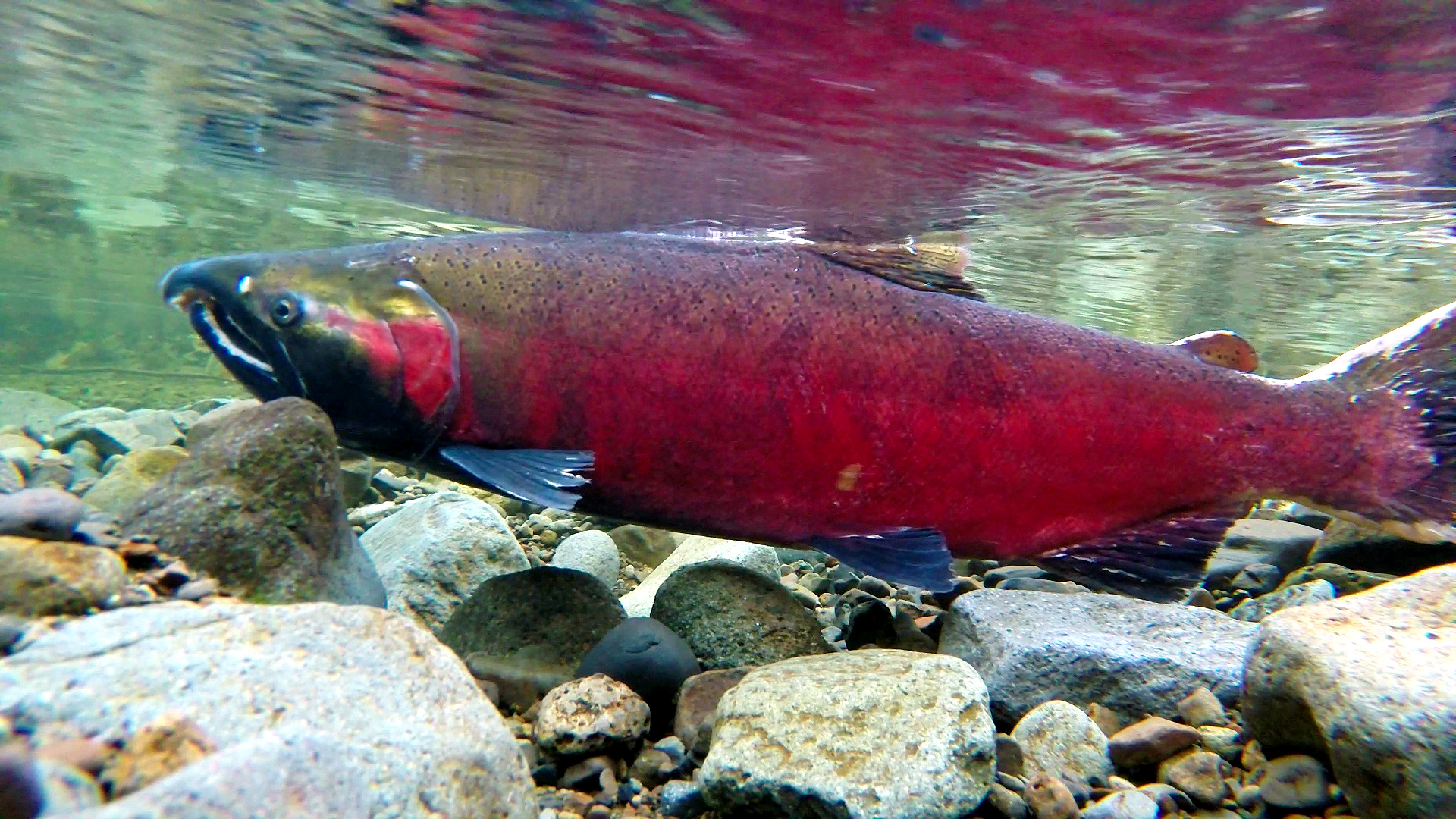
A deep red coho salmon with a dark green hooked head, photographed underwater just above a bed of pale gravel
A coho on the spawning gravel, photographed by the Bureau of Land Management on the Salmon River in Oregon. The colour and the hooked jaw are what an adult does to itself after it enters fresh water; the fish that left the ocean a few weeks earlier was plain silver. That change is why a run window and a spawning window are different questions. “Coho Spawning on the Salmon River (16148779468)” — Bureau of Land Management Oregon and Washington — Public Domain
Fish counts

Where to find real fish numbers

Fish passage counts are published by the programmes that run the counting stations, linked below with what each one reports.

Where the actual fish counts are published

  • Columbia River DART, University of WashingtonDaily adult passage counts at Bonneville, The Dalles, John Day, McNary, Ice Harbor, Lower Monumental, Little Goose and Lower Granite, plus the mid-Columbia and Willamette Falls, updated through yesterday. This is the live count for the Columbia and Snake.
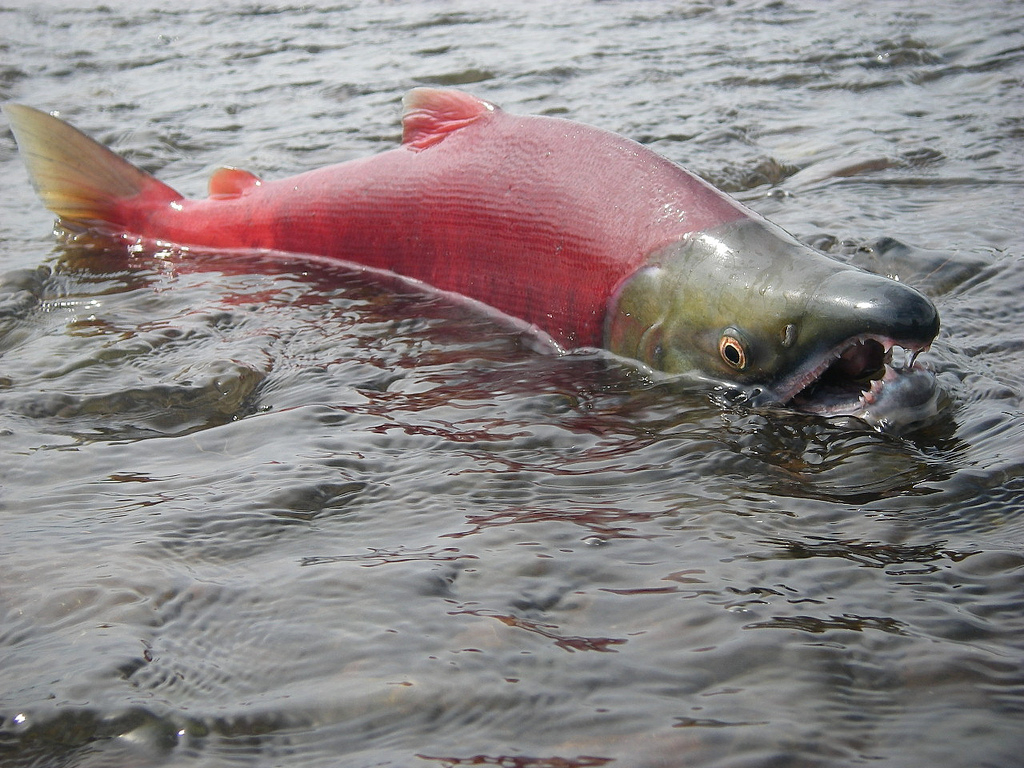
A bright red sockeye salmon with a green head and an open hooked jaw, half out of the water in a shallow stream
A spawning male sockeye. Sockeye are the run that most obviously needs a particular kind of river: they rear as fry in a lake, so a system without one gets no sockeye at all, however good the gravel is. “July 2010, Spawning male sockeye (6990781448)” — US Environmental Protection Agency — Public Domain
Common questions

Idaho salmon run timing FAQ

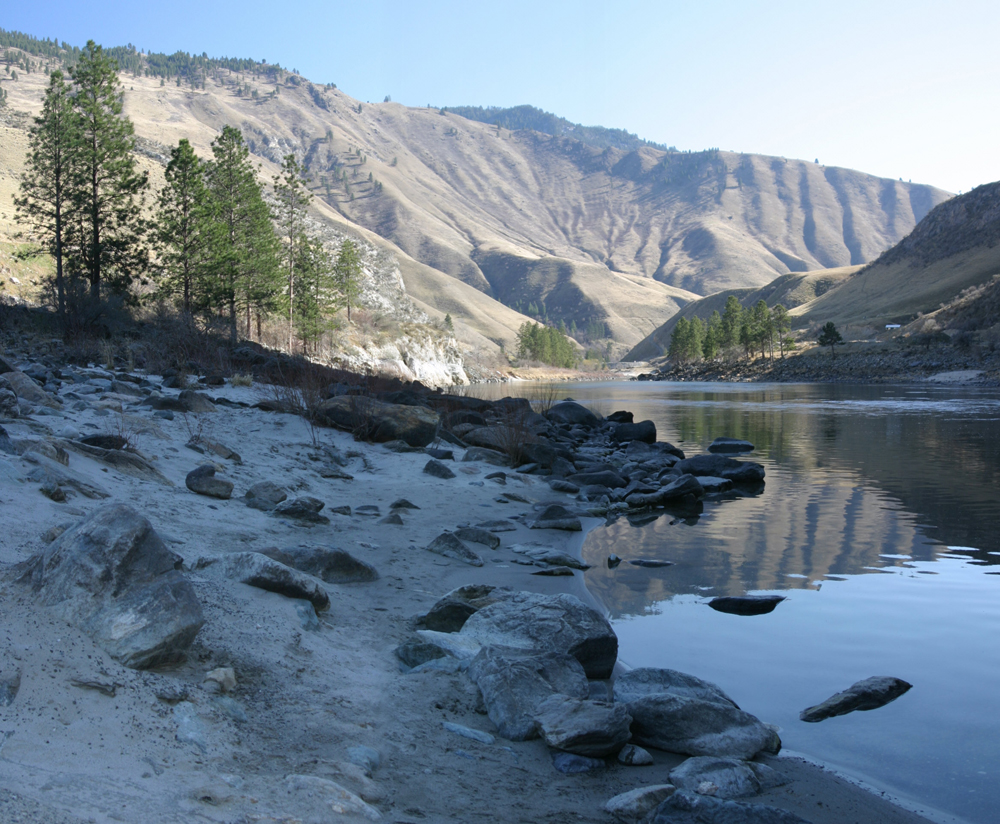
A wide calm river below steep dry grass and rock slopes, with scattered pines and a pale sand and boulder bar in the foreground
Idaho water. Everything on this page is about the weeks in which fish move through it. “My Public Lands Roadtrip: Lower Salmon River in Idaho (18111557534)” — Bureau of Land Management — Public Domain
The rest of the Idaho year

Plan the rest of your Idaho calendar

Other Pacific coast states

Advertisement

Run windows on this page are quoted from the agency named beside each one. River conditions come from the U.S. Geological Survey and are readings, not forecasts and not fish counts. Fishing seasons, bag limits, gear rules and licence requirements for Idaho are set by the agency linked here, and a run window is not an open season. For rules, see Idaho Department of Fish and Game. National picture: every state with a salmon or steelhead run →
Hero image: “My Public Lands Roadtrip: Lower Salmon River in Idaho (18111557534)” — Bureau of Land Management — Public Domain