Skip to content
Pacific salmon and steelhead · Washington

When Salmon and Steelhead Run in Washington

Washington has all five Pacific salmon plus both runs of steelhead, and something entering fresh water in every month of the year. The Olympic Peninsula rivers, the Skagit and the Columbia tributaries all run on different clocks.

8
Runs on this page
each with the sentence it came from
5
Species
Chinook, Coho, Pink, Chum, Steelhead
10
Rivers read live
USGS gauges
2
In window today
Fall Chinook, Coho

Seasons, limits and licence rules are set by your state agency.

The calendar

Washington run by run

Each bar below spans January to December, with today marked, and draws the quoted sentence underneath it. Where an agency describes a run by season rather than by month, the card carries the sentence without a bar.

Spring Chinook

Window has passed
April 1 to July 31

Fish bound for spawning gravel hundreds of miles inland leave the ocean first, because they have the furthest to swim.

The migration from the ocean to their spawning grounds begins in April through July, with peak migration occurring in May.
NOAA Fisheries, West Coast Region

Summer Chinook

Window has passed
June 1 to August 31

The middle run, overlapping both the spring and fall fish on the same rivers.

Traveling back to their spawning grounds occurs from June to August.
NOAA Fisheries, West Coast Region

Fall Chinook

In the window now
July 25 to December 31

The most abundant Chinook run on the coast, and the one that spawns closest to salt water.

The journey to spawning grounds begins in late July, peaking in September, and ends in December.
NOAA Fisheries, West Coast Region

Coho

In the window now
September 1 to December 31

Coho time their move on water, not on the calendar. They gather off a river mouth and go up when it rains.

Returning coho often gather at the mouths of streams and wait for the water flow to rise, such as after a rain storm, before heading upstream.
Washington Department of Fish and Wildlife

Pink, odd years only

Window has passed
July 1 to September 30

Pinks live exactly two years, so Washington gets them in odd numbered years and not at all in even ones.

Most pink salmon in Washington State return during odd numbered years, usually to the lower reaches of rivers from July to September.
National Park Service, Olympic National Park

Chum

No months published
The agency describes this run by season rather than by month.

The last salmon of the year into fresh water, and the reason the Skagit fills with bald eagles in midwinter. The Park Service bounds this one only by season, so we leave it unbounded here.

Chum salmon have the potential to return in huge numbers to the lower sections of the major rivers to spawn, usually in the summer or late fall.
National Park Service, Olympic National Park

Winter steelhead

Later in the year
November 1 to April 30

Mature fish that spawn soon after they arrive. Western Washington rivers are dominated by these.

Winter-run Steelhead return from the ocean at age 4 or 5 years, and travel to their spawning grounds from November to April.
NOAA Fisheries, West Coast Region

Summer steelhead

Window has passed
April 1 to September 30

Immature fish that come in early and spend months in the river ripening. Mostly east of the Cascades.

Most summer runs are east of the Cascades, and enter streams in summer to reach the spawning grounds by the following spring.
Washington Department of Fish and Wildlife
Advertisement
Right now

What Washington rivers are doing today

Live water temperature and discharge from USGS gauges, with the time each reading was taken. These are river conditions, not fish counts.
RiverWater tempFlowMeasured
Skagit Rivernear Mount VernonLoadingLoading
Skykomish Rivernear Gold BarLoadingLoading
Nooksack Riverat FerndaleLoadingLoading
Dungeness Rivernear SequimLoadingLoading
Bogachiel Rivernear ForksLoadingLoading
Wenatchee Riverat MonitorLoadingLoading
Okanogan Riverat MalottLoadingLoading
Yakima Riverat KionaLoadingLoading
Klickitat Rivernear PittLoadingLoading
White Salmon Rivernear UnderwoodLoadingLoading

Source: USGS Water Services (National Water Information System). Instantaneous values service. U.S. Geological Survey data are works of the United States Government and are in the public domain. Gauge list verified 2026-08-24.

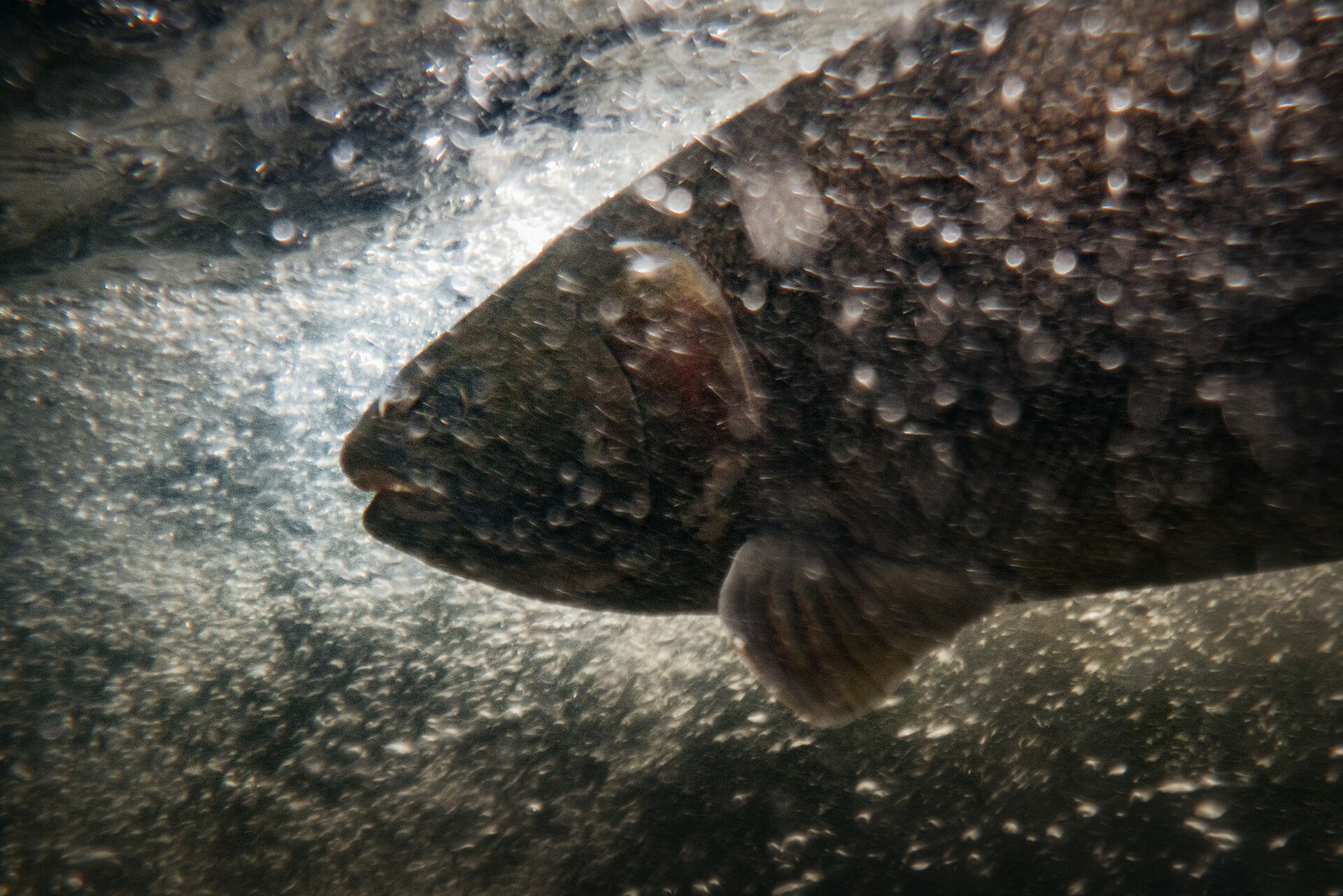
A salmon held in fast white water full of bubbles, photographed from underwater at the foot of a fish passage structure
A coho at the base of a fish ladder at Lower Lake Creek Falls in Oregon, in water so aerated it reads as static. Every dam between the sea and the spawning gravel is a place where a run can stall, which is one reason flow matters as much as the calendar does. “The Greatest Journey (52547039906)” — BLM Oregon & Washington — Public Domain
The rivers themselves

What is particular about Washington

The Skagit is the one river here where a federal agency has written down the whole arc: the Park Service says thousands of salmon work their way up it every autumn between August and December. On the Olympic Peninsula the Park Service is more specific still, putting coho into the Sol Duc primarily in late September and early October and Quinault sockeye on the spawning gravel in November and December.

Every autumn between August and December, thousands of salmon work their way up the Skagit River, struggling against the current and leaping high out of the cascading whitewater to reach their spawning beds.
National Park Service, North Cascades National Park
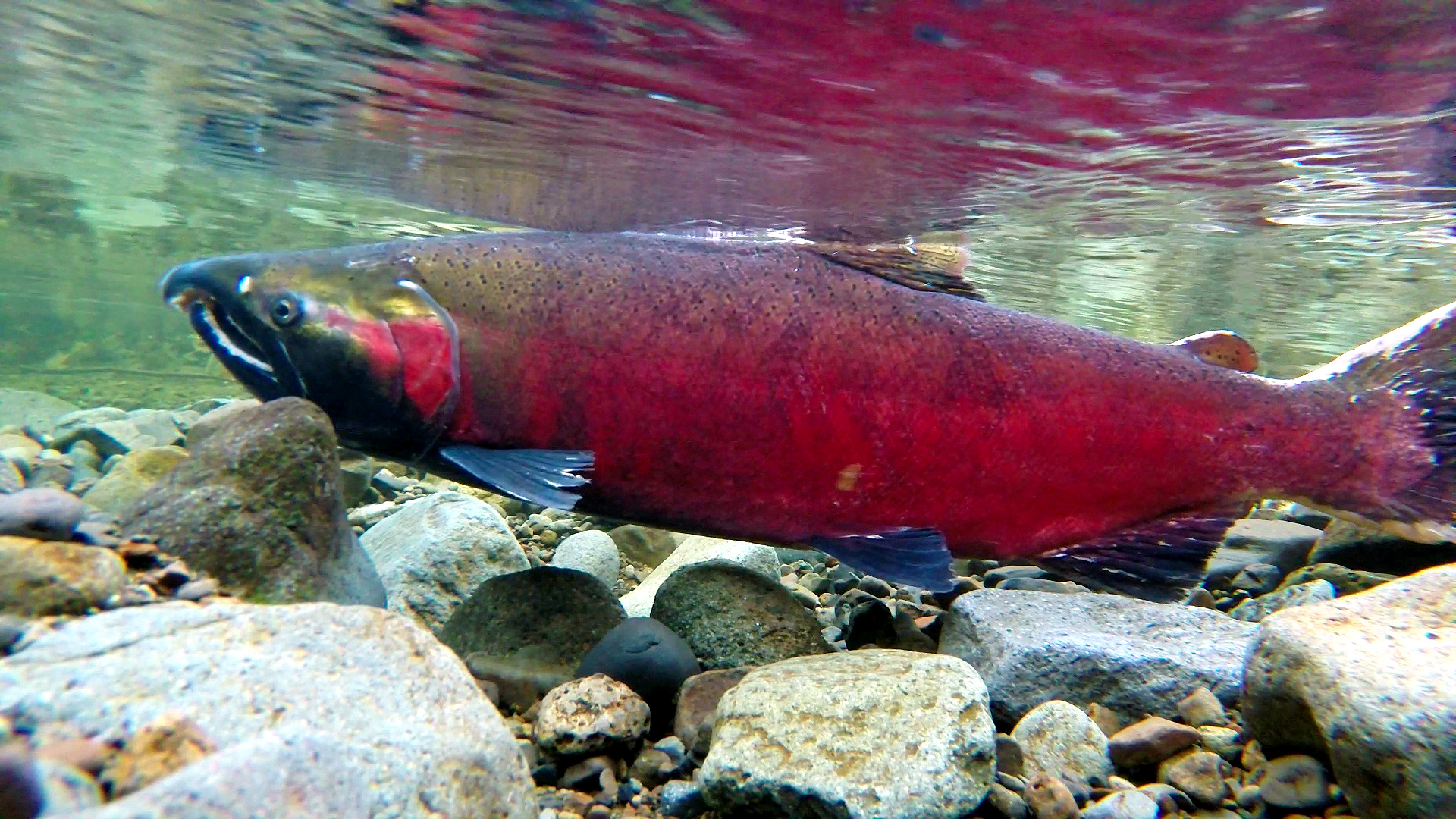
A deep red coho salmon with a dark green hooked head, photographed underwater just above a bed of pale gravel
A coho on the spawning gravel, photographed by the Bureau of Land Management on the Salmon River in Oregon. The colour and the hooked jaw are what an adult does to itself after it enters fresh water; the fish that left the ocean a few weeks earlier was plain silver. That change is why a run window and a spawning window are different questions. “Coho Spawning on the Salmon River (16148779468)” — Bureau of Land Management Oregon and Washington — Public Domain
Fish counts

Where to find real fish numbers

Fish passage counts are published by the programmes that run the counting stations, linked below with what each one reports.

Where the actual fish counts are published

  • Columbia River DART, University of WashingtonDaily adult passage counts at Bonneville, The Dalles, John Day, McNary, Ice Harbor, Lower Monumental, Little Goose and Lower Granite, plus the mid-Columbia and Willamette Falls, updated through yesterday. This is the live count for the Columbia and Snake.
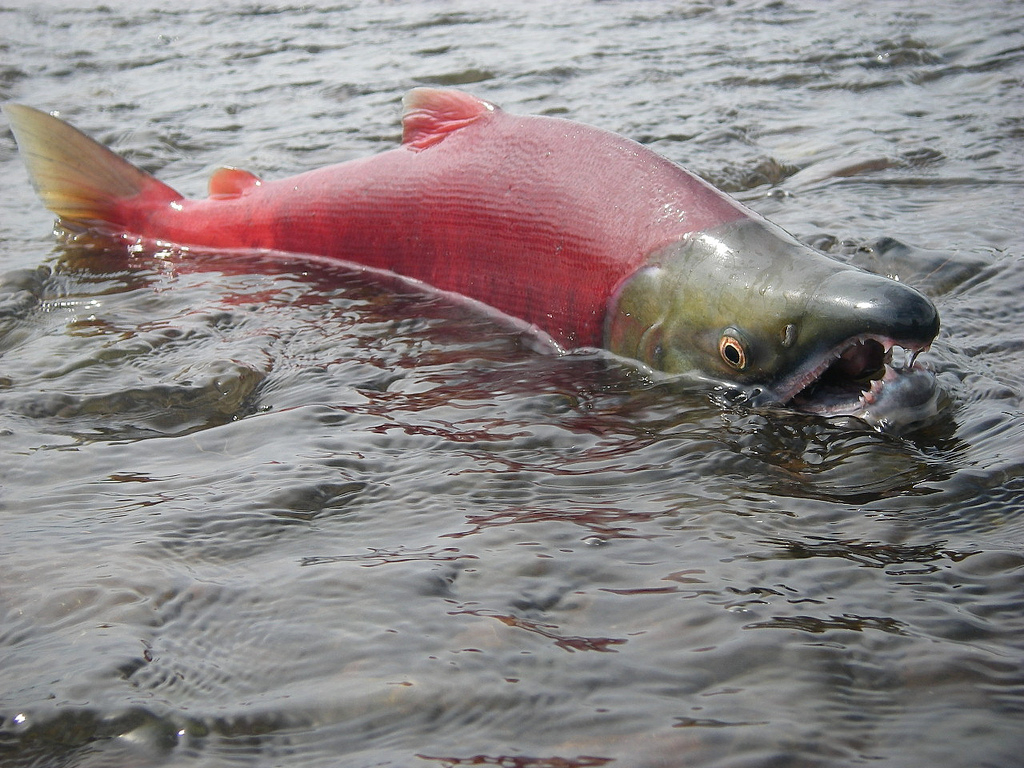
A bright red sockeye salmon with a green head and an open hooked jaw, half out of the water in a shallow stream
A spawning male sockeye. Sockeye are the run that most obviously needs a particular kind of river: they rear as fry in a lake, so a system without one gets no sockeye at all, however good the gravel is. “July 2010, Spawning male sockeye (6990781448)” — US Environmental Protection Agency — Public Domain
Common questions

Washington salmon run timing FAQ

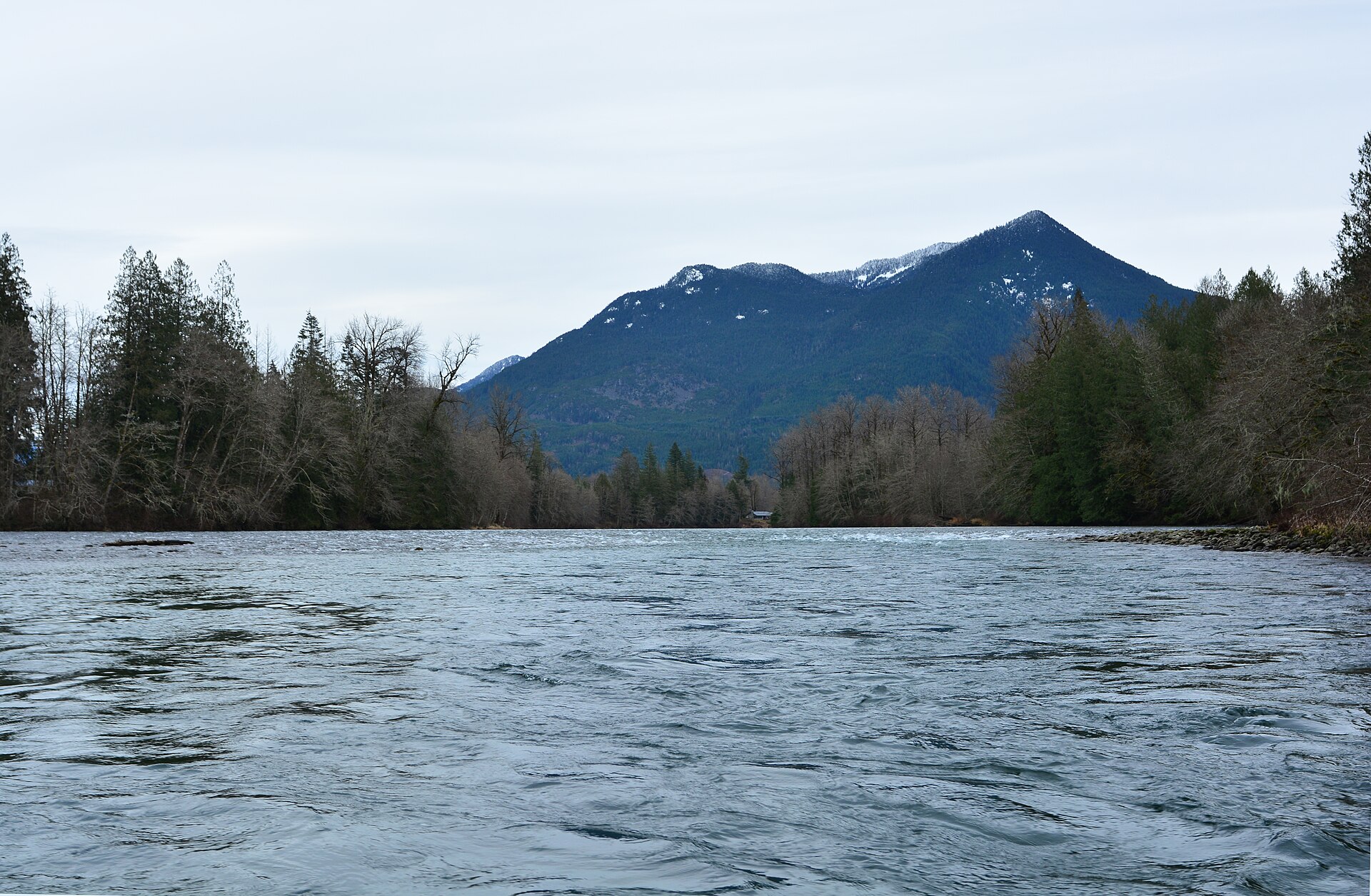
A wide grey green river running toward a snow dusted forested mountain, with bare winter trees along both banks
Washington water. Everything on this page is about the weeks in which fish move through it. “Skagit River, Marblemount to O'Brien-Riggs State Park 07” by Joe Mabel, CC BY-SA 4.0
The rest of the Washington year

Plan the rest of your Washington calendar

Other Pacific coast states

More West states with a run

Advertisement

Run windows on this page are quoted from the agency named beside each one. River conditions come from the U.S. Geological Survey and are readings, not forecasts and not fish counts. Fishing seasons, bag limits, gear rules and licence requirements for Washington are set by the agency linked here, and a run window is not an open season. For rules, see Washington Department of Fish and Wildlife. National picture: every state with a salmon or steelhead run →
Hero image: “Skagit River, Marblemount to O'Brien-Riggs State Park 07” by Joe Mabel, CC BY-SA 4.0