Skip to content

Every upcoming US launch, checked against your ZIP

Rocket Launches You Can See From Home

Enter a ZIP and every upcoming launch is tagged for it: whether it reaches your sky, which way to look, how high it climbs and when to step outside.

Your next launch appears here: when it lifts off, which way to look and how high it climbs.

TryOrlandoMiamiLos AngelesVirginia BeachAtlantaNew York

Behind: a Falcon 9 trail seen from 500 miles away in South Carolina. “Starlink Falcon Heavy launch in the sky”, Brandon Ghany / Horizon Productions SFL, CC0

What the tags run on

Launch Library schedule, launch geometry
5
Launch sites
11 pads across Florida, California, Virginia, Texas and Alaska
8
Launch paths
each worked out from its heading, climb and the distance to you
28
States with a view
at least one path reaches the sky over a major city; 7 get a big show
621 mi
Farthest, after dark
174 miles in daylight; a sunlit plume carries about 808

Each launch is placed on the heading its orbit needs, and the rocket is followed up its climb to see where it rises above your horizon. Distance, the hour and whether the plume is in sunlight decide the tag. It is geometry, not a forecast, so cloud can hide any of it.

Where to watch

Where to watch near each pad

The closest public places to each launch site, each with where the advice comes from. Roads and beaches near a pad often close before a launch, so check the day before.

Cape Canaveral and Kennedy Space Center, FL

SLC-40: SpaceX Falcon 9. LC-39A: SpaceX Falcon 9 and Falcon Heavy. SLC-41: United Launch Alliance Atlas V and Vulcan. SLC-37: Delta IV Heavy site, being rebuilt for Starship. LC-36: Blue Origin New Glenn.

  • Space View ParkTitusvilleAcross the Indian River from the pads, free, and the park fills up fast for high profile missions.“Parking is free and plentiful in the surrounding downtown streets, though it fills up fast for high-profile missions.” We Report Space: where to watch a launch on the Space Coast
  • Max Brewer BridgeTitusvilleA slightly higher vantage point than ground level, looking east over the river toward the pads.“The bridge itself gives you a slightly higher vantage point than ground level.” We Report Space: where to watch a launch on the Space Coast
  • Jetty ParkPort CanaveralThe mouth of Port Canaveral, closest of the easy spots to the southern pads. Parking has a fee.“A full-service park at the mouth of Port Canaveral with a fishing pier, beach, campground, and restrooms.” We Report Space: where to watch a launch on the Space Coast
  • Playalinda BeachCanaveral National SeashoreThe closest public beach to the Kennedy pads. It closes ahead of launches, so plan to arrive early.“The beach itself is beautiful and undeveloped, so the wait is not unpleasant.” We Report Space: where to watch a launch on the Space Coast
  • Kennedy Space Center Visitor ComplexMerritt IslandTicketed viewing on the grounds for select launches.
Vandenberg Space Force Base, CA

SLC-4E: SpaceX Falcon 9. SLC-6: SpaceX Falcon 9 and Falcon Heavy, planned. SLC-2W: Firefly Alpha.

  • Jalama BeachSanta Barbara CountyOpen to launch viewing under a county agreement updated in 2023; check closures first.
  • Ocean Park and Surf Beachnear LompocThe closest public beaches. They close temporarily for some missions.
  • Riverbend ParkLompocYou see the rocket rise, not the pad.“You won’t see the pad, but you can still catch the rocket rising into the sky.” Explore Lompoc: best places to view a rocket launch
  • Beattie ParkLompocA park with room to settle in for the countdown.“Pack a picnic, settle in, and watch as the rocket streaks across the sky.” Explore Lompoc: best places to view a rocket launch

Wallops Flight Facility, VA

Pad 0A: Northrop Grumman Antares and Rocket Lab Neutron.

  • NASA Wallops Visitor Center Launch Viewing AreaWallops Island, VirginiaThe official viewing area, 7 miles from the launch range.“The Launch Viewing Area at the Visitor Center is located 7 miles from the launch range.” NASA Wallops Visitor Center

SpaceX Starbase, TX

Starbase: SpaceX Starship.

  • South Padre IslandTexasBeach and bayside parks across the water from the launch site. Starship dates and hours move often, so go by the day.

Pacific Spaceport Complex Alaska, AK

Kodiak: small and medium rockets.

  • Kodiak Island roads and beachesAlaskaLaunches are rare and mostly seen from the island itself.
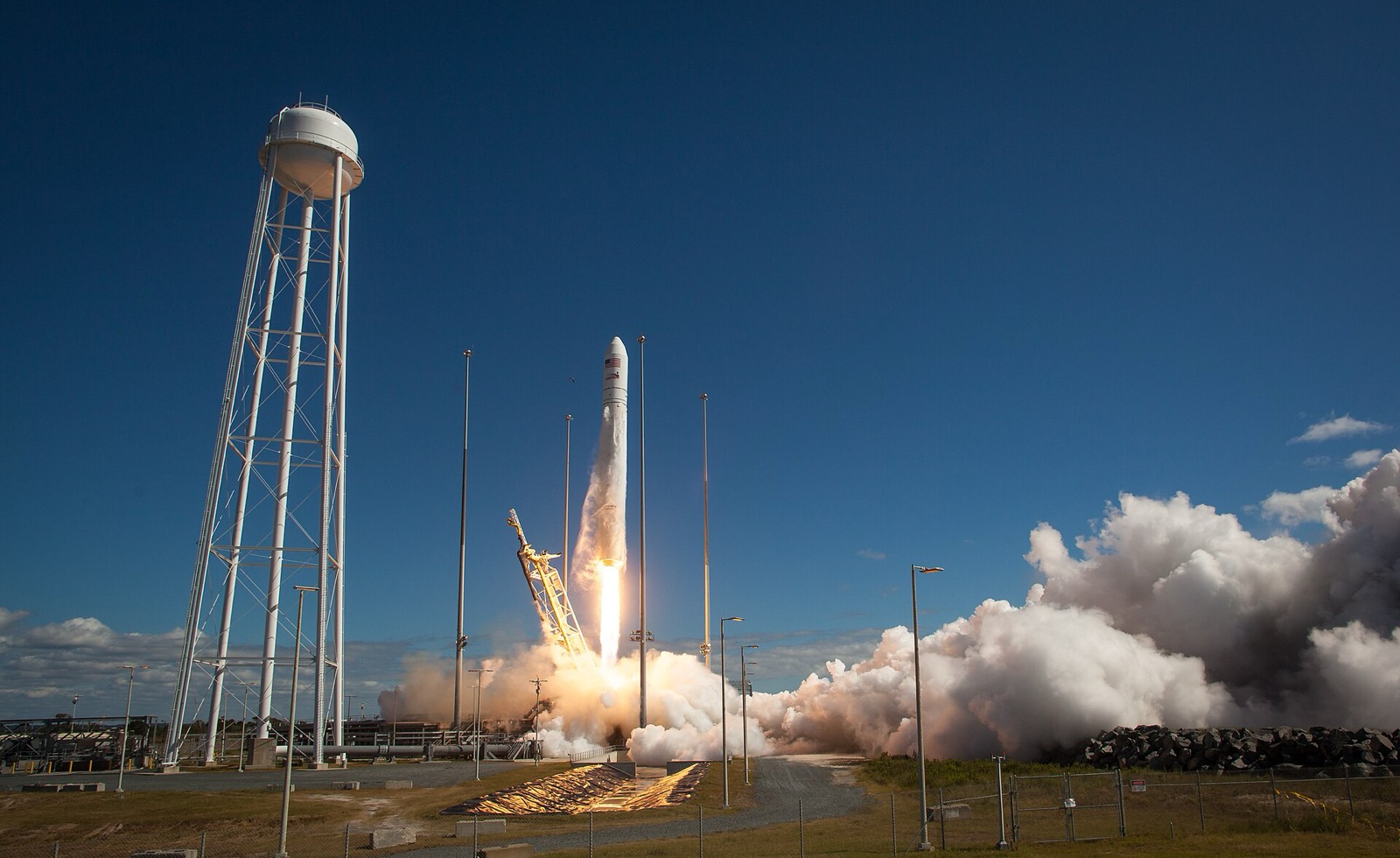
A white Antares rocket lifting off from a launch pad in bright daylight under a deep blue sky, with a tall white water tower at left and a billowing cloud of white exhaust at right
An Antares rocket with the Cygnus cargo spacecraft lifting off from Pad-0A at NASA’s Wallops Flight Facility in Virginia on September 18, 2013, on its way to the space station. A daytime launch from the pad is a loud, bright climb; from a distance it shrinks to a trail. “Antares Orb-D1 launches from Wallops (201309180010HQ)”, Bill Ingalls, Public domain
Advertisement
The rockets

What the rockets are

Most launches on the list are SpaceX Falcon 9 rockets from Florida and California, with Starship from Texas, United Launch Alliance and Blue Origin rockets from Florida, and smaller rockets from Virginia and Alaska. The tags mean the same for all of them.

  • Cape Canaveral, FLSpaceX Falcon 9; SpaceX Falcon 9 and Falcon Heavy; United Launch Alliance Atlas V and Vulcan; Delta IV Heavy site, being rebuilt for Starship; Blue Origin New Glenn
  • Vandenberg, CASpaceX Falcon 9; SpaceX Falcon 9 and Falcon Heavy, planned; Firefly Alpha
  • Wallops Island, VANorthrop Grumman Antares and Rocket Lab Neutron
  • Starbase, TXSpaceX Starship
  • Kodiak Island, AKsmall and medium rockets

What the tags mean

  • Spectacular A big show. Close enough, or lit by the sun after dark, that the whole climb and the plume are easy to follow.
  • Visible Plainly visible. A bright point and a trail, well above the treeline.
  • Low on the horizon Low on the horizon. Up for a short time near the horizon, so you need a clear view in that direction.
  • Not from here Not from here. Too far, or hidden below the horizon. The webcast is the way to see it.

A rocket in daylight can be followed to about 174 miles, after dark to about 621 miles, and a plume lit by the sun while the ground is dark carries to about 808 miles.

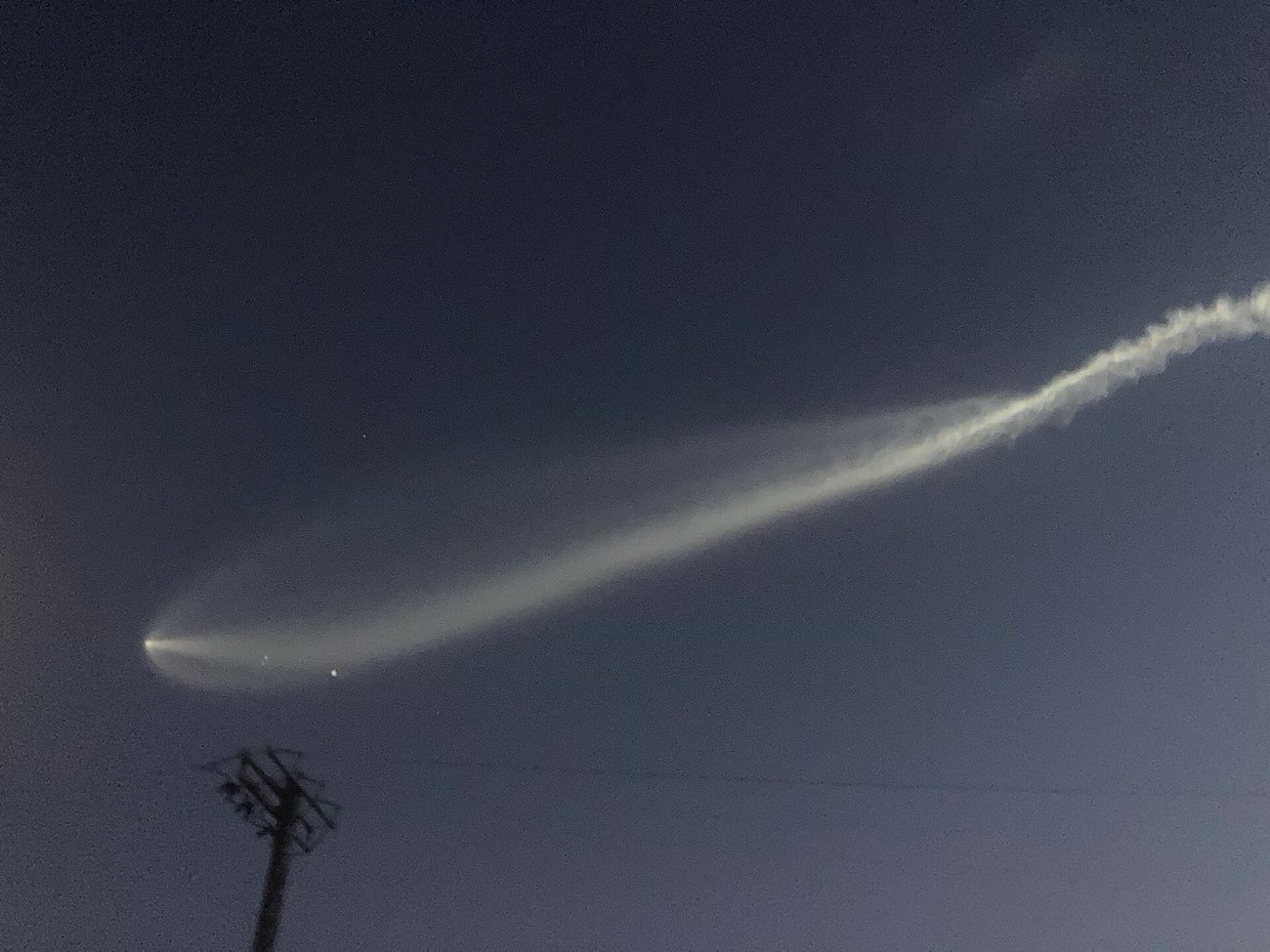
A thin pale trail of rocket exhaust curving across a dark blue evening sky above a power pole, with a small bright point of light at its left end
A Falcon 9 launch on June 18, 2024, seen from an ordinary street as the twilight effect lights its plume. No telescope and no trip to the coast: a clear view toward the launch and a phone were enough. “Falcon 9 rocket launch June 18 2024”, Jebeadso, CC0
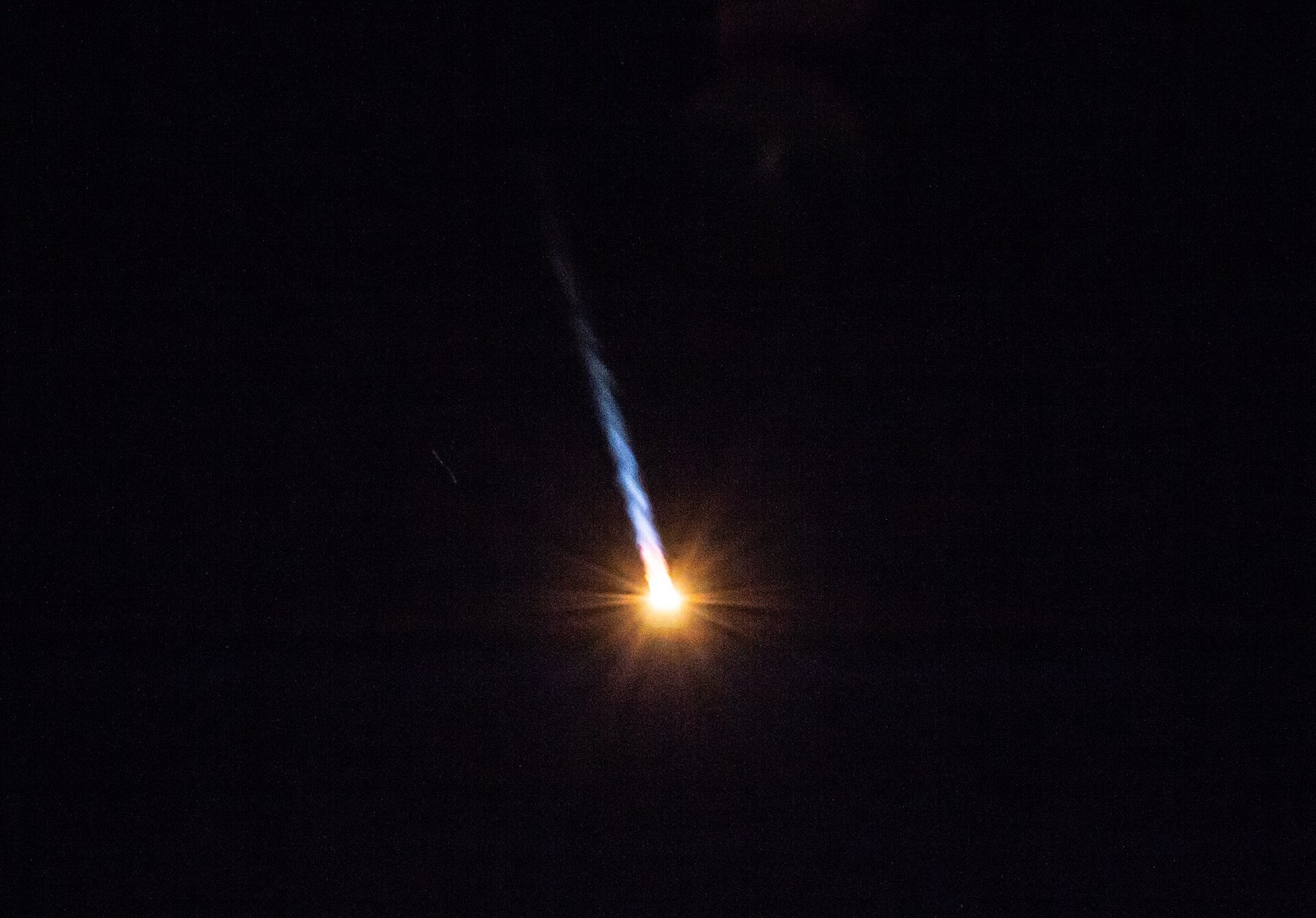
A bright orange flame with a thin blue and white exhaust trail streaking down through a black night sky
Falcon 9 Flight 62 leaving Vandenberg on the night of October 7, 2018, photographed from Santa Clarita, California. At night the engine flame itself is the show, and it can be followed for minutes. “SpaceX Falcon 9 Launch from Vandenberg, CA - October 7 2018” by Kevin Gill, CC BY 2.0

Rocket launch questions

Sources

Launch times come from the Launch Library and can move. Visibility is worked out in your browser from the launch heading and the distance; cloud and local terrain can hide a launch.

Advertisement