
See the Space Station Over Alaska This Week
From Juneau the space station climbs to about 26 degrees above the southern horizon, from Anchorage about 16 and from Fairbanks about 9, under the 10 degree line the tool lists from. From about June 3 to July 9 the sky over Anchorage never gets dark enough for a pass, nor from about May 15 to July 29 over Fairbanks.
Working out the next 7 days of passes over Anchorage, AK, from today’s orbits.
How high each one climbs over Alaska
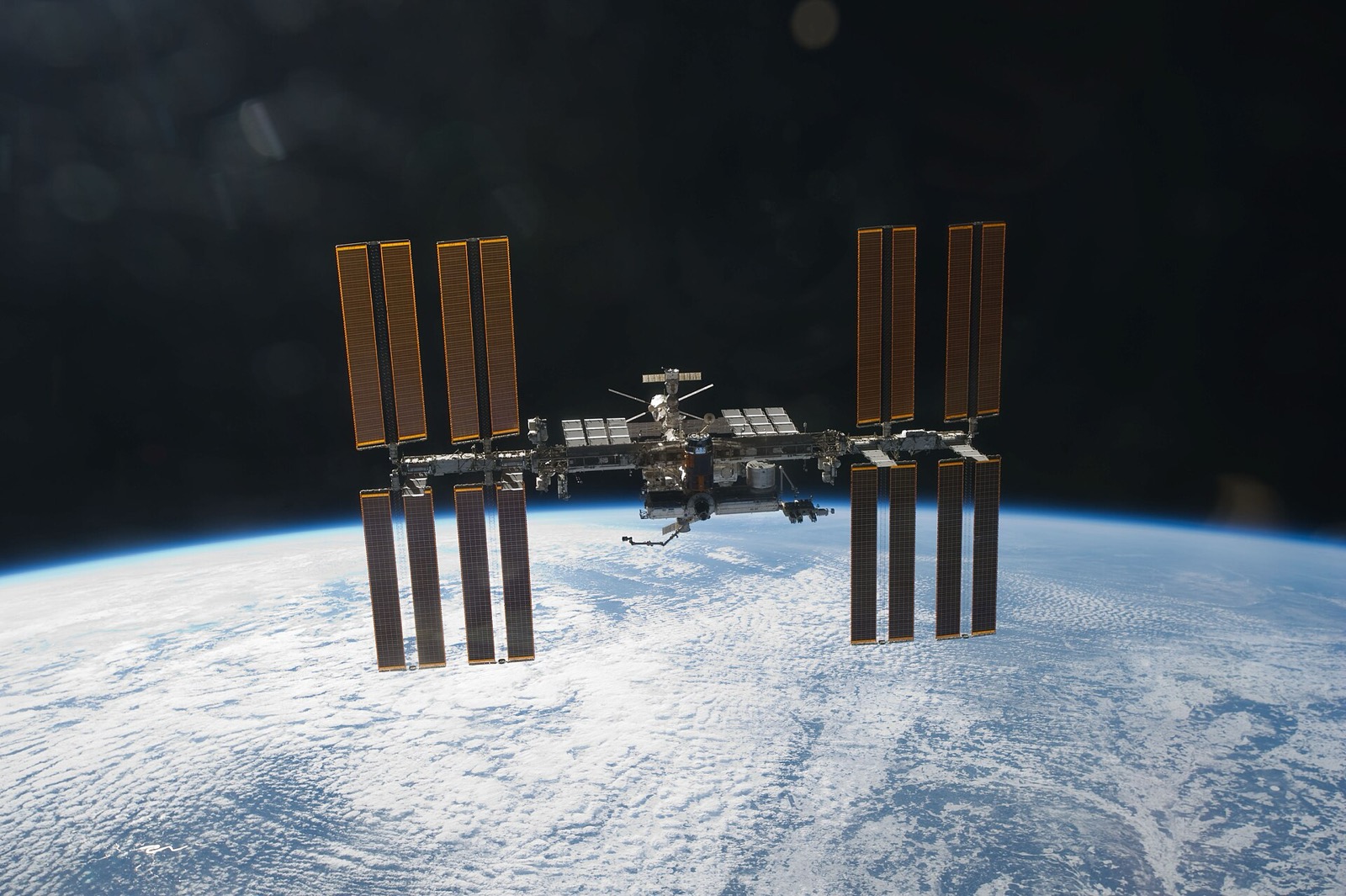
From each orbit’s tilt and heightThe highest a satellite can get over a place depends on how far north its orbit reaches. The space station’s orbit is tilted 51.6 degrees to the equator, Tiangong’s 41.5 and Hubble’s 28.5, so the farther north a city sits, the lower the southern ones stay.
The ceiling over Anchorage, Fairbanks and Juneau
These are the best a city can get; most passes cross lower, and each pass in the list above gives its own highest point. A satellite under 10 degrees is too low to list.
| City | Space station | Tiangong | Hubble |
|---|---|---|---|
| Anchorage | 16° | Never up | Never up |
| Fairbanks | 9° | Never up | Never up |
| Juneau | 26° | 3° | Never up |
The highest each can climb, worked out from its orbit in CelesTrak’s element sets of October 9, 2026. Overhead is 90°; below 10° a pass is too low to list.
From about June 3 to July 9 the sky over Anchorage never gets dark enough for a visible pass (37 nights). From about May 15 to July 29 the sky over Fairbanks never gets dark enough for a visible pass (76 nights). A pass needs the sun 6° below the horizon, the end of civil twilight.
The darkest places to watch from in Alaska
The space station is bright enough to see from a city street. The rocket stages, Hubble and Tiangong on a low pass are easier from a dark spot. These are ranked darkest first on the Bortle scale, where a lower number is a darker sky. The Milky Way in Alaska page has the dark nights to go, and the stargazing forecast the cloud hour by hour.
How to spot it
Go out a few minutes early
Passes come in the hours around dusk and dawn. NASA: “All International Space Station sightings will occur within a few hours before or after sunrise or sunset.”
Face the direction it starts
The list gives the compass point where each pass begins and its highest point in degrees. “The horizon is at zero degrees, and directly overhead is 90 degrees.”
Look for a steady, fast light
“The space station appears similar to an airplane or a very bright star moving across the night sky, except it does not have flashing lights or change direction.” It moves fast, too: “airplanes fly at about 600 mph (965 kph); the space station flies at 17,500 mph (28,000 kph).”
Watch it fade
Many evening passes end in midair, as it slips into the earth’s shadow. “Satellites are only visible when they are lit by the sun, but the observer on the ground is already in darkness.”
Alaska satellite questions
More of the Alaska night sky
Satellites over other states
Sources
- NASA, Spot the Station, read October 9, 2026
- NASA, International Space Station facts and figures, read October 9, 2026
- NASA Science, About Hubble, read October 9, 2026
- Heavens-Above, Frequently asked questions, read October 9, 2026
- Space.com, Starlink satellite train: how to see and track it, read October 9, 2026
- U.S. Naval Observatory, Rise, Set, and Twilight Definitions, read October 9, 2026
- CelesTrak GP element sets, read October 9, 2026
- National Weather Service, forecast terms, read October 9, 2026
- Heavens-Above, pass tables for Columbus, Ohio (the accuracy check), read October 9, 2026