
Mosquito Bite vs Spider Bite: How to Tell the Difference
In the United States, most suspected "spider bites" turn out to be something else. Clinical data from the American Academy of Family Physicians (AAFP) shows these lesions are frequently mosquito bites, bedbug reactions, or bacterial infections like MRSA. Misdiagnosing one for the other can delay treatment for a life-threatening infection. This guide covers the visual differences, the two medically significant US spiders, and the symptoms that warrant professional care.
Quick comparison at a glance
| Clinical feature | Typical mosquito bite | Typical spider bite |
|---|---|---|
| Number of marks | Multiple; randomly distributed | Typically solitary and isolated |
| Typical appearance | Round pink papule/welt | Expanding red, warm, swollen bump |
| Pain at moment of bite | Negligible; often unnoticed | Mild sting to a sharp prick |
| Itch level | Intense and persistent | Low to secondary; pain dominates |
| Onset of symptoms | Minutes | Delayed; escalating over 3–8 hours |
| Duration | 3–5 days | 1 week to months (significant species) |
| Body location pattern | Exposed skin (ankles, arms, neck) | Hidden areas (clothing, boots, garages) |
This table is a general guide to common patterns. It is not a clinical diagnosis tool.
What a typical mosquito bite looks like
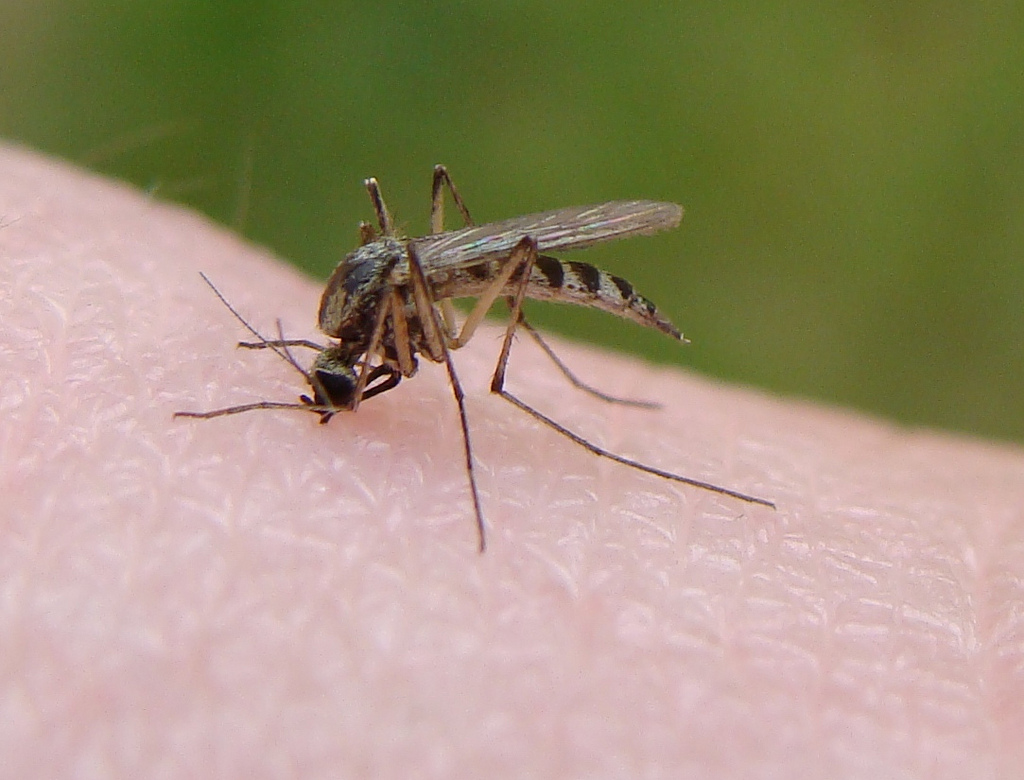
A mosquito bite is the body's immune response to foreign proteins and anticoagulants introduced by a female mosquito during feeding. The saliva triggers a localized allergic reaction, and the body releases histamine. That cascade produces the vasodilation and swelling people recognize as a bite [Source: Mayo Clinic].
Visually, a mosquito bite is a papule: a single, round, raised pinkish-red welt typically 5 to 15 millimeters across [Source: Mayo Clinic]. Mosquitoes are flying vectors drawn to CO2 and body heat, so bites tend to land in multiples, scattered randomly across exposed skin like the ankles, lower legs, forearms, hands, neck, and face [Source: Mayo Clinic]. The reaction comes on fast, but itching usually peaks at 24 to 48 hours and resolves on its own within 3 to 5 days [Source: Mayo Clinic].
The main risk with a mosquito bite is what happens to the skin afterward. Repeated scratching can introduce bacteria like Staphylococcus aureus into the micro-wound, leading to secondary infections such as cellulitis [Source: Mayo Clinic]. Some people develop a more severe hypersensitivity reaction known as Skeeter Syndrome, with intense inflammation and fever from allergens in mosquito saliva. It's sometimes mistaken for a bacterial infection. In severe cases it may require systemic treatment with corticosteroids like prednisone [Source: AAFP].
What a typical spider bite looks like
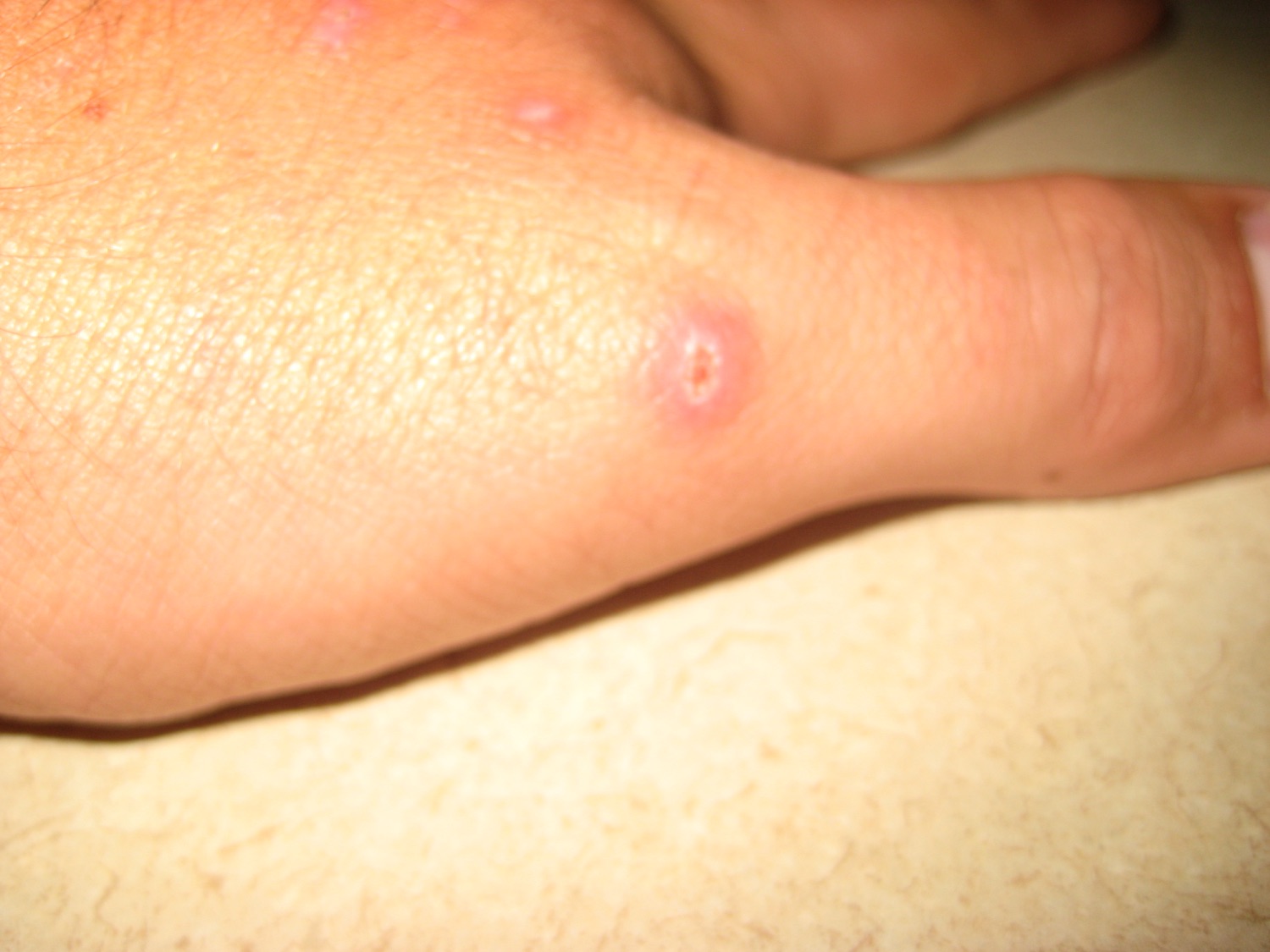
Spiders are non-aggressive, solitary predators. Most US species aren't medically significant, and they only bite as a defensive reflex when trapped against skin (squeezed in clothing or rolled onto in bedding, for example) [Source: Mayo Clinic]. Most genuine spider bites show up as a single lesion, because spiders don't forage for blood in groups the way mosquitoes or bedbugs do [Source: Mayo Clinic].
A common myth is that a spider bite has to show two punctures. In practice, the fangs (chelicerae) of most domestic species are too small, flexible, or closely spaced to leave visible dual marks. Most bites just look like a single red bump that develops gradually over hours, not minutes [Source: Mayo Clinic]. Unlike the near-instant reaction to a mosquito, spider bite symptoms are often delayed: redness and swelling expand over a window of 3 to 12 hours. The dominant sensation tends to be a dull ache or burning rather than intense itch. Localized pain is far more common with spider envenomation than with mosquito bites [Source: Mayo Clinic].
Location is another clue. Spiders favor secluded places, so bites tend to land on skin covered by clothing or in spots where someone disturbed a spider in a hidden area: a garage, a woodpile, the inside of a boot. That's the opposite of the random, scattered pattern mosquito bites leave on exposed skin.
Worried about mosquito-borne disease in your area?
Check your local mosquito forecastThe two US spider bites that need attention
BROWN RECLUSE
- Identification. The brown recluse (Loxosceles reclusa) is golden to dark brown with long, thin legs. Look for the dark violin-shaped (fiddle) marking on its back and the unusual arrangement of six eyes in three pairs (dyads) instead of the typical eight.
- Geography. Most common in the south-central and midwestern United States, especially Missouri, Kansas, Arkansas, Louisiana, eastern Texas, and Oklahoma. Favors dry, sheltered spots like attics and woodpiles [Source: MedlinePlus].
- Progression. The bite itself is often painless, no worse than a faint pinprick. Between 8 and 24 hours later, pain becomes severe and deep as the venom's cytotoxins (sphingomyelinase D) destroy tissue [Source: Mayo Clinic]. The site may develop a bull's-eye pattern: a dark blue or purple central blister or scab, a pale ischemic ring, and an outer halo of expanding redness. It can progress to tissue necrosis and a deep, slow-healing ulcer.
- Action. Suspected bites need immediate emergency care to limit tissue damage and manage potential necrosis.
BLACK WIDOW
- Identification. The female black widow is a shiny, jet-black spider with a spherical abdomen and a bright red or orange hourglass marking on its underside (ventral abdomen).
- Geography. Found throughout North America but most common in the southern and western United States, living in undisturbed spots like garages and sheds [Source: CDC].
- Progression. Symptoms at the bite site are often minor (though two small puncture marks are occasionally visible). The real threat is systemic neurotoxicity from the toxin α-latrotoxin. The venom produces pain at the bite area first, then spreads to the chest, abdomen, or the whole body [Source: CDC]. Within 1 to 8 hours, the patient may experience severe muscle cramps and rigidity that start near the bite and spread outward. Other symptoms include profuse sweating, nausea, and tremors.
- Action. This is a medical emergency. Get immediate evaluation for potential antivenom or muscle relaxant therapy.
Other reactions that look similar
Flea bites typically appear as very small red bumps in clusters or in linear groups, most commonly on the lower legs, feet, calves, and ankles. They itch intensely and immediately because of the histamine response to flea saliva [Source: Cleveland Clinic].
Bed bug bites are red, puffy bumps that often appear in linear arrays or tight clusters on skin exposed during sleep: face, neck, arms, and hands. Colloquially called "breakfast, lunch, and dinner," they're usually discovered in the morning [Source: Healthline].
Tick bites are different because the tick often stays attached to the skin for hours or days while it feeds, and the bite itself is generally painless. Once removed, the tick leaves a small red spot. The critical sign to watch for is an expanding bull's-eye rash (medically known as Erythema migrans), a hallmark indicator of Lyme disease [Source: CDC].
Contact dermatitis is a non-infectious inflammatory rash caused by allergens like poison ivy. Unlike the localized bumps of an insect bite, it usually shows up as an irregular, scaly, or blistering patch of skin that may ooze or crust after contact with the irritant.
When to see a doctor
Get medical evaluation right away if any of these red flags show up:
- Rapidly expanding redness, warmth, or red streaking from the site [Source: Mayo Clinic].
- Fever, chills, or persistent body aches after a bite [Source: Mayo Clinic].
- Suspected bite from a black widow or brown recluse.
- A bite or sore that is not healing after 2 weeks.
- Severe reactions in a child under age 2 or an immunocompromised individual.
- Difficulty breathing or swallowing after a bite [Source: Mayo Clinic].
- Signs of secondary infection: increased redness, swelling, warmth, or pus [Source: Pinnacle Dermatology].
- Tissue necrosis: an ulcer forming at the bite site that turns black or significantly worsens over 24 to 48 hours [Source: Wake Pest].
When in doubt, get it looked at. A clinical evaluation is necessary to rule out bacterial infections like MRSA (Methicillin-Resistant Staphylococcus aureus). MRSA often begins as a painful, red bump that gets mistaken for a spider bite, but it requires specific antibiotics and professional wound care to prevent spread into the bloodstream.
Frequently asked questions
Can you tell from a single bite whether it's a spider or mosquito?
Definitively diagnosing a single lesion is hard without seeing the bug. Use the timing as a clue. Mosquito bites itch almost instantly. Spider bites often involve a delayed, aching pain that develops over several hours.
Do spider bites always hurt right away?
No. Envenomations from certain spiders, most notably the brown recluse, are frequently painless at first or feel like a minor prick. Severe pain typically develops hours later as the venom starts to affect the tissue.
Why does my "spider bite" have two marks?
Visible dual puncture marks are rare in most domestic spider bites. Two adjacent marks are more likely to be separate insect bites, such as bedbug bites. That said, dual punctures are a known clinical feature associated with the black widow.
Can mosquito bites get infected?
Yes. The bite itself is an allergic reaction, but repeated scratching can break the skin and introduce bacteria like Staphylococcus aureus, leading to secondary infections such as cellulitis or impetigo.
What does a brown recluse bite look like in the first 24 hours?
In the first day, it typically looks like a red papule or swollen bump, sometimes with a small white blister at the center or a pale ring as the venom affects the local blood vessels. The characteristic necrotic progression develops over the following days.
Should I bring the spider with me if I see a doctor?
Yes, if you can safely capture or kill the specimen and seal it in a container. Bringing it to the doctor helps with species identification and points to the right treatment protocol.
Want to know when mosquito season peaks in your state?
Enter your ZIP code or town below to see your local forecast.
Sources
- CDC NIOSH: Venomous Spiders at Work
- Mayo Clinic: Mosquito Bites — Symptoms and Causes
- Mayo Clinic: Spider Bites — Symptoms and Causes
- Mayo Clinic: Mosquito Bites — Diagnosis and Treatment
- MedlinePlus: Brown recluse spider
- Cleveland Clinic: Flea Bites
- Healthline: Bed Bug Bites vs. Mosquito Bites
- CDC: About Ticks
- AAFP: Arthropod Bites
- Pinnacle Dermatology: Bed Bug Bites