
Ice Dams in Idaho
McCall spends about 47.3 days of a normal winter with snow on the ground and a high that never reaches freezing. Boise spends 7.6. That gap, not the storm total, is what decides whose eaves ice over.
Outside McCall's typical window, which runs Dec 1 to Feb 16Idaho's ice dam window
1991-2020 station recordsThe mountain north and east are ice dam country and the Snake River Plain around Boise is not. McCall runs six times Boise's setup count and more than ten times its melt-refreeze count.
How an ice dam actually forms
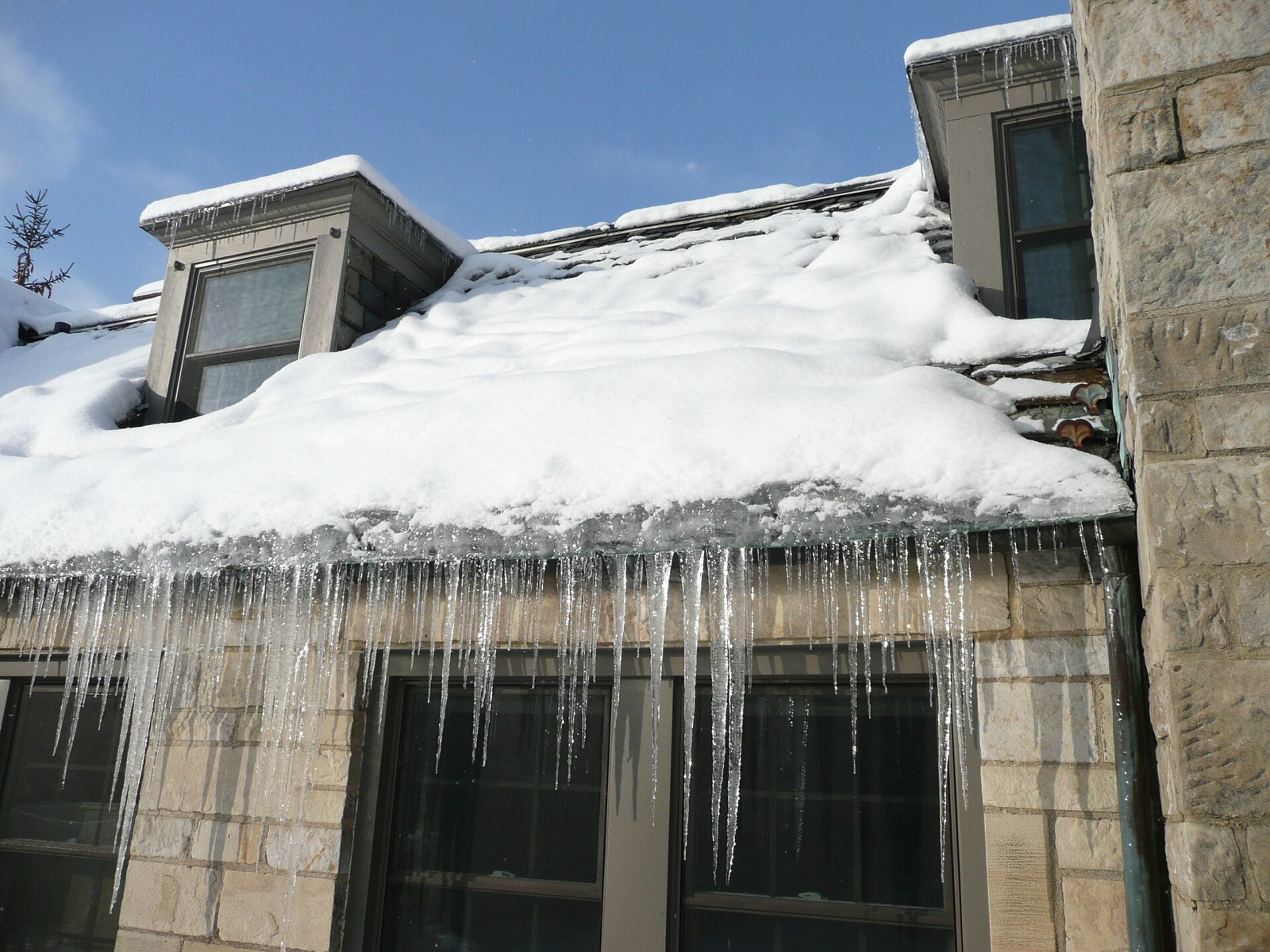
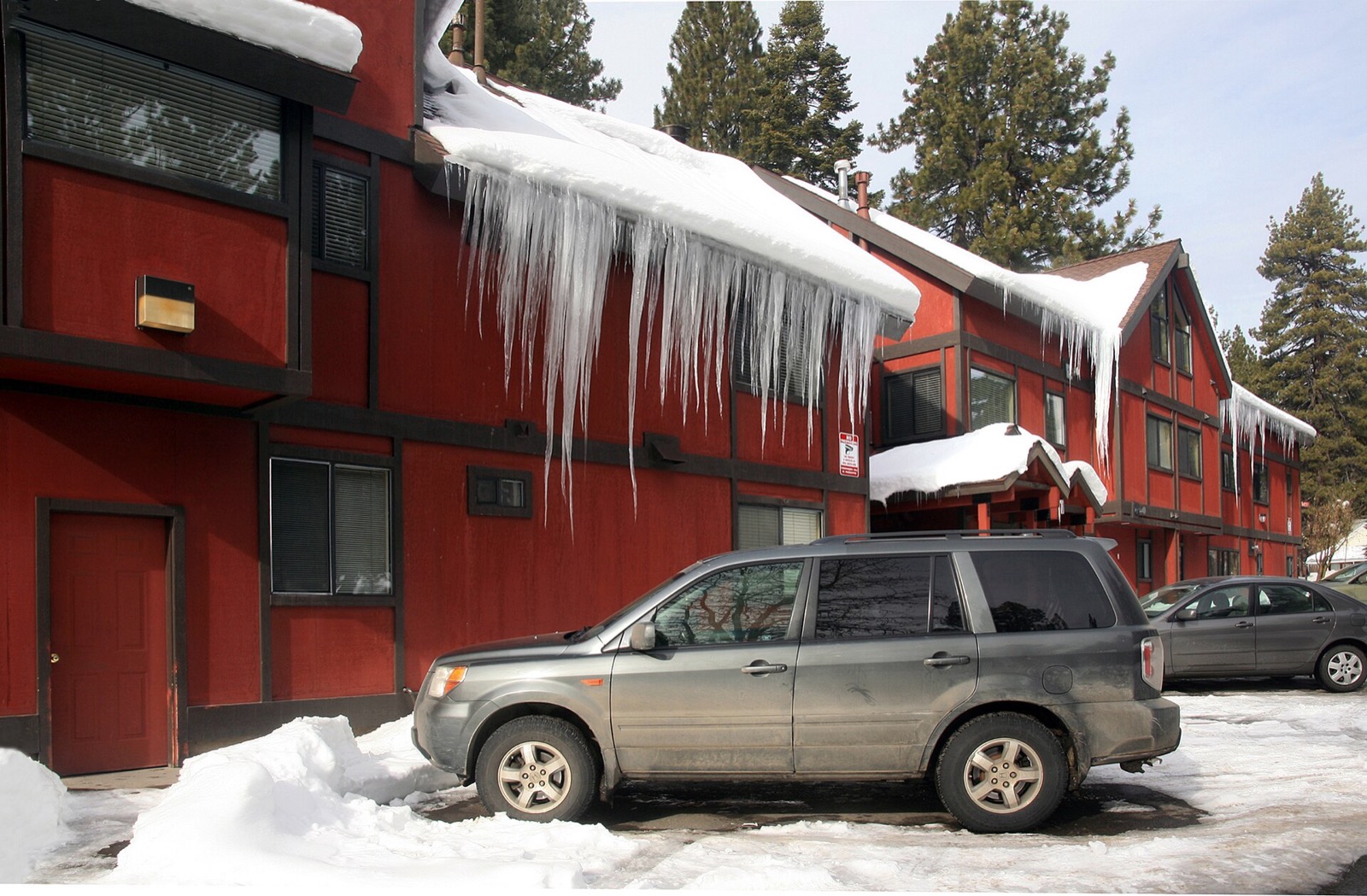
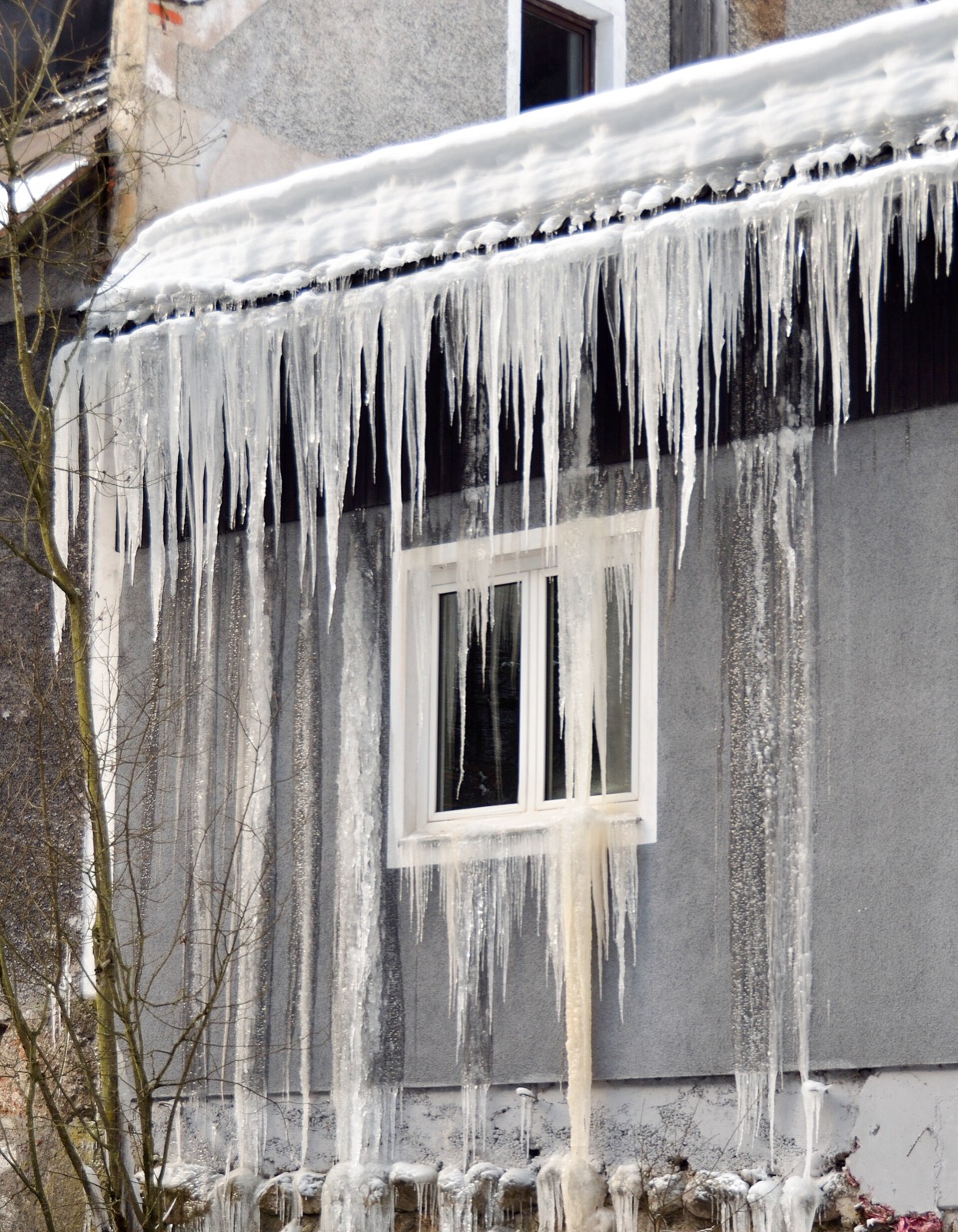
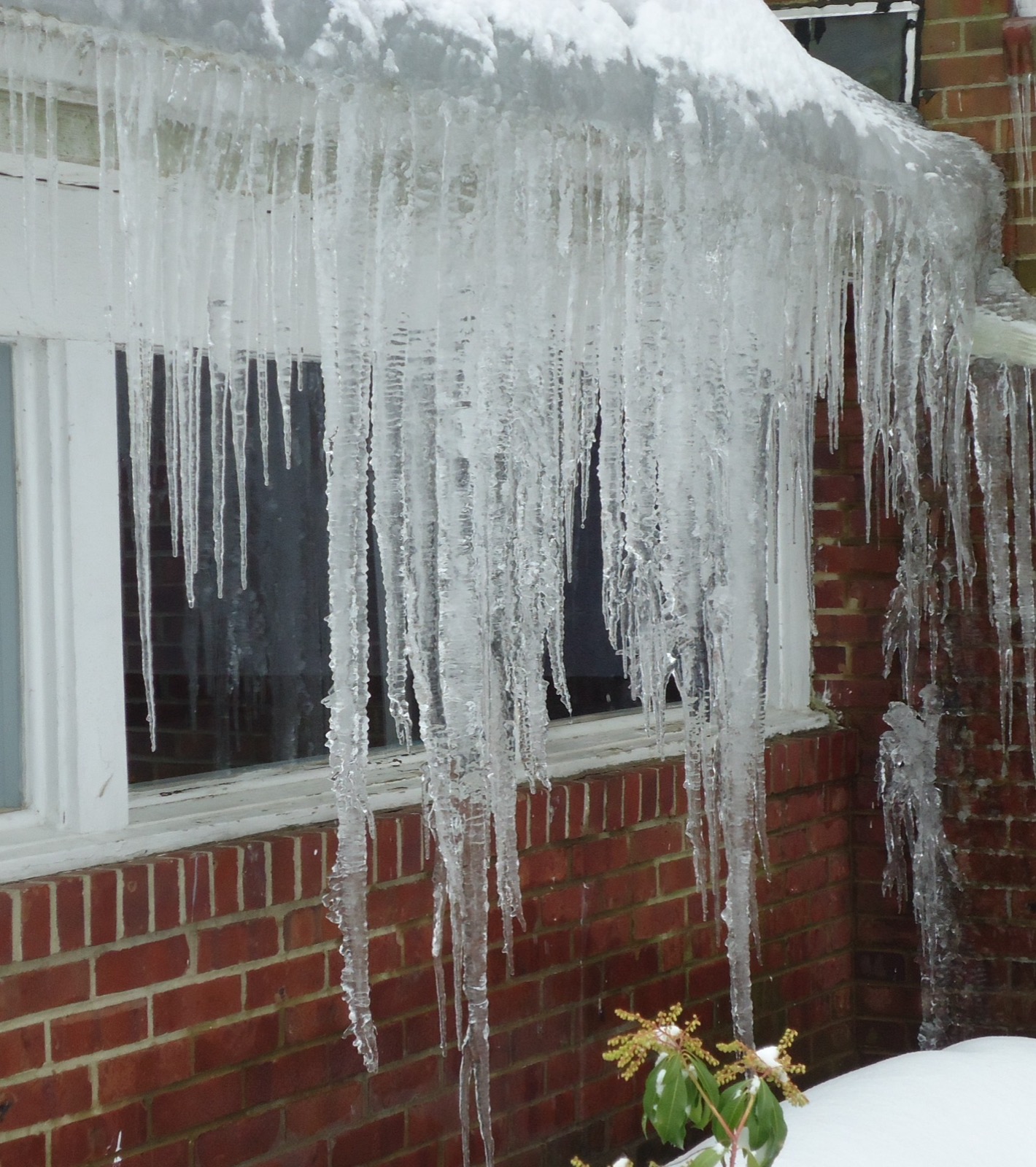
Almost nothing on this site has a mechanism this clean. Snow lands on the roof. Heat escaping through the ceiling warms the underside of the deck and melts the snow sitting on it. The meltwater runs down the slope, reaches the eave, which hangs out over cold outside air and is not being warmed by anything, and freezes there. The ridge of ice that builds up blocks the next meltwater, which pools behind it and goes looking for a way in.
NDSU Extension, Check Your Roof for Ice Dams“Ice dams look like an ice ridge along the edge of the roof.”
Its account of what follows is a simple sequence. Snow lying on the warm section melts. The meltwater runs down the slope until it reaches the part of the roof that is below freezing, and stops there as ice. The ridge grows from above as more snow melts, but it can only extend as far up the roof as the freezing line, so the water pooling behind it stays liquid, finds gaps in the roof covering, and enters the attic. From there the extension service traces it into exterior walls and through ceiling insulation to the finish below.
Our summary, not a quotation. Source: University of Minnesota Extension, Dealing with and preventing ice dams
NDSU Extension, Check Your Roof for Ice Dams“It's important to look for these spots because water behind the ice may enter the house causing insulation to be ineffective, leading to the rotting of structural wood, staining wall coverings and creating conditions conducive for mold growth.”
What Idaho's weather record shows
There is no published ice dam climatology anywhere, from any agency, so this is our own count from NOAA's daily station records. A setup day is a day the station reported an inch or more of snow on the ground and a high temperature at or below 32 F: the outdoor half of the condition, present. A spell is a run of them, which is what actually builds a dam, because ice accumulates over days rather than hours. A melt and refreeze day is the other route: snow still down, an afternoon above freezing, a night back below it.
None of these numbers is a statement about a house. They describe weather, and the reason is visible in how the condition is defined:
University of Minnesota Extension sets the condition out in three parts that have to hold at once. Snow has to be lying on the roof. The upper part of the roof surface has to be running above freezing while the lower part runs below it. And because an overhanging eave is only ever as cold as the air around it, the outdoor air has to be below freezing as well. It stresses that these are sustained averages rather than a passing hour, which is exactly why a single cold night does not build a dam and a cold fortnight does.
Our summary, not a quotation. Source: University of Minnesota Extension, Dealing with and preventing ice dams
Two of those three parts are weather and one is not. A station record can tell you the snow was lying and the air was below freezing. It cannot tell you the upper roof was above freezing, because nothing outdoors put it there. That warmth came out of the building, and no weather dataset in the world holds it.
| Station | Setup days a winter | Longest spell | Melt and refreeze days | Snow on the ground | Winters with a spell |
|---|---|---|---|---|---|
| McCall McCall, 5,025 ft | 47.3 | 11 d (max 23) | 88.6 | 141.1 d | 100% |
| Pocatello Pocatello Rgnl AP, 4,451 ft | 25.3 | 8 d (max 17) | 20.1 | 46.5 d | 97% |
| Boise Boise Air Terminal, 2,823 ft | 7.6 | 4 d (max 14) | 8.9 | 17.1 d | 57% |
The frozen route
Days a winter, on average, with an inch or more of snow on the ground and a high that never reaches 32 F. The eave stays frozen all day, so anything the house melts has nowhere to go.
The melt and refreeze route
Days a winter with snow on the ground, an afternoon above freezing and a night back below it. Sun does the melting instead of the attic, and the refreeze happens after dark.
Are the conditions lining up right now?
The National Weather Service publishes, for every point in the country, a gridpoint forecast with daily high temperatures and forecast snowfall; it issues no ice dam watch, advisory or index. Counting the forecast days whose high stays at or below freezing is this site's arithmetic on those published values.
Is the outdoor half of the condition in the forecast for McCall?
Reading the National Weather Service gridpoint forecast...
Active National Weather Service winter products in Idaho
These are passed through exactly as issued, with the office that issued them and the times they cover.
Checking active National Weather Service winter products...
This is a building problem that weather reveals
Two houses on the same street, under the same storm, in the same 47.3-day winter, get completely different results. The weather is identical. The ceilings are not. That is the whole story, and the extension services state it without hedging.
NDSU Extension, Check Your Roof for Ice Dams“Ice dams occur when escaping heat melts the snow on the roof and the water freezes when it reaches the cooler surface near the eaves.”
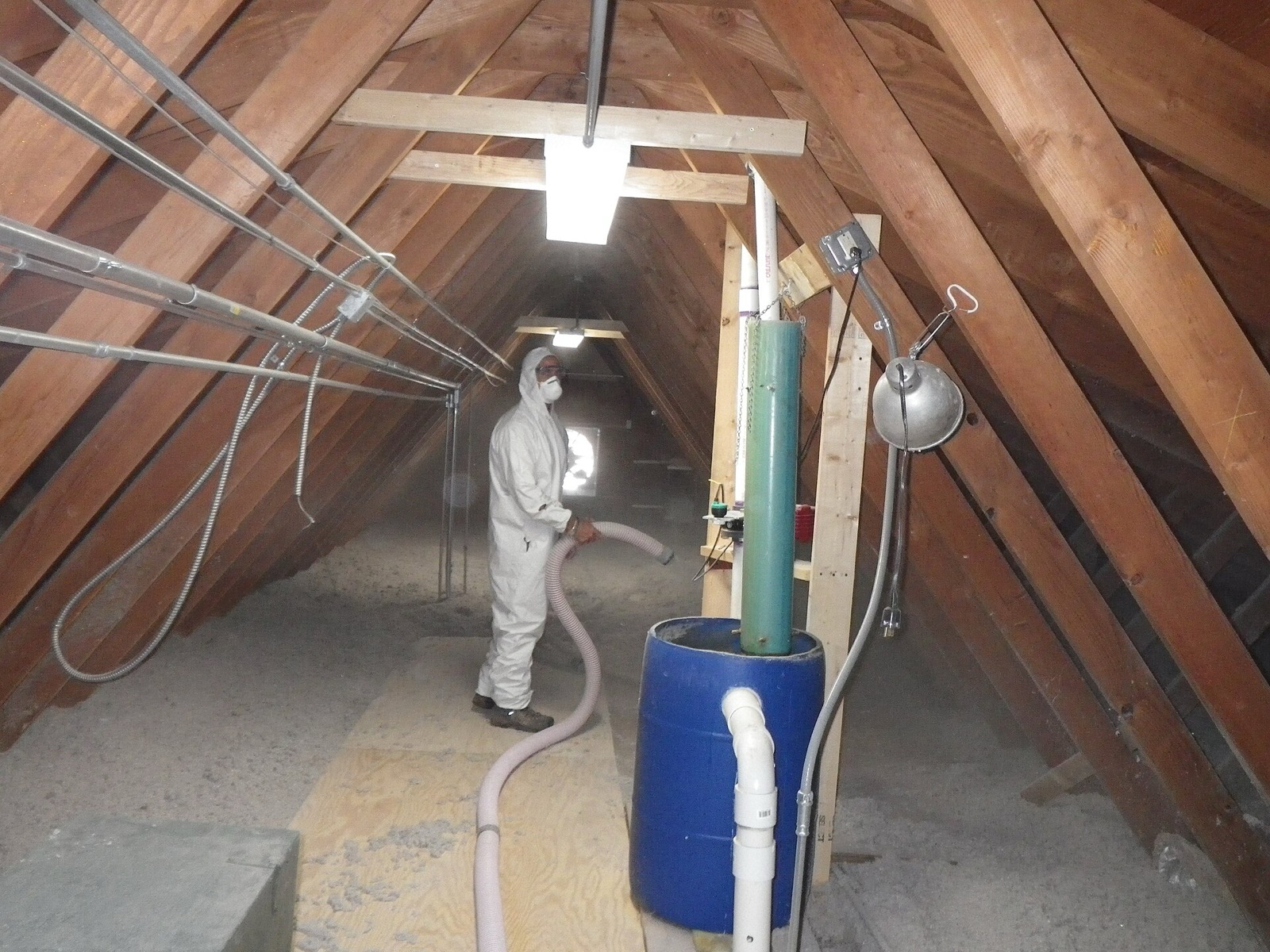
On where the warmth comes from, the extension service is unambiguous: it is heat leaving the house that makes the roof surface uneven in temperature, with sunshine an occasional rather than a usual cause. It breaks the path into conduction through the ceiling, convection and radiation off the top of the insulation, and air leaking through ceiling penetrations, and identifies that last one as the biggest contributor in many houses.
Our summary, not a quotation. Source: University of Minnesota Extension, Dealing with and preventing ice dams
Which is why the published fix is an order of operations on the building, not a product and not a technique on the roof:
NDSU Extension, Check Your Roof for Ice Dams“The best way to reduce the potential for ice dams is by providing adequate attic insulation and ventilation that keep the roof cold and to minimize any air leaks from the living space into the attic.”
Its long-term remedy is an order of operations, and the order is the point. Seal the ceiling first so warm, moist indoor air cannot get into the attic at all. Only then add insulation depth to cut the heat that still conducts through. Doing the second without the first leaves the leaks running underneath the new insulation.
Our summary, not a quotation. Source: University of Minnesota Extension, Dealing with and preventing ice dams
And the people who do that work are a specific trade with a specific diagnostic:
It also names the trade and the test. The work belongs to weatherization contractors, whose job is precisely the heat-transfer problem underneath an ice dam, and the extension service says the contractor you hire should be running a blower door test to measure how airtight the ceiling really is, often alongside an infrared camera to find where the heat is escaping.
Our summary, not a quotation. Source: University of Minnesota Extension, Dealing with and preventing ice dams
Two more things those sources say that are worth knowing before anyone starts. Some very common features make the problem harder, and one popular idea is explicitly not endorsed:
Some features load the dice. Recessed lighting, skylights, heating ducts routed through the attic and roofs with complicated geometry all show up on its list of things that make ice dams more likely, because each one is either a hole in the ceiling plane or a heat source on the wrong side of it.
One popular idea is explicitly not on its list. Powered attic ventilation is not recommended as a fix for ice dams in Minnesota, on the grounds that it can bring other attic moisture problems with it and can pull the house itself into negative pressure.
Our summary, not a quotation. Source: University of Minnesota Extension, Dealing with and preventing ice dams
Read your own roof after the next snow
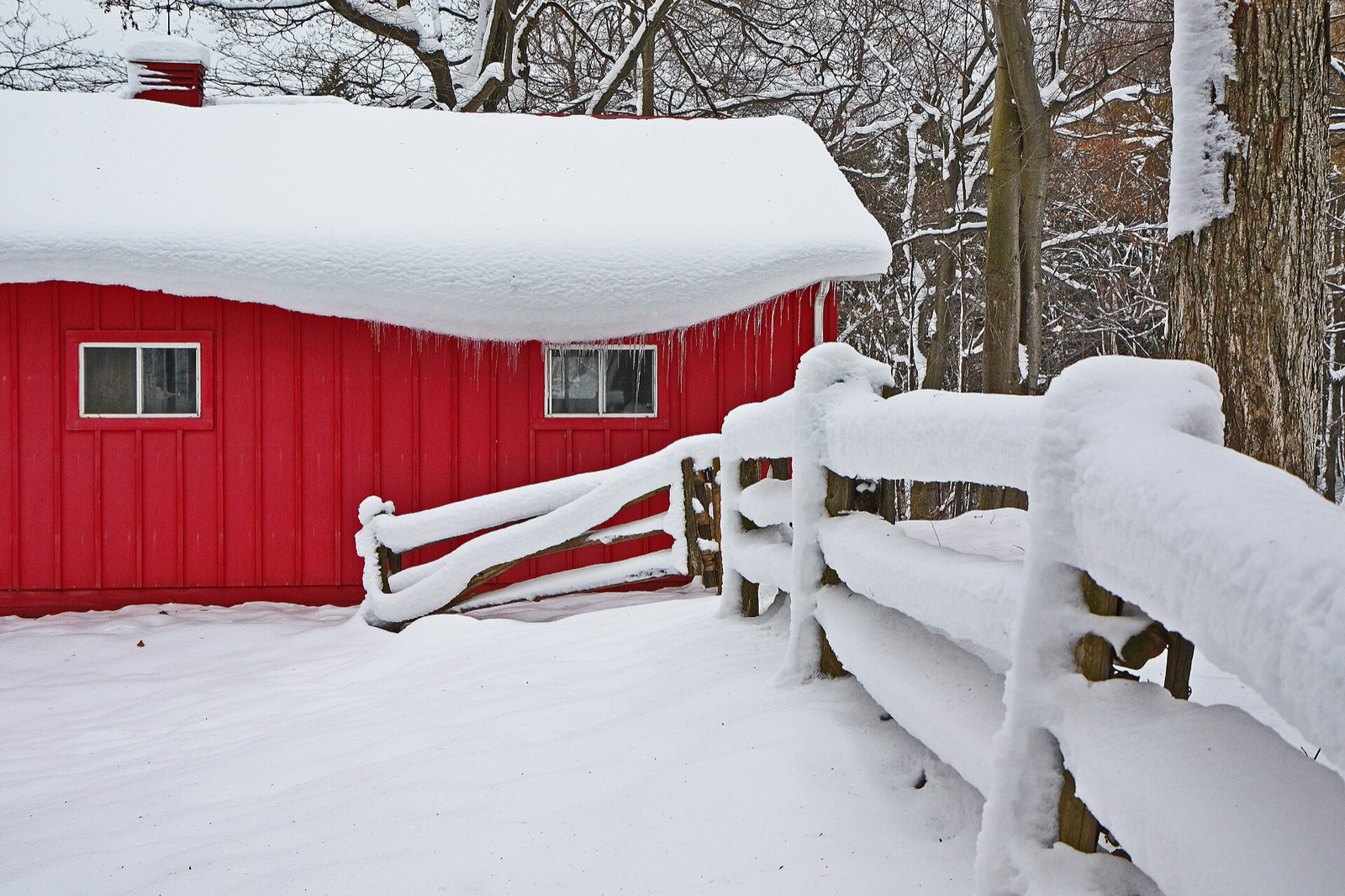
NDSU Extension publishes the simplest diagnostic in this whole subject, and it needs no equipment and no ladder. Look at the snow, from the ground:
NDSU Extension, Check Your Roof for Ice Dams“The snow on your house should look like it does on an unheated, detached garage -with only a little melt around the edges. You do not want bare spots. That means there is warm air leaking from the living area that warms the roof, triggering an ice-dam.”
“They indicate that your house is leaking heat and does not have adequate attic ventilation.”
University of Alaska Fairbanks Cooperative Extension Service, Insulating an Existing House“Ice dams at the eaves are another sign that warm air is leaking into the roof cavity or that it is inadequately insulated.”
A roof that keeps its snow is a roof that is not paying to heat the sky. Bare patches, or a melted stripe over a bathroom fan or a recessed light, are the map of where the heat is getting out. In a state where the setup turns up 47.3 days a winter and virtually every winter carry a multi-day spell, that map is worth having before the next one.
Getting ice off a roof
Occupational Safety and Health Administration, Winter Weather: Hazards and Precautions“Employers can protect workers from these hazardous work conditions, for example, by using snow removal methods that do not involve workers going on roofs, when and where possible.”
“Snow covered rooftops can hide hazards such as skylights that workers can fall through.”
“Electrical hazards may also exist from overhead power lines or snow removal equipment.”
“A surface that is weighed down by snow must be inspected by a competent person to determine if it is structurally safe for workers to access it, because it may be at risk of collapsing.”
Those are written for employers with trained crews, fall arrest systems and aerial lifts. Read them as a description of what the job actually involves. Two further consequences catch people out, and both are set out on the University of Minnesota Extension page linked below: the tools have a cost of their own, and a roof that stops melting its snow ends up carrying more weight, not less.
On clearing snow from the ground, its caution is about the roof rather than about the ice: a roof rake or push broom will take snow off, and can take shingles and roofing with it.
And it flags a consequence people do not expect. Fixing the heat loss means the snow stops melting, so the roof ends up carrying more weight through the winter, not less. Its own note is that a house built to current code should be designed for the snow load it will see, and that an engineer is the right person to answer the question for an older one.
Our summary, not a quotation. Source: University of Minnesota Extension, Dealing with and preventing ice dams
The damage is a moisture problem
An ice dam is not really an ice story. It is a water story with a refrigerated beginning. The water that gets behind one runs into the deck, the attic, the insulation, the wall cavity and the ceiling, and it does not dry on its own in January.
NDSU Extension, Check Your Roof for Ice Dams“It's important to look for these spots because water behind the ice may enter the house causing insulation to be ineffective, leading to the rotting of structural wood, staining wall coverings and creating conditions conducive for mold growth.”
It also links the water directly to indoor air quality, noting that moisture arriving this way can lead to mold and mildew growth, that those can bring on respiratory problems, and that the response is to dry the wet parts of the house immediately rather than waiting for spring.
Our summary, not a quotation. Source: University of Minnesota Extension, Dealing with and preventing ice dams
We are not a health authority and we give no health verdict. EPA is the federal authority on indoor mold, and its guidance on the point that matters is short enough to quote in full:
US Environmental Protection Agency, A Brief Guide to Mold, Moisture and Your Home“The key to mold control is moisture control.”
“It is important to dry water-damaged areas and items within 24-48 hours to prevent mold growth.”
If it has already got in, the clock in that second sentence is the one to watch. Our Idaho mold season page covers the indoor moisture side of the year in more depth.
How the Idaho figures are calculated
Everything counted on this page comes from NOAA NCEI GHCN-Daily station observations: daily snow depth, daily maximum temperature and daily minimum temperature, for the 30 winters from 1991-92 through 2020-21, the same period as NOAA's official climate normals. NOAA publishes normals for snowfall totals and for temperature threshold days, but nothing that combines the two, so the setup counts here are this site's derivation, labelled as such.
A winter only counts for a station if at least 90 percent of its November through March days reported both snow depth and maximum temperature, and a station is only quotable at all with 20 or more such winters. That gate matters more than it sounds: snow depth reporting is much patchier than snowfall reporting, and it is the reason some snow states have no page. The hub page names each of them with its number.
The limits. This is a count of weather, not of ice dams: no national register of ice dams exists, so a season with 40 setup days is not a season with 40 dams. Airport and co-op gauges sit where they sit, so a station 15 miles and 500 feet away from you can be describing a different winter. And the decisive variable is not in this dataset at all, because it is inside your ceiling.
Idaho ice dam FAQ
The rest of Idaho's winter
Ice dams in nearby states
Setup days, spells and melt-refreeze days are our derivation from NOAA NCEI GHCN-Daily station observations over 1991-2020; no agency publishes an ice dam climatology. Forecast readings are our arithmetic on published National Weather Service gridpoint values, and the NWS issues no ice dam product. All guidance on this page is quoted from the named agency and linked to its source. Every state we rate: the ice dam hub