
Rodent Season in Delaware: 2026 Timing
Nights at Wilmington reach 50F around October 5, which is when house mice living outdoors start moving toward buildings. The sealing has to be finished before that, not after.
Inside the Delaware cool down now, nights reached 50F around October 5The Delaware cool down at a glance
Derived from NOAA normalsNOAA 1991 to 2020 normal daily minimum temperature, read day by day. The overnight low, rather than the frost date, is the quantity the published guidance names.
Wilmington Oct 5, Dover Oct 12. One state date is a convenience. The spread inside a state is often three weeks or more.
Research-grade iNaturalist observations of the five rodents in Delaware, all years, snapshot 2026-08-28. Aggregate counts only, no photographs used.
Delaware sits just north of the published roof rat belt and has no roof rat records. Wilmington nights reach 50F in the first week of October and freezing in the first week of December, one of the longer cool-down windows in the country.
One sentence of published guidance, and three limits on it
Almost everything written about mice in autumn treats the timing as settled. One agency statement puts rodent entry on a calendar, and it is narrower than the internet version in three specific ways.
What it says. Where there is a house mouse population living outdoors nearby, the mice frequently move into buildings in autumn as the overnight temperature falls. Nighttime temperature is the cue the fact sheet names, and it names no other. UC Statewide IPM Program, Pest Notes: House Mouse, UC ANR Publication 7483, revised July 2025. Read it there.
Limit one, the conditional. The same fact sheet attaches a condition that matters: this is about mice that are living outdoors and come in. It also lists a route into buildings that has nothing to do with weather at all, namely arriving inside packaged goods and delivery vehicles. UC Statewide IPM Program, Pest Notes: House Mouse, UC ANR Publication 7483, revised July 2025. Read it there.
Limit two, this is about mice. The companion fact sheet on rats says nothing at all about rats moving indoors in autumn, or about cold driving them in. Rat guidance is written around harborage, food and structural access instead. UC Statewide IPM Program, Pest Notes: Rats, UC ANR Publication 74106, revised June 2025. Read it there.
Limit three, cold is not the only seasonal driver. Arizona extension reports that roof rats are more commonly reported in the cooler months, and attributes it to backyard citrus rather than to the cold: tangerines can be heavy on the tree as early as September and oranges run on into spring. University of Arizona Cooperative Extension, Roof Rats: Identification, Ecology, and Signs, az1775, July 2018. Read it there.
What the September 14 date on this page is
Two thirds measurement, one third planning margin. The 50F crossing at Wilmington on October 5 is a number from the NOAA 1991 to 2020 normals, and it is the quantity the guidance names. The three weeks in front of it is this site’s margin: no agency publishes a sealing deadline, and exclusion work only counts if it is finished before the animals are looking.
The measurements alone: nights at Wilmington reach 50F around October 5 and freezing around December 4.
Does the house mouse record actually move in autumn?
The timing claim can be checked against an independent record: research-grade iNaturalist observations, which are photographs of a real animal in a real place, verified by other people. Delaware has too few for a monthly shape to mean anything, so the chart below is the national one and the state's own counts are in the species section instead.
Two series, because they do not always agree. The grey bars are the raw count of house mouse records by month. The dark bars are the same counts divided by all research-grade observations in the same place and month, which corrects for the fact that far more people are outdoors with a camera in June than in November.
Nationally the raw count peaks in Oct and the effort adjusted index peaks in Nov, bottoming out in Jun at about a fifth of the November level. Both series point the same way, which is what makes this worth showing: the house mouse record genuinely concentrates in late autumn.
The Norway rat record shows no autumn rise. Its raw record peaks in May, in spring, and only the effort adjusted version moves it to Dec. When two views of the same data disagree that hard, the rat signal is not there, which is the second independent reason the autumn story on this page is about mice and not rats.
One confound. The effort denominator is dominated by plants and insects, which only exist in summer. So any winter active animal’s share of what gets recorded rises in winter partly for that reason alone. The adjusted curve on its own is weak evidence; the adjusted curve plus a raw curve that also rises in October and November is the result.
Counts are research-grade iNaturalist observations of Mus musculus, all years, snapshot taken 2026-08-28. Aggregate counts only; no observation photographs are used anywhere on this site, because most of them carry noncommercial licences. Each series is scaled to its own maximum, because the two are in different units and the comparison is between their shapes. This is an observation record, not a population estimate.
The Delaware roster
Most pages on this subject list the same rodents for every state. They are not the same everywhere, and the differences are large enough to change what you should be looking at: a roof rat problem is a roofline problem, a Norway rat problem is a ground level problem, and a woodrat is not a pest control problem at all in the same sense.
Below, the published range is the frame and the observation record is the check. Read the two carefully, because they are not equally informative:
- For the roof rat, an absence of records means something. It is a rat, it lives in attics and fruit trees, people photograph it. The interior and northern states with zero research-grade records are the same states the published range describes as free of it. Two independent lines of evidence agreeing is worth something. Delaware has 0.
- For the house mouse, an absence of records means nothing. Maine has one research-grade record in the whole state and North Dakota has one. Neither state is free of house mice. Nobody photographs the mouse inside their wall and uploads it for strangers to identify. Delaware has 20, and that number tells you about photography, not about mice.
House mouse
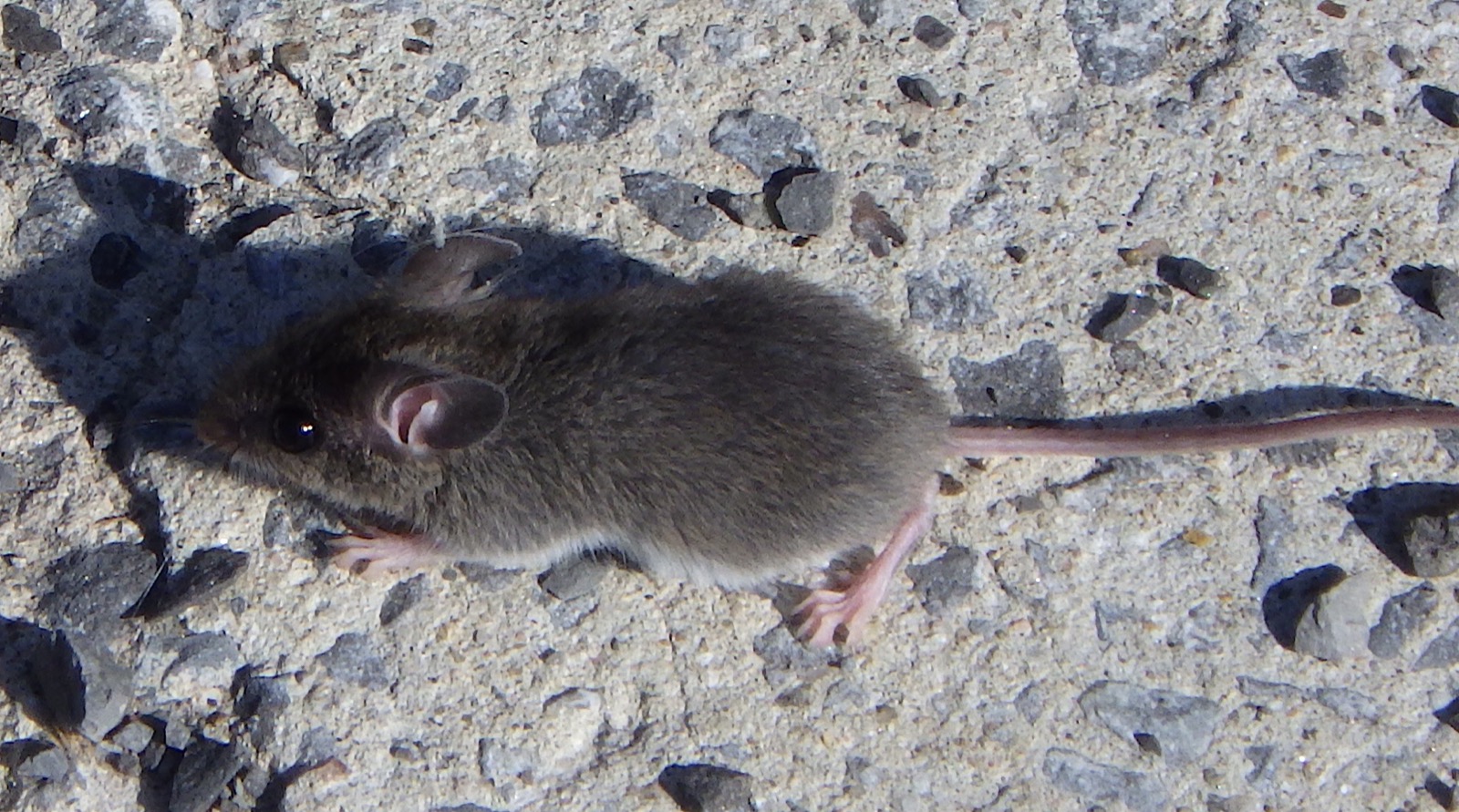
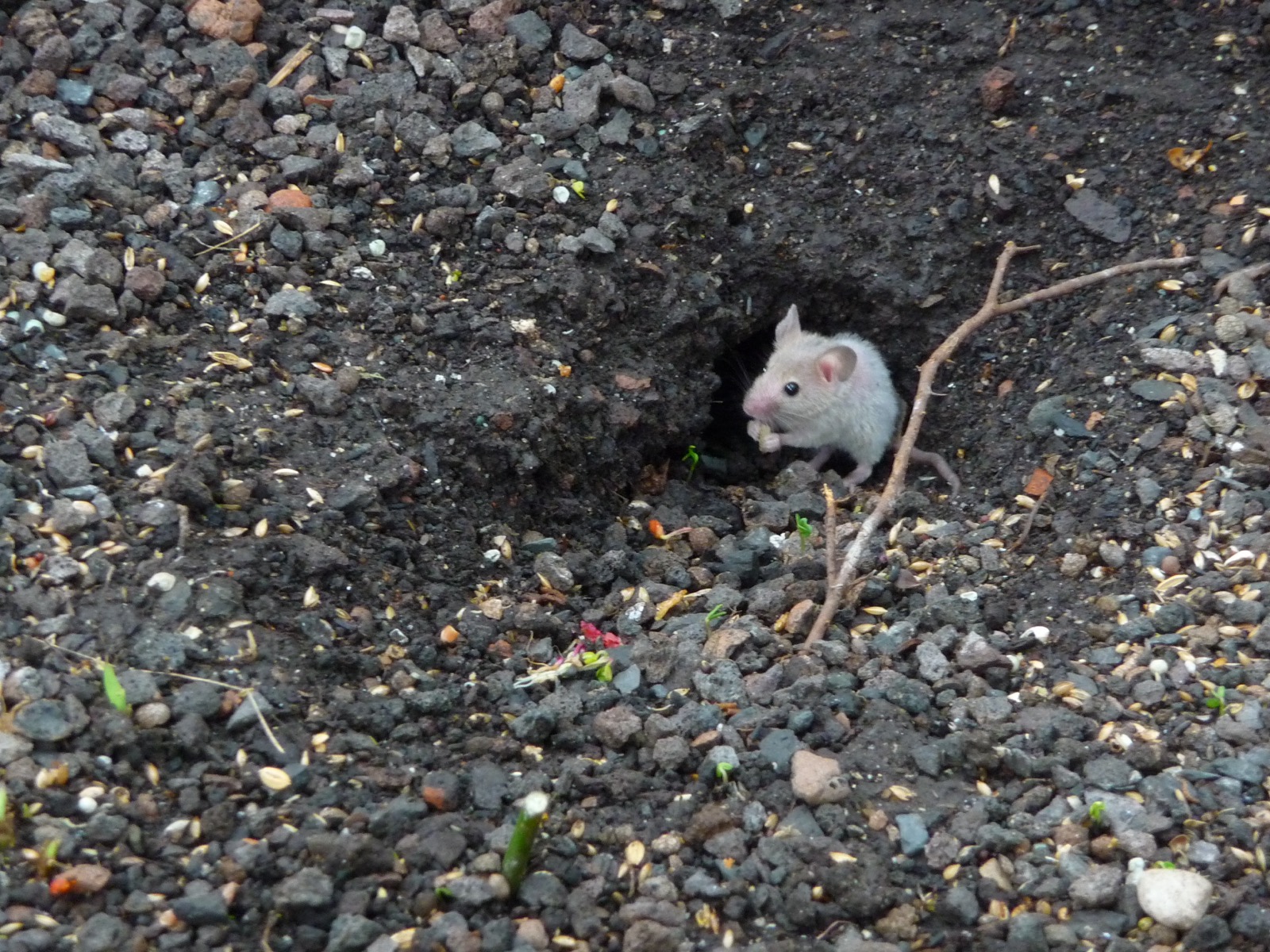
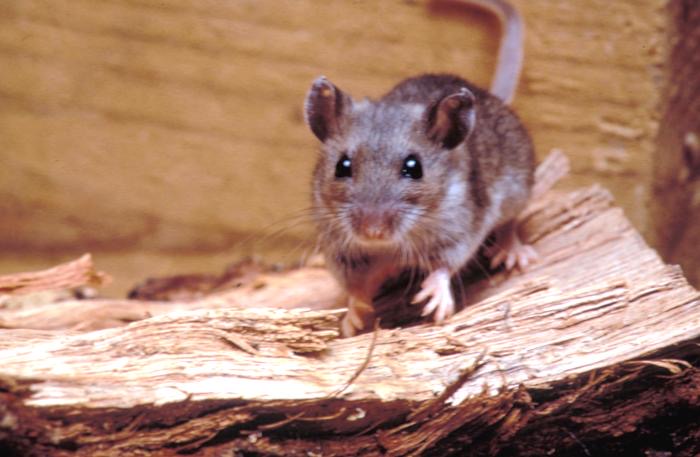
Mus musculusThe animal this page is mostly about. Small, grey brown, with a tail about as long as its body and a pointed nose. It is the only rodent for which an agency puts autumn entry in writing, and it is the one that fits through the smallest gap.
Published range: nationwide · 20 verified recordsNorway rat
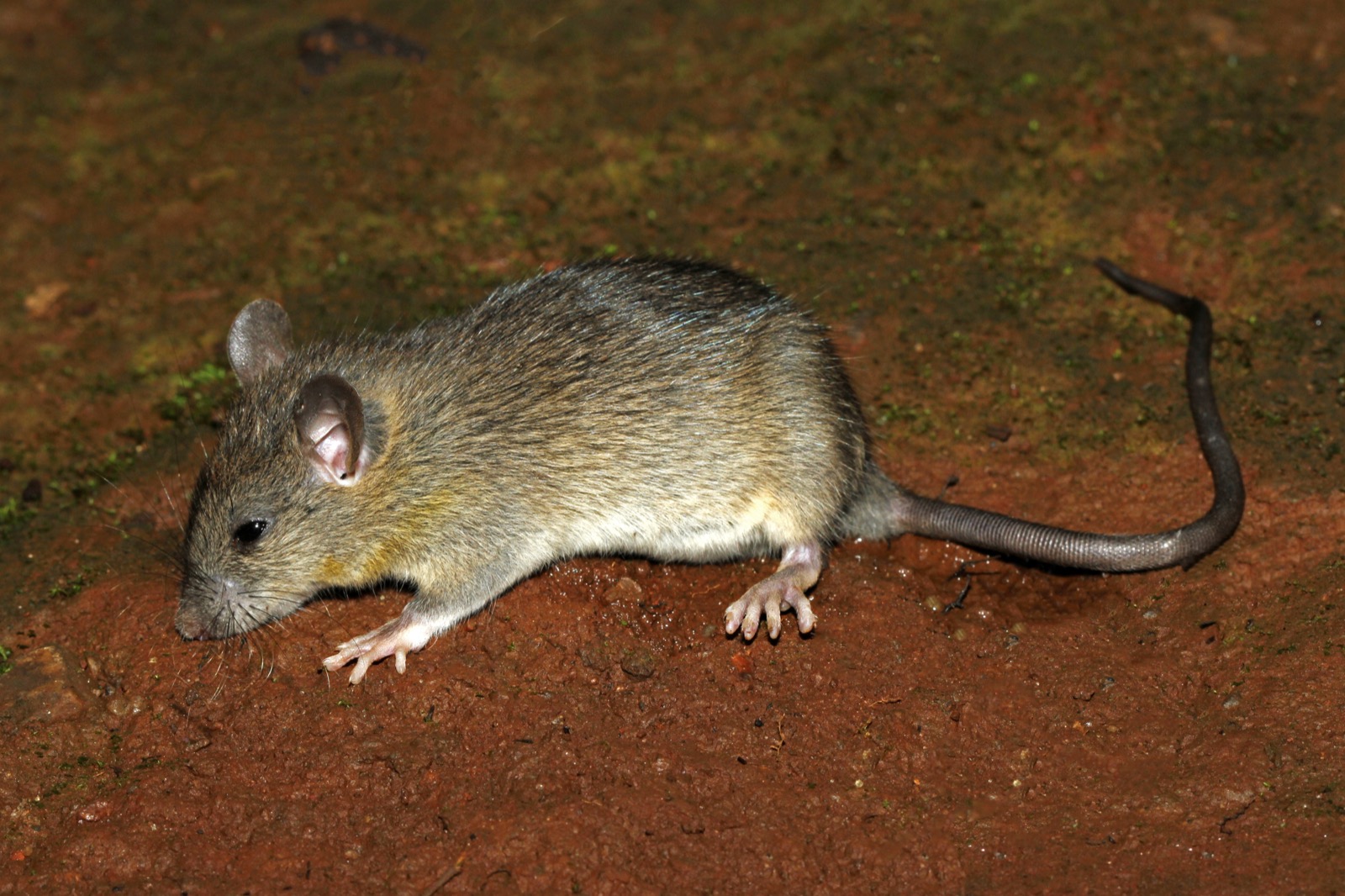
Rattus norvegicusHeavy bodied, blunt nosed, with small ears and a tail shorter than its head and body. It burrows: under slabs, foundations, decking and woodpiles. Extension guidance for rats is about harborage, food and structural access, not about the calendar.
Published range: nationwide · 25 verified recordsRoof rat
Rattus rattusSlimmer than the Norway rat, with large ears, a pointed nose and a tail longer than its head and body. It climbs, and it nests high: attics, roof spaces, palms and dense ornamental shrubs. Its range is genuinely restricted, which is why this page checks it state by state.
No verified records in this stateWoodrat or packrat
Neotoma spp.A native animal, not an introduced one, and a different problem with different rules. Woodrats build large stick middens, collect objects, and sometimes nest in parked vehicles. Several species are protected and one is federally endangered, so the published guidance leads with sealing rather than with control.
No verified records in this stateDeer mouse and white footed mouse
Peromyscus spp.Native mice with white feet, a white belly and a sharply two-toned tail. They come into outbuildings, cabins and garages rather than into busy houses. They matter here for one reason: this is the group CDC names in connection with hantavirus, which is why the cleanup section on this page routes to CDC rather than to us.
58 verified recordsTelling the two rats apart
The most useful published rule is about where the nest is rather than what the animal looks like, which is handy because you will usually find the nest first.
“If the nest is high, it is usually that of a roof rat. If it is underground, it is almost always a Norway rat.”Texas A&M AgriLife Extension, Rats and Mice, L-1916, June 2013 source
| Norway rat | Roof rat | |
|---|---|---|
| Build | Heavy, thick bodied | Slim, lighter |
| Ears | Small, close to the head | Large and prominent |
| Nose | Blunt | Pointed |
| Tail | Shorter than head and body | Longer than head and body |
| Where the nest is | Burrows, under slabs, foundations and decking | Attics, roof spaces, palms, dense shrubs |
| Recorded in Delaware | 25 records | 0 records |
It is not a dime
“A mouse can fit through a hole the size of a dime” is one of the most repeated facts on the American internet, and it is usually credited to CDC. CDC’s seal up page and its 2025 rodent brochure mention no dime, nickel, quarter or any other coin. Here is what CDC publishes, verbatim, and it is more useful than the coin because you probably have one in a drawer.
“Check inside and outside for large and small gaps or holes. Mice can fit through a hole the width of a pencil (1/4 inch or 6 millimeters in diameter).”CDC, How to Seal Up to Prevent Rodents, page dated April 8, 2024 source
A quarter of an inch, six millimetres, the width of a pencil. CDC gives no rat figure at all, on that page or in the brochure, so anyone attributing a rat coin size to CDC has made it up. The other published dimensions come from California IPM and from the federal wildlife damage handbook, and they are below.
In CDC’s own words: a mouse fits through a hole the width of a pencil, a quarter of an inch or six millimetres across. California IPM gives the same quarter inch for the height of gap a house mouse squeezes under.
A second and larger figure, for width rather than height, from California IPM. Almost everything written about mice collapses the two into one number. They are not the same measurement and the difference decides whether a repair works.
California IPM names young rats of either species. CDC publishes no rat figure at all, on the seal up page or in its brochure, so nobody should be attributing one to CDC.
The tightest number of the set, from the federal wildlife damage handbook, and it is about how the building was put together rather than about the animal.
How to measure a gap without a gauge. The handbook suggests measuring suspect gaps with an ordinary wooden pencil or ballpoint pen, which runs about three sixteenths to three eighths of an inch across and is therefore already wide enough for a mouse. Baker, Bodman and Timm, Rodent-Proof Construction and Exclusion Methods, in Prevention and Control of Wildlife Damage (USDA APHIS Animal Damage Control, Great Plains Agricultural Council and University of Nebraska), 1994. Read it there.
The single most productive gap in most houses. The gap between the bottom of an exterior door and its threshold is given a maximum of a quarter of an inch, with the note that building the threshold up is sometimes easier than modifying the door. Baker, Bodman and Timm, Rodent-Proof Construction and Exclusion Methods, in Prevention and Control of Wildlife Damage (USDA APHIS Animal Damage Control, Great Plains Agricultural Council and University of Nebraska), 1994. Read it there.
Mesh, and why one size does not do both. The federal wildlife damage handbook gives two mesh specifications rather than one: half inch by half inch woven hardware cloth in 19 gauge to exclude rats, and quarter inch by quarter inch in 24 gauge to exclude mice. A mesh sized for rats does not stop mice. Baker, Bodman and Timm, Rodent-Proof Construction and Exclusion Methods, in Prevention and Control of Wildlife Damage (USDA APHIS Animal Damage Control, Great Plains Agricultural Council and University of Nebraska), 1994. Read it there.
Before you staple mesh over a vent. The same handbook flags a tradeoff worth knowing before you staple anything over a vent: mesh finer than half an inch cuts air flow noticeably, and where ventilation is already marginal that can be unacceptable. In cold or dusty places fine mesh also clogs and freezes over. Baker, Bodman and Timm, Rodent-Proof Construction and Exclusion Methods, in Prevention and Control of Wildlife Damage (USDA APHIS Animal Damage Control, Great Plains Agricultural Council and University of Nebraska), 1994. Read it there.
Sealing a Delaware house, by September 14
This is the job the rest of the page is context for: an afternoon, a caulk gun and a torch, and it has to happen before October 5 rather than after.
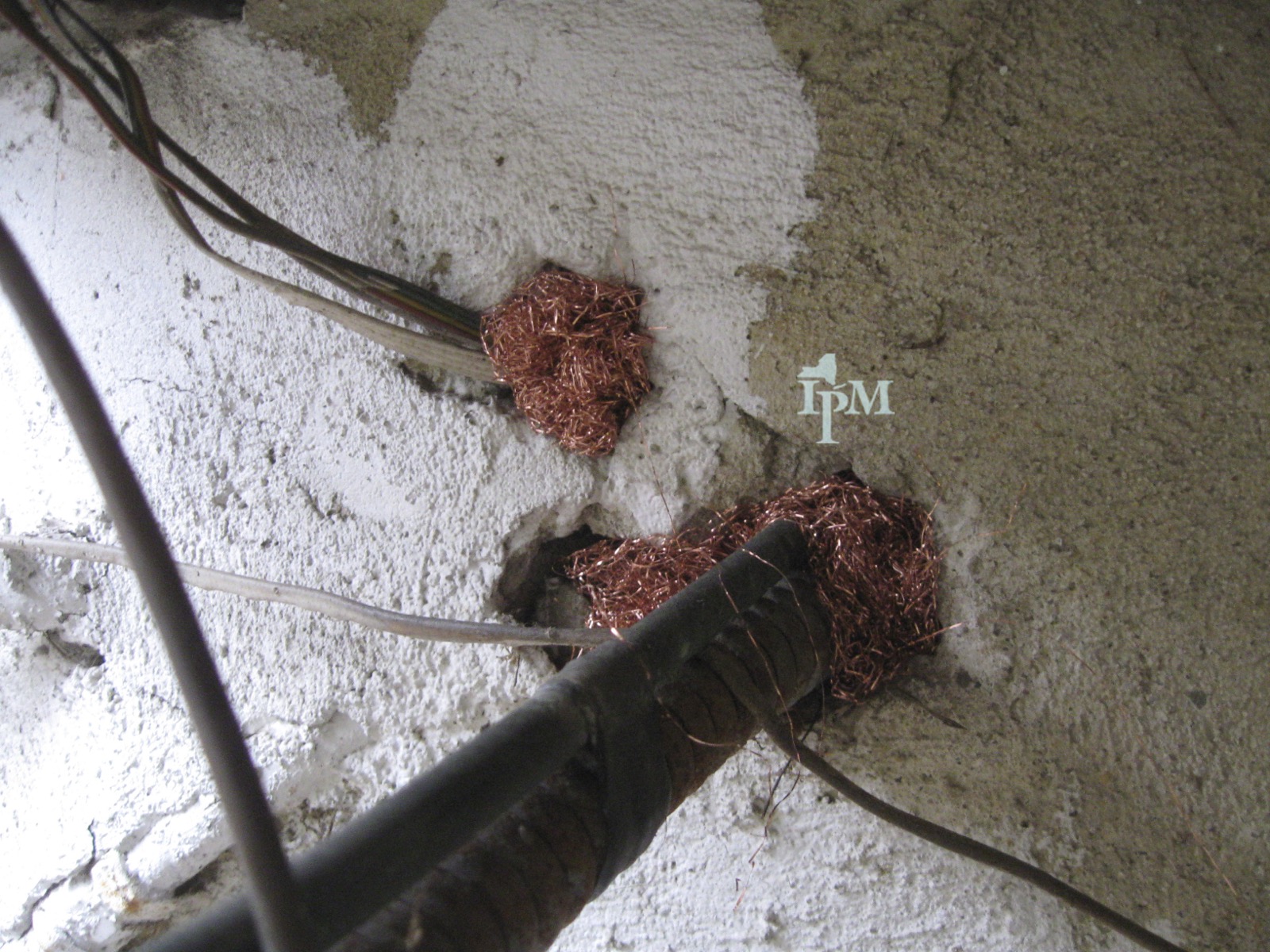
Why this and not something else. Exclusion is described as the most successful and permanent approach to house mice, and the working rule given is to close every gap and opening wider than a quarter of an inch. UC Statewide IPM Program, Pest Notes: House Mouse, UC ANR Publication 7483, revised July 2025. Read it there.
What CDC says to seal with
“Fill small holes with steel wool. Put caulk around the steel wool to keep it in place or use spray foam. Use lath screen or metal, cement, hardware cloth, or metal sheeting to fix larger holes. Cut material to fit around pipes.”CDC, How to Seal Up to Prevent Rodents, page dated April 8, 2024 source
“Fix gaps in trailer skirting and use flashing around the base of the house. Seal outbuildings and garages as well.”CDC, How to Seal Up to Prevent Rodents, page dated April 8, 2024 source
What does not work
Plastic screening, rubber, vinyl, expanding foam, wood and anything else a mouse can gnaw are listed as ineffective for plugging holes, because the mouse simply chews back through. UC Statewide IPM Program, Pest Notes: House Mouse, UC ANR Publication 7483, revised July 2025. Read it there.
Steel wool pads are described as a good temporary plug that may rust over time, with metal or concrete named for the permanent repair around pipes, vents and cable entries. UC Statewide IPM Program, Pest Notes: House Mouse, UC ANR Publication 7483, revised July 2025. Read it there.
Lightweight chicken wire is ruled out for rat exclusion, because rats pass straight through openings that size. UC Statewide IPM Program, Pest Notes: Rats, UC ANR Publication 74106, revised June 2025. Read it there.
Two agencies disagree about foam
CDC names spray foam as an option for holding steel wool in place. California IPM lists expanding foam among the materials that do not work, because a mouse gnaws through it. Both are published positions and they are incompatible. What both agree on is the permanent repair: metal, cement or concrete behind whatever you pack the hole with.
Outside the wall, in CDC’s words
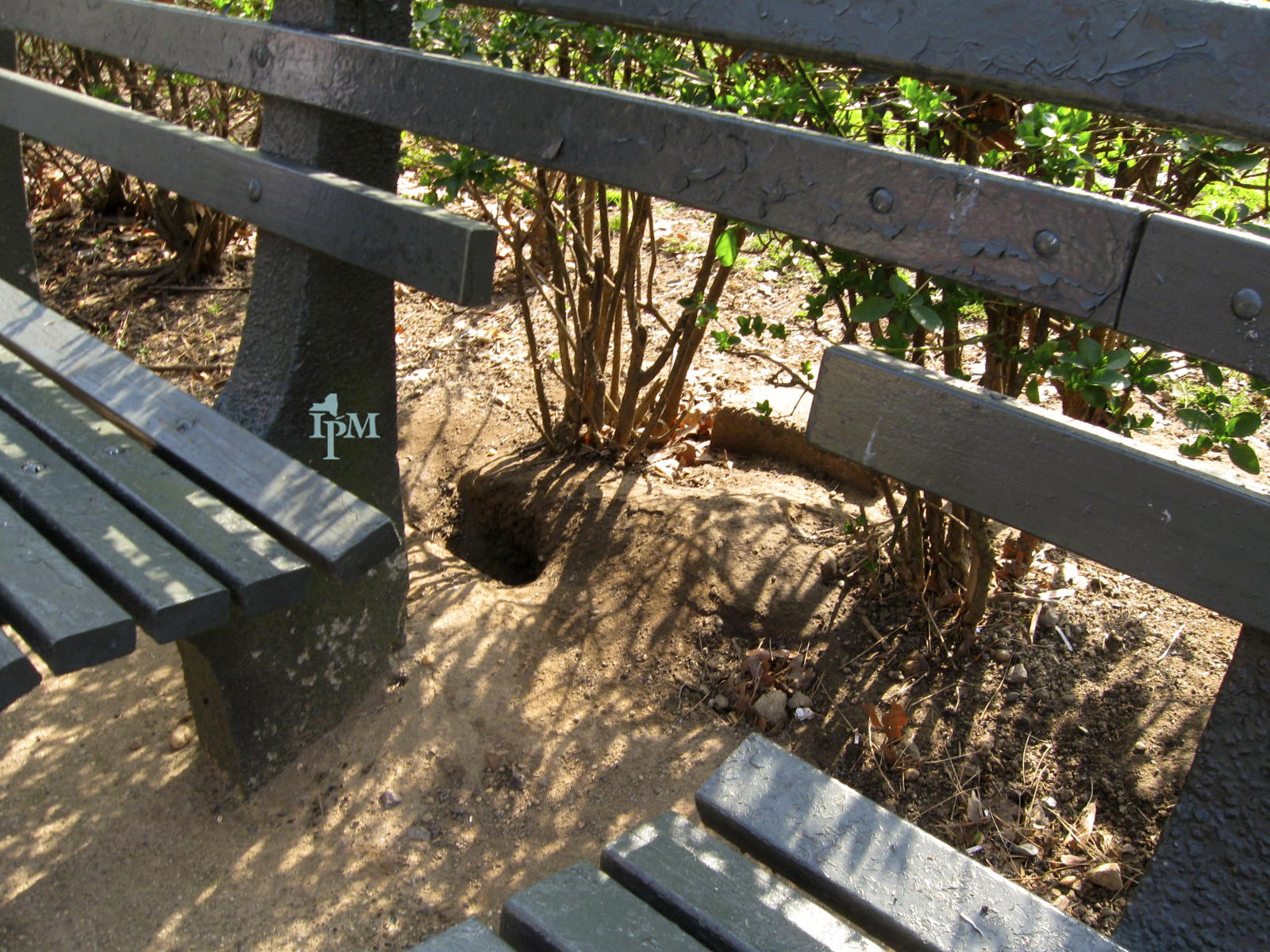
“Move woodpiles 100 feet or more from your home and raise the wood at least one foot off the ground. Clean up brush and weeds around your home. Keep grass and shrubbery within 100 feet of your home well-trimmed.”CDC, How to Seal Up to Prevent Rodents, page dated April 8, 2024 source
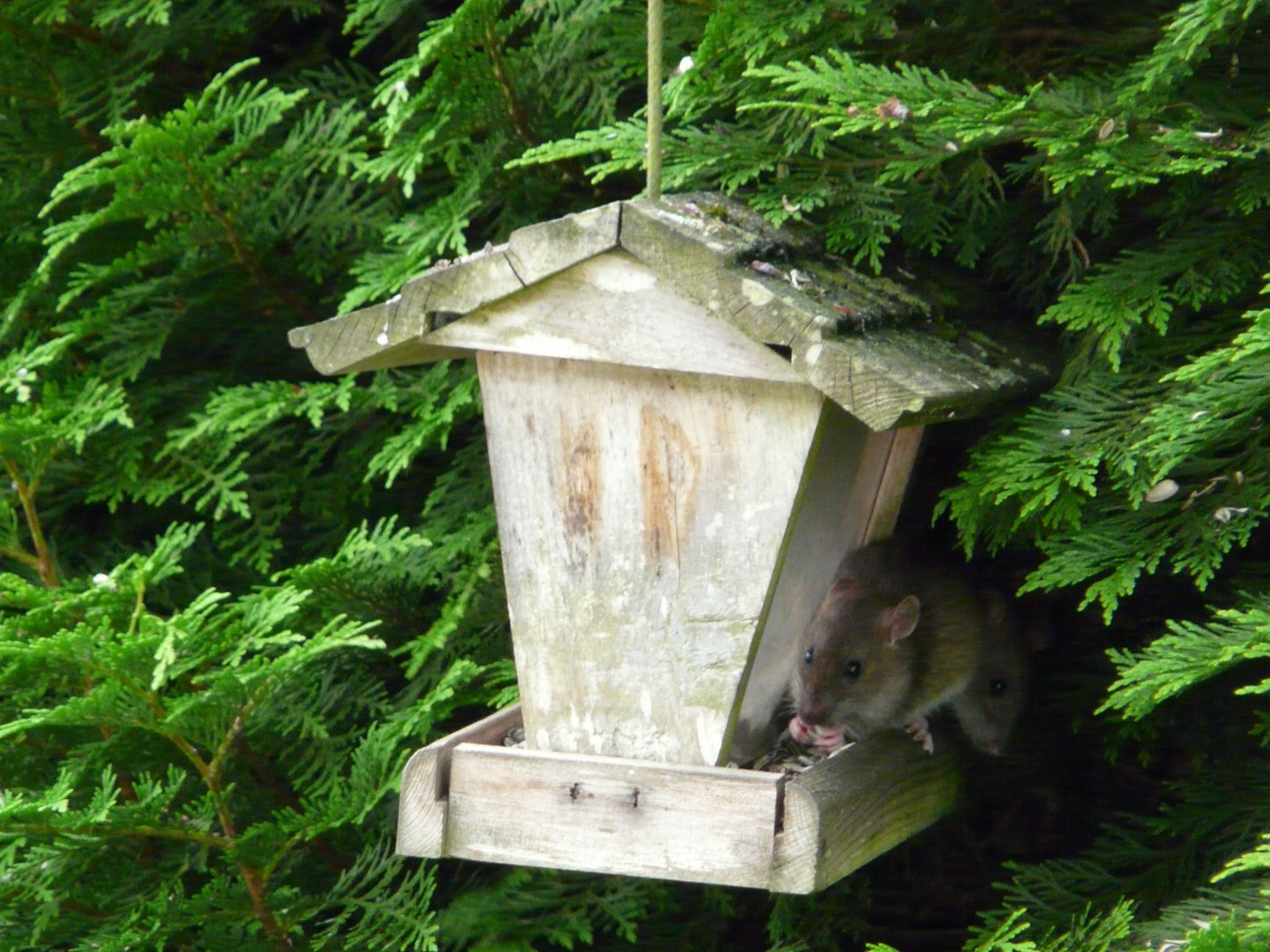
“Keep bird feeders away from the house and use squirrel guards to limit access to the feeder by squirrels and other rodents.”CDC, How to Seal Up to Prevent Rodents, page dated April 8, 2024 source
In Delaware the buildings that fill up are newer subdivisions on former farmland, older town houses with brick foundations, and outbuildings on flat open ground. That is this site’s observation rather than an agency finding, and it tells you which wall to start on.
If you find droppings, read CDC before you clean
Everything in this section is CDC, verbatim, with links
CDC is a federal agency, so its material is in the public domain and is reproduced here exactly rather than paraphrased. The full procedure is at the link after each quote. For a question about your own health, ask a doctor; for a question about your own house, CDC says to contact your local or state health department.
The instruction most people get wrong
“Diseases are mainly spread to people from rodents when they breathe in contaminated air. Don’t vacuum or sweep rodent urine, droppings, or nesting materials. This can cause tiny droplets containing viruses to get into the air. If you already vacuumed, follow the cleanup guidance on this page.”CDC, How to Clean Up After Rodents, page dated April 8, 2024 source
Before you start
“Open all doors and windows for 30 minutes before cleaning to ventilate the space. Leave the area during this time.”CDC, How to Clean Up After Rodents, page dated April 8, 2024 source
“Wear rubber or plastic gloves. Additional precautions should be used for cleaning homes or buildings with heavy rodent infestation.”CDC, How to Clean Up After Rodents, page dated April 8, 2024 source
What to use
“Combine 1.5 cups of household bleach in 1 gallon of water (or 1 part bleach to 9 parts water). Make bleach solution fresh before use.”CDC, How to Clean Up After Rodents, page dated April 8, 2024 source
“Spray urine and droppings with bleach solution or an EPA-registered disinfectant until very wet. Let it soak for 5 minutes or according to instructions on the disinfectant label.”CDC, How to Clean Up After Rodents, page dated April 8, 2024 source
Which mouse, and which disease
This is the distinction the subject most often blurs, and it is worth getting right because the two animals live in different parts of your property. CDC on hantavirus:
“The most common hantavirus that causes HPS in the United States is spread by the deer mouse.”CDC, About Hantavirus, page dated May 13, 2024 source
The deer mouse is a native animal of sheds, cabins, garages and outbuildings rather than of a busy kitchen. Delaware has 58 research-grade records of the genus Peromyscus. CDC separately names the house mouse, the animal this page is mostly about, in connection with a different virus:
“Lymphocytic choriomeningitis, or LCM, is a disease caused by a virus and spread by the common house mouse, Mus musculus.”CDC, About Lymphocytic Choriomeningitis, page dated January 30, 2025 source
“Healthy people with LCM usually recover. LCM can result in serious illness for people who have a weakened immune system and pregnant women.”CDC, About Lymphocytic Choriomeningitis, page dated January 30, 2025 source
CDC’s clinical material, including its case fatality figures, is at the links rather than on this page: it is accurate, and it is not something a homeowner can act on. Here is CDC’s own reason for the sealing job this page is about:
“Rodent control is the primary strategy for preventing hantavirus pulmonary syndrome (HPS), a disease caused by infection with certain hantaviruses. Wild rodents near human populations should be controlled and excluded from homes.”CDC, Hantavirus Prevention, page dated May 13, 2024 source
Where the other questions go
Control, health and legal questions
This page covers the timing and the exclusion work. Traps, bait and rodenticide are a licensed pest control trade in most states, and a licensed operator is the source for product decisions. Health questions go to CDC, quoted above, and to a clinician. What you may lawfully do about a woodrat, which is native wildlife and in several species protected, is a question for the Delaware wildlife agency, and the agency guidance quoted above says the same. The dime, the roof rat marching north and the dollar figures for chewed wiring are repeated everywhere and traceable to no agency, which is why none of them appears here.
Rodenticide, in a wildlife agency’s words
A state wildlife agency writing about what it finds in its own dead animals is a fact rather than a recommendation, and it belongs on any page about rodents in a building. The Oregon Department of Fish and Wildlife, in its own words:
“Another very common way that wildlife is poisoned is by eating a rodent that ingested rodenticide (secondary poisoning). This occurs in species such as raptors, bobcats, and fox because rodents are a natural part of their daily diet. Poisoned rodents also become more lethargic and exhibit abnormal behavior such as sitting out in the open and making little to no attempts to escape from predators, and this increases the chance that they will be caught and eaten by a predator.”Oregon Department of Fish and Wildlife, Anticoagulant Rodenticide Fact Sheet, undated source
“In Oregon we have documented cases in multiple raptors and bobcats around the state, and studies in California show that in some fisher populations, most of the animals have ingested anticoagulant rodenticides.”Oregon Department of Fish and Wildlife, Anticoagulant Rodenticide Fact Sheet, undated source
Note where that agency’s own advice starts:
“One of the best things you can do is to prevent potential rodent problems. This includes plugging any holes that may provide entrance points in and out of buildings and reducing potential food sources or nesting areas.”Oregon Department of Fish and Wildlife, Anticoagulant Rodenticide Fact Sheet, undated source
California IPM notes that because anticoagulants accumulate, a dead rat can carry several lethal doses, so an animal that eats the carcass can be poisoned in turn. UC Statewide IPM Program, Pest Notes: Rats, UC ANR Publication 74106, revised June 2025. Read it there.
The same source records that bromethalin, often presented as the safer substitute, has been shown to pass up the food chain to predators that eat mice which ate it. UC Statewide IPM Program, Pest Notes: House Mouse, UC ANR Publication 7483, revised July 2025. Read it there.

How the Delaware season runs
Finish sealing · by September 14 ours, not anybody’s published deadline
Three weeks before the nights here start reaching 50F. No agency publishes a sealing deadline, so this one is ours: the work has to be done before the animals are looking, and at Wilmington they start looking around October 5. Treat it as a planning date.
Nights reach 50F · October 5 the cue that is actually documented
The normal overnight low at Wilmington falls to 50F on this date in the 1991 to 2020 NOAA normals. This is the point the one piece of published timing guidance describes: house mice living outdoors start moving toward buildings as nighttime temperatures get colder.
Nights reach 40F · November 6 pressure building
Outdoor cover is thinning, seed and fruit are going, and the temperature gradient between a wall cavity and the outside is now large enough to be worth crossing. No published guidance attaches a number to this point; it is the measured middle of the window.
Nights reach freezing · December 4 the influx tails off
The normal overnight low reaches 32F. Whatever was going to get in has largely got in. Note the word normal: this is a thirty year average, and any individual year freezes earlier and later than this.
Winter · indoors not seasonal any more
A mouse population already inside a building is not on a calendar at all. It has heat, it has water, and if there is food it breeds through the winter. That is why the seasonal framing on this page is about ENTRY and not about presence, and why sealing in October does not solve what came in during September.
Nights back above 50F · May 9 outdoor year restarts
Nights at Wilmington climb back through 50F around now, outdoor food and cover return, and the pressure toward buildings from outside eases off. This is the point to do the exclusion work you did not get to, with the whole summer ahead of you.
Delaware rodent season FAQ
The rest of the Delaware calendar
More Southeast rodent season timing
Health information on this page is quoted verbatim from CDC, a federal agency whose work is in the public domain, and linked. Secondary poisoning material is quoted from the Oregon Department of Fish and Wildlife. Findings from the cooperative extension services appear in our own sentences with their names and links attached, because several of them publish under licences that do not permit verbatim reuse on an advertising supported site; a fact is not copyrightable but the sentence expressing it is. The dates are ours: derived from NOAA NCEI 1991 to 2020 normal daily minimum temperatures at Wilmington, and they are climatological typicals rather than a forecast. No agency publishes a sealing deadline; the one on this page is our synthesis and is labelled as such throughout. Observation counts are research-grade records from iNaturalist, aggregate counts only, snapshot 2026-08-28. National picture: when rodents move indoors across the US
Hero image: “House mouse (Mus musculus) 2732” — Ahunt — CC0