
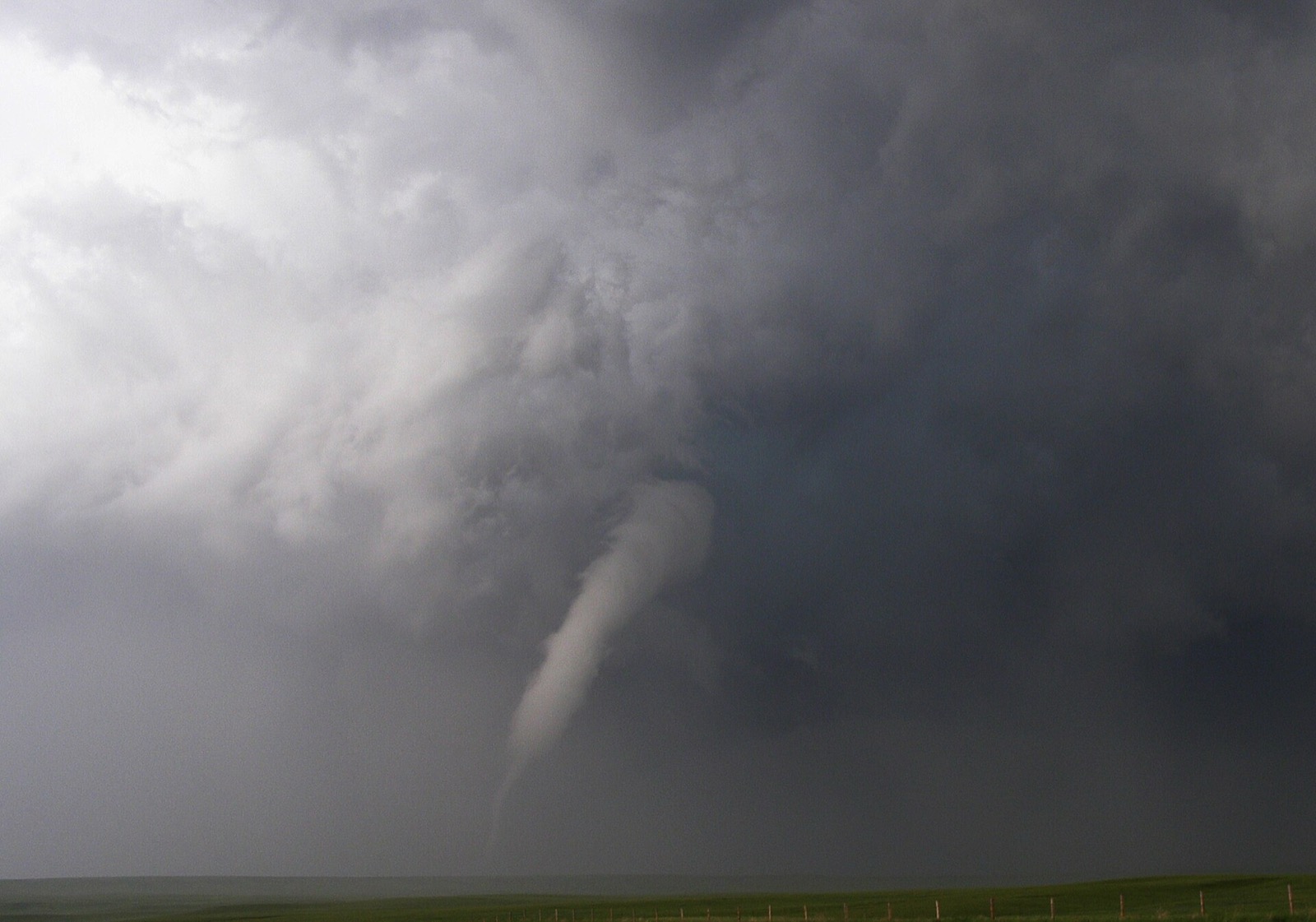
Tornado Season in Alaska
Alaska has too few tornadoes for a season to have a shape, so this page shows the whole 30 year record, every year that had one, and the live National Weather Service feed for the rare day that matters.
Alaska recorded 4 tornadoes in 30 years, in 3 of themThe whole Alaska tornado record
1996-2025, tornadoes counted once per state they touched| Year | Tornadoes |
|---|---|
| 2004 | 2 |
| 2005 | 1 |
| 2024 | 1 |
Alaska has recorded exactly four tornadoes in these 30 years, in 2004, 2005 and 2024, every one rated EF0 and every one in summer daylight. That is the smallest tornado record of any state, and this page shows the whole of it rather than pretending a season exists.
Alaska tornadoes by rating
Most tornadoes everywhere are weak, and the shape of this ladder is how Alaska compares: 4 of its 4 tornadoes carry a rating, 0 reached EF2 or stronger, and none reached EF4.
The strongest on record here. Rated EF0 on 2024-04-19, with a 0.01 mile path. The National Weather Service pairs that rating with estimated 3 second gusts of 65-85 mph.
| Rating | Estimated 3 second gust | SPC term |
|---|---|---|
| EF0Alaska's strongest since 1996 | 65-85 mph | Weak |
| EF1 | 86-110 mph | Weak |
| EF2 | 111-135 mph | Significant |
| EF3 | 136-165 mph | Significant |
| EF4 | 166-200 mph | Violent |
| EF5 | Over 200 mph | Violent |
National Weather Service Norman OK, The Enhanced Fujita Scale“The EF scale still is a set of wind estimates (not measurements) based on damage.”
National Weather Service Norman OK, The Enhanced Fujita Scale“The NWS is the only federal agency with authority to provide 'official' tornado EF Scale ratings.”
What the National Weather Service has out in Alaska
Everything below is read live from api.weather.gov when this page loads and shown exactly as the issuing office wrote it, including the office's own tag saying whether a tornado was observed or radar indicated.
Checking api.weather.gov for active tornado products.
Products are shown exactly as issued, with the office's own tornadoDetection tag saying whether the tornado was observed or radar indicated. A missing tag is shown as missing. Source: api.weather.gov
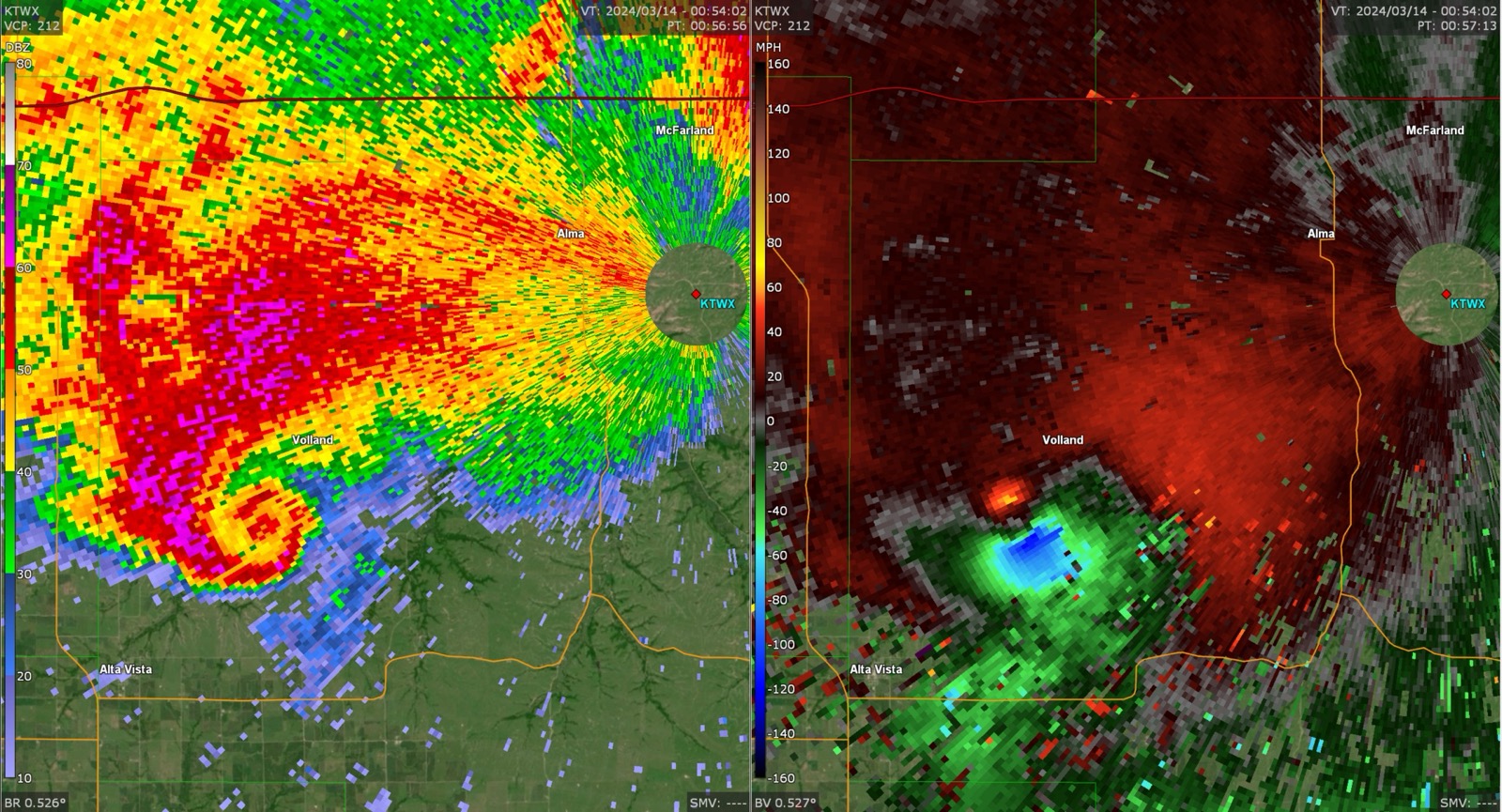
Tornado safety, in the agency's own words
Tornado safety guidance is the National Weather Service's. Here it is verbatim, starting with the two products every alert above belongs to.
National Weather Service, Understand Tornado Alerts“Tornado Watch: Be Prepared! Tornadoes are possible in and near the watch area. Review and discuss your emergency plans, take inventory of your supplies and check your safe room. Be ready to act quickly if a warning is issued or you suspect a tornado is approaching. Acting early helps to save lives! Watches are issued by the Storm Prediction Center for counties where tornadoes may occur. The watch area is typically large, covering numerous counties or even states.”
National Weather Service, Understand Tornado Alerts“Tornado Warning: Take Action! A tornado has been sighted or indicated by weather radar. There is imminent danger to life and property. Move to an interior room on the lowest floor of a sturdy building. Avoid windows. If in a mobile home, a vehicle, or outdoors, move to the closest substantial shelter and protect yourself from flying debris.”
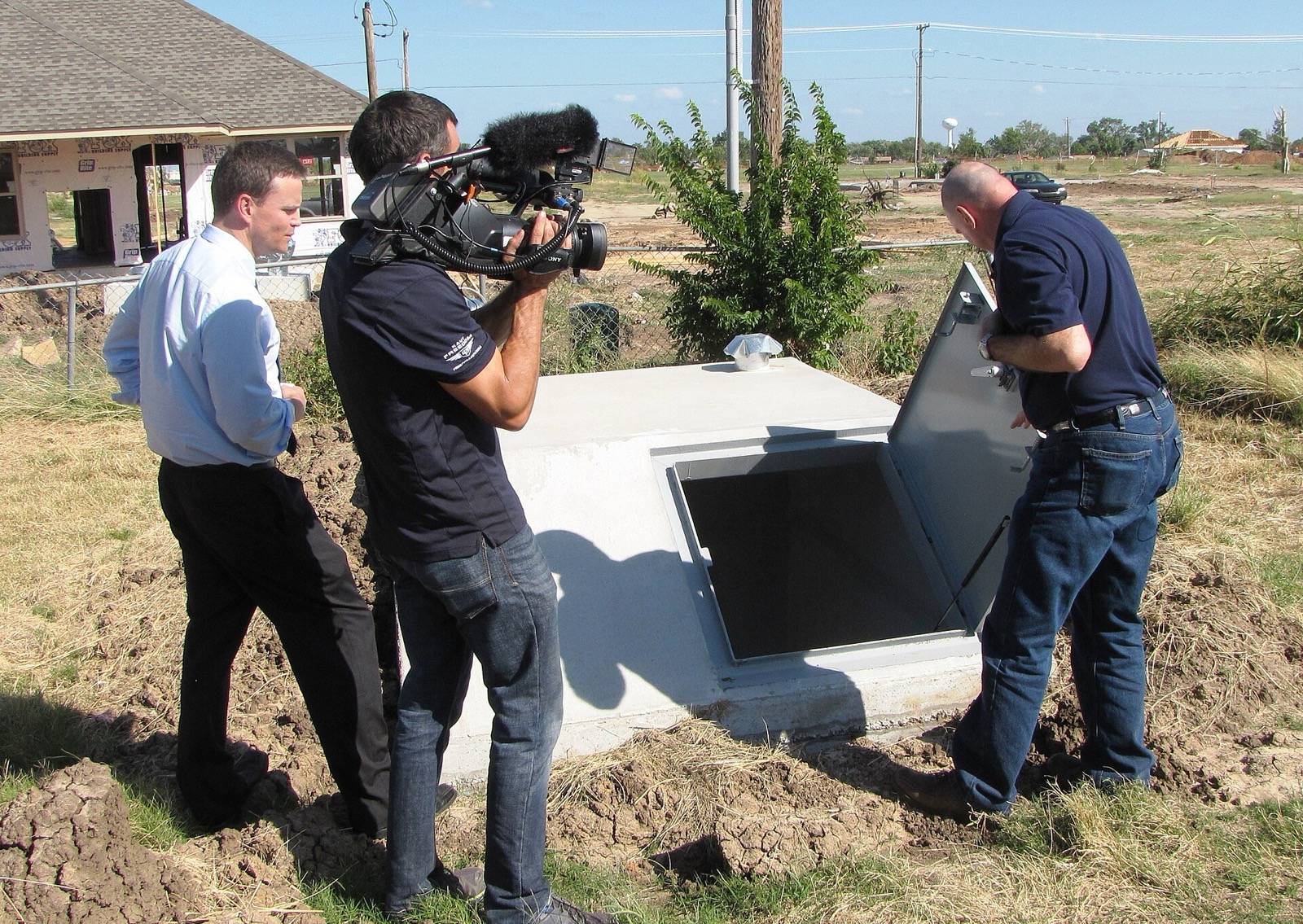
National Weather Service, What to do During a Tornado“At Your House: If you are in a tornado warning, go to your basement, safe room, or an interior room away from windows. Don't forget pets if time allows.”
National Weather Service, What to do During a Tornado“Outside: Seek shelter inside a sturdy building immediately if a tornado is approaching. Sheds and storage facilities are not safe. Neither is a mobile home or tent. If you have time, get to a safe building.”
National Weather Service, What to do During a Tornado“In a vehicle: Being in a vehicle during a tornado is not safe. The best course of action is to drive to the closest shelter. If you are unable to make it to a safe shelter, either get down in your car and cover your head, or abandon your car and seek shelter in a low lying area such as a ditch or ravine.”
Full guidance is at NWS Tornado Safety, and the Storm Prediction Center publishes the forward looking SPC Convective Outlooks for the next several days. Both are the place to look for what is going to happen; this page is the record of what has.
How the Alaska figures are calculated
The source. Every count on this page comes from the NOAA Storm Prediction Center Severe Weather Database, the National Weather Service's own record of every United States tornado since 1950, a US Government work in the public domain.
Tornadoes, not rows. The database stores each tornado track as segments: a tornado that crosses a county or state line appears as several rows, and counting rows double counts exactly the long track tornadoes people remember. Each tornado is counted once per state it touched, using the file's own segment flags, and the counting rule is verified against SPC's separate de-segmented tornado file every time this snapshot is rebuilt.
The window is the Doppler era. Everything is computed on 1996 to 2025, because the record before the NEXRAD radar network is not comparable with the record after it, and SPC says so itself:
NOAA Storm Prediction Center, The Online Tornado FAQ“Tornado reports have increased, especially around the installation of the NEXRAD Doppler radar system in the mid 1990s. This doesn't mean that actual tornado occurrence has gone up, however.”
NOAA Storm Prediction Center, The Online Tornado FAQ“The increase in tornado numbers is almost entirely in weak (EF0-EF1) events that are being reported far more often today due to a combination of better detection, greater media coverage, aggressive warning verification efforts, storm spotting, storm chasing, more developmental sprawl (damage targets), more people, and better documentation with cameras (including cell phones) than ever.”
NOAA Storm Prediction Center, Severe Weather Maps, Graphics, and Data Page“Monetary loss information is highly suspect and should be used with caution, if at all.”
Not on this page. A risk score, an index, a forecast, a trend line, or the database's monetary loss columns, on SPC's own advice below. Deaths and injuries appear only as the agency's own totals.
Page shape follows the data. A state clearing 10 tornado days a year AND 2 EF2 or stronger tornadoes a year leads with frequency; above 3 tornado days a year the page leads with the season window; below that it counts; and a state with tornadoes in fewer than 15 of the 30 years gets the whole record instead of a season window. Alaska is on the rare shape, ranked 50 of 50 by tornado days a year. Sources: NOAA SPC Severe Weather Database, US Census Bureau 2020 county codes, NWS api.weather.gov active alerts. All are US Government works in the public domain. SPC last updated the database on 24 April 2026; this snapshot was built on 2026-09-02.
Alaska tornado season FAQ
The rest of Alaska's storm year
Tornado season in nearby states
Counts are ours, from the NOAA Storm Prediction Center Severe Weather Database, 1996 to 2025, tornadoes counted once per state they touched. Ratings, definitions and all safety text are quoted from the National Weather Service and the Storm Prediction Center. Live products come from api.weather.gov and are shown verbatim. National picture: tornado season in every state