
Texas Deer Rut 2026
Inside the published breeding window now. Texas is one of the states whose biologists have measured actual breeding dates from fetal data, and this page quotes that study.
When deer actually breed in Texas
Measured: conception date studyWhite-tailed deer
Texas: when white-tailed deer breed
August 24 to February 1
Inside the published window now. This window is measured, not guessed: biologists back date fetal measurements from harvested does to the day each fawn was conceived, which yields a distribution of real breeding dates.
The breeding study involved the examination of 2,436 does, the largest number of deer ever utilized in a Texas breeding study. The date of conception can be determined by looking at fetus length.Texas Parks and Wildlife Department, The Rut in White-tailed Deer, study written in 1996. Read it at the source
In most areas the rut varied very little from year to year.Texas Parks and Wildlife Department, The Rut in White-tailed Deer. Read it at the source
This increased movement helps give rise to the idea that cold weather causes the rut. However, this theory is disproved by white-tailed deer breeding in tropical climates.Texas Parks and Wildlife Department, The Rut in White-tailed Deer. Read it at the source The agency itself addressing the cold front myth.
South Texas had the latest rut in the state. Breeding dates ranged from November 9 to February 1 during the three years.Texas Parks and Wildlife Department, The Rut in White-tailed Deer. Read it at the source
Read the window as biology, not as a movement forecast. Breeding timing is set by photoperiod, so it barely moves from year to year; what a cold snap or a warm November changes is how much of the activity happens in daylight where you can see it. The seeking, chasing and lockdown language hunters use describes the arc inside this window, but those are common usage terms rather than agency data, so the dates above are the only timeline this page treats as evidence.
The TPWD study is the largest fetal conception dataset any state publishes, 2,436 does on 16 study areas over three years, and it is the reason the Texas page carries eight regional windows instead of one statewide date. Statewide the measured spread runs from late August on the upper coast to the first of February in the South Texas brush, the widest of any state. TPWD also manages mule deer in the Trans-Pecos and Panhandle; its published mule deer material focuses on management rather than a quotable rut window, so this page stays with the whitetail study.
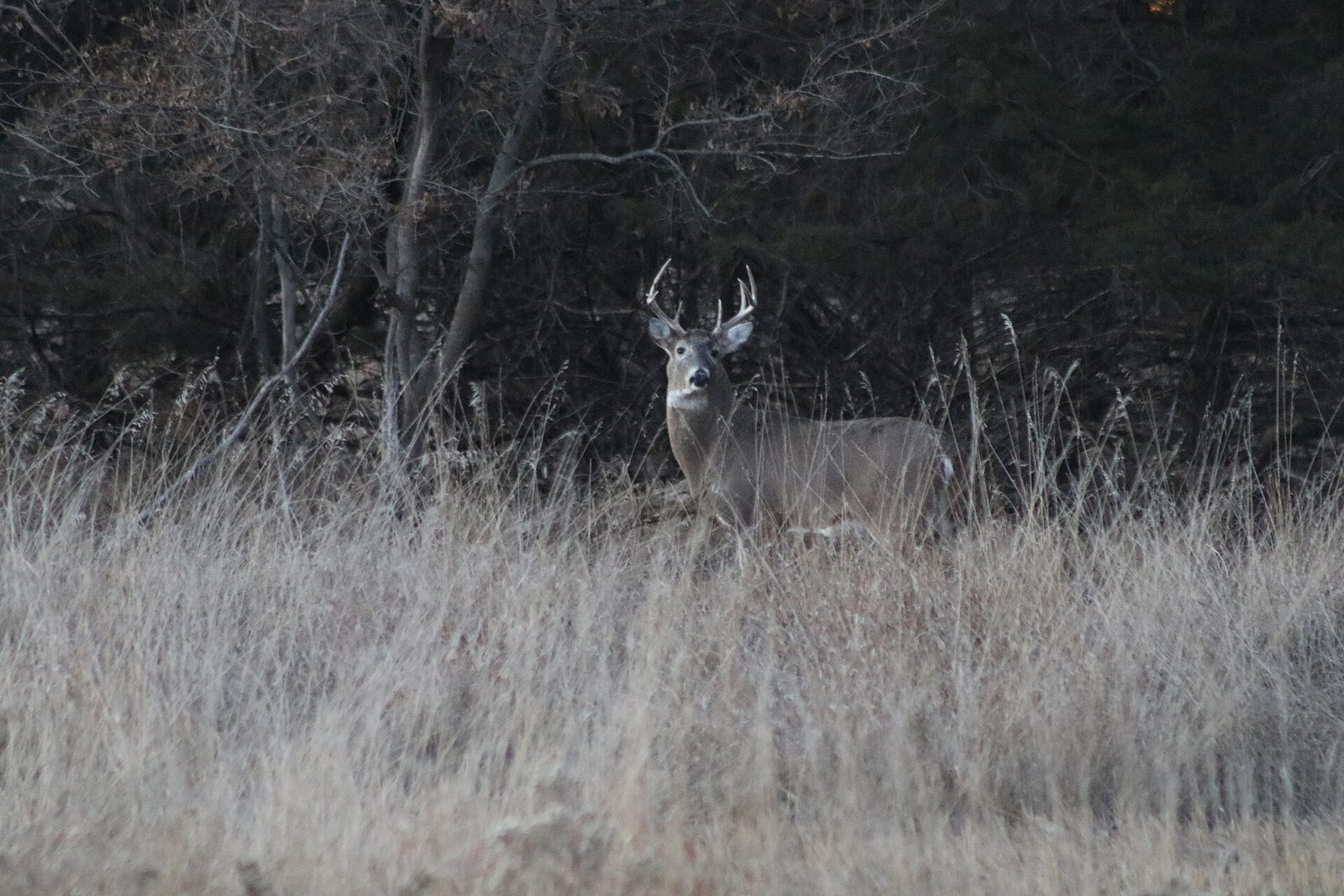
The rut is also a driving season
The same behaviour that makes November worth watching makes it the most dangerous month of the year to drive at dusk in deer country. Bucks travel, does get pushed, and both cross roads with their attention elsewhere. This is the public service half of the page, and it applies to every reader with a windshield, hunter or not.
The national claims data, applied to Texas
The rate of animal-strike-related insurance claims in November is more than twice the yearly average, according to an analysis of claims from 2013 to 2022 conducted by the Highway Loss Data Institute.Insurance Institute for Highway Safety, October 18, 2023. Read it at the source
That analysis is national rather than specific to Texas. No Texas agency publishes a month for its own deer collision peak, so the national figure stands here with its source.
MyWild composes no driving advice of its own. The figures above are quoted from the named source, and driver guidance belongs to Texas Parks and Wildlife Department and your state transportation department.
Texas hunting regulations
Season dates, bag limits and legal methods are set by Texas Parks and Wildlife Department, are legally binding and change every year. The biology above is stable; the current rules are on the agency page linked below.
Where the Texas records actually are
The map draws every research grade iNaturalist record of Odocoileus virginianus in Texas as a grid of counts, so it shows where people actually record deer. It over draws suburbs, parks and roadsides, because that is where the people are, and that bias is worth seeing on a page that is partly about roads.
Coloured cells are verified Odocoileus virginianus records on iNaturalist, brighter where more have been logged. This is where people have found and photographed the species, so it thins out over roadless country and thickens around parks and towns. It is a record map, not a drawn range boundary. See the underlying records.
In October, Texas has historically produced 4,742 of those records. See the underlying Texas records on iNaturalist.
Deer rut timing in other states
Texas deer rut questions
Breeding windows on this page are quoted from the named agency source and MyWild adds no timing model on top of them. A window badged as a conception date study is the agency’s measurement; one badged as a description is the agency’s prose. Collision figures are quoted from the named source. Hunting season dates, bag limits and legal methods are set by Texas Parks and Wildlife Department and published on its pages.