
Skip to content
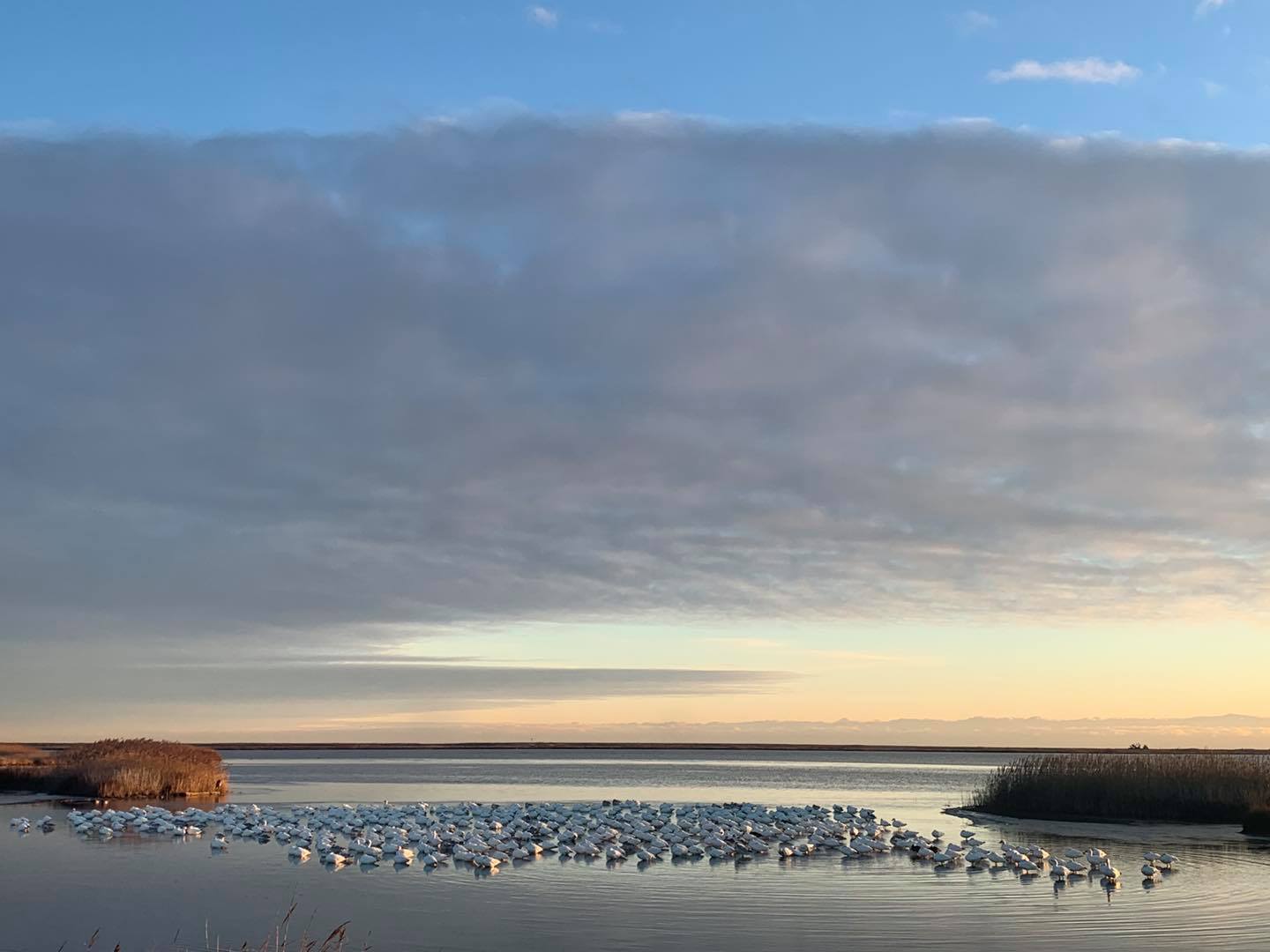
Arriving: October is snow goose season at Jocelyn Nungaray Refuge.

Snow Geese in Texas: Where and When to See Them

Jocelyn Nungaray Refuge, Hagerman Refuge, San Bernard and Playa Lakes: when each site’s manager says snow geese are there, why Texas ended its spring order and directions to each.

Snow geese in Texas in October

From the managers’ own pages
Arriving
In October
At Jocelyn Nungaray Refuge
Oct to Mar
Months at the sites
From each site's manager
4
Viewing sites
Jocelyn Nungaray Refuge
Ended
Spring conservation order
Since spring 2025

The months are each site manager’s own, quoted and linked below with the day they were read.

Where to go

4 places to see snow geese in Texas

Jocelyn Nungaray National Wildlife Refuge

U.S. Fish and Wildlife Service

In season now: Oct to Mar
Getting there
Directions in Google Maps
Between October and March, visitors to Anahuac NWR are likely to see approximately 31 species of waterfowl. Huge flocks of snow geese, sometimes in excess of 80,000, can be seen blanketing the marsh like a heavy layer of snow.
U.S. Fish and Wildlife Service, read October 13, 2026. Read it at the source
Hagerman National Wildlife Refuge

U.S. Fish and Wildlife Service

Snow geese: Nov to Feb
Getting there
Directions in Google Maps
Thousands of waterfowl species use refuge impoundments, waters of Lake Texoma, and managed fields as stop-over and wintering grounds. Some featured species include pintails, mallards, and gadwalls, as well as snow, white-fronted, and Ross’ geese.
U.S. Fish and Wildlife Service, read October 14, 2026. Read it at the source
Starting in November, geese by the thousands arrive at the refuge from their northern breeding grounds. These winter “snowbird” residents feed on refuge-grown grain, which prepares them for spring migration to their summer breeding grounds. By late February, the winter wheat has all been eaten and the geese begin their journey north.
U.S. Fish and Wildlife Service, read October 14, 2026. Read it at the source

San Bernard National Wildlife Refuge

U.S. Fish and Wildlife Service

Snow geese: Winter
Getting there
Directions in Google Maps
Gazing across the refuge’s pristine marshes, sloughs, expansive uplands and into the woodlands, it is easy to imagine Texas as it was before settlement. Clouds of snow geese in the winter or warbler “fallouts” in the spring further convince visitors they have stepped back in time.
U.S. Fish and Wildlife Service, read October 14, 2026. Read it at the source

Playa Lakes Wildlife Management Area, Taylor Lakes Unit

Texas Parks and Wildlife Department

Snow geese: Winter
Getting there
Directions in Google Maps
There is a viewing blind that offers the opportunity to observe migratory waterfowl and shorebirds on one of 3 playas on the area. Wintering Canada and Snow Geese, as well as puddle ducks, congregate here in large numbers.
Texas Parks and Wildlife Department, read October 14, 2026. Read it at the source
On the map

Texas snow goose sites by month

Style
Layers

1 of the 4 mapped sites has snow geese in October. A pin takes a color only in the months the refuge or agency that runs it gives for snow geese. The shaded grid is where people have logged a verified snow or Ross’s goose on iNaturalist in October, in any year, brighter where more have been logged; it maps reports, so it thickens where observers stand.

Advertisement
Through the year

When snow geese are in Texas

ArrivingTexas, October

October is snow goose season at Jocelyn Nungaray Refuge.

Between October and March, visitors to Anahuac NWR are likely to see approximately 31 species of waterfowl. Huge flocks of snow geese, sometimes in excess of 80,000, can be seen blanketing the marsh like a heavy layer of snow.
U.S. Fish and Wildlife Service, read October 13, 2026. Read it at the source
The refuge was renamed by secretarial order from Anahuac National Wildlife Refuge to Jocelyn Nungaray National Wildlife Refuge on March 10, 2025,
U.S. Fish and Wildlife Service, read October 13, 2026. Read it at the source
The most conspicuous species during winter are Canada Geese and Snow Geese. Recent estimates suggest that 300,000 geese are found in the Playa Lakes Region.
Texas Parks and Wildlife Department, read October 13, 2026. Read it at the source

When people report them

More reports come in December than in any other month. The bars combine every year on record; the twelve month figure runs from October 14, 2025.

August: 19 recordsAugSeptember: 16 recordsSepOctober: 69 recordsOctNovember: 655 recordsNovDecember: 814 recordsDecJanuary: 720 recordsJanFebruary: 459 recordsFebMarch: 194 recordsMarApril: 80 recordsAprMay: 40 recordsMayJune: 10 recordsJunJuly: 11 recordsJul
3,087 research grade snow and Ross’s goose records from Texas over ten years, by the month they were made, August first. Most are logged in December; the rose bar is October. A record is a person’s photograph confirmed by others, so the bars count sightings rather than birds.

512 research grade snow and Ross’s goose reports from Texas in the twelve months to October 14, 2026.

Reading this month’s reports from iNaturalist.

The spring order

The light goose conservation order in Texas

Texas ended its Light Goose Conservation Order.

The Texas Parks and Wildlife Commission eliminated it in both the eastern and western zones, starting in spring 2025.

Eliminate the Light Goose Conservation Order from both eastern and western zones due to continuous declines of wintering light geese in Texas.
Texas Parks and Wildlife Department, read October 13, 2026. Read it at the source

From the same release: “The Texas Parks and Wildlife Commission have approved hunting regulations for the 2024-25 season”

Check the state’s own regulations before you go: permits, zones and dates are the agency’s to set.

Texas snow goose questions

Advertisement

Every fact about Texas’s snow geese links to the refuge, agency or festival page it comes from, read between October 13 and 14, 2026. Tour routes and viewing areas close for weather, hunts and work, so check the site’s own page before you drive. Report tallies are iNaturalist research grade records of snow and Ross’s geese, which count sightings, not birds. Every state is on the snow goose migration hub.