
Skip to content
Snow geese are due back at Pocosin Lakes in November.

Snow Geese in North Carolina: Where and When to See Them

Pocosin Lakes, Mattamuskeet and Pea Island: when each site’s manager says snow geese are there, the 2027 order suspension and directions to each.

Snow geese in North Carolina in October

From the managers’ own pages
Due back in November
In October
At Pocosin Lakes
Nov to Feb
Months at the sites
From each site's manager
3
Viewing sites
Pocosin Lakes
Suspended
Spring conservation order
Suspended for 2027

The months are each site manager’s own, quoted and linked below with the day they were read.

Where to go

3 places to see snow geese in North Carolina

Pocosin Lakes National Wildlife Refuge, Pungo Unit

U.S. Fish and Wildlife Service

Snow geese: Nov to Feb
Getting there
Directions in Google Maps
Pocosin Lakes NWR is famous for its large concentrations of wintering waterfowl, including tundra swans, snow geese, and other ducks.
U.S. Fish and Wildlife Service, read October 13, 2026. Read it at the source
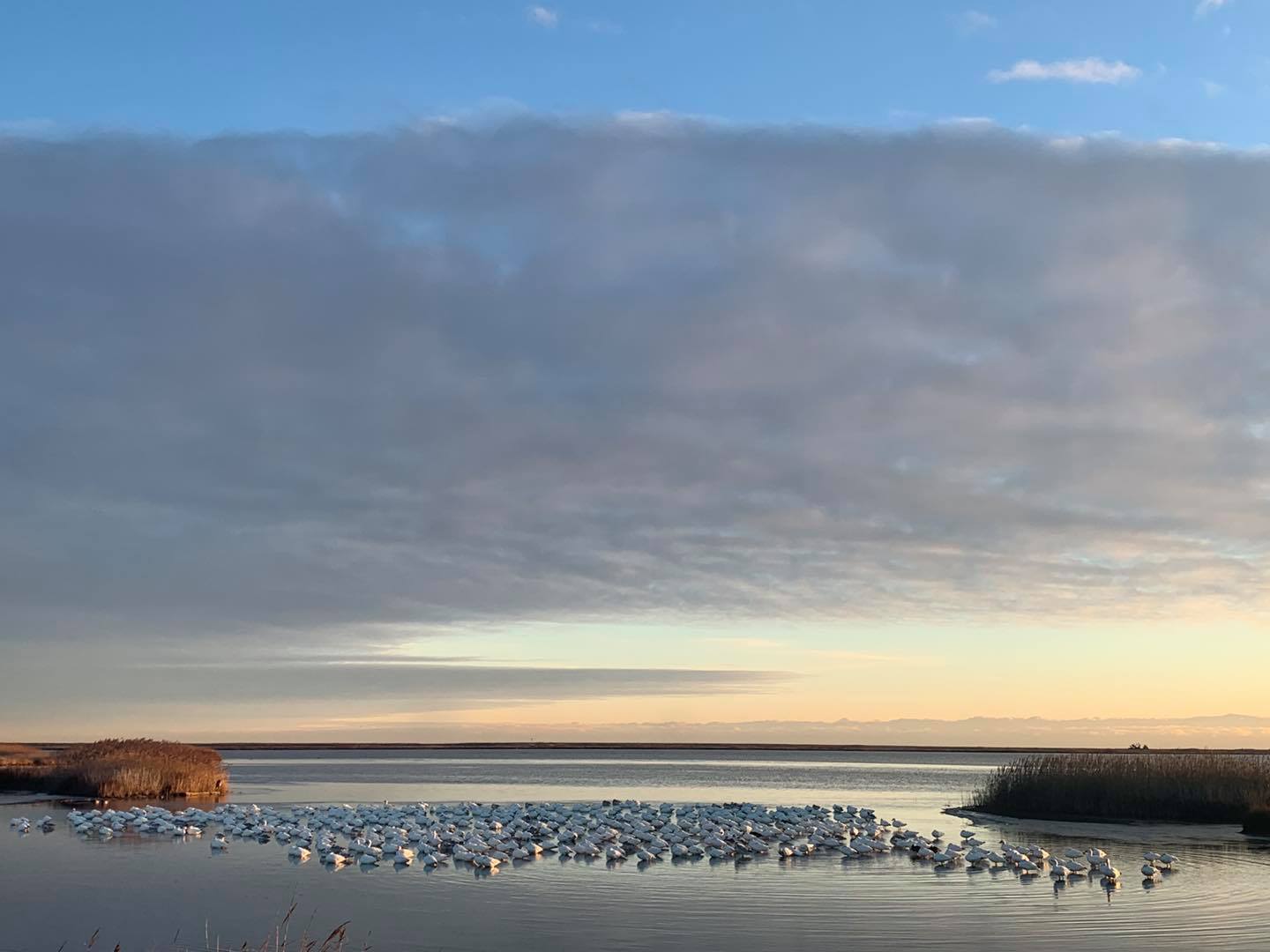
Although waterfowl can be seen almost anywhere on Pungo during the waterfowl season (November – February), we have designated five observation areas/points that usually provide good waterfowl observation opportunities.
U.S. Fish and Wildlife Service, read October 13, 2026. Read it at the source

Mattamuskeet National Wildlife Refuge

U.S. Fish and Wildlife Service

Getting there
Directions in Google Maps
An observation viewing deck is available along the Highway 94 Causeway. Swans, snow geese, northern pintail and other waterfowl as well as bald eagles are often observed.
U.S. Fish and Wildlife Service, read October 13, 2026. Read it at the source

Pea Island National Wildlife Refuge

U.S. Fish and Wildlife Service

Snow geese: Winter
Getting there
Directions in Google Maps
Pea Island National Wildlife Refuge was established in 1938 to provide nesting, resting, and wintering habitat for migratory birds, including the greater snow geese and other migratory waterfowl, shorebirds, wading birds, raptors, and neotropical migrants
U.S. Fish and Wildlife Service, read October 13, 2026. Read it at the source
On the map

North Carolina snow goose sites by month

Style
Layers

A pin takes a color only in the months the refuge or agency that runs it gives for snow geese. The shaded grid is where people have logged a verified snow or Ross’s goose on iNaturalist in October, in any year, brighter where more have been logged; it maps reports, so it thickens where observers stand.

Advertisement
Through the year

When snow geese are in North Carolina

Due back in NovemberNorth Carolina, October

Snow geese are due back at Pocosin Lakes in November.

The Pungo Unit is the most popular area for wildlife observation on the refuge. Large numbers of swans, snow geese, and other waterfowl can be seen using the Unit's wetlands, agricultural fields, moist-soil units, and the waters of Pungo Lake.
U.S. Fish and Wildlife Service, read October 13, 2026. Read it at the source
More than a hundred thousand ducks, geese, and swans congregate on the refuge in winter, and the refuge supports one of the densest populations of black bear ever reported.
U.S. Fish and Wildlife Service, read October 13, 2026. Read it at the source
In total, the refuge attracts more than 200,000 ducks, geese and swans from November through February.
U.S. Fish and Wildlife Service, read October 13, 2026. Read it at the source

When people report them

More reports come in December than in any other month. The bars combine every year on record; the twelve month figure runs from October 14, 2025.

August: 2 recordsAugSeptember: 0 recordsSepOctober: 4 recordsOctNovember: 36 recordsNovDecember: 112 recordsDecJanuary: 100 recordsJanFebruary: 54 recordsFebMarch: 21 recordsMarApril: 5 recordsAprMay: 2 recordsMayJune: 0 recordsJunJuly: 0 recordsJul
336 research grade snow and Ross’s goose records from North Carolina over ten years, by the month they were made, August first. Most are logged in December; the rose bar is October. A record is a person’s photograph confirmed by others, so the bars count sightings rather than birds.

62 research grade snow and Ross’s goose reports from North Carolina in the twelve months to October 14, 2026.

Reading this month’s reports from iNaturalist.

The spring order

The light goose conservation order in North Carolina

The spring conservation order is suspended for 2027.

The Light Goose Conservation Order has been paused and will not be offered in 2027 after agreement within the Atlantic Flyway from the eight participating hunt states, Quebec, and Ontario.
North Carolina Wildlife Resources Commission, read October 13, 2026. Read it at the source
The Conservation Order has been suspended for 2027 after agreement from the eight participating hunt states, Quebec and Ontario.
Maryland Department of Natural Resources, read October 13, 2026. Read it at the source

The states it covers, in the notice’s words: “As of 2026, eight states in the Atlantic Flyway held the Conservation Order including Vermont, New York, New Jersey, Delaware, Pennsylvania, Maryland, Virginia, and North Carolina.”

Check the state’s own regulations before you go: permits, zones and dates are the agency’s to set.

North Carolina snow goose questions

Advertisement

Every fact about North Carolina’s snow geese links to the refuge, agency or festival page it comes from, read on October 13, 2026. Tour routes and viewing areas close for weather, hunts and work, so check the site’s own page before you drive. Report tallies are iNaturalist research grade records of snow and Ross’s geese, which count sightings, not birds. Every state is on the snow goose migration hub.