
Skip to content

Winter Eagle Watching in Washington

The largest wintering concentration in the state, viewable from pull-offs on a single highway, and a voluntary river closure every morning to keep boats off the birds.

Agency viewing sites
3
On federal land
2
Mapped
2
Where to stand

Public viewing sites in Washington

Every place below is one an agency itself describes for eagle viewing, with that agency named and linked. Where a federal agency wrote something worth reading, its words are reproduced exactly, because a US government work is in the public domain. Where a state agency or a company is the source, the fact is in our own words with the source named.

The State Route 20 roadside viewpoints between Concrete and Marblemount Federal

Skagit River

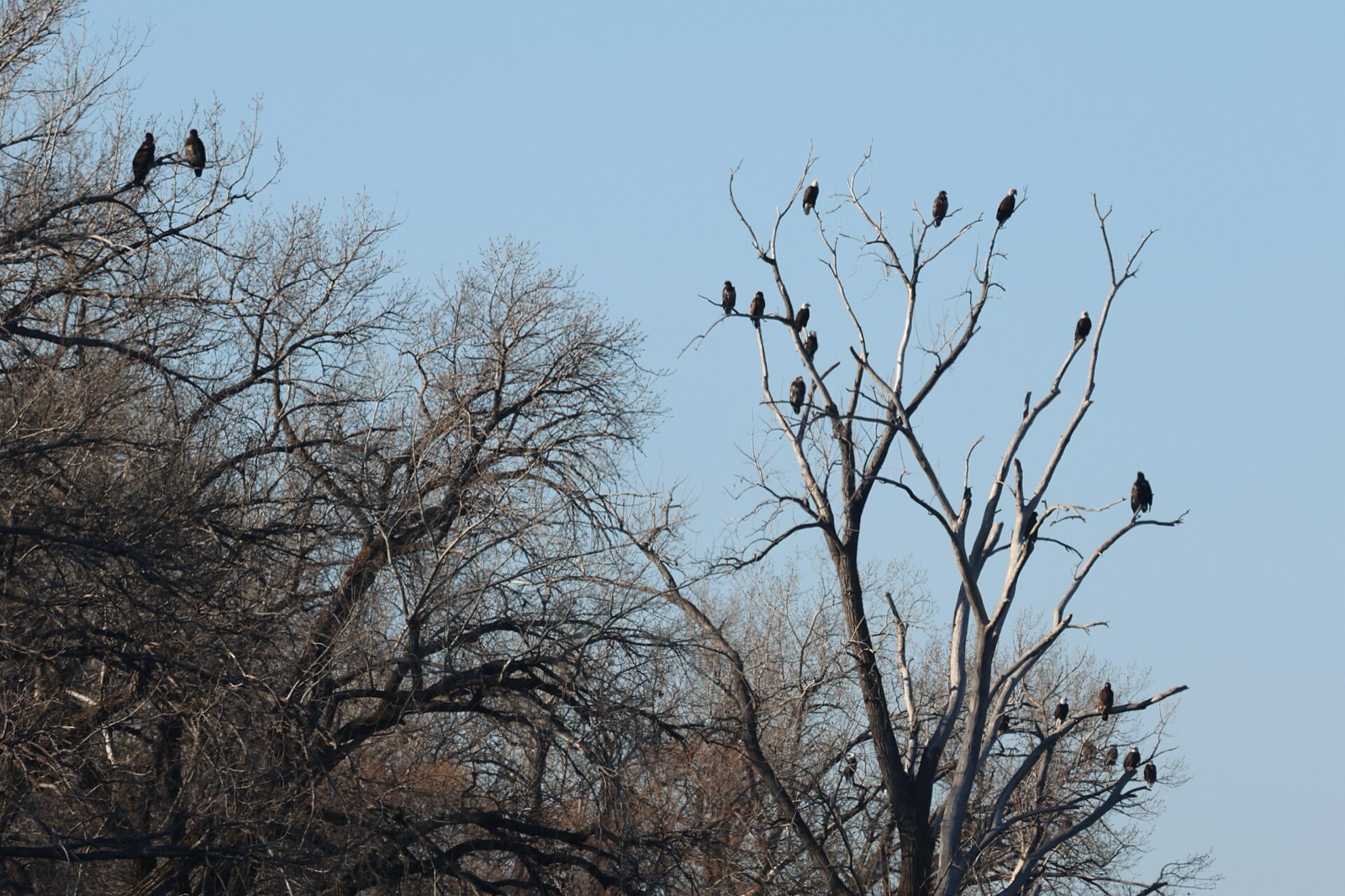
The Forest Service tells visitors to watch from roadside viewpoints along the highway between two named towns, which is about as simple as a viewing instruction gets. The birds are here for salmon carcasses rather than for a dam, which is why this is a river reach rather than a single point.

Run by USDA Forest Service, Mount Baker-Snoqualmie National Forest
Marblemount Boat Launch Federal

Skagit River at the Cascade River confluence, river mile 78

The launch is also where the Forest Service publishes its voluntary river closure, asking boaters to stay off the water from the end of December through February between five and eleven in the morning so that the birds can feed. If you are on foot, that is also a strong hint about when the birds are worth watching.

Run by USDA Forest Service, Mount Baker-Snoqualmie National Forest

Skagit Bald Eagle Natural Area Preserve State

Skagit River

Listed for completeness and to say clearly that it is not a visitor destination. The state land agency protects roughly 1,500 acres of mature conifer roosting habitat here and states plainly that there are no programmes, no facilities and no accessible provision. The viewing happens from the highway; the preserve is why there is anything to view.

Run by Washington State Department of Natural Resources

“You may view abundant wildlife along the Skagit, including the largest wintering population of bald eagles in Washington State. Eagles arrive in the late fall and stay in the area through January to feed on salmon carcasses. Observe eagles from roadside view points along State Route 20 between the towns of Concrete and Marblemount.”
USDA Forest Service, Mount Baker-Snoqualmie National Forest, North Cascades SR 20. A US government work, in the public domain, quoted exactly.
“A voluntary river closure is in effect from Dec. 26 - Feb. 28 from 5:00 am to 11:00am daily in order to limit impact on migratory bald eagles during their feeding time.”
USDA Forest Service, Marblemount Boat Launch. A US government work, in the public domain, quoted exactly.
The map

Washington sites, dams and the reporting record

Style
Records
Size

Viewing sites in Washington, with the Corps of Engineers locks and dams in the state drawn underneath. The coloured grid is where people have uploaded a verified bald eagle record to iNaturalist in December, January and February, brighter where more have been logged. It is a map of reports, not of birds: it thickens around car parks, boardwalks and towns because that is where observers stand, and it thins over roadless country whether or not eagles are there. It shows past reports rather than birds present today. Pins are public viewing sites an agency itself describes; grey dots are US Army Corps of Engineers locks and dams, drawn because open tailwater below a dam is the reason most of these sites exist.

Advertisement
When

What USDA Forest Service, Mount Baker-Snoqualmie National Forest says about timing

The window for Washington is arriving in late autumn and staying through January, according to USDA Forest Service, Mount Baker-Snoqualmie National Forest. That is a pattern across past winters rather than a forecast: how well a given year matches it depends on whether the water upstream actually freezes. A mild winter keeps the river open everywhere, the birds stay spread out, and the concentration this page is about never forms.

Time of day is the more reliable lever in any case, and it is the one thing every agency agrees on. The federal management guidance describes when eagles feed, and it is not the middle of the day.

“Avoid recreational and commercial boating and fishing near critical eagle foraging areas during peak feeding times (usually early to mid-morning and late afternoon), except where eagles have demonstrated tolerance to such activity.”
US Fish and Wildlife Service, National Bald Eagle Management Guidelines, May 2007. A US government work, in the public domain, quoted exactly.

Read that as a viewing instruction rather than a boating one. The birds come off the roost hungry, fish hard in the first hours of light, and then spend the middle of the day sitting in a tree digesting, which looks exactly like an empty river to somebody who arrived at eleven. Late afternoon gives you a second, shorter window as they feed again before going back to roost.

The Skagit is the clearest example in the country of the other winter eagle mechanism, the one that has nothing to do with dams. Five species of salmon and sea run trout spawn in this river, and a late chum run means carcasses arriving in the shallows through December and January, at exactly the point when nothing else is feeding a large bird. So the eagles come to the fish rather than to open water, the concentration sits along a river reach rather than at a single structure, and the viewing is done from pull-offs on one highway. The federal management of it is unusually thoughtful. Rather than closing the river, the Forest Service asks boaters to stay off it in the mornings, which protects the feeding window without shutting anybody out, and it publishes the reason.

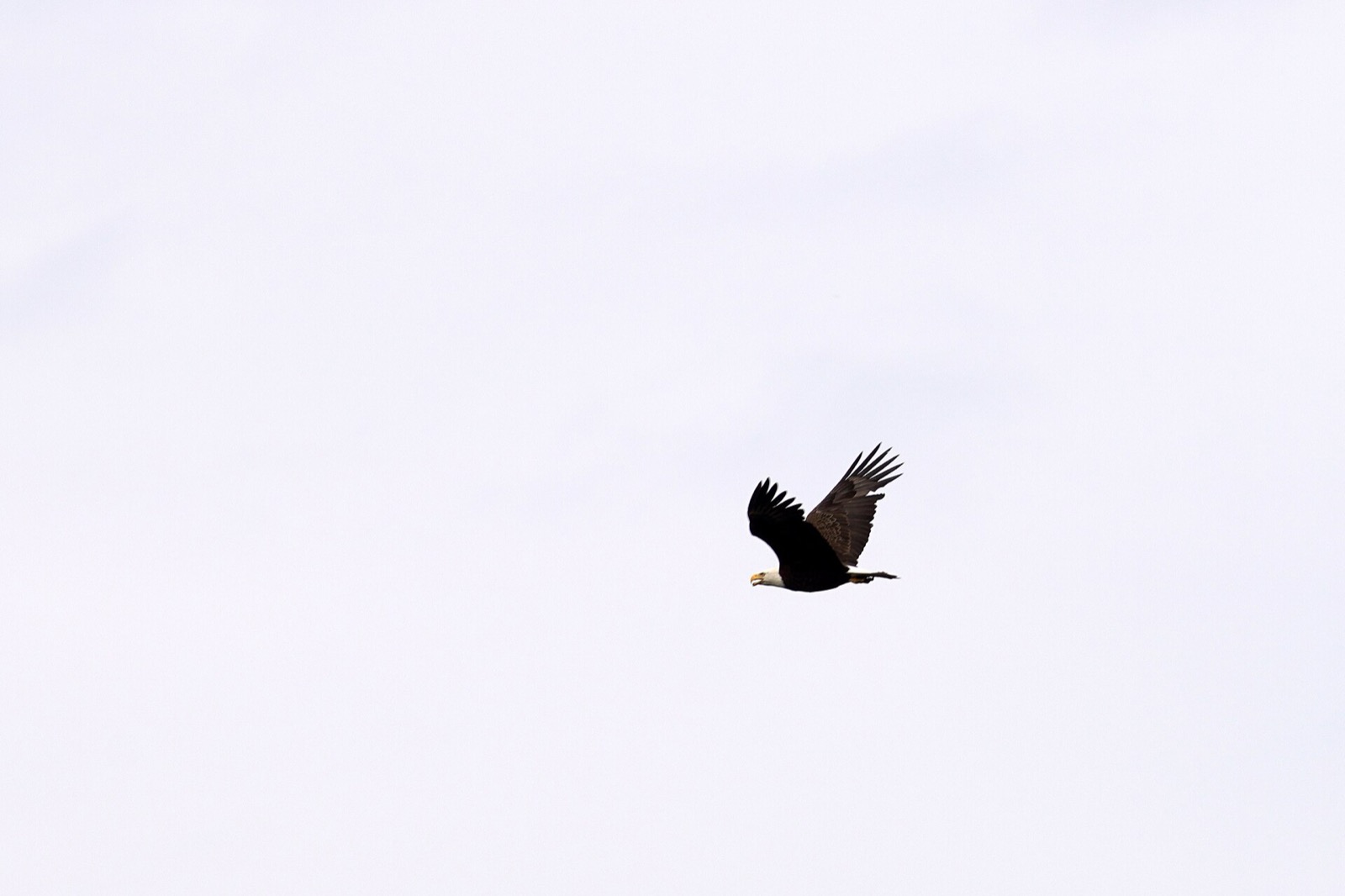
An adult bald eagle gliding on flat outstretched wings against a pale overcast sky, its white head and white tail clearly separated from the dark body
An adult in the flat winged glide that distinguishes a bald eagle from a golden at range, which holds its wings in a shallow V. In a state with a published window this is the bird the window describes; in a state without one it is still the bird, and the agency has simply not written the dates down. “Bald eagle in flight”, U.S. Fish and Wildlife Service - Midwest Region, Public domain
The record

What people have actually reported in Washington

Below is a reading of a public platform rather than a survey. It counts the research grade bald eagle observations members of the public have uploaded to iNaturalist for this state, by calendar month, across every year the platform holds. It is a count of reports. It measures how many people were out with a camera as much as it measures birds, so the shape is worth reading and the absolute numbers are not.

Reading the Washington observation record from iNaturalist...

Checking the most recent winter upload for Washington...

Questions about Washington

Inventory compiled 2026-09-04 from the agency pages linked above. Federal text is quoted exactly because a US government work is in the public domain; state agency, nonprofit and company material is restated in our own words with the source named and linked.