
Skip to content
Washington, 2 public soaking sites

Hot Springs in Washington

Washington's agency listed hot springs are both in Olympic National Park: wild seeps up the Elwha and a concession resort in the Sol Duc Valley.

2
Sites listed for soaking
run by National Park Service
Set by site
Fees
each one quoted from the agency page
30
Thermal springs on NOAA’s list
hottest listed feature 266 F
September 22, 2026
Agency pages read
each quote links the page it came from
Site by site

Public hot springs in Washington

2 hot springs in Washington are listed for soaking by the agencies that run them. Each card below carries that agency’s own fee, season, access and rules, quoted and linked, as the page read on September 22, 2026. A fee line that says nothing about cost is written as a question for the managing office rather than as free.

Olympic Hot Springs

Primitive spring

National Park Service, Olympic National Park, Elwha area

FeeCheck fees with Olympic National Park, Elwha area
SeasonAll year, though the road may close before the trailhead in winter.
AccessWith the Elwha road washed out, park at Madison Falls Trailhead, go about 9 miles on foot or bike on Olympic Hot Springs Road, then hike 1.5 miles (no bikes) from Boulder Creek Trailhead.
  • Foot access only; no pets or bicycles at the springs.
  • Overnight stays need a wilderness use permit.
  • No campfires at the springs or Boulder Creek Campground.
  • Store food and scented items in park approved bear canisters.
Olympic Hot Springs are natural, unmaintained hot water seeps in the Elwha River Valley.
Hot Springs, Olympic National Park, National Park Service, read September 22, 2026. Read it at the source
These springs are only accessible by foot and no pets or bicycles are permitted.
National Park Service on Olympic Hot Springs. Read it at the source
Camping is permitted near the hot springs but backpackers must follow wilderness camping regulations and acquire a wilderness use permit before their trip.
National Park Service on Olympic Hot Springs. Read it at the source
Campfires : To protect sensitive vegetation, campfires are prohibited at Olympic Hot Springs and the Boulder Creek Campground.
National Park Service on Olympic Hot Springs. Read it at the source
All food, garbage, and scented items must be stored in park-approved bear canisters.
National Park Service on Olympic Hot Springs. Read it at the source
The pools are in a wilderness area and are not tested or treated by the park. They may contain harmful bacteria and use of these pools is at your own risk.
National Park Service on Olympic Hot Springs. Read it at the source
The water quality of the hot springs is not monitored and may contain high levels of fecal coliform bacteria.
National Park Service on Olympic Hot Springs. Read it at the source

Sol Duc Hot Springs Resort

Developed pool

National Park Service, Olympic National Park, Sol Duc Valley (concession)

FeeCheck fees with Olympic National Park, Sol Duc Valley (concession)
SeasonOpen late March through mid-October.
  • Day use of three mineral pools and one fresh water pool, only while the resort is open; the resort sets hours and rates.
The concession-operated Sol Duc Hot Springs Resort has lodging and an RV campground; you can make reservations by calling 888-896-3818.
Sol Duc Hot Springs Resort, National Park Service, read September 22, 2026. Read it at the source
The pools are only accessible when the resort is open.
National Park Service on Sol Duc Hot Springs Resort. Read it at the source
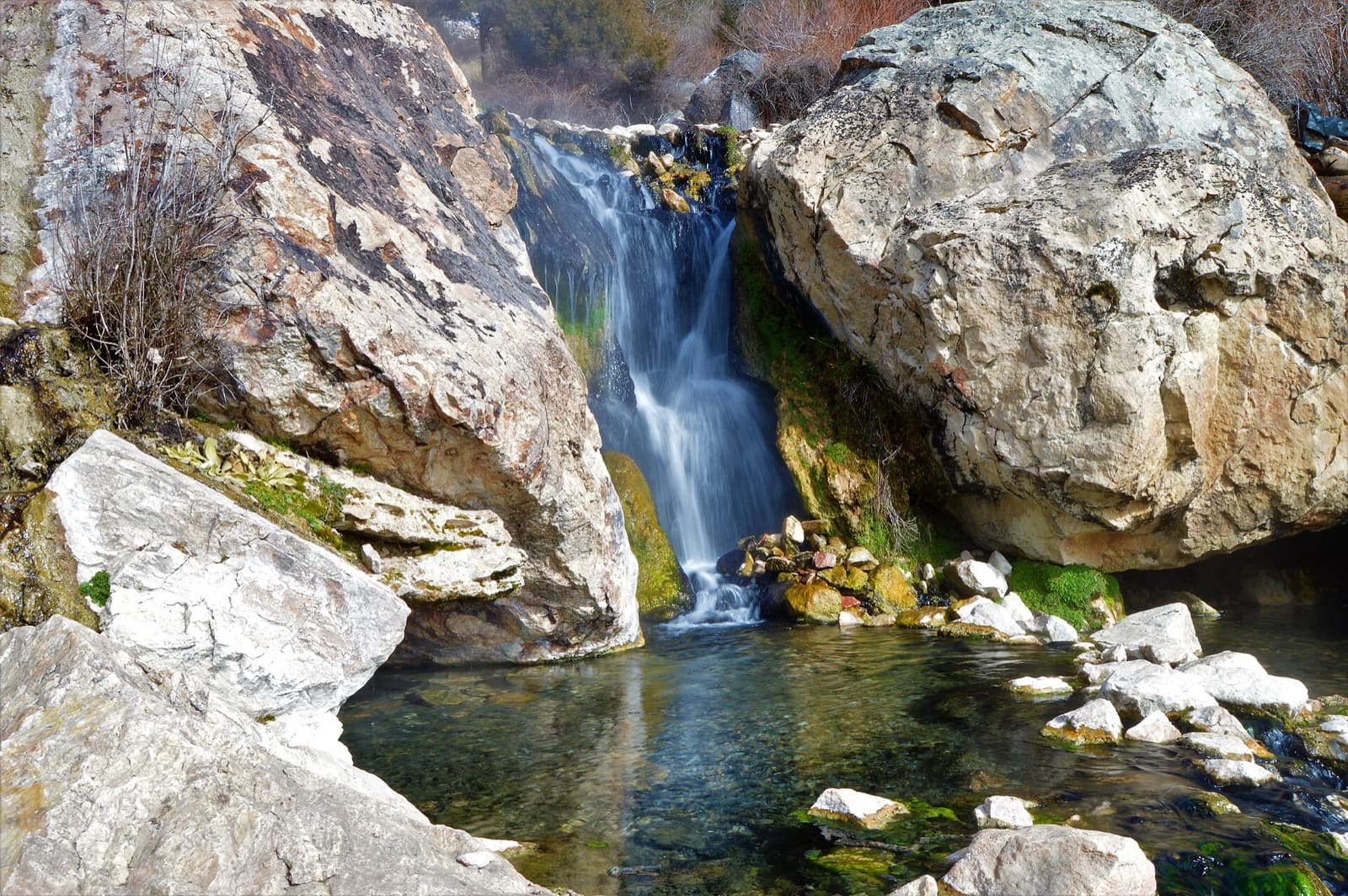
A small waterfall pouring between two pale boulders into a clear green pool, with steam drifting off the top of the fall
The falls and a lower pool at Goldbug Hot Springs, Idaho. The first quarter mile of the trail crosses private property on a public easement, and the BLM asks for dogs on a leash there. “Goldbug Hotsprings (25920311177)”, BLMIdaho, Public domain
How many springs

Thermal springs counted in Washington

NOAA’s Thermal Springs List for the United States counts 30 thermal features in Washington, the hottest listed at 266 F, out of 1661 across 23 states. The count is a measure of geology: Natural surface hydrothermal features (springs, pools, mud pots, mud volcanoes, geysers, fumaroles and steam vents) at 20 C (68 F) or warmer; temperatures are the maximum reported surface reading. Most sit on remote ground, on land with no public access, or too hot to approach, which is why the soaking list above is the shorter one. The hottest reading can belong to a fumarole or a steam vent rather than a pool.

Thermal Springs List for the United States, compiled by George W. Berry, Paul J. Grim and Joy A. Ikelman, NOAA Key to Geophysical Records Documentation No. 12, 1980; published by NOAA National Centers for Environmental Information (formerly the National Geophysical Data Center). Data file read September 22, 2026: the thermal springs list and its documentation. Every state’s count is on the national table.

The water

What the CDC and the Park Service say about soaking

Two hazards come up in every agency’s own words: what lives in warm water, and how hot the ground and the water can be. Both are quoted below as the agencies write them, and they apply at every site above.

Always keep your head above water in hot springs and other naturally hot (geothermal) water.
CDC, Preventing Brain Infection When Swimming, read September 22, 2026. Read it at the source
Naegleria fowleri lives in soil and warm freshwater lakes, rivers, ponds, and hot springs around the world.
CDC, Naegleria fowleri Infections, read September 22, 2026. Read it at the source
Hold your nose shut or use a nose clip if you jump or dive into the water.
CDC, Preventing Brain Infection When Swimming, read September 22, 2026. Read it at the source
Avoid digging in, or stirring up, sediment in shallow fresh water. Naegleria fowleri amebas are more likely to live in sediment at the bottom of lakes, ponds, and rivers.
CDC, Preventing Brain Infection When Swimming, read September 22, 2026. Read it at the source
All thermal waters contain organisms that may cause illness, including skin rash, gastrointestinal illness (vomiting and diarrhea), or other infections that can be life-threatening.
National Park Service, swimming in Yellowstone, read September 22, 2026. Read it at the source
Burns from thermal features are a common cause of serious injury and death in the park. The ground surrounding these features may look solid, but it can be just a thin crust with super-heated water below.
National Park Service, Yellowstone safety, read September 22, 2026. Read it at the source
Even thermal runoff can be extremely hot and cause burns.
National Park Service, Yellowstone safety, read September 22, 2026. Read it at the source
Toxic gases may accumulate to dangerous levels in some hydrothermal areas. If you begin to feel sick while exploring a geyser basin, leave the area immediately.
National Park Service, Yellowstone safety, read September 22, 2026. Read it at the source
Pets are not allowed in thermal areas or on boardwalks, even if they're on a leash or carried in arms, strollers, or backpacks.
National Park Service, Yellowstone safety, read September 22, 2026. Read it at the source

Washington hot springs questions

Compiled September 22, 2026 from National Park Service pages, one per site, each linked beside its quote and read on September 22, 2026. Site types above: primitive spring and developed pool. Fees, seasons and access change between seasons, a spring can be closed by flood, fire or repair at short notice, and a soak is at the soaker’s own risk, so the managing office is the one to check before a trip. Every state is in the national hot springs guide.