
Skip to content
Oregon, 5 public soaking sites

Hot Springs in Oregon

Oregon's national forests run three well known soaking springs, Bagby, Umpqua and Terwilliger, and the BLM and a wildlife refuge list more out in the high desert.

5
Sites listed for soaking
run by USDA Forest Service, Bureau of Land Management and U.S. Fish and Wildlife Service
Set by site
Fees
each one quoted from the agency page
126
Thermal springs on NOAA’s list
hottest listed feature 207 F
September 22, 2026
Agency pages read
each quote links the page it came from
Site by site

Public hot springs in Oregon

5 hot springs in Oregon are listed for soaking by the agencies that run them. Each card below carries that agency’s own fee, season, access and rules, quoted and linked, as the page read on September 22, 2026. A fee line that says nothing about cost is written as a question for the managing office rather than as free.

Bagby Hot Springs

Bathhouse

USDA Forest Service, Mt. Hood National Forest, Clackamas River Ranger District

Fee$5 per person soaking fee, cash on site; no passes accepted.
SeasonOpen while hosts can reach it; once roads are impassable the site is not maintained until spring, usually April.
AccessA trail of about a mile and a half from the Bagby Trailhead on Forest Road 70, southeast of Estacada; roads are not plowed.
Waterthe main bathhouse spring flows at 138 F at the source
  • No camping at the hot springs; camp at Bagby Campground by the trailhead.
  • Public nudity is not allowed.
  • Dogs allowed but leashed.
  • First come, first served; expect waits on weekends.
  • Drain your tub and refill it half full for the next bather.
The springs are accessible by a 1.4-mile trail, offering a unique, rustic experience. Hand-hewn tubs and cedar plumbing are typical of the primitive facilities.
Bagby Hot Springs, Mt. Hood National Forest, read September 22, 2026. Read it at the source
Camping at the hot springs is not allowed.
USDA Forest Service on Bagby Hot Springs. Read it at the source
Public nudity is not allowed.
USDA Forest Service on Bagby Hot Springs. Read it at the source
Dogs are allowed in the campground and hot springs but must be leashed.
USDA Forest Service on Bagby Hot Springs. Read it at the source
Use of the hot springs is on a first come, first served basis.
USDA Forest Service on Bagby Hot Springs. Read it at the source
Please empty your tub and fill it half full so that the water will cool for the next bather.
USDA Forest Service on Bagby Hot Springs. Read it at the source
Rockfall and landslides are common on Forest Roads 46 and 63 to Bagby Hot Springs.
USDA Forest Service on Bagby Hot Springs. Read it at the source

Umpqua Hot Springs

Primitive spring

USDA Forest Service, Umpqua National Forest, North Umpqua Ranger District

Fee$5 per vehicle day use fee at the trailhead; Northwest Forest Pass or interagency pass accepted.
SeasonDay use, sunrise to sunset; the road usually closes in winter, leaving a 2.5 mile hike, snowshoe or ski.
AccessA steep 0.3 mile trail from the Umpqua Hot Springs Trailhead, across a footbridge over the river.
Waterabout 100 to 115 F
  • Day use only, sunrise to sunset, for the springs, trail and trailhead.
  • Expect crowds and nudity.
The springs are located on a bare rock face 150 feet above the North Umpqua Wild and Scenic River.
Umpqua Hot Springs Trail, Umpqua National Forest, read September 22, 2026. Read it at the source
The hot springs, trail and trailhead is Day-Use Only - open from sunrise to sunset.
USDA Forest Service on Umpqua Hot Springs. Read it at the source
Expect high use and nudity at this popular site.
USDA Forest Service on Umpqua Hot Springs. Read it at the source

Terwilliger (Cougar) Hot Springs

Primitive spring

USDA Forest Service, Willamette National Forest, McKenzie River Ranger District

Fee$12 per person for two hours, ages 12 and up; no passes honored.
SeasonOpen all year, but Forest Road 19 is not cleared of snow and ice in winter.
AccessA quarter mile walk on the Rider Creek Trail from Forest Road 19 near Cougar Reservoir; parking is limited.
Waterabout 85 F in the lower pool to 112 F in the upper pool
  • Clothing optional, but no nudity visible from Forest Road 19.
  • Closed 10 p.m. to sunrise.
  • No alcohol.
  • No pets; leashed service animals allowed.
  • Camp only in the developed Cougar Recreation Area campgrounds.
There are four soaking pools spaced apart by rock walls laid out in steps down a ravine.
Terwilliger (Cougar) Hot Springs, Willamette National Forest, read September 22, 2026. Read it at the source
No visible nudity is allowed from Aufderheide Scenic Byway (Forest Road 19).
USDA Forest Service on Terwilliger (Cougar) Hot Springs. Read it at the source
Closed to all use 10:00 p.m. to sunrise.
USDA Forest Service on Terwilliger (Cougar) Hot Springs. Read it at the source
Possession or consumption of alcohol is prohibited.
USDA Forest Service on Terwilliger (Cougar) Hot Springs. Read it at the source
No pets are allowed at the site/hot springs.
USDA Forest Service on Terwilliger (Cougar) Hot Springs. Read it at the source
Camping is restricted to developed campgrounds in the Cougar Recreation Area.
USDA Forest Service on Terwilliger (Cougar) Hot Springs. Read it at the source
When visiting, other potential hazards include: loose rocks, flooding, debris flows, and weakened trees falling.
USDA Forest Service on Terwilliger (Cougar) Hot Springs. Read it at the source

Snively Hot Springs Recreation Site

Primitive spring

Bureau of Land Management, Vale District, Malheur Field Office

FeeCheck fees with Vale District, Malheur Field Office
SeasonOpen year round, sunrise to sunset.
AccessOn Owyhee Lake Road along the Lower Owyhee River; vault toilet and day use parking on site.
Waterspring water emerges near 190 F and is cooled by the river in rock pools
  • Day use only; no camping in or around the site.
Situated on the banks of the Lower Owyhee River, Snively Hot Springs offers year-round primitive soaking against a scenic desertscape.
Snively Hot Springs Recreation Site, Bureau of Land Management, read September 22, 2026. Read it at the source
a no camping regulation is strictly enforced in and around the site.
Bureau of Land Management on Snively Hot Springs Recreation Site. Read it at the source

Hart Mountain hot spring

Primitive spring

U.S. Fish and Wildlife Service, Hart Mountain National Antelope Refuge

FeeCheck fees with Hart Mountain National Antelope Refuge
A natural hot spring nestled against the eastern base of Warner Peak provides a soothing retreat for area visitors.
Hart Mountain National Antelope Refuge, U.S. Fish and Wildlife Service, read September 22, 2026. Read it at the source
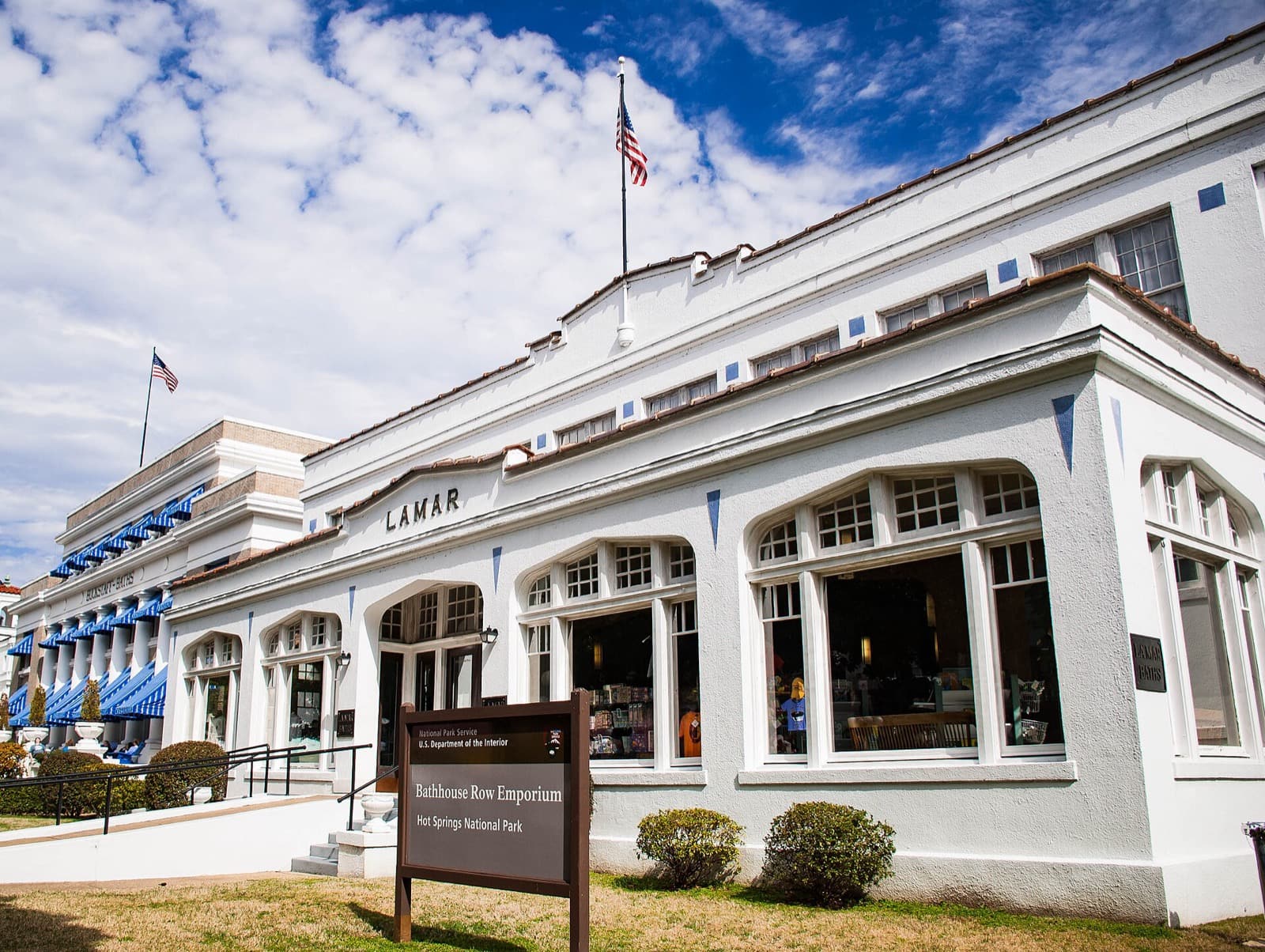
The white stucco front of the Lamar Bathhouse on Bathhouse Row, with the blue striped awnings of the Buckstaff Bathhouse beyond
The Lamar and Buckstaff bathhouses on Bathhouse Row, Hot Springs National Park, Arkansas. The park's thermal water is soaked indoors, in the bathhouses on the row. “Bathhouse Row, Lamar, Hot Springs National Park, Arkansas”, SaraDGarland, CC BY-SA 4.0
Listed for looking at

Thermal features in Oregon that are not for soaking

These are named by an agency as thermal features to see rather than to enter. The agency sentence and the rule that goes with it are quoted on each card.

Mickey Hot Springs

For viewing only

Bureau of Land Management, Burns District

FeeCheck fees with Burns District
AccessOff the East Steens Road north of the Alvord Desert; the access road ranges from dusty to wet clay.
Waternear boiling pools; small streams up to 180 F
  • No soaking; every pool is too hot.
Mickey Hot Springs is a moderately known geothermal area on the northern end of the Alvord Desert.
Mickey Hot Springs, Bureau of Land Management, read September 22, 2026. Read it at the source
All Mickey Hot Springs pools are too dangerously hot for soaking.
Bureau of Land Management on Mickey Hot Springs. Read it at the source
All Mickey Hot Springs pools are too dangerously hot for soaking.
Bureau of Land Management on Mickey Hot Springs. Read it at the source
How many springs

Thermal springs counted in Oregon

NOAA’s Thermal Springs List for the United States counts 126 thermal features in Oregon, the hottest listed at 207 F, out of 1661 across 23 states. The count is a measure of geology: Natural surface hydrothermal features (springs, pools, mud pots, mud volcanoes, geysers, fumaroles and steam vents) at 20 C (68 F) or warmer; temperatures are the maximum reported surface reading. Most sit on remote ground, on land with no public access, or too hot to approach, which is why the soaking list above is the shorter one. The hottest reading can belong to a fumarole or a steam vent rather than a pool.

Thermal Springs List for the United States, compiled by George W. Berry, Paul J. Grim and Joy A. Ikelman, NOAA Key to Geophysical Records Documentation No. 12, 1980; published by NOAA National Centers for Environmental Information (formerly the National Geophysical Data Center). Data file read September 22, 2026: the thermal springs list and its documentation. Every state’s count is on the national table.

The water

What the CDC and the Park Service say about soaking

Two hazards come up in every agency’s own words: what lives in warm water, and how hot the ground and the water can be. Both are quoted below as the agencies write them, and they apply at every site above.

Always keep your head above water in hot springs and other naturally hot (geothermal) water.
CDC, Preventing Brain Infection When Swimming, read September 22, 2026. Read it at the source
Naegleria fowleri lives in soil and warm freshwater lakes, rivers, ponds, and hot springs around the world.
CDC, Naegleria fowleri Infections, read September 22, 2026. Read it at the source
Hold your nose shut or use a nose clip if you jump or dive into the water.
CDC, Preventing Brain Infection When Swimming, read September 22, 2026. Read it at the source
Avoid digging in, or stirring up, sediment in shallow fresh water. Naegleria fowleri amebas are more likely to live in sediment at the bottom of lakes, ponds, and rivers.
CDC, Preventing Brain Infection When Swimming, read September 22, 2026. Read it at the source
All thermal waters contain organisms that may cause illness, including skin rash, gastrointestinal illness (vomiting and diarrhea), or other infections that can be life-threatening.
National Park Service, swimming in Yellowstone, read September 22, 2026. Read it at the source
Burns from thermal features are a common cause of serious injury and death in the park. The ground surrounding these features may look solid, but it can be just a thin crust with super-heated water below.
National Park Service, Yellowstone safety, read September 22, 2026. Read it at the source
Even thermal runoff can be extremely hot and cause burns.
National Park Service, Yellowstone safety, read September 22, 2026. Read it at the source
Toxic gases may accumulate to dangerous levels in some hydrothermal areas. If you begin to feel sick while exploring a geyser basin, leave the area immediately.
National Park Service, Yellowstone safety, read September 22, 2026. Read it at the source
Pets are not allowed in thermal areas or on boardwalks, even if they're on a leash or carried in arms, strollers, or backpacks.
National Park Service, Yellowstone safety, read September 22, 2026. Read it at the source

Oregon hot springs questions

Compiled September 22, 2026 from USDA Forest Service, Bureau of Land Management and U.S. Fish and Wildlife Service pages, one per site, each linked beside its quote and read on September 22, 2026. Site types above: bathhouse, primitive spring and for viewing only. Fees, seasons and access change between seasons, a spring can be closed by flood, fire or repair at short notice, and a soak is at the soaker’s own risk, so the managing office is the one to check before a trip. Every state is in the national hot springs guide.