
How to Identify Mosquito Bites: Comparison with Bed Bug, Flea, Spider & Chigger Bites
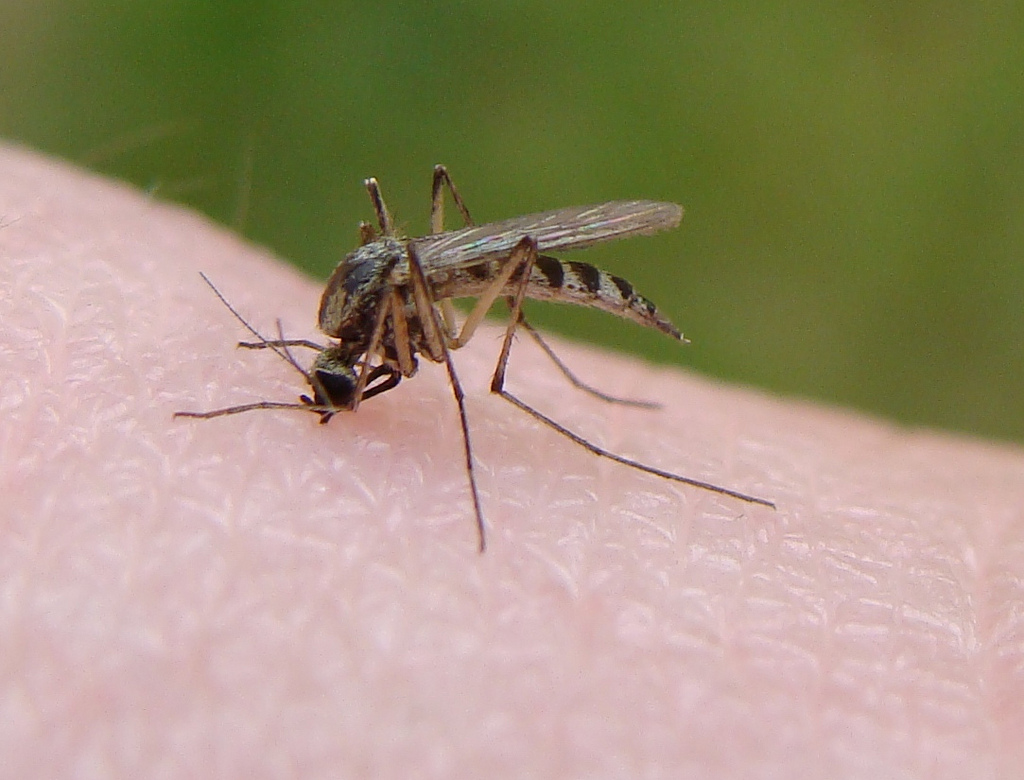
Most itchy bumps after time outside are mosquito bites, but not all of them. Misreading a bite can delay the right treatment, miss the early signs of a vector-borne illness, and let bed bugs or fleas go unchecked indoors. This guide walks through what a mosquito bite actually looks like, why the reaction happens, how to tell it apart from bed bug, flea, chigger, and spider bites, and the specific symptoms that should send you to a doctor or the ER.
What does a mosquito bite look like
A fresh mosquito bite is a small, round, raised bump (medically called a wheal or papule) that appears within minutes of the bite. In the first few minutes it often shows up as a pale, puffy white welt with a tiny red dot in the center where the mosquito's proboscis punctured the skin. Within 20 to 30 minutes, the white wheal flattens and the area turns into a pink or red itchy bump, typically 2 to 10 millimeters across [Source: Mayo Clinic] [Source: AAD].
Bites land on uncovered skin: ankles, lower legs, forearms, wrists, hands, neck, ears, and forehead. Because the female mosquito is hunting by carbon dioxide, body heat, and skin volatiles, she lands wherever skin is exposed, which means bites scatter across the body in no particular pattern. Multiple bites in one outdoor session are common, but they almost never line up neatly the way bed bug or flea bites do [Source: CDC].
Itching usually peaks within the first 24 to 48 hours and resolves on its own in 3 to 5 days. A faint pink or brown mark may linger for a week or two as the skin heals, especially in people with darker skin tones or in anyone who scratched the bite repeatedly [Source: AAD].
How mosquito saliva causes the reaction
The bite itself is painless. The bump and the itch are not from the puncture, they're from the saliva. When a female mosquito feeds, she injects saliva containing anticoagulants and vasodilators that keep your blood flowing freely while she drinks [Source: CDC]. Those salivary proteins are foreign to your immune system, and the body responds by releasing histamine. Histamine widens local blood vessels, brings immune cells to the site, and triggers the itch response on nearby nerve endings [Source: Mayo Clinic].
Reactions vary widely from person to person. People bitten for the first time may not react at all, because the immune system has not yet been sensitized. Repeated exposure typically produces the classic immediate wheal followed by a delayed bump 24 to 48 hours later. Some people, especially young children, older adults, and people with weakened immune systems, develop unusually large local reactions known as skeeter syndrome (covered below) [Source: AAFP].
Why do some people get bitten more often? Mosquitoes preferentially target people with higher CO2 output, warmer skin, certain blood types, pregnant people, and individuals with specific skin microbiome profiles. None of these factors change how a bite looks once it appears, but they explain why one person in a backyard can walk away covered in welts while another walks away untouched [Source: CDC].
Mosquito bite vs bed bug bite
Bed bug bites are the most commonly confused with mosquito bites because both produce small red itchy bumps. The patterns and locations are the giveaway.
- Pattern. Mosquito bites are scattered and random. Bed bug bites often appear in a straight line or a tight zigzag cluster of three, the so-called 'breakfast, lunch, and dinner' arrangement as the bug moves along the skin to feed [Source: AAD].
- Location. Mosquitoes prefer exposed skin (ankles, arms, neck, face). Bed bugs feed on skin that touches the mattress overnight: back, shoulders, abdomen, thighs, and the sides of the neck.
- Timing of itch. Mosquito itch starts within minutes. Bed bug bites can take hours or even days to become itchy because the reaction develops slowly as the immune system responds to the bug's anesthetic-containing saliva [Source: AAD].
- Discovery moment. Mosquito bites are usually noticed outdoors, in the evening, or during sleep with a window open. Bed bug bites are typically discovered in the morning after waking up indoors, often on the same nights repeatedly.
- Other evidence. Bed bugs leave physical signs: small rust-colored blood spots on sheets, dark fecal specks along mattress seams, and shed skins. Mosquitoes leave none of that behind.
Mosquito bite vs flea bite
Flea bites are much smaller than mosquito bites and concentrate on the lower body, because fleas jump from carpet, pet bedding, or grass and feed at whatever skin they hit first.
- Size. Flea bites are typically 1 to 2 millimeters across, noticeably smaller than the 2 to 10 millimeter mosquito wheal [Source: AAD].
- Appearance. Flea bites have a distinct red dot or tiny purple spot at the very center (the puncture site) surrounded by a small red halo. Mosquito bites are usually a uniform raised welt without a sharp central dot.
- Location. Flea bites cluster on the ankles, feet, and lower legs of adults. Children playing on carpet may get bites across the abdomen and arms. Mosquito bites are scattered across exposed skin anywhere on the body.
- Pattern. Flea bites appear in clusters of three or four bumps grouped tightly together, or in irregular lines as the flea hops along the skin. Mosquito bites are randomly distributed [Source: AAD].
- Pet exposure. A household with cats or dogs that go outdoors is a common source. If multiple family members have ankle-level bumps and the pet is scratching more than usual, fleas are the more likely answer.
Mosquito bite vs chigger bite
Chiggers are the larval stage of certain mites, picked up from tall grass, brushy fields, and weedy lake or stream edges. The bites look different and itch differently from mosquito bites.
- Appearance. Chigger bites form bright red welts or small pimple-like bumps, sometimes with a tiny blister on top. They tend to be smaller and more uniformly red than a mosquito wheal [Source: AAD].
- Location. Chiggers concentrate where clothing fits tightly against the skin: sock lines, waistband, bra line, behind the knees, and the groin. They look for thin skin and a barrier that stops them from crawling further. Mosquitoes go for any exposed skin without that constriction pattern.
- Timing. Chigger bites are not noticed at the moment they happen. Intense itching typically begins 3 to 6 hours after exposure and can peak 24 to 48 hours later. Mosquito itch starts within minutes [Source: AAD].
- Itch intensity. Chigger itch is famously severe and can last 1 to 2 weeks. Mosquito itch is usually milder and resolves in a few days.
- Myth. Chiggers do not burrow into the skin and do not stay attached. By the time you feel the itch, the chigger is long gone. Nail polish over the bite does nothing to suffocate it and only risks contact dermatitis.
Mosquito bite vs spider bite
Most lesions people call 'spider bites' in the United States are actually mosquito bites, bed bug reactions, or bacterial skin infections like MRSA. True spider bites are usually solitary, appear on skin covered by clothing or hidden in a shoe, and produce a delayed, expanding, painful lesion over several hours rather than the near-instant itchy wheal of a mosquito [Source: Mayo Clinic] [Source: AAFP].
The two US spiders that warrant medical attention are the brown recluse and the black widow. Both produce systemic symptoms (severe pain, cramping, tissue damage) that mosquito bites do not. If you suspect a spider bite, especially with rapidly spreading redness, a darkening center, or muscle cramps, see the dedicated comparison guide for diagnostic detail and the symptoms that warrant emergency care.
Curious how active mosquitoes are in your area right now?
See the local forecastSkeeter syndrome and large local reactions
Skeeter syndrome is the clinical name for an unusually large local allergic reaction to mosquito saliva. Instead of a small itchy bump, the bite produces extensive swelling, redness, warmth, and sometimes blistering across an area the size of a hand or larger. It often comes with low-grade fever, swollen lymph nodes, or generalized malaise within hours of the bite [Source: AAFP].
It is most common in young children, people who have recently moved to a new region with unfamiliar mosquito species, and individuals with weakened immune systems. The reaction is mediated by IgG and IgE antibodies against specific salivary proteins, and it tends to fade with repeated exposure to the same local mosquito species over time [Source: AAFP].
Skeeter syndrome is frequently mistaken for cellulitis (a bacterial skin infection) because both look red, warm, and swollen. The key difference is timing. A skeeter reaction appears within minutes to a few hours after a known bite and starts to improve within 24 to 48 hours. Cellulitis develops over 24 to 72 hours, keeps expanding, and is often accompanied by streaking, high fever, and worsening pain. If you cannot tell the two apart, especially if redness keeps spreading or fever rises, get a clinical evaluation rather than guessing [Source: AAFP].
When a mosquito bite is dangerous
The bite itself almost never causes serious harm. The risk comes from the pathogens a small percentage of mosquitoes carry. In the United States the main concerns are West Nile virus, Eastern equine encephalitis (EEE), St. Louis encephalitis, La Crosse encephalitis, and, in parts of the Gulf Coast and territories, dengue and Zika [Source: CDC].
There is no special look to a mosquito bite that signals infection. A West Nile bite looks identical to any other mosquito bite. The warning signs are systemic and appear days after the bite, not at the bite site. West Nile virus symptoms typically begin 2 to 14 days after the bite. EEE symptoms begin 4 to 10 days after the bite. Dengue symptoms begin 4 to 10 days after the bite [Source: CDC].
Seek medical care quickly if any of these appear in the two weeks after a known bite, especially during local mosquito season:
- High fever (above 102 degrees Fahrenheit) without a clear other cause.
- Severe headache, stiff neck, or sensitivity to light.
- Confusion, disorientation, tremors, seizures, or sudden muscle weakness on one side of the body. These are neurological signs of viral encephalitis and warrant an emergency room visit, not urgent care [Source: CDC].
- Severe joint pain, eye pain behind the eyes, or a flat red rash spreading across the trunk (more typical of dengue) [Source: CDC].
- Persistent vomiting, abdominal pain, or unusual bleeding from the gums or nose, which can signal severe dengue and is a medical emergency [Source: CDC].
Most people infected with West Nile virus have no symptoms at all. About 20 percent develop a mild flu-like illness. Roughly 1 in 150 develops the severe neuroinvasive form, with the highest risk in adults over 60 and people with weakened immune systems [Source: CDC].
How to treat a mosquito bite
Most mosquito bites resolve on their own within a few days without any treatment. The goal of home care is to reduce the itch enough to avoid scratching, because broken skin invites bacterial infection.
- Wash the area with soap and water. Clean the bite gently to remove any bacteria left on the skin surface [Source: Mayo Clinic].
- Apply a cold pack or ice wrapped in a cloth for 10 minutes. Cold constricts local blood vessels, slows the histamine response, and reduces both swelling and itch [Source: Mayo Clinic].
- Use an over-the-counter 1% hydrocortisone cream or calamine lotion. Apply a thin layer to the bite up to twice daily for one or two days. Hydrocortisone calms the inflammatory reaction; calamine has a mild numbing and drying effect [Source: AAD].
- Take an oral antihistamine if the itch is severe or you have many bites. Non-drowsy options like cetirizine or loratadine work well during the day; diphenhydramine works at night. Follow the dosing on the package [Source: Mayo Clinic].
- Do not scratch. Repeated scratching breaks the skin and opens the door to bacteria like Staphylococcus aureus and Streptococcus, which can cause secondary infections such as impetigo and cellulitis. For young kids, keep fingernails trimmed short and cover stubborn bites with a small adhesive bandage [Source: AAD].
- Skip the home remedies that don't help. Toothpaste, vinegar, baking soda paste, and rubbing alcohol have no proven benefit over standard topical treatments and can irritate sensitive skin or trigger contact dermatitis.
When to see a doctor
Most mosquito bites do not need medical attention. See a clinician (or in some cases go directly to an emergency room) if any of the following develop:
- Signs of secondary infection at the bite site: increasing redness, warmth, swelling, pus, or red streaks spreading away from the bite. These can indicate cellulitis or impetigo, which need antibiotics [Source: Mayo Clinic].
- A large local reaction with fever or unusually extensive swelling (consistent with skeeter syndrome). Children with skeeter syndrome sometimes need a short course of oral antihistamines or, in severe cases, oral corticosteroids [Source: AAFP].
- Anaphylaxis after a bite: difficulty breathing, swelling of the lips, tongue, or throat, hives spreading over the body, dizziness, or fainting. Call 911. True anaphylaxis to mosquitoes is rare but does occur and is a medical emergency [Source: Mayo Clinic].
- Systemic symptoms 2 to 15 days after a known bite: fever above 102 degrees, severe headache, stiff neck, confusion, seizures, or one-sided weakness. Go to the emergency room. These are red flags for West Nile, EEE, or other neuroinvasive arboviruses [Source: CDC].
- Persistent rash or non-healing sore at a bite site that has not resolved after two weeks. This warrants an in-person evaluation to rule out infection, an unusual reaction, or a different cause entirely.
- Bites on infants under 2 months, anyone immunocompromised, pregnant patients, or older adults who develop fever or feel unwell after bites. These groups have higher risk of severe outcomes from mosquito-borne illness and benefit from earlier evaluation [Source: CDC].
When in doubt, call a doctor's office or nurse line and describe the bite and the timeline. The combination of recent outdoor exposure, a known bite, and any neurological or rapidly worsening symptom is always worth a same-day clinical evaluation.
Frequently asked questions
How can I tell the difference between a mosquito bite and a bed bug bite?
Mosquito bites itch within minutes and scatter randomly across exposed skin like ankles, arms, and neck. Bed bug bites often appear in a straight line or tight cluster of three on skin that touched the mattress overnight, and they typically take hours or days to become itchy. Rust-colored spots on sheets or dark specks along the mattress seam point to bed bugs.
Why do mosquito bites itch so much?
The itch comes from your immune response to proteins in mosquito saliva, not from the puncture. The body releases histamine, which dilates local blood vessels and triggers itchy nerve endings around the bite. Some people release more histamine than others, which is why reactions vary so widely from person to person.
Can a mosquito bite spread infection?
The bite itself does not directly cause a skin infection, but repeated scratching breaks the skin and lets bacteria like Staph or Strep enter, causing impetigo or cellulitis. Separately, a small percentage of mosquitoes carry viruses like West Nile, EEE, or dengue that they transmit through saliva. Vector-borne infections show up days after the bite as systemic symptoms, not as changes at the bite site.
How long do mosquito bites last?
Most mosquito bites peak in itch within 24 to 48 hours and fully resolve within 3 to 5 days. A faint pink or brown mark may linger another week or two as the skin heals, especially after heavy scratching or in people with darker skin tones.
What does a West Nile mosquito bite look like?
It looks identical to any other mosquito bite. There is no visual difference between a West Nile-carrying mosquito's bite and a regular one. The warning signs are systemic and show up 2 to 14 days later: fever, severe headache, stiff neck, or neurological symptoms like confusion or weakness. Those signs warrant immediate medical evaluation.
Why do mosquitoes bite some people more than others?
Mosquitoes are drawn to higher carbon dioxide output, warmer skin, certain blood types, pregnant people, and specific skin microbiome profiles. None of these factors change how a bite looks once it appears. They just explain why one person in a group ends up with most of the bites.
Are mosquito bites worse on certain parts of the body?
Bites on the face, eyelids, lips, ears, and genitals often swell more because those areas have thinner skin and looser connective tissue, which lets fluid accumulate quickly. The bite is no more dangerous, just more dramatic. The reaction usually resolves on the same 3 to 5 day timeline.
Can I have an allergic reaction to mosquito bites?
Yes. Large local allergic reactions (skeeter syndrome) produce extensive swelling, warmth, and sometimes low-grade fever within hours of a bite, and are most common in young children and people new to a region. True systemic anaphylaxis to mosquitoes is rare but possible and causes hives across the body, throat swelling, or difficulty breathing. That requires calling 911.
What's the fastest way to stop a mosquito bite from itching?
Apply a cold pack or ice wrapped in a cloth for about 10 minutes, then a thin layer of 1% hydrocortisone cream or calamine lotion. If you have many bites or the itch is severe, an oral antihistamine like cetirizine or loratadine during the day or diphenhydramine at night will help. Avoid scratching to prevent secondary infection.
Want to know when mosquito biting pressure peaks where you live?
Enter your ZIP code or town below to see your local forecast.
Sources
- CDC: About Mosquito Bites
- CDC: West Nile Virus Symptoms, Diagnosis, and Treatment
- CDC: Eastern Equine Encephalitis Symptoms and Treatment
- CDC: Dengue Symptoms and Treatment
- Mayo Clinic: Mosquito Bites Symptoms and Causes
- Mayo Clinic: Mosquito Bites Diagnosis and Treatment
- AAD: How to Treat and Prevent Mosquito Bites
- AAD: Bug Bites and Stings, When to See a Dermatologist
- AAFP: Arthropod Bites