
Snowy Owls in Ohio
Snowy owl reports in Ohio winter by winter, adjusted for the growth of iNaturalist, with this winter read live and the latest report date.
Snowy owl reports in Ohio this winter
Winter 2026-27 so far
Reading this winter’s reports for Ohio from iNaturalist.
Looking up the latest research grade snowy owl report for Ohio.
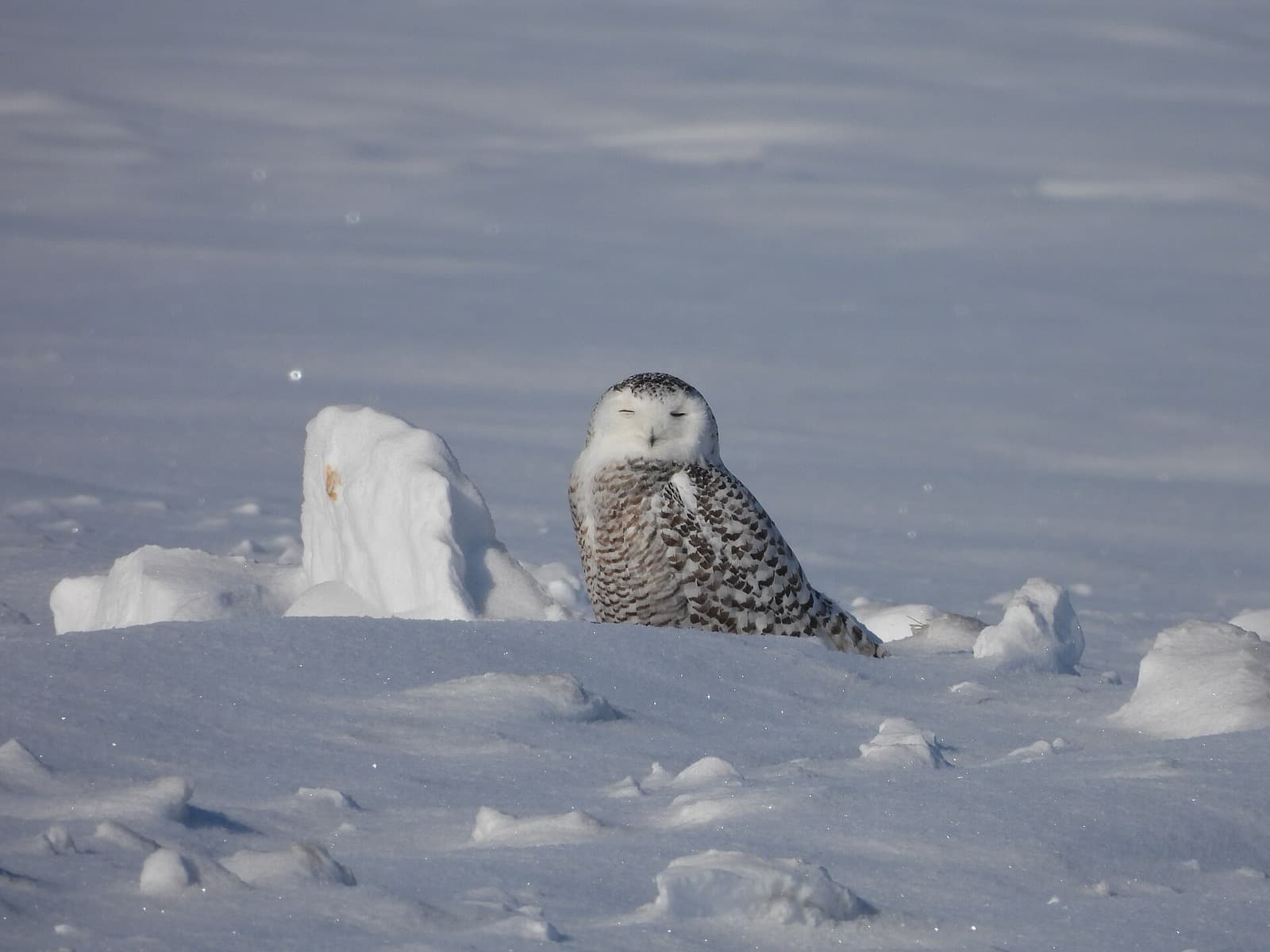
Ohio owls gather on the Lake Erie shoreline, breakwalls and marinas, and on the flat former lake bed farmland of the northwest, with big flights in 2017-18 and 2020-21.
Twelve winters of snowy owls in Ohio
Measured against everything birders reported, the biggest winter in the Ohio record is 2017-18: 82 research grade reports, 9.4x an ordinary winter. Each winter runs November 1 to March 31, and its rate is snowy owl reports per 10,000 bird reports for the state, so the rising number of people on iNaturalist does not read as more owls.
When snowy owls are reported in Ohio
Snowy owl
292 research grade snowy owl observations uploaded to iNaturalist for Ohio since July 2014, by calendar month, with November to March shaded. Reports usually begin in November and peak in December; December to February holds 77 percent of them. Counts of what people reported, so they follow observers as well as owls.
Where snowy owls winter in Ohio
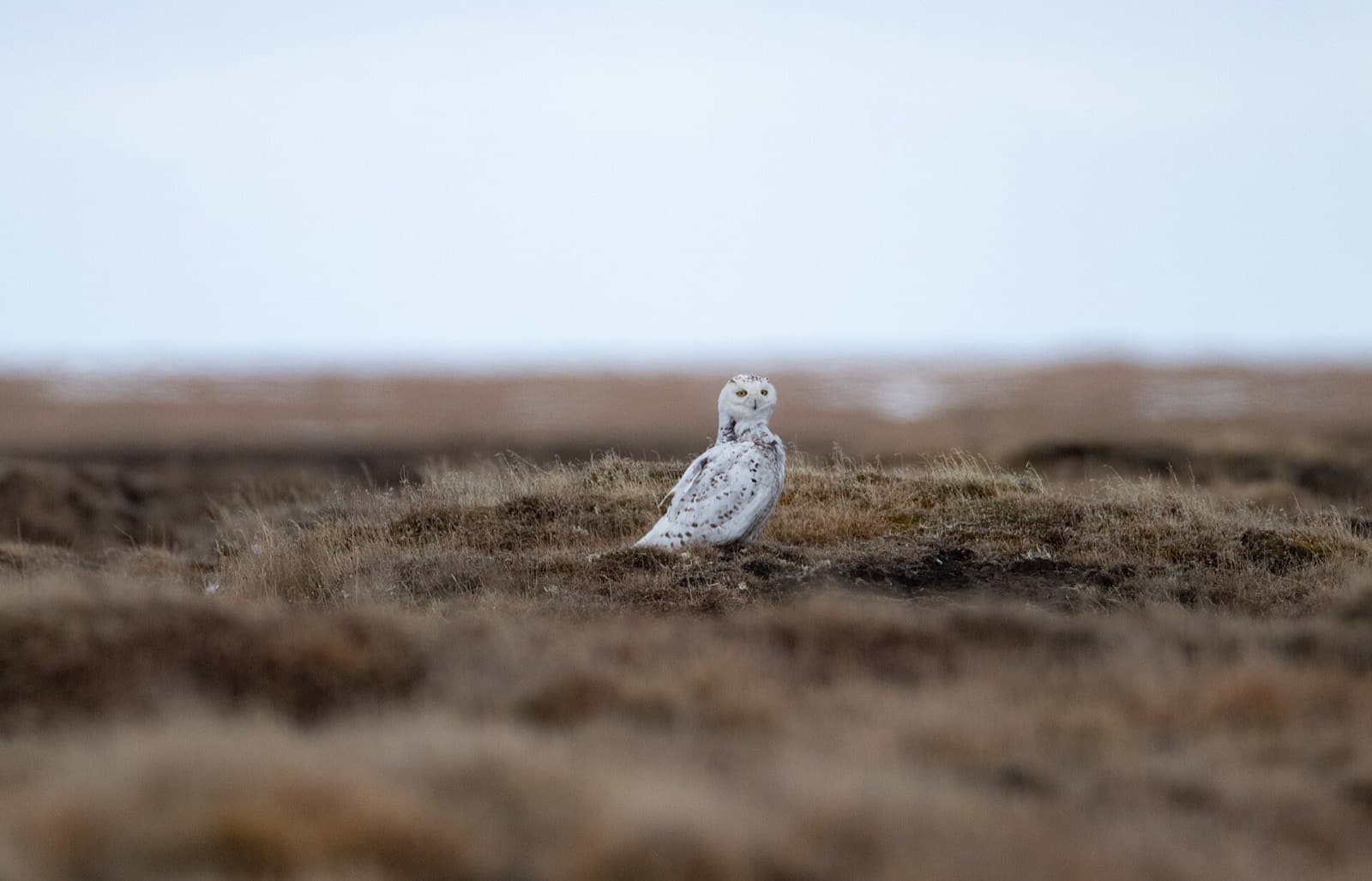
Snowy owls look for country that resembles the tundra: flat, open and treeless, with a low perch to hunt from. In Ohio that means:
- Lake Erie shoreline
- breakwalls
- open farmland
Winter finches and northern raptors in Ohio
The northern birds with at least 25 winter reports in the Ohio record, and how each came in last winter against its own other winters. The Winter Finch Forecast from the Finch Research Network reads the northern crops each autumn.
| Species | Reports | Index | Standing |
|---|---|---|---|
| Evening grosbeak | 10 | rare | most winters have none |
| Redpoll | 3 | 0.4x | quiet |
| Pine siskin | 62 | 3.0x | big irruption |
| Red crossbill | 0 | rare | most winters have none |
| Rough-legged hawk | 41 | 1.3x | above normal |
| Snow bunting | 58 | 1.2x | typical |
| Northern shrike | 4 | 0.1x | quiet |
Evening grosbeak
Large tree seeds, especially box elder and maple, and sunflower at feeders.
Flights south follow poor seed crops in the boreal forest, and spruce budworm outbreaks in the north have fed a recovery in numbers.
Redpoll
Birch and alder catkins, and nyjer at feeders.
When the northern birch seed crop fails, flocks come south, and big flights have tended to come every other winter.
Pine siskin
Small conifer seeds, alder and birch, and nyjer at feeders.
A nomad on conifer seed that settles wherever the cones are good, so it can be abundant one winter and scarce the next.
Red crossbill
Seeds prised from closed conifer cones with a crossed bill.
Several call types each specialise on different conifers and wander to wherever their cone crop is heavy.
Rough-legged hawk
Voles and other small rodents, hunted by hovering over open fields.
A regular winter visitor from the Arctic whose numbers rise and fall with the rodent cycles in its breeding range.
Snow bunting
Weed and grass seed on bare ground.
Flocks settle on windswept fields and shorelines where snow blows thin, and move on with each storm.
Northern shrike
Voles and small birds, sometimes cached on thorns.
A songbird that hunts like a small hawk, coming south in larger numbers when prey in the north is scarce.
How to watch a snowy owl in Ohio
- Keep about 100 yards away. A snowy owl in winter is resting between hunts and every flush costs it energy it may not have. If it turns to stare, stands up or flies, back off. Binoculars, a scope or a long lens close the distance instead.
- Stay in the car. On farm roads and at airport edges the car works as a blind; an owl that ignores a parked vehicle will leave when a person steps out. Pull fully off the road and keep to public roads outside fences.
- Let the owl hunt its own food. Baited owls learn to fly low toward people and cars, which draws them onto roads and runways where collisions kill them.
- Leave the calls at home. Recorded calls and imitations pull owls off their hunting perches and add stress in the hardest season of the year.
- Share sightings at the state level. An owl that holds one field for weeks draws crowds once its spot is posted; the state and the date are plenty for the record.
Guidance from Project SNOWstorm and Audubon Great Lakes.
Wildlife in Ohio is managed by Ohio Department of Natural Resources Division of Wildlife.
Snowy owl reports in other states
Questions about snowy owls in Ohio
Compiled 2026-09-22 from research grade observation counts for Ohio on iNaturalist, with the live winter and latest report date read from the same source. Counts are uploads by the public, adjusted by all bird uploads for the state in the same window.