
Lead Service Lines in Connecticut
The Connecticut headline is how much is still unknown. Enter your ZIP below to see the water systems serving your county and exactly what each one told EPA its service lines are made of. Every figure here is EPA's, from the April to June 2026 extract, and each one is a utility's count for its whole network.
Connecticut utilities have not established the material of 281,092 service lines, 33.8 percent of everything they reportedThese are counts of pipe a utility reported, for its whole network, not a finding about any address. The record for your own service line is your utility's inventory for your address.
Look up the water systems serving your ZIP
Enter a Connecticut ZIP code. You get every community water system EPA lists for the county or countys that ZIP touches, and for each one, the service line materials it reported in EPA's four categories, its most recent listed lead tap result, and the doors to its own records.
What Connecticut utilities actually reported
Connecticut reported 7,993 lead lines and 5,178 galvanized requiring replacement, but a third of its reported lines, 281,092 of them, are still unknown. It also carries 130 listed LSL Inventory violations across 474 community systems, one of the higher rates in New England, so the unknown share reflects utilities that have not finished the work as much as pipe nobody can reach.
Across 474 active community water systems, Connecticut reported 830,767 service lines in total: 7,993 lead, 5,178 galvanized requiring replacement, 281,092 of unknown material and 536,504 non lead. That puts it 28 of 50 states by confirmed lead plus galvanized lines, and 25 of 50 by the raw size of its unknown column.
9 of those systems, 1.9 percent of the state, reported no service line types at all. Those systems are blanks in the federal record rather than systems with nothing to report, and they are excluded from the totals above rather than counted as zero. 305 systems, 64.3 percent, report that every line they own has been identified.
Our summary of information published by EPA SDWIS service line inventory report
This page leads with the unknown column because in Connecticut 33.8 percent of reported lines have no established material (the cut is 30 percent) or 1.9 percent of systems reported nothing (the cut is 15 percent). With that much of the record unresolved, the confirmed counts are partial by construction, so the unknown column is the finding.
EPA separately PROJECTS 5,198 lead service lines and 6,109 galvanized requiring replacement in Connecticut, about 11,307 together, for the purpose of allocating federal replacement money. That is a larger number than the 13,171 reported above, and the difference is the unknowns: EPA distributes a share of each state's unknown lines into the lead column using that state's own ratio of lead to identified pipe. It is a funding estimate rather than a count, and it is shown separately from the reported counts throughout.
Our summary of information published by EPA 7th Drinking Water Infrastructure Needs Survey and Assessment
EPA's four categories, and what they mean
Every inventory in the country sorts lines into the same four buckets. The one people misread is the last: unknown is not a finding of no lead, and in Connecticut it covers 281,092 lines.
Lead status unknown
The utility has not established what this line is made of. It is not a finding of lead and it is not a finding of no lead.
281,092Lead
The utility records this line as lead.
7,993Galvanized requiring replacement
Galvanized iron or steel that sits, or once sat, downstream of a lead line, so it can hold lead picked up from it. The rule treats it like lead.
5,178Non lead
The utility records this line as something other than lead or galvanized requiring replacement, most often copper or plastic.
536,504
US EPA, Final Lead and Copper Rule Improvements technical fact sheet“A GRR service line is a galvanized service line that currently is or ever was downstream of an LSL or is currently downstream of a service line of unknown material.”
Galvanized requiring replacement is the category that surprises people, because the pipe is not lead. It is galvanized iron or steel whose rough interior can hold lead that washed down from a lead line upstream, and it keeps releasing it after the lead is gone, which is why the rule treats it the same way.
Where the inventory stops
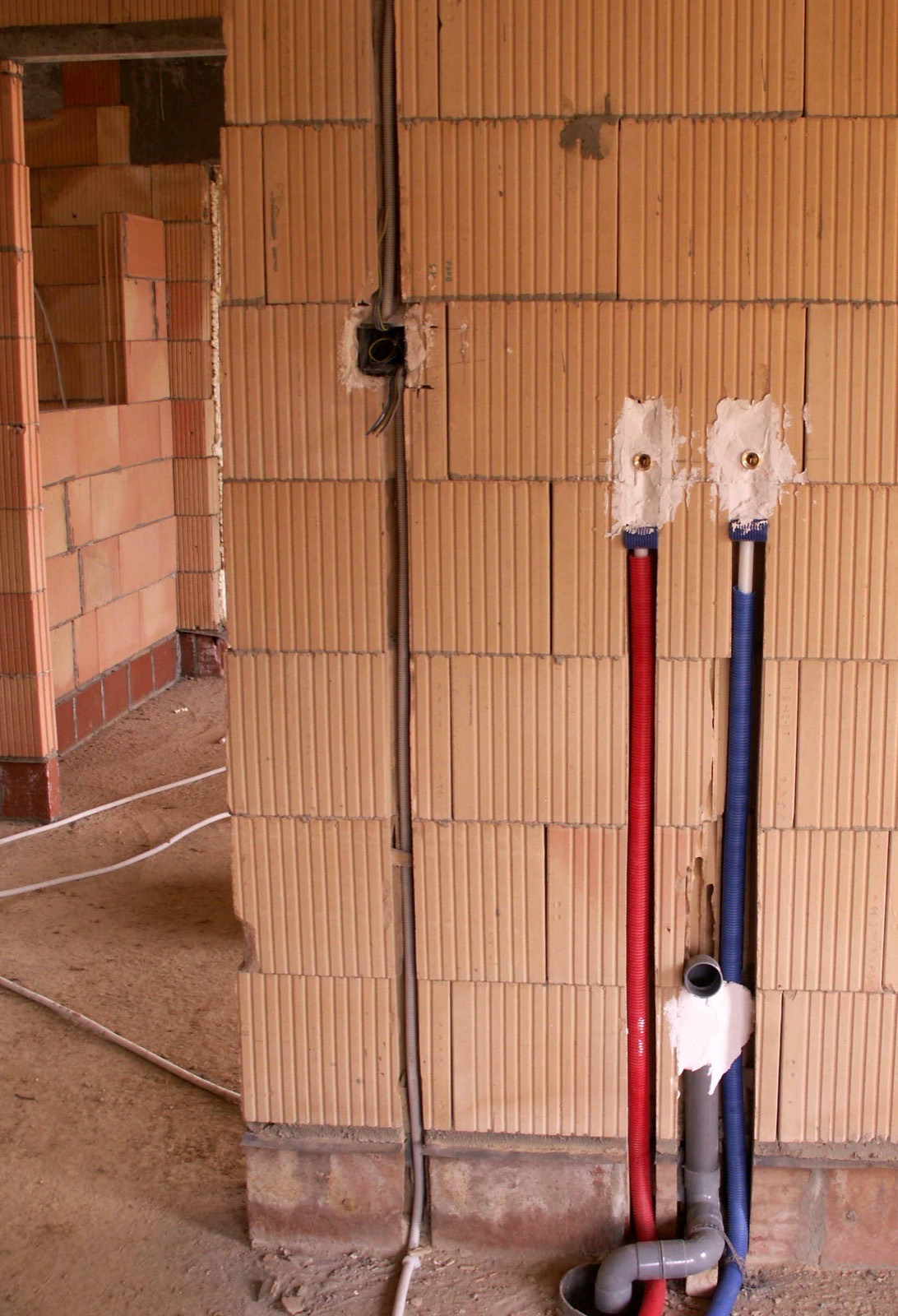
A service line is the pipe between the water main and the building. The inventory covers that and nothing else: not the plumbing inside the walls, not the solder in its joints, not the fixtures on the end of it. Lead solder was legal in household plumbing until 1986 and brass fittings could legally contain lead long after that.
US EPA, Basic Information about Lead in Drinking Water“Among homes without lead service lines, the most common problem is with brass or chrome-plated brass faucets and plumbing with lead solder.”
This is the utility's record, not a test of your home. An inventory is what a water system believes about the pipe between its main and a building, assembled from permits, tap cards and spot checks. It can be wrong, it is counted at the system level here, and across the country the largest category in it is lead status unknown. It says nothing about the plumbing inside your walls: EPA notes that “Among homes without lead service lines, the most common problem is with brass or chrome-plated brass faucets and plumbing with lead solder.” Your utility's own inventory for your address, and a laboratory test of your own tap, are the two records that speak to a particular home; no public dataset does.
What the federal rule requires, and by when
Two EPA rules govern this: the Lead and Copper Rule Revisions, which created the inventory, and the Lead and Copper Rule Improvements, which extended it and set the replacement clock.
US EPA, Lead and Copper Rule Improvements comparison table“All systems must develop an initial lead service line (LSL) inventory by October 16, 2024, that includes all service lines, regardless of ownership, categorized as lead, non-lead, galvanized requiring replacement (GRR), and unknown.”
- October 16, 2024The first deadline. Every community and non transient non community water system had to have compiled an initial service line inventory covering every line it serves, in EPA's four categories.
- Since thenSystems must notify anyone served by a line recorded as lead, as galvanized requiring replacement, or as unknown. A letter saying "unknown" is the rule working, not a finding about the building.
- November 1, 2027The baseline inventory is due: an updated version that adds connectors and validates the non lead category, so a line called non lead has to be backed by something.
- Then ten yearsFull replacement of lead and galvanized requiring replacement lines under the system's control, with limited exceptions, whatever the system's 90th percentile lead level.
Did Connecticut systems file?
130 Connecticut community water systems carry a listed LSL Inventory violation in EPA's compliance file, and 130 carry some service line specific violation, of which 116 are still listed as unaddressed or being resolved. Read this as paperwork rather than pipe. A system with no violation filed something, which says nothing at all about what the something said, and states differ enormously in how thoroughly they report enforcement to EPA.
US EPA ECHO, Drinking Water (SDWA) FAQs“Compliance statistics are based on violations reported by states to the EPA Safe Drinking Water Information System (SDWIS). EPA is aware of inaccuracies and underreporting of some data in this system. We are working with the states to improve the quality of the data.”
Finding your own system's inventory
No statewide Connecticut inventory lookup is linked here: the rule made each utility publish an inventory, not each state, so the inventory for your address lives with your water system. Use the ZIP tool above to get the names of the systems serving your area, then look for that system's own service line inventory on its website or ask it directly. Connecticut Department of Public Health runs the drinking water program in Connecticut and can say where a given system's inventory was filed.
US EPA, Lead and Copper Rule Improvements comparison table“The inventory must be made publicly accessible and available online for systems serving > 50,000 persons.”
Connecticut by county
What the systems serving each county reported. Sorted by lead and galvanized lines, then by unknowns.
Loading the county table from the committed EPA snapshot.
The other federal record: lead at the tap
Separately from the inventory, systems sample tap water at a targeted pool of higher risk homes and report a 90th percentile lead result. It measures water, not pipe, and the two records answer different questions.
In Connecticut, 473 community water systems have a lead result from a monitoring period ending within five years of the April to June 2026 extract. The median of those results is 0.7 parts per billion, and 3 systems sit at or above EPA's 15 parts per billion action level. No system in the state is missing a result from the last five years.
The action level is not a health threshold. It is the concentration at which the rule requires a system to act, and EPA's replacement requirement applies whatever a system's 90th percentile is. A system can report a low percentile and still have thousands of lead lines in the ground.
Our summary of information published by EPA ECHO Safe Drinking Water Act data
US EPA, Basic Information about Lead in Drinking Water“EPA and the Centers for Disease Control and Prevention (CDC) agree that there is no known safe level of lead in a child’s blood.”
CDC publishes guidance on lead in drinking water and on blood lead testing for children, linked here: CDC Lead in Drinking Water. EPA's own household checklist is EPA Protect Your Tap, a quick check for lead.
Connecticut lead service line questions
The rest of the Connecticut water record
Nearby states
All 50 states and the national picture on lead service lines, including what the country as a whole reported.