
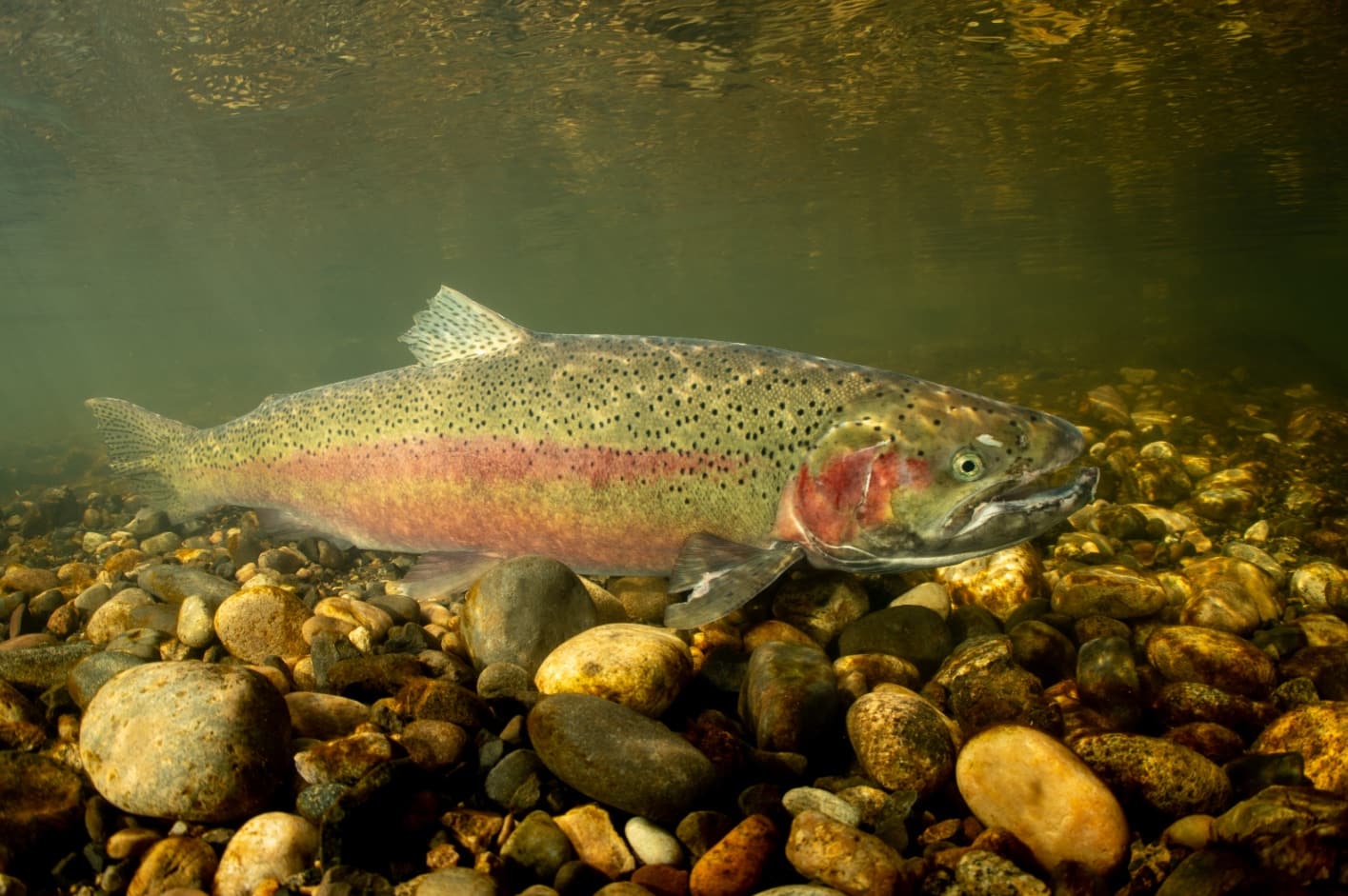
Winter Steelhead in Ohio
Ohio Department of Natural Resources, Division of Wildlife names 9 steelhead rivers, from the Vermilion River to the Black River, and describes fall run Sep 15 to Nov 30, winter run Dec 1 to Mar 31, spring run Mar 1 to May 15. 8 of them carry a live USGS gauge, shown against the median for today's date.
Ohio steelhead rivers, run timing and flow today
Each river below is one Ohio Department of Natural Resources, Division of Wildlife names for steelhead, with the timing it gives and the sentence it came from. Beside it, the latest discharge from the river’s USGS gauge and the median discharge for today’s date across that gauge’s years of record, so a reading of 150% means the river is carrying half again its usual flow for the day. 1 of the gauges also report water temperature.
| River | Run timing | Hatchery | Flow now | Median for today | Water temp |
|---|---|---|---|---|---|
| Vermilion RiverLake Erie The westernmost stocked stream, scheduled for 55,000 yearlings a year. Ohio DNR source USGS gauge 04199500 | Sep to May | Hatchery fish | Loading | Loading | Discharge only at this gauge |
| Rocky RiverLake Erie One of three rivers scheduled for 90,000 yearlings a year, on Cleveland's west side. Ohio DNR source USGS gauge 04201500 | Sep to May | Hatchery fish | Loading | Loading | Discharge only at this gauge |
| Chagrin RiverLake Erie Scheduled for 90,000 yearlings a year, east of Cleveland. Ohio DNR source USGS gauge 04209000 | Sep to May | Hatchery fish | Loading | Loading | Discharge only at this gauge |
| Grand RiverLake Erie Scheduled for 90,000 yearlings a year; the gauge is near Painesville. Ohio DNR source USGS gauge 04212100 | Sep to May | Hatchery fish | Loading | Loading | Discharge only at this gauge |
| Ashtabula RiverLake Erie The newest stocked stream, added once water quality and habitat improved. Ohio DNR source | Sep to May | Hatchery fish | Run timing from Ohio DNR, with the note and source beside it. | ||
| Conneaut CreekLake Erie Stocked by both Ohio and Pennsylvania, 75,000 yearlings each. Ohio DNR source USGS gauge 04213000 | Sep to May | Hatchery fish | Loading | Loading | Discharge only at this gauge |
| Cuyahoga RiverLake Erie Not stocked; the agency lists it among rivers that get stray steelhead. Ohio DNR source USGS gauge 04208000 | Sep to May | Wild run | Loading | Loading | Loading |
| Euclid CreekLake Erie A small Cleveland creek the agency lists for stray steelhead. Ohio DNR source USGS gauge 04208700 | Sep to May | Wild run | Loading | Loading | Discharge only at this gauge |
| Black RiverLake Erie A stray run river west of Cleveland; not stocked. Ohio DNR source USGS gauge 04200500 | Sep to May | Wild run | Loading | Loading | Discharge only at this gauge |
When steelhead are in Ohio rivers
The months Ohio DNR gives for each river, laid on a July to June year so a winter run reads as one bar. The statewide winter run is Dec 1 to Mar 31. Rain and water temperature move the weeks inside those months from one year to the next.
- Vermilion RiverLake ErieSep to May
- Rocky RiverLake ErieSep to May
- Chagrin RiverLake ErieSep to May
- Grand RiverLake ErieSep to May
- Ashtabula RiverLake ErieSep to May
- Conneaut CreekLake ErieSep to May
- Cuyahoga RiverLake ErieSep to May
- Euclid CreekLake ErieSep to May
- Black RiverLake ErieSep to May
- Fall run
- Winter run
- Spring run
- Nov, the current month
The runs, in Ohio DNR’s words
- Fall run, Sep 15 to Nov 30. Stocked yearlings return from Lake Erie to the tributaries starting in mid September, holding in harbors, lower rivers and deep pools through the fall.
Fall (mid-September-November)
Source - Winter run, Dec 1 to Mar 31, peak Dec to Mar. By December the fish already in the rivers are spread out and the bulk of the run heads upstream toward spawning areas, and the agency calls December through March the peak.
December through March provides peak action for anglers. By this time, the trout that are already in the rivers are well distributed, and the bulk of the population begin heading up the streams to spawning areas.
Source - Spring run, Mar 1 to May 15. Fish work gravel runs to attempt spawning in March and April, then drop back to Lake Erie from mid April through mid May.
Then in mid-April through mid-May, they move back downstream and into Lake Erie for the summer.
Source
Water temperature and the run
By mid-October the run has intensified as the water temperatures of the streams drop to the optimum range of 45-58 degrees F for migration.
New York State Department of Environmental Conservation
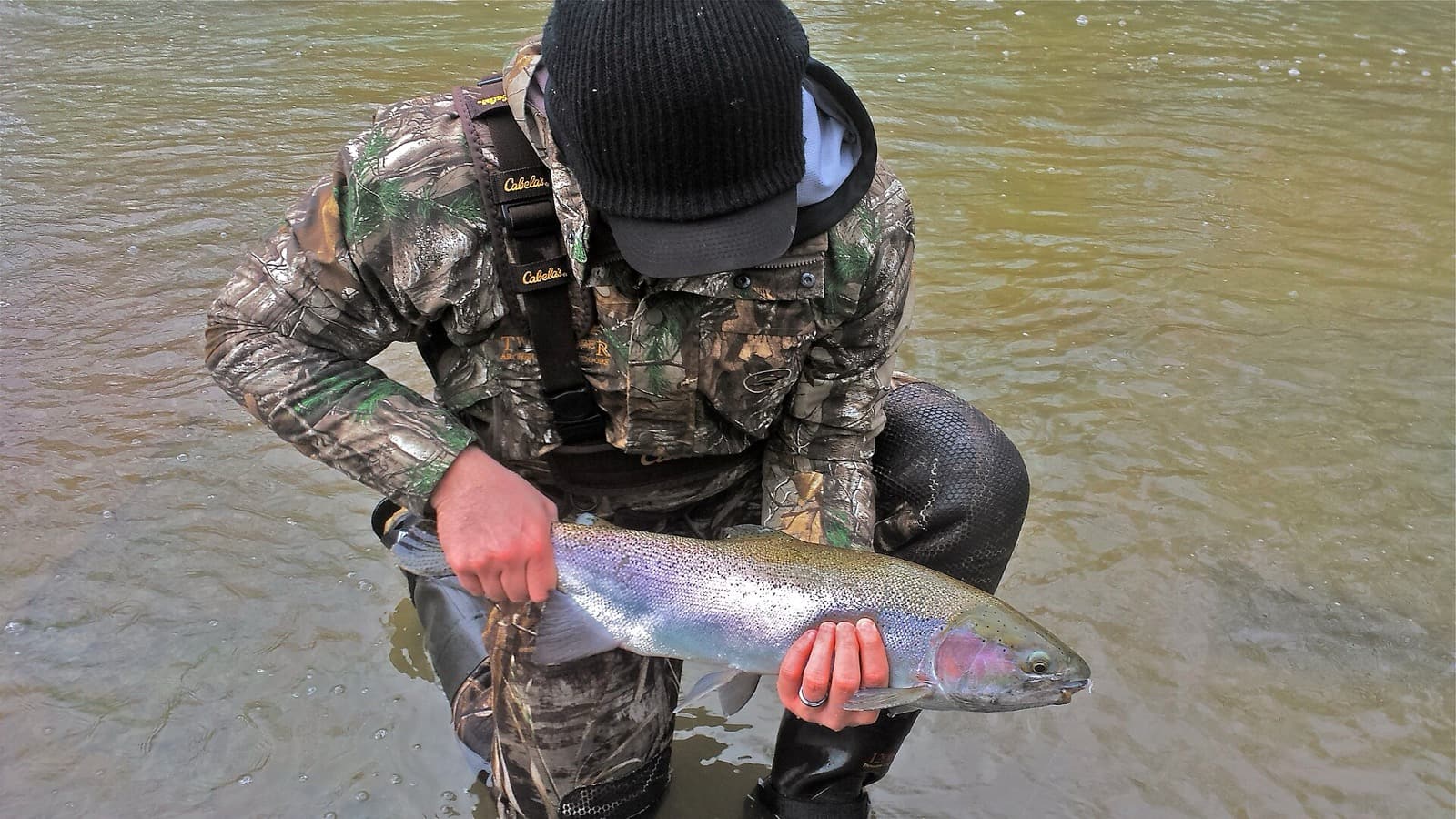
Ohio steelhead reports and counts
Where Ohio DNR publishes the current picture: fishing reports, weir and hatchery counts, and creel surveys, each with how often it is updated.
- Fishing Reports and Forecasts (Lake Erie)Ohio DNR, fishing report, weekly
Steelhead are starting to be caught while trolling within 4 miles of Ashtabula harbor in 34-69’ of water.
- Steelhead Creel Survey ReportOhio DNR, creel
- Steelhead Angler Survey ReportOhio DNR, creel
Steelhead run timing in other states
Questions about Ohio steelhead
River timing from Ohio Department of Natural Resources, Division of Wildlife pages, each linked beside its river. Flow, water temperature and the daily median from the USGS Water Services. Compiled September 21, 2026.