
Chiggers in Idaho: 2026 Season & Activity Forecast
Typical peak July 1 – August 20 — today's live activity score, where they are, and when they go away.
Season over — gone until ~June 5 next yearThe Idaho chigger season at a glance
Live · scored dailyUniversity of Idaho Extension notes chiggers are "not a significant pest" in the state — if you itch after a hike here, check for ticks.
Chigger activity in Idaho today
Scored 0–10 from today’s high temperature, mean humidity, and the last three days of rain at three reference cities, gated by the season window. Larvae quest above ~60°F, peak at 77–86°F in humid air, and go quiet in dry heat above ~95°F.
| City | High today | Humidity | Rain, 3 days | Activity |
|---|---|---|---|---|
| Boise | — | — | — | Loading… |
| Idaho Falls | — | — | — | Loading… |
| Coeur d'Alene | — | — | — | Loading… |
Source: Open-Meteo daily forecast, read in your browser just now. Season status: Season over — gone until ~June 5 next year.
Chigger activity map around Idaho
Enter a ZIP (or explore the default view) to see today’s estimated activity across the surrounding area — humid river bottoms and shaded edges score higher than open, dry uplands on the same afternoon.
Estimated chigger activity around Boise, ID today, scored 0–10 from Open-Meteo’s daily high temperature, mean humidity, and the last three days of rain, gated by the state’s typical season window and its regional abundance tier. Larvae are most active at 77–86°F in humid, shaded grass and go quiet in dry heat or after the first frost. A model, not a survey — no one is counting mites out there.
Where chiggers live in Idaho
Chigger larvae wait a few inches up on grass and low brush, in shade that holds humidity, and they are patchy — one spot on a trail can be loaded while fifty feet away is clean. In Idaho the habitats that matter are Snake River Plain irrigated field edges, Boise River greenbelt grass, Clearwater and Lewiston valley bottoms.
Lewiston–Clarkston valley
Idaho's hottest, lowest ground with riverside grass along the Clearwater and Snake.
Boise River Greenbelt
Irrigated tall grass and cottonwood bottoms used daily in summer.
Snake River Plain farm edges (Twin Falls–Nampa)
Irrigated alfalfa and pasture margins in a dry basin.
Species in Idaho
Eutrombicula alfreddugesi is very rare; Idaho's dry summers prevent established populations outside irrigated bottoms.
How the Idaho chigger season unfolds
First larvae · June 5 starting
Once soil and litter hold above ~60°F, the first larval chiggers of the year climb onto grass blades and wait. Bites are scattered and mostly at the warmest, brushiest edges — Snake River Plain irrigated field edges first.
Peak season · July 1–August 20 the itch
Larvae are abundant anywhere grass meets brush: Snake River Plain irrigated field edges, Boise River greenbelt grass. Humid days after rain in the 77–86°F band are the worst. Treat clothes, stay on mown paths, and shower within an hour of coming in.
Late season · to September 15 fading
Cooler nights cut activity week by week. A warm, humid September spell brings a last surge; the first killing frost — Idaho's typical one is in the band above — ends it for the year.
Winter dormant
Adults and nymphs overwinter in the soil and do not bite. No larvae, no bites — you cannot pick up chiggers from frozen or dormant ground. The cycle restarts when spring soil warms.
How to avoid chigger bites in Idaho
In the yard
Chiggers hate sun and dry turf. Mow short, clear tall-grass and brush edges, keep play areas in full sun, and you remove most of the habitat. For a known hot patch — the fence line, the woods edge — a labeled lawn insecticide (bifenthrin, permethrin, or carbaryl) applied to that strip works; blanket-spraying the lawn rarely does. Test for a patch by standing a square of black cardboard on edge in the grass at midday: larvae climb to the top within minutes and show as tiny red-orange specks.
Chigger bites vs. tick bites — and the burrowing myth
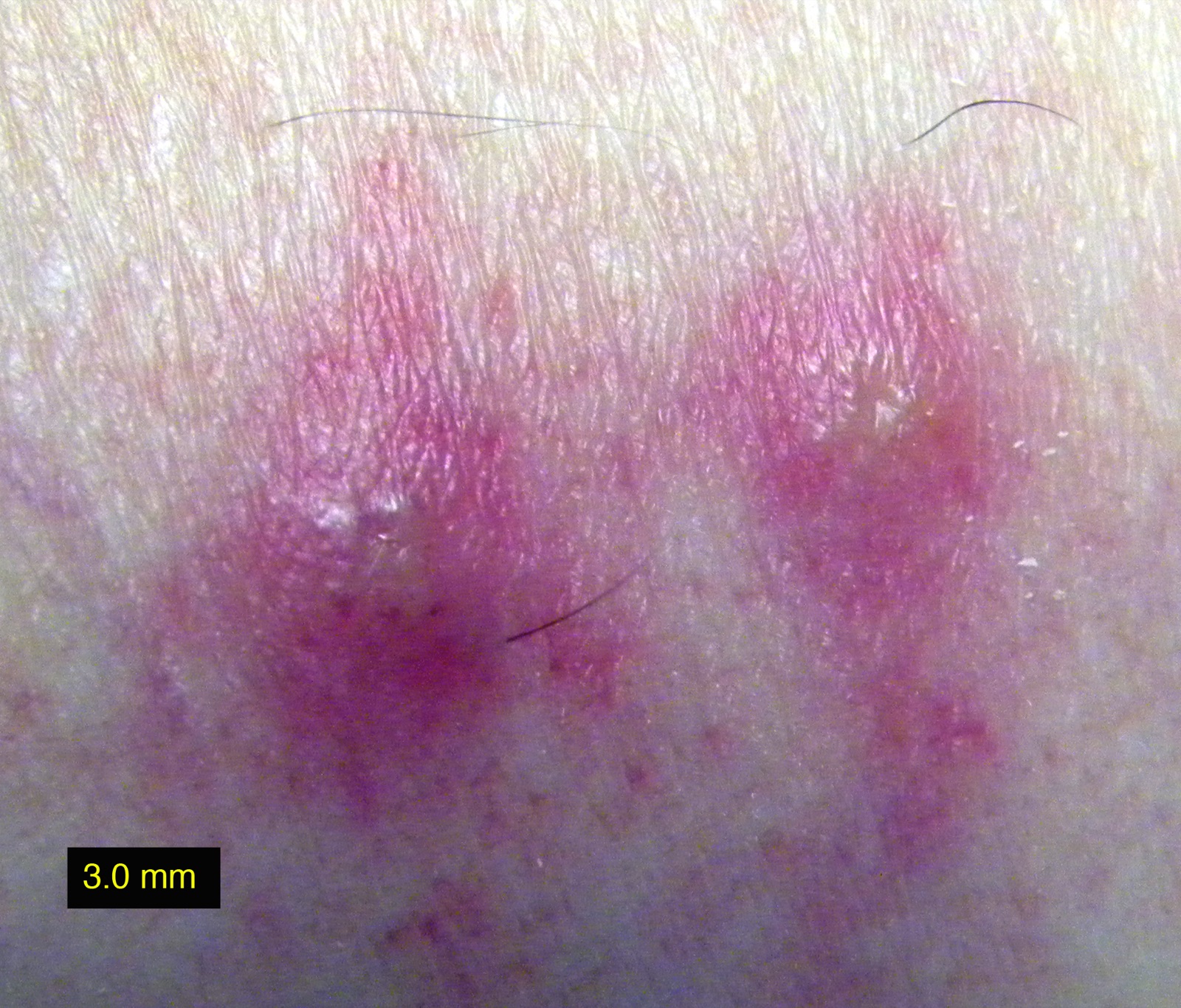
| Chigger bites | Tick bites | |
|---|---|---|
| When you notice | 3–6 hours after exposure, itching peaks day 1–2 | Usually while the tick is still attached, or as a single bump later |
| Pattern | Clusters of small red welts, often dozens | One bite per tick; a spreading ring (erythema migrans) means see a doctor |
| Where on the body | Ankles, sock lines, behind knees, waistband, groin | Hairline, behind ears, armpits, waist, groin |
| Is anything still in the skin? | No — the larva fed at the surface and dropped off; the red center is the feeding tube | Yes if still attached — remove with fine tweezers, straight out |
| Disease risk (US) | None — no US chigger transmits disease; the risk is infection from scratching | Real — Lyme, Rocky Mountain spotted fever, ehrlichiosis, alpha-gal and more |
| How long it lasts | 1–2 weeks of itching | Days, unless infected |
Chiggers do not burrow into your skin, and painting bites with nail polish to “suffocate” them does nothing — the larva is already gone. Treat the reaction: wash with soap, cool compress, 1% hydrocortisone or calamine, an oral antihistamine for sleep, and keep nails short. See a doctor for spreading redness, pus, or fever (a scratched bite can get infected), or if a bite is followed by a bull’s-eye rash — that is a tick, not a chigger, and it matters.
What a chigger actually is
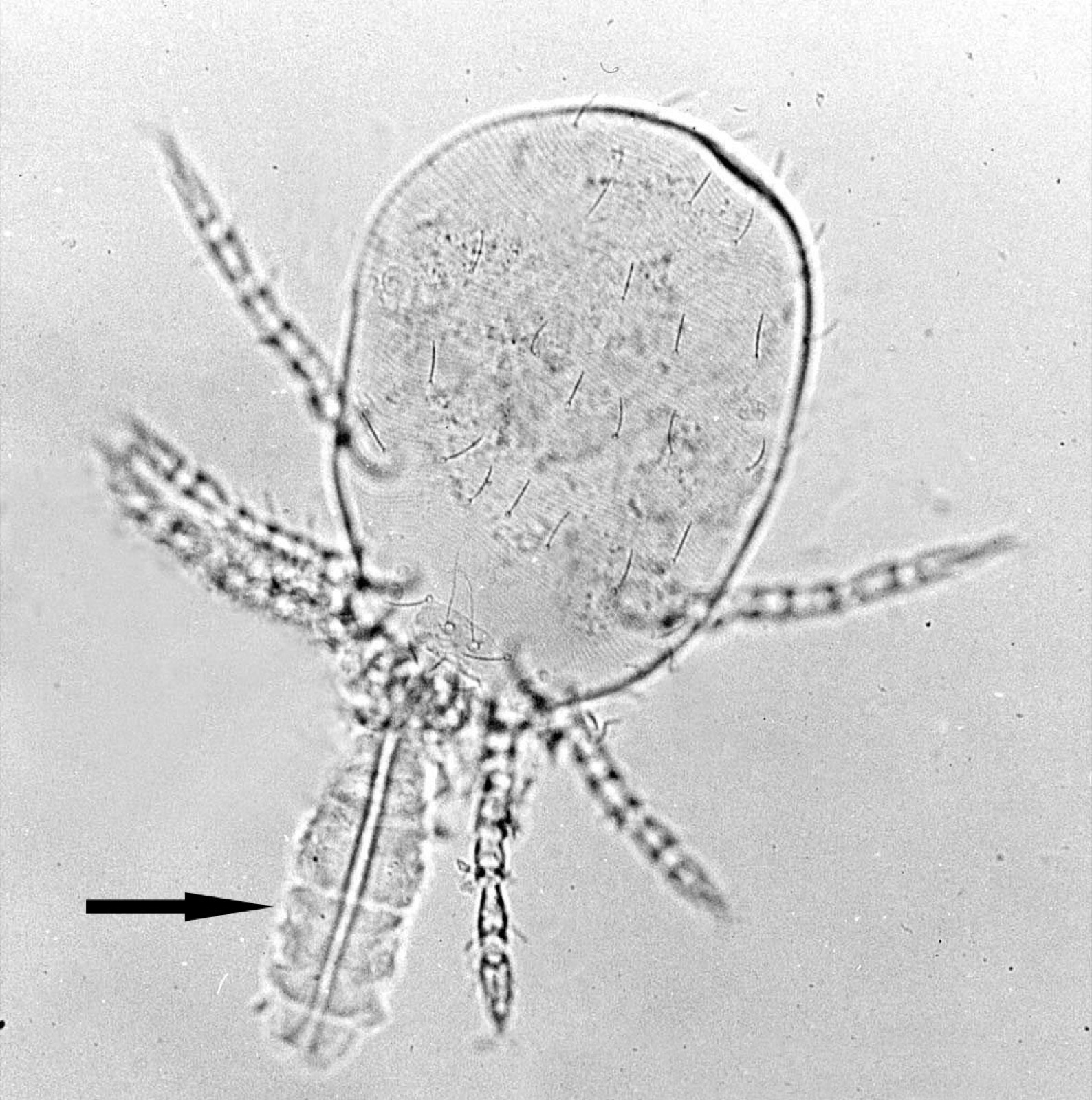
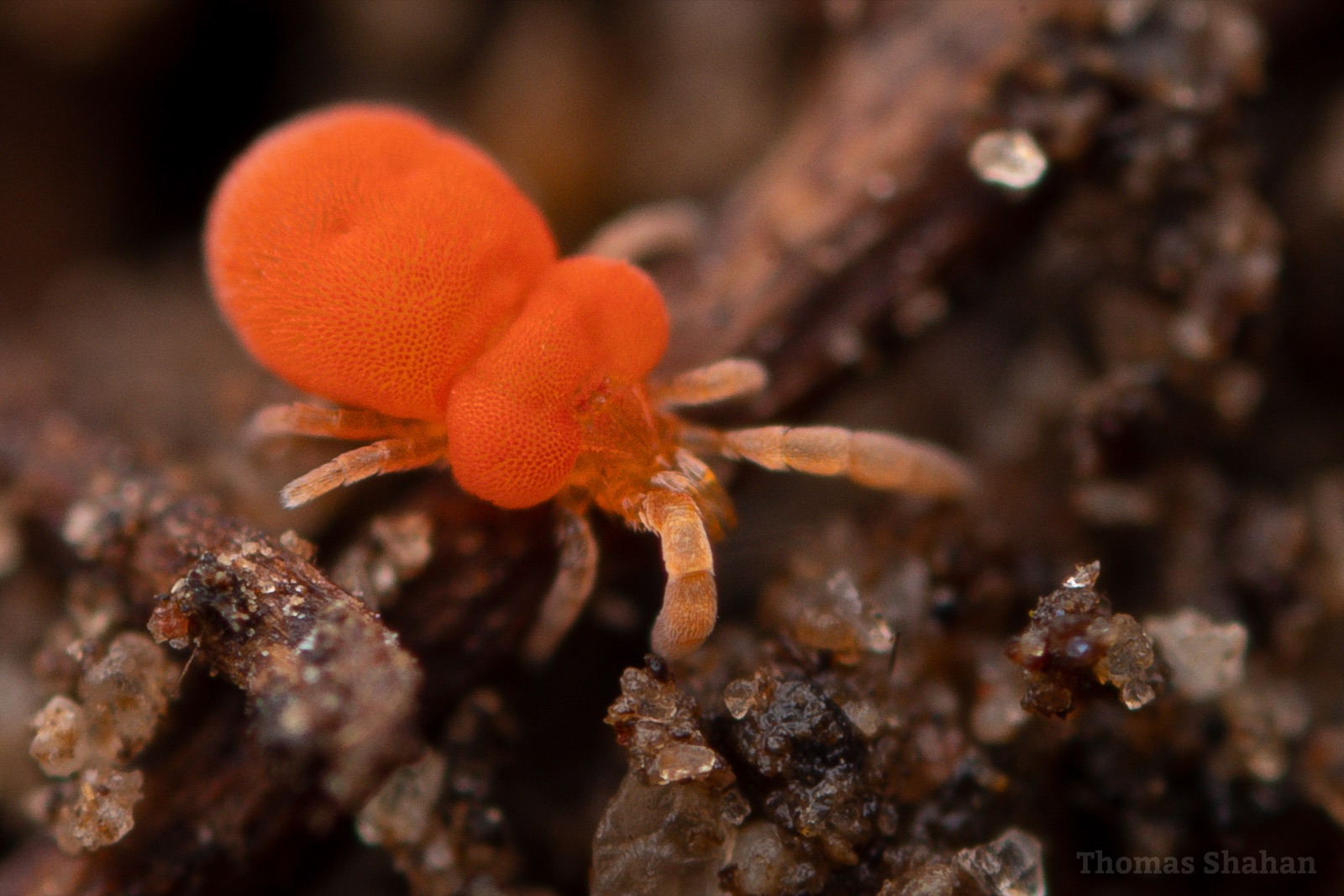
Chiggers are the larval stage of trombiculid mites — in most of the US, Eutrombicula alfreddugesi, with E. splendens in the humid Southeast and E. belkini on the California coast. Eggs laid in the soil hatch into six-legged larvae about 0.2 mm across that climb a few inches up vegetation and wait for a warm-blooded host. They feed once, for one to four days, then drop off, molt into eight-legged nymphs and then adults, and spend the rest of their lives in the soil eating springtails and insect eggs. Humans are an accidental host; the mite would rather have a lizard, bird, or mouse.
The bite is chemistry, not a burrow: saliva liquefies skin cells, the skin walls off the feeding site into a tube called a stylostome, and the larva drinks through it. Your immune response to that saliva is the welt and the itch. In the United States no chigger species transmits disease. The one chigger-borne illness, scrub typhus, is carried by Leptotrombidiummites across the Asia-Pacific “tsutsugamushi triangle” and does not occur here.
Timing is set by soil temperature and humidity. Larvae appear once soil holds above about 60°F, peak in the 77–86°F band with humid air, retreat into litter in dry heat, and are killed off by the first hard frost — Idaho's typically lands around September 28. That is why the South gets two or three generations and a seven-month season while the northern tier gets one generation and a window of about three months.
Idaho chigger FAQ
Plan the rest of your Idaho summer
More Rockies chigger forecasts
Season windows are climatological typicals compiled from state extension-service guidance (Texas A&M AgriLife, MU Extension, K-State, UGA, Clemson, Purdue, and others), the trombiculid literature, and NOAA first-frost normals — not a day forecast; any year runs ±2 weeks. Today’s activity score is computed in your browser from Open-Meteo’s daily forecast and is a model, not a mite count. National picture: where chiggers are active right now →
Hero image: “Meadow Looking Towards Baptists Trace" (Mammoth Cave National Park, KY)” — NPS Photo — Public domain