
Chiggers in Alaska: 2026 Season & Activity Forecast
Alaska has no established chigger populations — here's what's biting instead.
No established chigger populations — see why belowThe Alaska chigger season at a glance
ReferenceUAF Cooperative Extension lists no chigger guidance for Alaska — summer biting here is mosquitoes, black flies, and no-see-ums, not mites.
Why Alaska doesn’t have chiggers
No established trombiculid chigger populations are known in Alaska; the species that bite humans in the Lower 48 cannot complete their life cycle in subarctic soils.
Chigger larvae need a long stretch of soil above roughly 60°F with dependable humidity to hatch, find a host, feed, and mature into the soil-dwelling nymphs and adults that overwinter. Alaska’s growing season is too short and its soils too cold for that cycle to close, so there are no established populations to meet on a trail.
Chigger bites vs. tick bites — and the burrowing myth
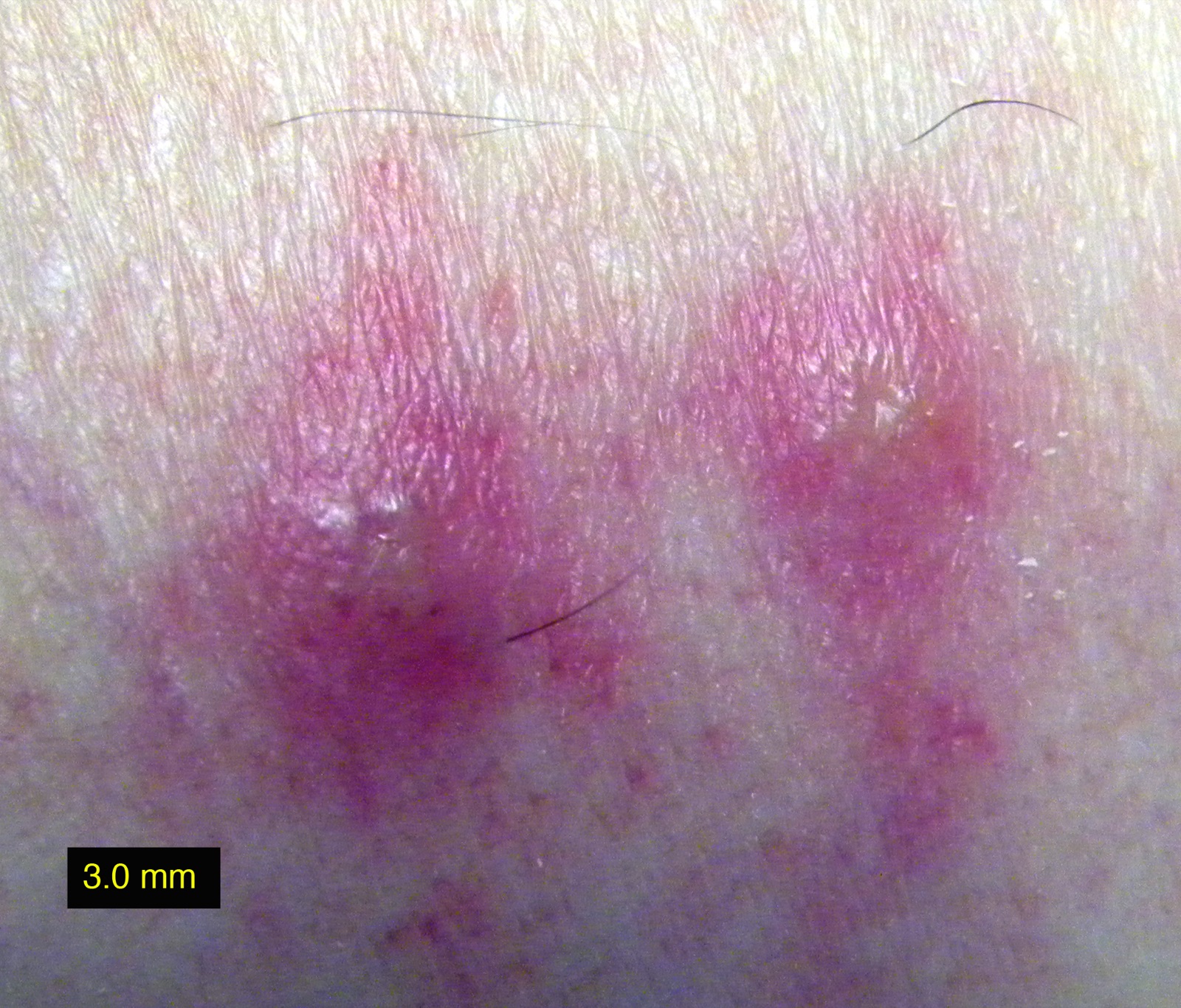
| Chigger bites | Tick bites | |
|---|---|---|
| When you notice | 3–6 hours after exposure, itching peaks day 1–2 | Usually while the tick is still attached, or as a single bump later |
| Pattern | Clusters of small red welts, often dozens | One bite per tick; a spreading ring (erythema migrans) means see a doctor |
| Where on the body | Ankles, sock lines, behind knees, waistband, groin | Hairline, behind ears, armpits, waist, groin |
| Is anything still in the skin? | No — the larva fed at the surface and dropped off; the red center is the feeding tube | Yes if still attached — remove with fine tweezers, straight out |
| Disease risk (US) | None — no US chigger transmits disease; the risk is infection from scratching | Real — Lyme, Rocky Mountain spotted fever, ehrlichiosis, alpha-gal and more |
| How long it lasts | 1–2 weeks of itching | Days, unless infected |
Chiggers do not burrow into your skin, and painting bites with nail polish to “suffocate” them does nothing — the larva is already gone. Treat the reaction: wash with soap, cool compress, 1% hydrocortisone or calamine, an oral antihistamine for sleep, and keep nails short. See a doctor for spreading redness, pus, or fever (a scratched bite can get infected), or if a bite is followed by a bull’s-eye rash — that is a tick, not a chigger, and it matters.
What a chigger actually is
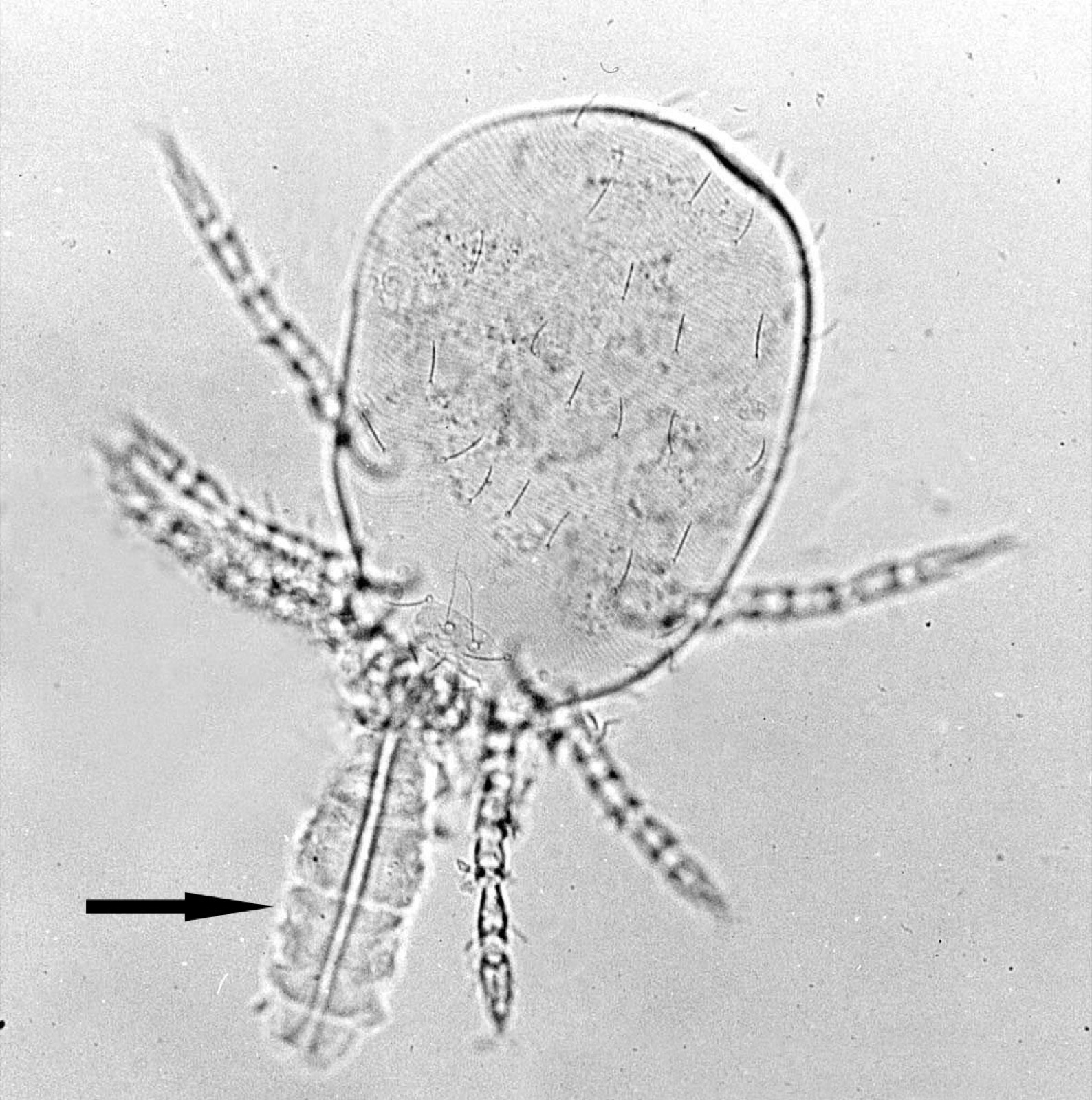
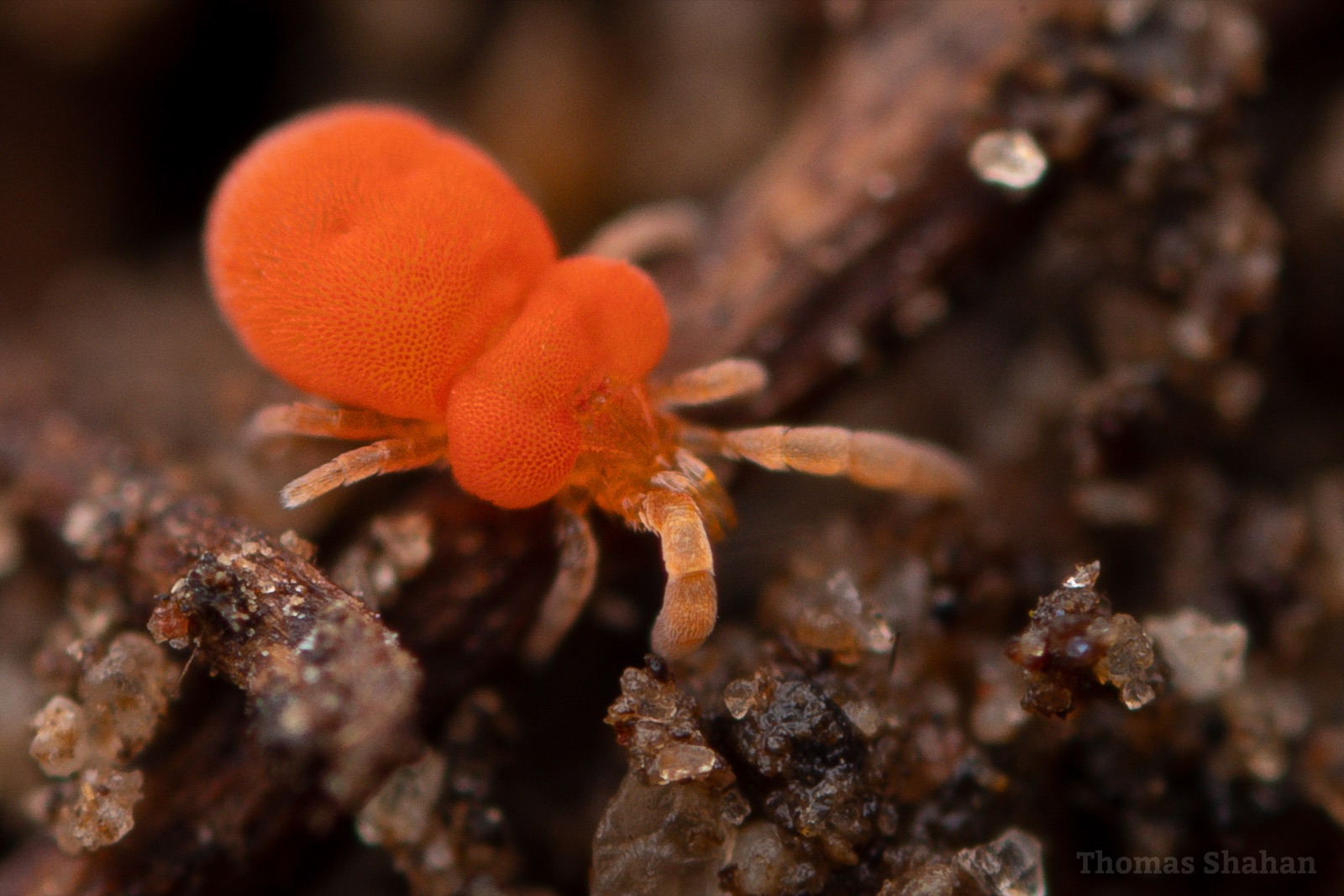
Chiggers are the larval stage of trombiculid mites — in most of the US, Eutrombicula alfreddugesi, with E. splendens in the humid Southeast and E. belkini on the California coast. Eggs laid in the soil hatch into six-legged larvae about 0.2 mm across that climb a few inches up vegetation and wait for a warm-blooded host. They feed once, for one to four days, then drop off, molt into eight-legged nymphs and then adults, and spend the rest of their lives in the soil eating springtails and insect eggs. Humans are an accidental host; the mite would rather have a lizard, bird, or mouse.
The bite is chemistry, not a burrow: saliva liquefies skin cells, the skin walls off the feeding site into a tube called a stylostome, and the larva drinks through it. Your immune response to that saliva is the welt and the itch. In the United States no chigger species transmits disease. The one chigger-borne illness, scrub typhus, is carried by Leptotrombidiummites across the Asia-Pacific “tsutsugamushi triangle” and does not occur here.
Timing is set by soil temperature and humidity. Larvae appear once soil holds above about 60°F, peak in the 77–86°F band with humid air, retreat into litter in dry heat, and stop questing as nights settle below 60°F, which in Alaska happens well before any freeze does. That is why the South gets two or three generations and a seven-month season while the northern tier gets one generation and a window of about three months.
Alaska chigger FAQ
Plan the rest of your Alaska summer
More West chigger forecasts
Season windows are climatological typicals compiled from state extension-service guidance (Texas A&M AgriLife, MU Extension, K-State, UGA, Clemson, Purdue, and others), the trombiculid literature, and NOAA first-frost normals — not a day forecast; any year runs ±2 weeks. Today’s activity score is computed in your browser from Open-Meteo’s daily forecast and is a model, not a mite count. National picture: where chiggers are active right now →
Hero image: “Meadow Looking Towards Baptists Trace" (Mammoth Cave National Park, KY)” — NPS Photo — Public domain