
Skip to content
Atlantic Flyway. Berlin averages at or below freezing from about Nov 23

New Hampshire Duck Hunting Forecast

The next seven days at Berlin, Concord, Nashua, each rated Slow to Prime for duck and goose movement from the snow on the ground, the freeze counted in days, the front, the wind and the barometer, with the reason for every point.

Atlantic
Flyway
The eastern seaboard corridor, Maine to Florida, inland to West Virginia.
Oct 2 to Jan 17
Duck season 2026-27
across 3 zones
Nov 23
Freeze line
mean day at or below freezing at Berlin
3
Reference points rated live
Berlin, Concord, Nashua
This week

New Hampshire duck movement for the next seven days

3 reference points spread north to south across New Hampshire, each rated from its own hourly forecast. Open a day for every factor and its points. For your own marsh, enter a ZIP code on the forecast.

Berlin

Freezing on an average day from about Nov 23

Reading the hourly forecast for Berlin, NH.

Concord

Freezing on an average day from about Dec 3

Reading the hourly forecast for Concord, NH.

Nashua

Freezing on an average day from about Dec 8

Reading the hourly forecast for Nashua, NH.

  • Prime80 and up
  • Great68 and up
  • Good55 and up
  • Fair40 and up
  • Slow0 and up
The flyway

What the Atlantic Flyway means for a week in New Hampshire

The eastern seaboard corridor, Maine to Florida, inland to West Virginia.

A flyway is a north to south corridor, so the cold that pushes birds into New Hampshire arrives at the top of the Atlantic Flyway first. The Atlantic Flyway forecast rates the whole corridor at once, which is the quickest way to see a push coming from upstream.

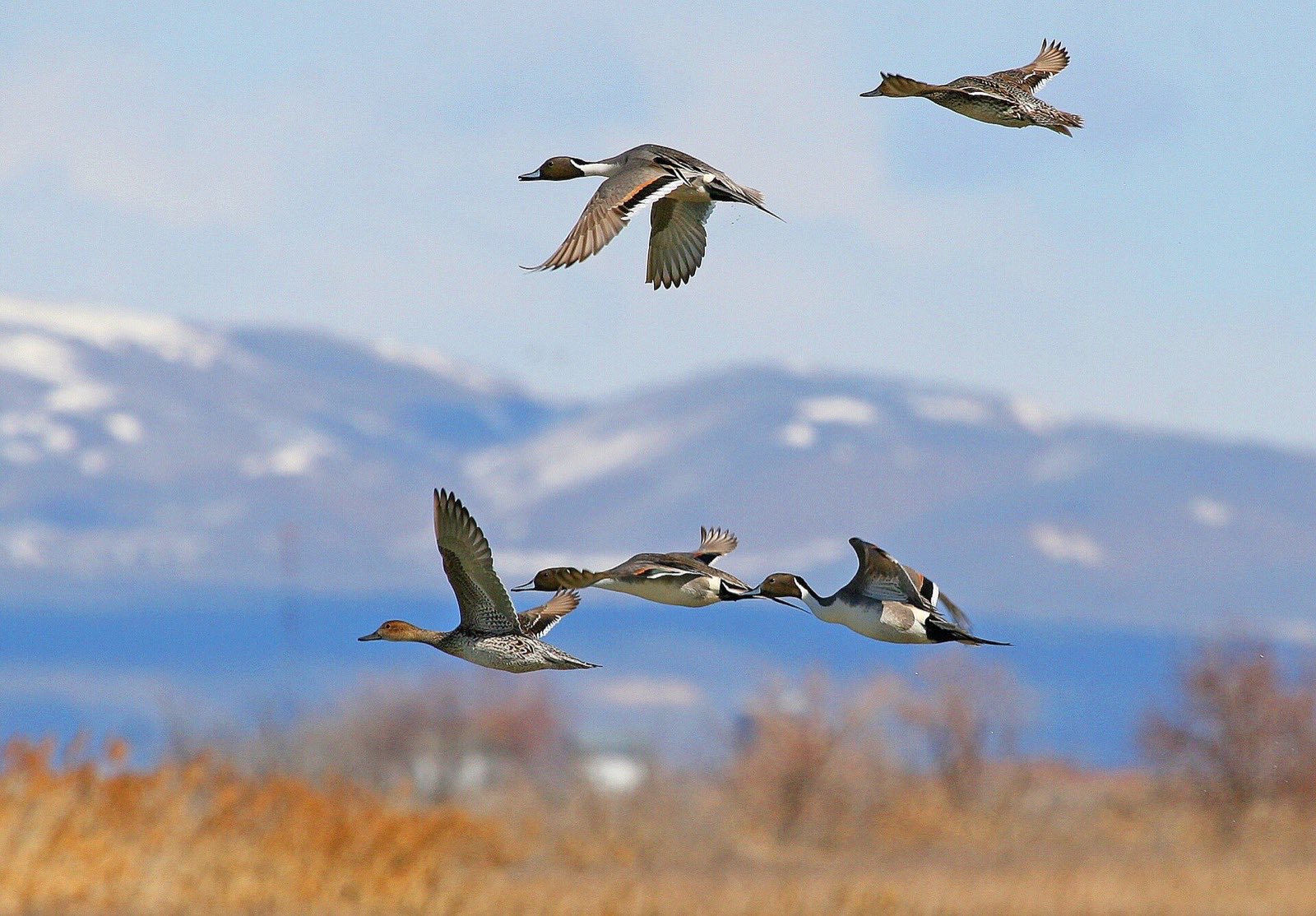
Six northern pintails flying left to right in two loose groups above a band of tan marsh reeds, with a snow-streaked mountain ridge and pale blue sky behind them
Pintails on the wing with snow already on the ridge behind them. A north wind at their tails is the single biggest thing the week ahead can hand a hunter: birds leaving the north ride it south, and the ones already here work a spread into it instead of circling wide. “Northern Pintails in Flight (5197275166)”, USFWS Mountain-Prairie, Public domain
Open days

Which New Hampshire zones are open across the rated week

A Prime morning is worth nothing if nothing is open on it. The 2026-27 dates below come from New Hampshire's 2026-2027 Migratory Waterfowl Hunting Seasons Are Now Set (NH Fish and Game Department, May 8, 2026), read 2026-09-01, and the full set with the bag limits is on the New Hampshire duck season page.

Duck, coot and merganser zones, 2026-27
ZoneOpen
Northern ZoneOct 2 to Nov 30
Inland and Connecticut River ZoneOct 13 to Nov 11Nov 25 to Dec 24
Coastal ZoneOct 6 to Oct 12Nov 26 to Jan 17

Zone dates cover ducks including sea ducks, mergansers, coots and Canada geese. Youth waterfowl weekend exists in late September.

Advertisement
The freeze

When New Hampshire water closes, and why it moves birds

Ice takes the food away, and that is what sends ducks south. The weather severity index behind each rating counts the daily mean below freezing, the days that cold has held, snow on the ground in inches and the days it has lain. Berlin averages at or below freezing from about Nov 23, so the index starts climbing in New Hampshire from about then.

NOAA 1991 to 2020 daily normals, New Hampshire
Reference pointMean day at or below 32First 28 degree nightColdest mean
BerlinNov 23Nov 1115 on Jan 16
ConcordDec 3Nov 1820 on Jan 14
NashuaDec 8Nov 2222 on Jan 16

Berlin averages at or below freezing from about Nov 23.

The research

What moves waterfowl, and how much

Snow and the cold counted over consecutive days are the two readings that make birds leave; the front and the wind decide whether the birds on hand fly and decoy. The forecast hub has all eight factors, with the barometer, the sky and the moon.

Snow on the ground moves the most birds

Up to 18 points. Six for a trace, 14 for an inch or more, 18 once that cover has held two days or a fresh half inch fell today.

  • “Our results indicate that among the tested environmental parameters, the dominant environmental driver of departure decision in autumn-migrating mallards was the onset of snow conditions, and secondarily the onset of temperatures close to, or below, the freezing point.”

    Snow first, the freeze second Snow arriving is the strongest driver of a mallard leaving in autumn, and temperatures at or below freezing the next strongest.

  • “Among recorded departures, most were driven by snow days (65%) followed by current temperature (30%).”

    Two departures in three followed snow days Most recorded departures came after consecutive days of snow on the ground, and most of the rest after the day turned cold.

  • “Departure was best predicted (60% accuracy) by a "winter conditions" model containing temperature, and depth and duration of snow cover. Models conditional on wind speed, precipitation, pressure variation, and cloud cover received lower support.”

    Winter conditions ranked first, the barometer last Among collared mallards the best model held temperature with the depth and duration of snow cover, and wind speed, precipitation, pressure change and cloud cover all ranked below it.

  • “MSU and Missouri collaborators found that cumulative effects of snow and temperature, as well as the duration of these events, best explain the rate of change in duck abundance.”

    Snow and cold added up over days What explains the change in duck numbers is snow and temperature accumulated over consecutive days, not one cold morning.

  • “Number of sequential days of snow depth ≥ 2.54 cm (1 inch) experienced by mallard at this location”

    What counts as a snow day A snow day is one of a run of consecutive days with at least an inch of snow on the ground.
The freeze, counted in days

Plus 3 to plus 16 as the cold deepens and holds, and minus 5 to minus 10 on a warm spell with lows above 42 degrees.

  • “Our results indicate that among the tested environmental parameters, the dominant environmental driver of departure decision in autumn-migrating mallards was the onset of snow conditions, and secondarily the onset of temperatures close to, or below, the freezing point.”

    Snow first, the freeze second Snow arriving is the strongest driver of a mallard leaving in autumn, and temperatures at or below freezing the next strongest.

  • “dabbling ducks, including northern pintail, gadwall and green-winged teal, migrate prior to freezing conditions or snow, while mallards generally migrate when freezing temperature and snow persist for several days”

    Early ducks leave ahead of the freeze, mallards after it Pintail, gadwall and green-winged teal move before freezing weather arrives. Mallards generally wait until the freeze and the snow have held for several days.

  • “In the past few years, we have observed that ducks are not migrating to southern latitudes in abundance, or are doing so generally only in the presence of severe weather”

    Big flights need real weather Ducks reach southern latitudes in numbers mainly when severe weather pushes them there.

  • “explained 40% of the variation in change in relative abundance of mallards and other dabbling ducks in Missouri during autumn–winter of 1995–2005.”

    The index explains two fifths of the change The published weather severity index accounted for 40 percent of the change in dabbling duck numbers across eleven autumns and winters in Missouri.

A front arriving, all at once

Up to 12 points when the temperature drop and the wind swinging into the northwest quadrant land on the same day.

  • “The best approximating model of departure probability was our integrated model, which included variables accounting for wind aloft direction favorable for departure (i.e., tailwind), absence of precipitation, and a partially or completely clear sky.”

    A tailwind, dry air and a clear sky The model that best predicted a duck leaving a stopover combined a favourable tailwind aloft, no precipitation, and a partly or completely clear sky.

  • “Our results indicate that among the tested environmental parameters, the dominant environmental driver of departure decision in autumn-migrating mallards was the onset of snow conditions, and secondarily the onset of temperatures close to, or below, the freezing point.”

    Snow first, the freeze second Snow arriving is the strongest driver of a mallard leaving in autumn, and temperatures at or below freezing the next strongest.

  • “MSU and Missouri collaborators found that cumulative effects of snow and temperature, as well as the duration of these events, best explain the rate of change in duck abundance.”

    Snow and cold added up over days What explains the change in duck numbers is snow and temperature accumulated over consecutive days, not one cold morning.

A north wind is a tailwind

Plus 10 on a wind out of the north or northwest, plus 6 on a west or northeast wind, minus 8 on a wind out of the south.

  • “Tailwind was documented as the primary weather condition affecting the propensity for migration in many bird species, including ducks, due to its substantial effect on the net energetic cost of migration”

    The wind pays for the flight Tailwind is the flight condition that matters most across migrating birds, because it decides what the journey costs.

  • “The best approximating model of departure probability was our integrated model, which included variables accounting for wind aloft direction favorable for departure (i.e., tailwind), absence of precipitation, and a partially or completely clear sky.”

    A tailwind, dry air and a clear sky The model that best predicted a duck leaving a stopover combined a favourable tailwind aloft, no precipitation, and a partly or completely clear sky.

  • “Flight weather is a prominent migration driver in passerines, but with the notable exception of wind direction, it plays less of a role in waterfowl.”

    Wind direction is the one flight factor that carries Flight weather drives songbird migration more than it drives waterfowl, and wind direction is the exception that still counts.

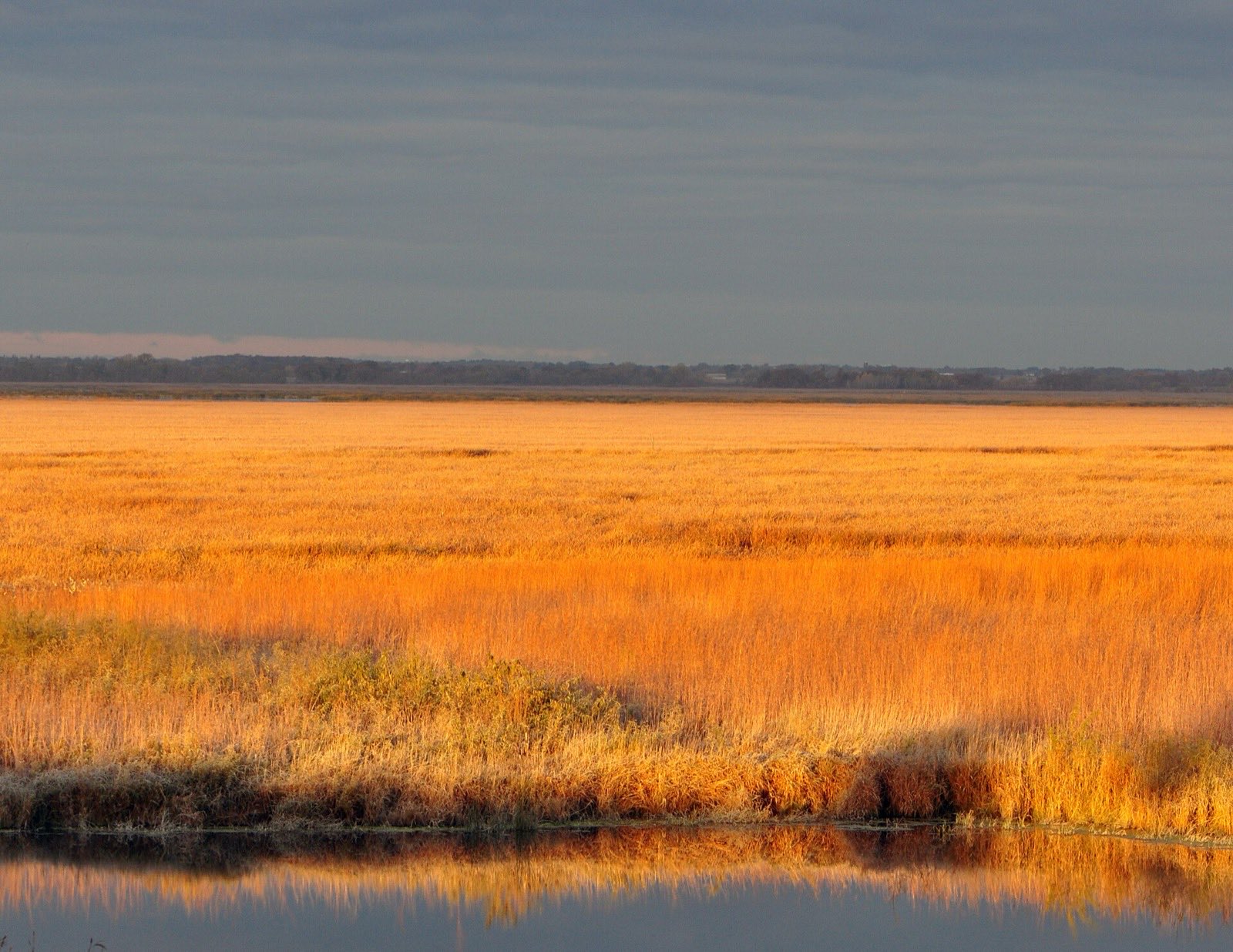
A wide cattail marsh lit orange by low sun, the stand of reeds running flat to a distant tree line under a grey sky, with still open water and the reeds reflected in the foreground
First light on the Horicon marsh in Wisconsin. A clear, calm morning like this one scores well for seeing birds and badly for working them: with no wind to hold a decoy spread and nothing pushing from the north, the birds that fly are the ones already here, and they come high. “Marsh of Gold - Horicon National Wildlife Refuge (10476458714)”, U.S. Fish and Wildlife Service - Midwest Region, Public domain

New Hampshire waterfowl forecast questions

Advertisement