
Skip to content

Whale Watching in Maine

Humpbacks, finbacks and minkes feed in the Gulf of Maine through spring, summer and autumn, and the National Park Service says do not expect to see them from shore.

In season in Maine right now: Humpback whale, Fin whale, Minke whale, North Atlantic right whale
Species with a season
4
Agency windows
4
Named shore sites
0

Maine whale season at a glance

Atlantic coast
April 1
Season opens
Earliest agency window in the state
October 31
Season closes
Latest agency window in the state
Open
Right now
From the quoted windows, not a forecast
4
Species with a published window
Agencies say do not expect to see whales from shore
Today
The busiest stretch of the Maine whale calendar, from June 15 to September 15. Climatological, from published agency windows, not a forecast.
The season

Which whale, and when, in Maine

Every window below is the wording of the agency that publishes it, reproduced exactly, with a link. Where two agencies describe the same animal differently, both are shown.

Humpback whale

Happening now

April 1 to October 31

“During spring, summer and fall these whales are found most often around the sloping sides of the banks and ledges of the Gulf of Maine, Georges Bank and the continental shelf south of the Islands.”

Maine Department of Marine Resources

What you are looking for: A tall columnar blow, a small dorsal fin on a hump, and the black and white underside of the tail as it dives. The only large whale that routinely breaches clear of the water.
Fin whale

Happening now

April 1 to October 31

“Same areas as the humpback whale, but not always at the same time.”

Maine Department of Marine Resources

What you are looking for: The second largest animal on earth, and a fast, low, straight-line traveller. A tall narrow blow and a dorsal fin that appears long after the blow, well down the back.

Minke whale

Happening now

April 1 to October 31

“Same as Humpback and Finback whales, but also found in closer to shore.”

Maine Department of Marine Resources

What you are looking for: The smallest baleen whale here, with a pointed snout, a curved dorsal fin visible almost at the same moment as the blow, and often no visible blow at all. Maine says minkes come "closer to shore" than humpbacks or finbacks.

North Atlantic right whale

Happening now

June 1 to November 30

“Winter/Spring in Cape Cod Bay & Great South Channel.. Summer/Fall in Bay of Fundy & Roseway Basin.”

Maine Department of Marine Resources

The Bay of Fundy and Roseway Basin are Canadian waters. Maine sits between the two halves of the right whale year rather than inside either.

What you are looking for: No dorsal fin at all, a broad black back, a V shaped blow from two separated blowholes, and rough white callosity patches on the head. If you think you have seen one, NOAA runs sighting hotlines: (866) 755-6622 from Maine to Virginia, (877) 942-5343 from North Carolina to Florida.

Worth knowing about Maine

Maine Department of Marine Resources publishes the only per-species seasonal table any state agency on this coast puts out, and it is the reason the fin and minke windows on this page exist at all. NOAA Fisheries' own fin whale and minke whale species pages give hemisphere-scale generalities and no Gulf of Maine months.

Checking the most recent public whale record in Maine…

From land

Can you see whales from shore in Maine?

Agencies say do not expect to see whales from shore

The National Park Service is unusually direct about this at Acadia: "Although the harbor porpoise is in the whale family, it is rare and unlikely to see a whale in the bay or from shore." It adds that whales "are spotted further out in the ocean and are best viewed from whale watching tours and excursions."

National Park Service, Acadia National Park

No federal or state agency names a specific Maine shore lookout in its own words, so none is listed here; the agencies' own assessment of shore viewing on this coast is above.

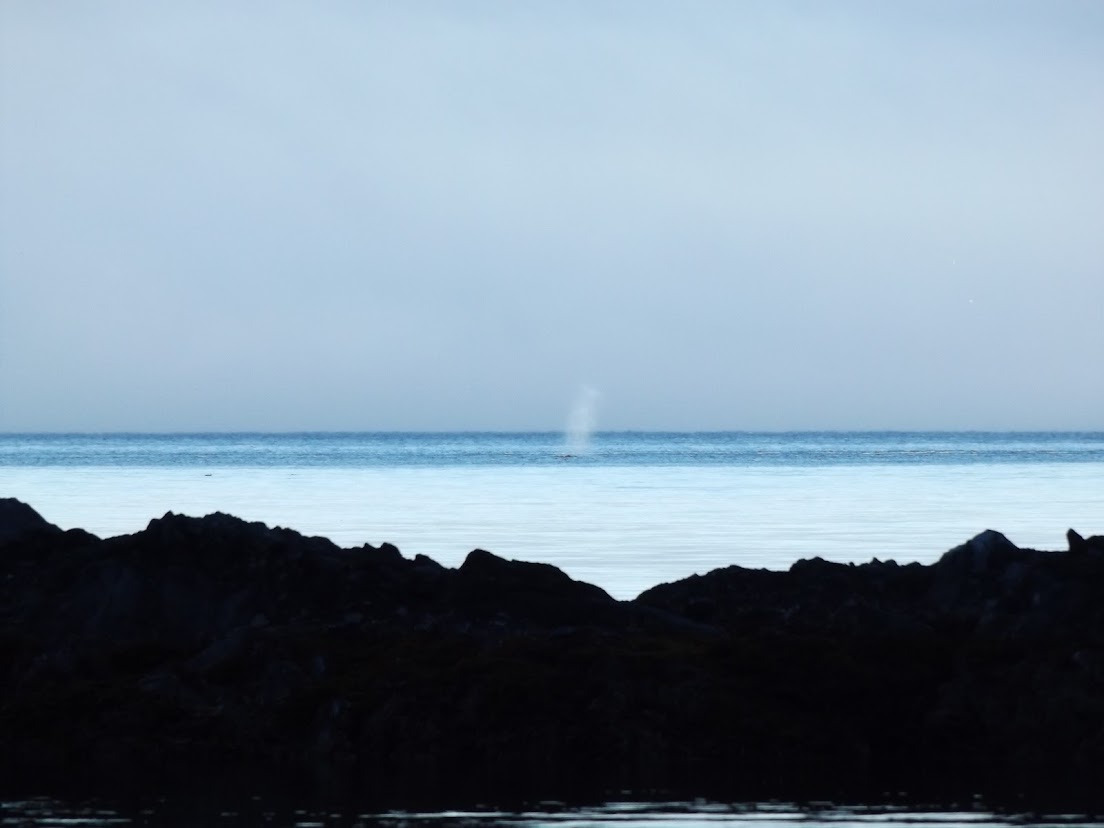
A distant white whale spout rising above a flat sea, seen over a dark rocky foreground from the shore
This is the realistic view from land: a blow on the horizon, over rock, gone in two seconds. Height above the water is what buys you distance, which is why agency lookouts sit on headlands and cliff tops rather than on the sand. “Whale spout, Alaska” — Forest Service Alaska Region, USDA — Public Domain
Advertisement
The law

How close you may legally get in Maine

Approach distances differ by species and by region, and the differences are large enough that a number remembered from another coast can put you in breach of federal law. Below, the rule for each species that has a published season here, quoted from the agency that issues it.

Humpback whaleMegaptera novaeangliae

“In Hawaii and Alaska, it is illegal to approach a humpback whale within 100 yards, by land or sea. It is also illegal to approach humpback whales in Hawaii within 1,000 feet (333 yards) by air.”

NOAA Fisheries, Humpback Whale: Resources

Note the phrase "by land or sea". NOAA states this rule two different ways on two of its own pages: the species resources page says "by land or sea", while its general viewing guidelines page frames the same 100 yards as a requirement on vessels. Outside Hawaii and Alaska the 100 yards is guidance rather than a humpback-specific law.

Fin whaleBalaenoptera physalus

“Remain at least 100 yards away, about the length of a football field, unless other rules apply.”

NOAA Fisheries, Marine Life Viewing Guidelines: Guidelines and Distances

Minke whaleBalaenoptera acutorostrata

“Remain at least 100 yards away, about the length of a football field, unless other rules apply.”

NOAA Fisheries, Marine Life Viewing Guidelines: Guidelines and Distances

North Atlantic right whaleEubalaena glacialis

“NOAA Fisheries has regulations that prohibit approaching or remaining within 500 yards (1,500 feet) of a right whale.”

NOAA Fisheries, North Atlantic Right Whale

This is five times the distance that applies to every other whale, and it is the strictest approach rule for any whale in US waters. NOAA words the restriction as applying to approaches "whether by vessel, aircraft or other means", and a separate line requires aircraft and drones to maintain a 1,500 foot minimum altitude over right whales. A drone launched from a beach is covered. No agency page states whether the rule reaches a person standing still on the sand. If a right whale comes to you, NOAA's instruction is to "immediately depart from the area at a slow, safe speed in a direction away from the whale."

Never approach a whale to get a better view, and never put a drone over one. If an animal comes to you, the instruction from NOAA is to move away from it, slowly, not to hold position for a photograph.

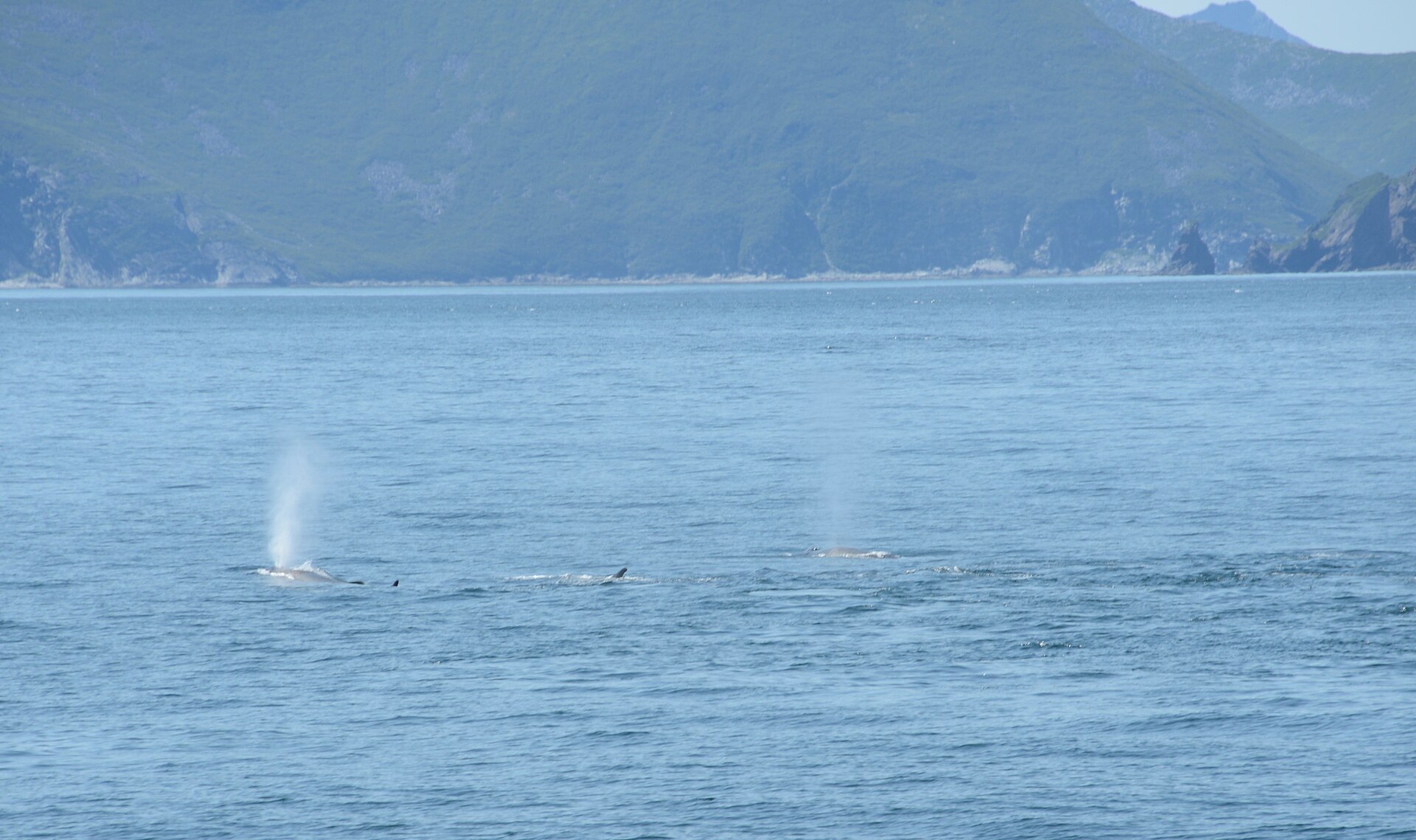
Two fin whales spouting at the surface of a calm blue sea below a green coastal headland
Humpback whale, Megaptera novaeangliae. A tall columnar blow, a small dorsal fin on a hump, and the black and white underside of the tail as it dives. The only large whale that routinely breaches clear of the water. “Fin whales spouting” by James Brooks, CC BY 2.0
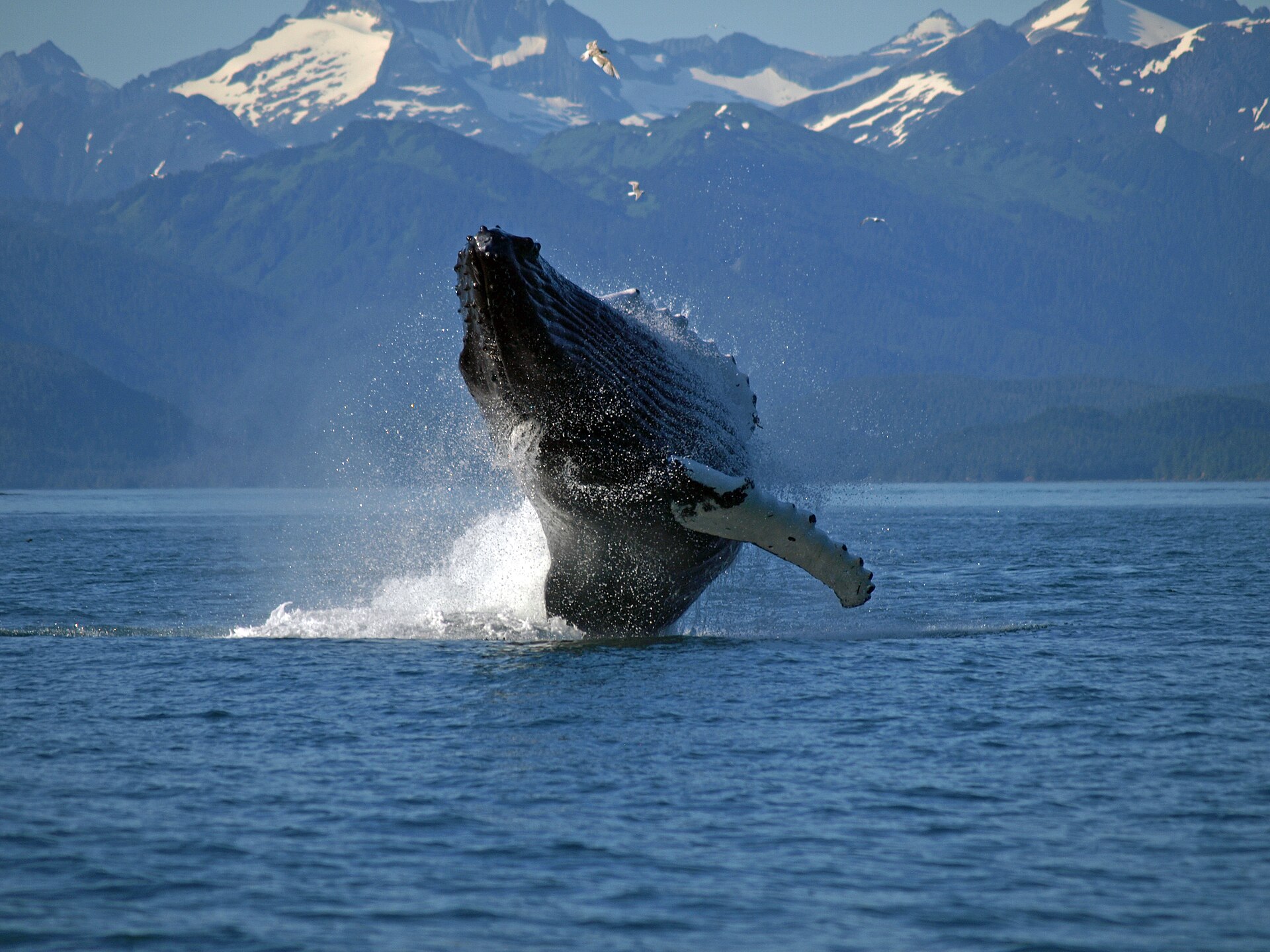
A humpback whale breaching clear of the water with its long white flippers spread
also occurs off Maine. “Adult Humpback Whale breaching” by Gillfoto, CC BY-SA 3.0
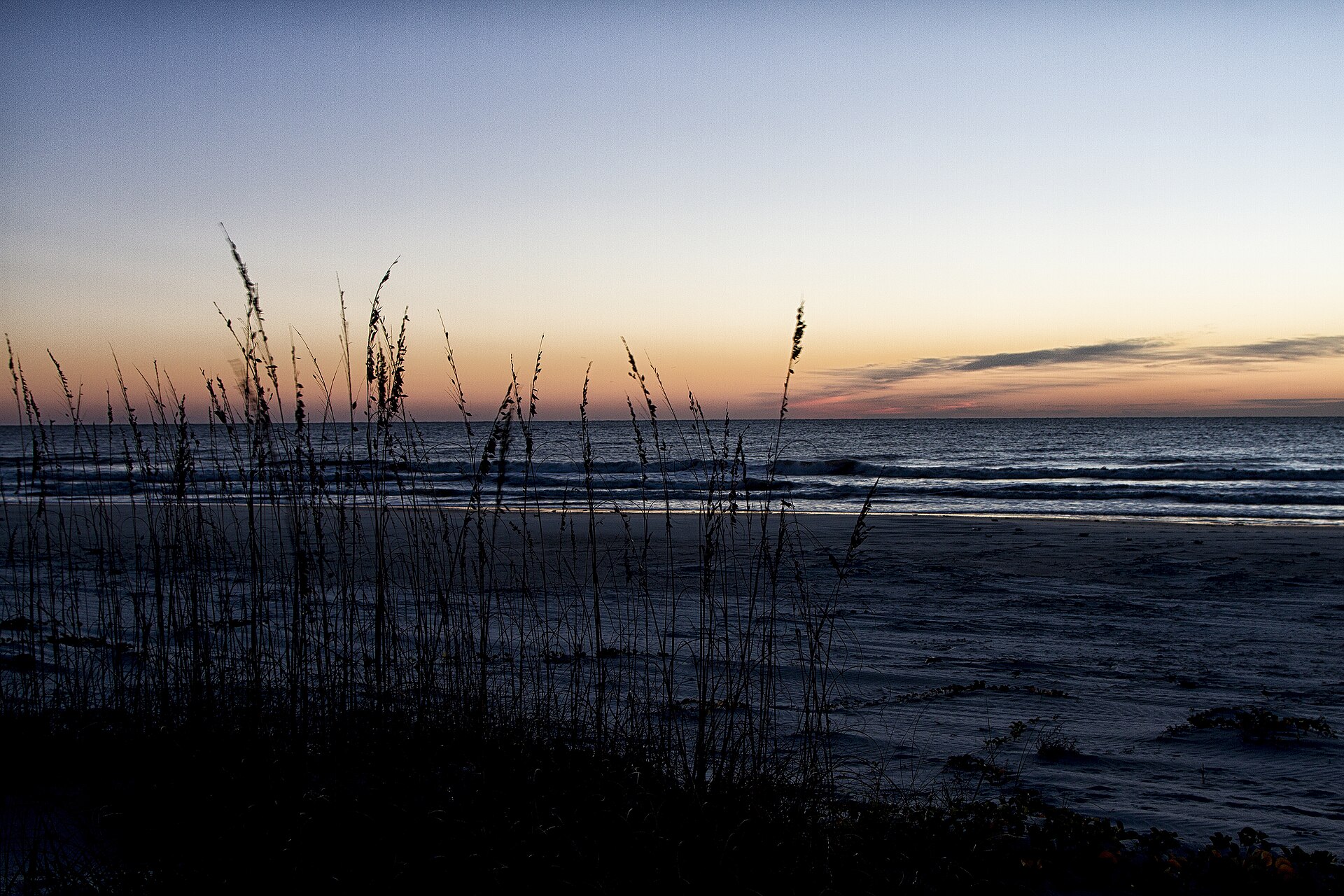
A wide sandy Atlantic beach under an open sky with the sea flat to the horizon
A shore vantage of the kind this page is built around. Every site listed here is watched from land, which is what NOAA itself asks for: viewing from shore keeps one more boat off the water. “Cumberland Island National Seashore beach at sunrise” — NPS Photo — Public Domain
A cross-check

When people actually reported humpback whales in Maine

The chart below counts research-grade public observations by month. It is not a season. It is a record of when somebody was standing in the right place with a camera and knew what they were looking at, and that depends at least as much on tourism and daylight as on whales. Winter is systematically under-counted everywhere on this coast for exactly that reason.

It earns its place because when it disagrees with the agency window, the disagreement usually has a cause worth understanding.

Reading the public observation record for Humpback whale in Maine…

Elsewhere

Whale watching season in other states

California

Gray whales pass twice, southbound from December and northbound from mid-February, and California has more agency-named shore lookouts than any other state.

Agencies name shore sites here

Oregon

Thousands of gray whales pass mid-December to mid-January going south and from late March going north, and about 200 stay all summer.

Agencies name shore sites here

Washington

Gray whales pass the outer coast in spring, and the inland waters hold killer whales under the strictest state approach law in the country.

Shore viewing is possible but agencies are cautious

Alaska

The summer feeding ground for the humpbacks that spend their winter in Hawaii, and the National Park Service says they feed within a mile of shore.

Shore viewing is possible but agencies are cautious

Hawaii

Humpbacks are here November through April with the peak from January through March, and the sanctuary itself says you can see them from shore.

Agencies name shore sites here

Massachusetts

Humpbacks arrive in April and are in large numbers through the summer, and right whales fill Cape Cod Bay in late winter under a federal January to May shipping rule.

Shore viewing is possible but agencies are cautious

New York

Humpbacks are close to shore in summer and autumn in the New York Bight, and right whales are detected in spring and winter.

Agencies say do not expect to see whales from shore

Georgia

The only known calving ground on earth for the North Atlantic right whale, occupied from mid-November to mid-April.

Shore viewing is possible but agencies are cautious

Florida

The southern half of the right whale calving ground, mid-November to mid-April, and the one state whose wildlife agency says the whales are often visible from the beach.

Shore viewing is possible but agencies are cautious

Virginia

A winter state, unusually: humpbacks concentrate off the Virginia coast in January and February while New England is empty.

Agencies say do not expect to see whales from shore

Not seeing your state? The hub names every coastal state without a page here and explains why, including the whole Gulf coast and most of the mid-Atlantic.

Common questions

Whale watching in Maine: FAQ

Advertisement

Seasons and approach distances on this page are quoted from the agency named beside each one, with a link. Nothing is modelled or averaged. Monthly observation counts are read live in your browser from the iNaturalist API and record when people reported whales, not when whales were present.
Hero image: “Fin whales spouting” by James Brooks, CC BY 2.0