
When to Aerate Your Lawn: Fall for Fescue, Late Spring for Bermuda
Aerate when the grass is growing hardest so it can heal the holes — not when it is dormant. Enter your ZIP for your grass zone’s window.
Covers all 50 states. Windows are frost-date typicals; live soil temperature adjusts the soil-gated tasks.
Core aerate: when, in one line
Cool-season: 7–3 weeks before first frost. Warm-season: 8–15 weeks after last spring frost.
Relieves compaction and opens thatch so water, air, and fertilizer reach the roots — and it is the best seedbed prep for overseeding.
When to aerate your lawn: the complete guide
The timing rule: aerate into active growth
Aeration punches thousands of holes in the turf. That is a wound, and the lawn heals it by growing into the holes — so aerate when your grass type is growing fastest and has weeks of good weather ahead. For cool-season lawns (Kentucky bluegrass, tall fescue, perennial ryegrass, fine fescues — the North, the Midwest, the Northeast, the mountains, the Pacific Northwest) that is early fall, roughly 7 to 3 weeks before the first frost: late August through September in the northern tier, September into early October in the Ohio Valley and mid-Atlantic. Early spring (April) is the second-best choice for cool-season turf, but it opens the soil right as crabgrass germinates and conflicts with pre-emergent.
Warm-season lawns (bermudagrass, zoysia, St. Augustine, centipede, bahia — the South, Texas, the desert Southwest) are the opposite: they are dormant in fall and aerating then just exposes the crowns to winter weeds and cold. Aerate warm-season turf in late spring to early summer, about 8 to 15 weeks after the last frost — May and June across the South — once it is fully green and pushing hard. Transition-zone homeowners with a mixed lawn follow the rule for whichever grass dominates; tall fescue in fall, bermuda or zoysia in late spring.
Does your lawn actually need it?
Aeration is not an annual obligation. Do the screwdriver test: after a rain or deep watering, push a long screwdriver into the lawn. If it goes 4–6 inches with moderate pressure, compaction is not your problem. Aerate if the screwdriver stops short; if water puddles or runs off instead of soaking in; if the lawn is on heavy clay or a construction-graded new-house lot; if it takes heavy foot or vehicle traffic (play areas, paths, where the trailer parks); or if the thatch layer — the spongy brown mat between green blades and soil — is over a half inch thick. Most clay-soil lawns benefit every year or two; sandy, lightly used lawns may never need it.
Core vs. spike vs. liquid
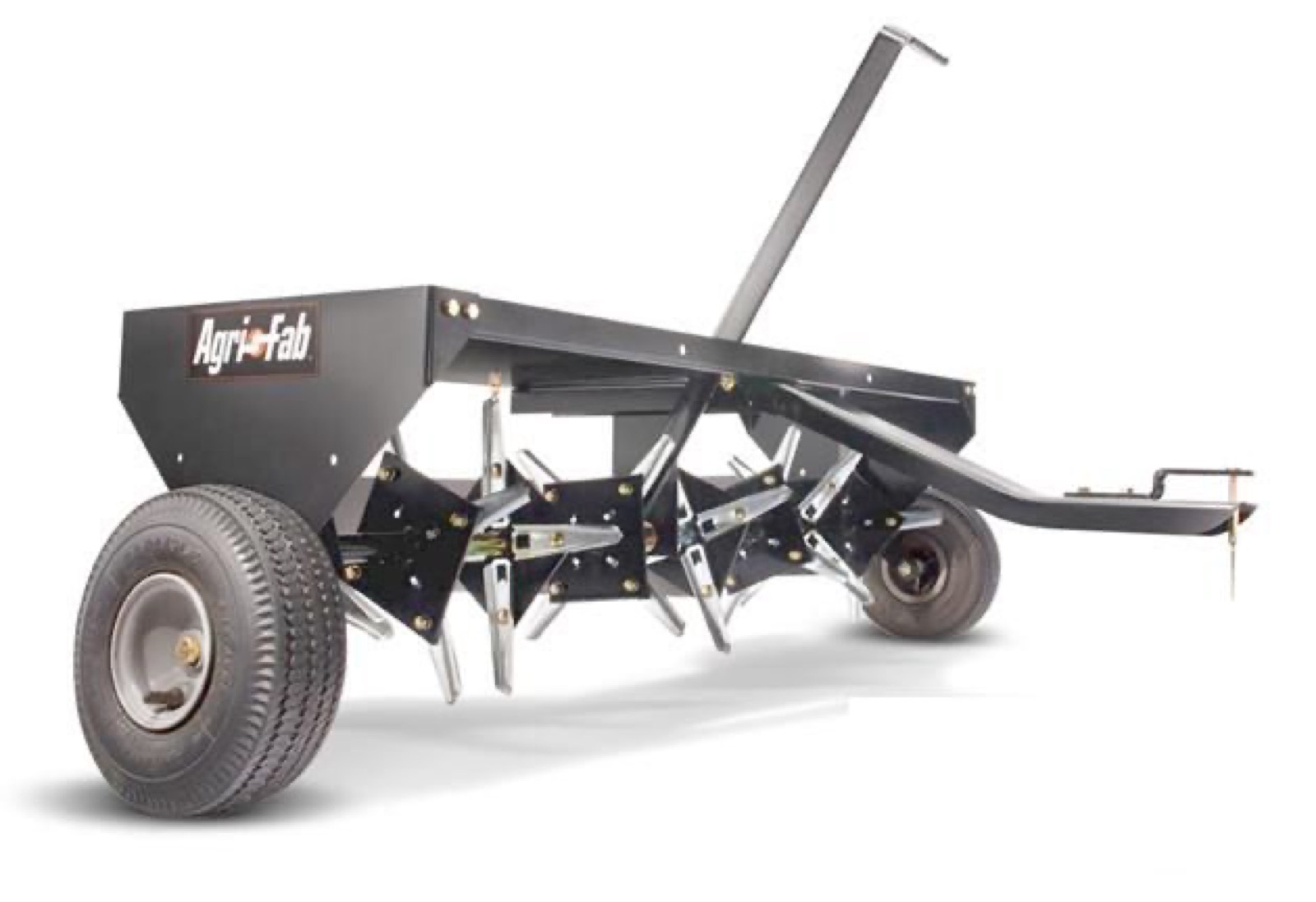
- Core (plug) aerators pull 2–3 inch cylinders of soil out with hollow tines, leaving an actual hole. This is the only method that relieves compaction — the soil around the hole expands into it. Rent a gas-powered walk-behind (about $80–120 a half day), use a tow-behind for a riding mower, or hire it out at roughly $75–200 for a typical suburban lawn.
- Spike aerators (solid tines, sandals, rolling spikers) push soil sideways and actually compact the wall of each hole. They are nearly useless for compaction, though a garden fork wiggled in the soil can help a small trouble spot.
- “Liquid aeration” products (surfactants, humic acids) improve water infiltration on hydrophobic or thatchy soils but do not move soil and do not replace coring on compacted ground.
How to aerate, step by step
- Water deeply 1–2 days before, or aerate the day after a soaking rain. Tines need moist, not muddy, soil — dry clay will not penetrate, and mud smears.
- Mark sprinkler heads, valve boxes, shallow cables, and invisible dog fence wire with flags. Aerator tines destroy all of them.
- Mow a notch lower than usual first so plugs and seed reach the soil.
- Make two passes at right angles, overlapping, for 20–40 holes per square foot. Go heavier on the worst-compacted areas — three or four passes is fine.
- Leave the plugs. They break down in 2–3 weeks with rain and mowing and return the soil’s microbes to the surface. Raking them into a pile wastes the benefit; if you hate the look, drag a section of chain-link fence or the back of a rake across them once they dry.
What to do in the 48 hours after — this is where the value is
Freshly aerated turf is the best seedbed and fertilizer-delivery system you will ever have, for about two days. Overseed immediately if you are going to (tall fescue 6 lb, bluegrass 2–3 lb, ryegrass 6–8 lb per 1,000 sq ft) so seed falls into the holes; apply the fall fertilizer and any lime the soil test called for; top-dress a quarter inch of compost on poor soils and drag it into the holes; then water lightly every day for two weeks if you seeded. Do not apply pre-emergent to a newly aerated, newly seeded lawn — it will stop the grass seed too.
Mistakes to avoid
- Aerating warm-season grass in fall — it cannot recover and winter weeds move in.
- Aerating bone-dry or sopping soil — tines bounce or smear.
- Spike shoes and rollers on compacted clay — cosmetic at best.
- Aerating a brand-new lawn — wait a full growing season.
- Aerating during drought or heat stress — wait for the growth window.
- Forgetting the sprinkler heads — the most common $40 mistake.
Core aerate windows by state
Typical windows computed from each state’s median frost dates and grass zone; the state page has the city-by-city soil readings and the rest of the calendar.
| State | Zone | Typical window | First frost | Status |
|---|---|---|---|---|
| Alabama | Warm-season | May 21 – July 5 | November 10 | Passed |
| Alaska | Cool-season | July 17 – August 15 | September 5 | Passed |
| Arizona | Warm-season | April 26 – June 10 | November 15 | Passed |
| Arkansas | Transition zone | September 10 – October 9 | October 30 | Open now |
| California | Transition zone | October 12 – November 10 | December 1 | Soon |
| Colorado | Cool-season | August 13 – September 11 | October 2 | Passed |
| Connecticut | Cool-season | August 25 – September 23 | October 14 | Passed |
| Delaware | Transition zone | September 8 – October 7 | October 28 | Passed |
| Florida | Warm-season | April 11 – May 26 | December 10 | Passed |
| Georgia | Warm-season | May 24 – July 8 | November 10 | Passed |
| Hawaii | Warm-season | April 15 – June 30 | none | Passed |
| Idaho | Cool-season | August 9 – September 7 | September 28 | Passed |
| Illinois | Cool-season | August 27 – September 25 | October 16 | Passed |
| Indiana | Cool-season | August 27 – September 25 | October 16 | Passed |
| Iowa | Cool-season | August 21 – September 19 | October 10 | Passed |
| Kansas | Transition zone | August 31 – September 29 | October 20 | Passed |
| Kentucky | Transition zone | September 2 – October 1 | October 22 | Passed |
| Louisiana | Warm-season | May 1 – June 15 | November 26 | Passed |
| Maine | Cool-season | August 9 – September 7 | September 28 | Passed |
| Maryland | Transition zone | September 4 – October 3 | October 24 | Passed |
| Massachusetts | Cool-season | August 23 – September 21 | October 12 | Passed |
| Michigan | Cool-season | August 16 – September 14 | October 5 | Passed |
| Minnesota | Cool-season | August 7 – September 5 | September 26 | Passed |
| Mississippi | Warm-season | May 19 – July 3 | November 10 | Passed |
| Missouri | Transition zone | September 2 – October 1 | October 22 | Passed |
| Montana | Cool-season | August 3 – September 1 | September 22 | Passed |
| Nebraska | Cool-season | August 21 – September 19 | October 10 | Passed |
| Nevada | Transition zone | August 13 – September 11 | October 2 | Passed |
| New Hampshire | Cool-season | August 6 – September 4 | September 25 | Passed |
| New Jersey | Cool-season | August 31 – September 29 | October 20 | Passed |
| New Mexico | Transition zone | August 26 – September 24 | October 15 | Passed |
| New York | Cool-season | August 16 – September 14 | October 5 | Passed |
| North Carolina | Transition zone | September 8 – October 7 | October 28 | Passed |
| North Dakota | Cool-season | August 3 – September 1 | September 22 | Passed |
| Ohio | Cool-season | August 27 – September 25 | October 16 | Passed |
| Oklahoma | Transition zone | September 12 – October 11 | November 1 | Open now |
| Oregon | Cool-season | September 8 – October 7 | October 28 | Passed |
| Pennsylvania | Cool-season | August 21 – September 19 | October 10 | Passed |
| Rhode Island | Cool-season | August 29 – September 27 | October 18 | Passed |
| South Carolina | Warm-season | May 23 – July 7 | November 12 | Passed |
| South Dakota | Cool-season | August 11 – September 9 | September 30 | Passed |
| Tennessee | Transition zone | September 6 – October 5 | October 26 | Passed |
| Texas | Warm-season | May 4 – June 18 | November 20 | Passed |
| Utah | Cool-season | August 19 – September 17 | October 8 | Passed |
| Vermont | Cool-season | August 5 – September 3 | September 24 | Passed |
| Virginia | Transition zone | September 5 – October 4 | October 25 | Passed |
| Washington | Cool-season | September 8 – October 7 | October 28 | Passed |
| West Virginia | Cool-season | August 23 – September 21 | October 12 | Passed |
| Wisconsin | Cool-season | August 13 – September 11 | October 2 | Passed |
| Wyoming | Cool-season | August 1 – August 30 | September 20 | Passed |
When to aerate your lawn FAQ
More fall timing guides
Windows are climatological typicals from NOAA 1991–2020 frost normals and grass-zone rules following land-grant extension guidance; any year runs ±2 weeks. Soil temperature is modeled at 6 cm by Open-Meteo, read live in your browser. Always follow the product label. Hero image: “Plug Aerator” — Agri-Fab, Inc. — CC0