
California Lawn Care Calendar 2026: Fall & Spring Task Dates
Every lawn and garden task dated to California's frost calendar and live soil temperature: transition zone grasses, extension-service timing.
Next up in California: fall pre-emergent, window open through November 1The California fall lawn season at a glance
Live · soil temp updates hourlyCalifornia's climate ranges from Sacramento fescue to San Diego bermuda to Sierra foothill bluegrass — UC's guide to healthy lawns treats fall (October) as the prime seeding month for cool-season turf statewide.
What to do in California right now
Tasks whose window is open or opening within three weeks, checked against live soil temperature at Sacramento (live reading unavailable, calendar only). Enter your ZIP for your own soil reading.
Fall pre-emergent
Do it nowInside the typical window (October 2 – November 1).
How to fall pre-emergentCore aerate
Coming upOpens in about 3 days — on October 12.
How to core aerateOverseed
Coming upOpens in about 3 days — on October 12.
How to overseedCover crop / winter rye
Coming upOpens in about 11 days — on October 20.
Covers all 50 states. Windows are frost-date typicals; live soil temperature adjusts the soil-gated tasks.
California fall lawn & garden calendar
| Task | Typical window | Status | Why now |
|---|---|---|---|
| Fall pre-emergent | October 2 to November 1 | Do it now | Stops winter annual weeds — annual bluegrass (Poa annua), henbit, chickweed — from germinating as soil cools through 70°F. |
| Bring houseplants in | November 10 to November 28 | Later | Tropical houseplants are damaged by nights in the 40s, well before any frost — and a sudden move from 50°F nights to a 70°F house causes leaf drop. |
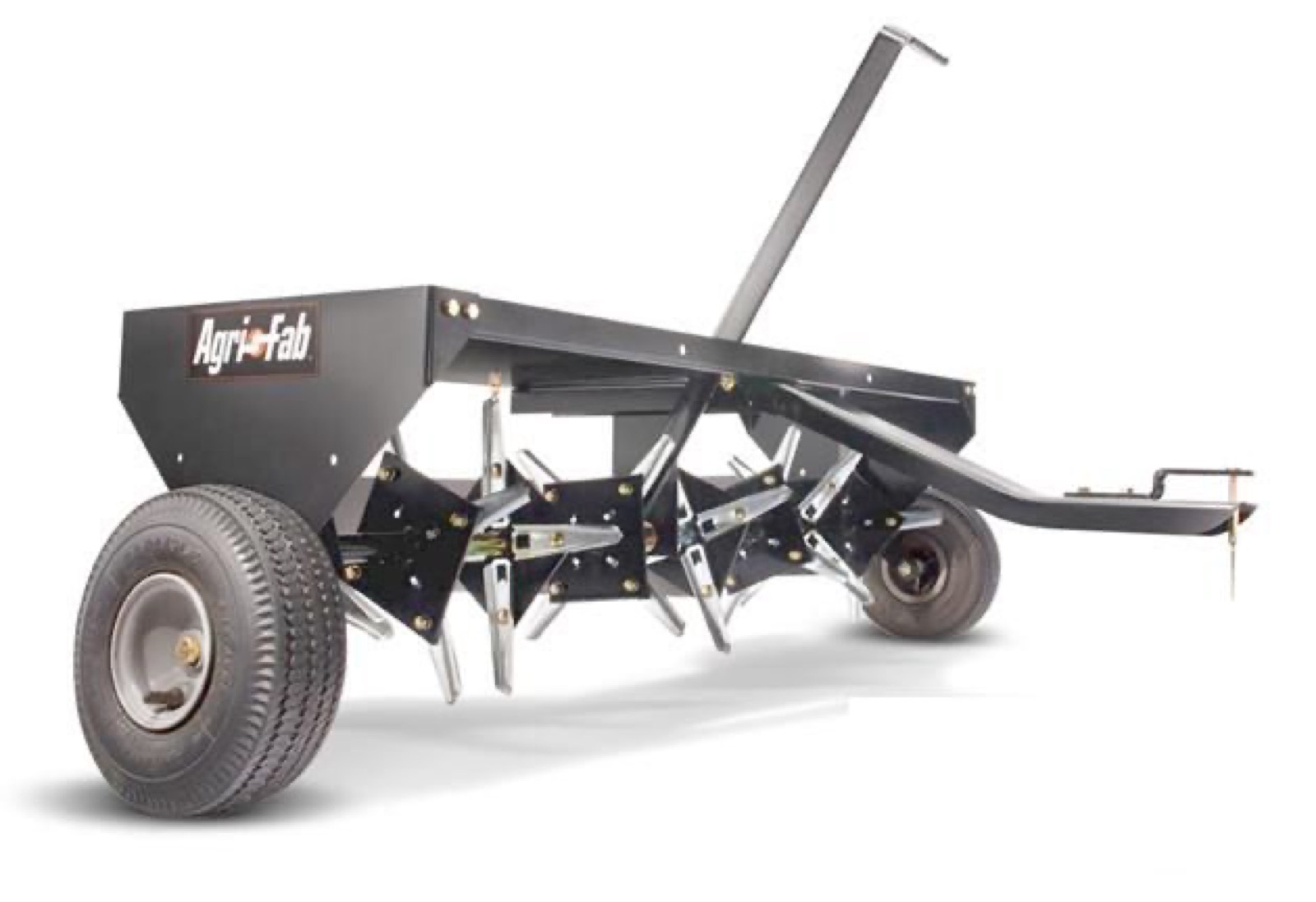
| Core aerate | October 12 to November 10 | Coming up | Relieves compaction and opens thatch so water, air, and fertilizer reach the roots — and it is the best seedbed prep for overseeding. |
| Overseed | October 12 to November 3 | Coming up | Warm soil plus cool air is the best germination combination of the year, and new seedlings need 6–8 weeks of growth before the first hard freeze. |
| Cover crop / winter rye | October 20 to November 17 | Coming up | A cover crop holds soil, scavenges leftover nitrogen, and adds organic matter over winter — bare vegetable beds lose both soil and fertility to winter rain. |
| Fall fertilizer | November 3 to November 24 | Later | Fall nitrogen builds roots and carbohydrate reserves instead of top growth — the single most valuable feeding of the year for cool-season turf. |
| Plant garlic | November 17 to December 22 | Later | Garlic needs 4–6 weeks to root before the ground freezes but should not push much top growth — planting around the first frost, 2 weeks either side, is the sweet spot. |
| Final mow | November 24 to December 15 | Later | Grass left long under snow mats and invites snow mold; cut too short it loses winter insulation. The last cut at 2–2.5 inches is the compromise. |
| Winterize sprinklers | November 26 to December 15 | Later | Water left in lines and backflow preventers expands when it freezes and splits pipes, valves, and heads — a repair that costs more than the whole winterization. |
| Plant tulips & bulbs | November 24 to January 5 | Later | Bulbs root in cool soil and need 12–14 weeks of chilling below 45°F to flower — planted into warm soil they rot or sprout early. |
California spring lawn calendar
Spring runs off the last frost (February 15) and, for pre-emergent, off soil temperature. The crabgrass trigger is 55°F at 1 to 2 inches for four or five days, not a date.
| Task | Typical window | Why then |
|---|---|---|
| Spring pre-emergent | January 18 to February 11 | Crabgrass germinates when soil at 1–2 inches holds 55°F for 4–5 consecutive days. Pre-emergent has to be in place BEFORE that — it has no effect on crabgrass that has already sprouted. |
| First mow | February 1 to February 22 | The first cut removes winter-damaged tips and signals the lawn to tiller and thicken — but mowing soggy soil ruts it, and scalping stresses turf before roots are working. |
| Spring grass seed | February 15 to March 15 | Spring seeding is second-best (fall is better) because seedlings face summer heat and crabgrass, but it is the only window for warm-season seed, which needs 65–70°F soil. |
| First spring fertilizer | March 1 to March 29 | Feeding too early pushes leaf growth ahead of root growth and feeds weeds — wait until the lawn is actively growing and has been mowed 2–3 times (cool-season) or is fully green (warm-season). |
Soil temperature and frost countdown across California
| City | Soil temp now (6 cm) | Typical first frost | Days to first frost | Typical last frost |
|---|---|---|---|---|
| Sacramento | loading… | December 2 | 54 | February 10 |
| Fresno | loading… | November 24 | 46 | February 14 |
| South Lake Tahoe | loading… | September 10 | passed | June 16 |
Soil temperature is modeled at 6 cm by Open-Meteo and read live in your browser; frost dates are NOAA 1991 to 2020 normals for each reference station.
California lawn grasses and mowing heights
California is a transition zone state. Common lawn grasses: Tall fescue, perennial ryegrass, bermudagrass, St. Augustine, buffalograss. In the transition zone neither grass type is perfectly adapted: tall fescue is the usual answer in shade and cooler corners, bermuda and zoysia in full sun, and the two run on different calendars.
| Grass | Mowing height |
|---|---|
| Tall fescue | 3 to 4 in |
| Kentucky bluegrass | 2.5 to 3.5 in |
| Zoysia | 1 to 2.5 in |
| Bermudagrass | 1 to 2 in |
Task-by-task guide for California
Soil temperature, growing degree days, and the frost anchor
Soil temperature beats air temperature. Grass seed germinates from about 50°F soil, crabgrass from a sustained 55°F, warm-season seed from 65°F, and tulips want soil under 55°F so they root without sprouting. Soil at seed depth warms and cools far more slowly than the air above it, so a hot week in April or a cold snap in October moves the soil only a few degrees. That is why the soil-gated tasks on this page defer to the live reading over the calendar.
Growing degree days (GDD) are how turf scientists track it: daily heat accumulated above a base (usually 50°F). Crabgrass germination, for instance, lines up with roughly 200 GDD base 50°F in spring, the same signal as forsythia finishing bloom. The frost calendar is the long-run average of all that heat accounting.
Why first frost anchors the fall. Most fall tasks are really a countdown to the first hard freeze: seedlings need 6 to 8 weeks of growth before it, garlic needs 4 to 6 weeks of rooting, cool-season fertilizer needs 2 to 4 weeks of uptake, and irrigation has to be drained before it. (Warm-season fertilizer is the exception: Southern extension programs cut nitrogen off on a calendar date, not a frost offset, because the Deep South frost arrives long after the grass stops growing.) California's typical first frost is December 1; see the California frost dates page for the early/late brackets and city table.
California lawn care FAQ
The rest of your California fall
More West lawn calendars
Windows are climatological typicals computed from NOAA 1991 to 2020 frost normals and grass-zone rules, cross-checked against UC Agriculture & Natural Resources guidance. Any single year runs ±2 weeks; live soil temperature (Open-Meteo, 6 cm) is modeled, not measured. National tool: fall planting calendar by ZIP → Hero image: “2022-10-26 08 11 53 Fallen Red Maple and Saucer Magnolia leaves on a lawn in autumn along Aquetong Lane in the Mountainview section of Ewing Township, Mercer County, New Jersey” by Famartin, CC BY-SA 4.0