
Yellowjacket Season in Louisiana: When the Wasps Peak
Colonies in Louisiana are largest and pushiest from about September 24 to November 26. Here is the real activity curve, how to tell the three wasps apart, and what to do about a nest.
Louisiana colonies are at peak right now, through November 26The Louisiana yellowjacket year
Wasps, not the TV showLouisiana's yellowjacket season effectively never closes: verified records run through December and January, and perennial nests are a documented local phenomenon.
When Louisiana yellowjackets are actually out
This is the shape everyone half-remembers and nobody publishes per state: near-nothing in spring, a slow climb, and then a wall in late summer. In Louisiana the busiest month runs roughly 6 times the quietest one. Nationally the swing is about twentyfold, from around 1,400 US records in January to 29,000 in both August and September.
That is not wasps hatching all at once. It is one colony, founded by one queen in spring, compounding all summer until it holds thousands of workers. The curve is the colony’s growth curve.
What this chart is not. It counts records, and a record needs a wasp and a person with a camera. It is not a colony census and we are not presenting it as one.
Which wasp is it, and does it matter
It matters a lot, because the three groups behave completely differently and only one of them will ever bother you at a picnic. The fastest way to tell them apart is not the wasp. It is the nest.
Yellowjackets
Vespula · 565 records in Louisiana
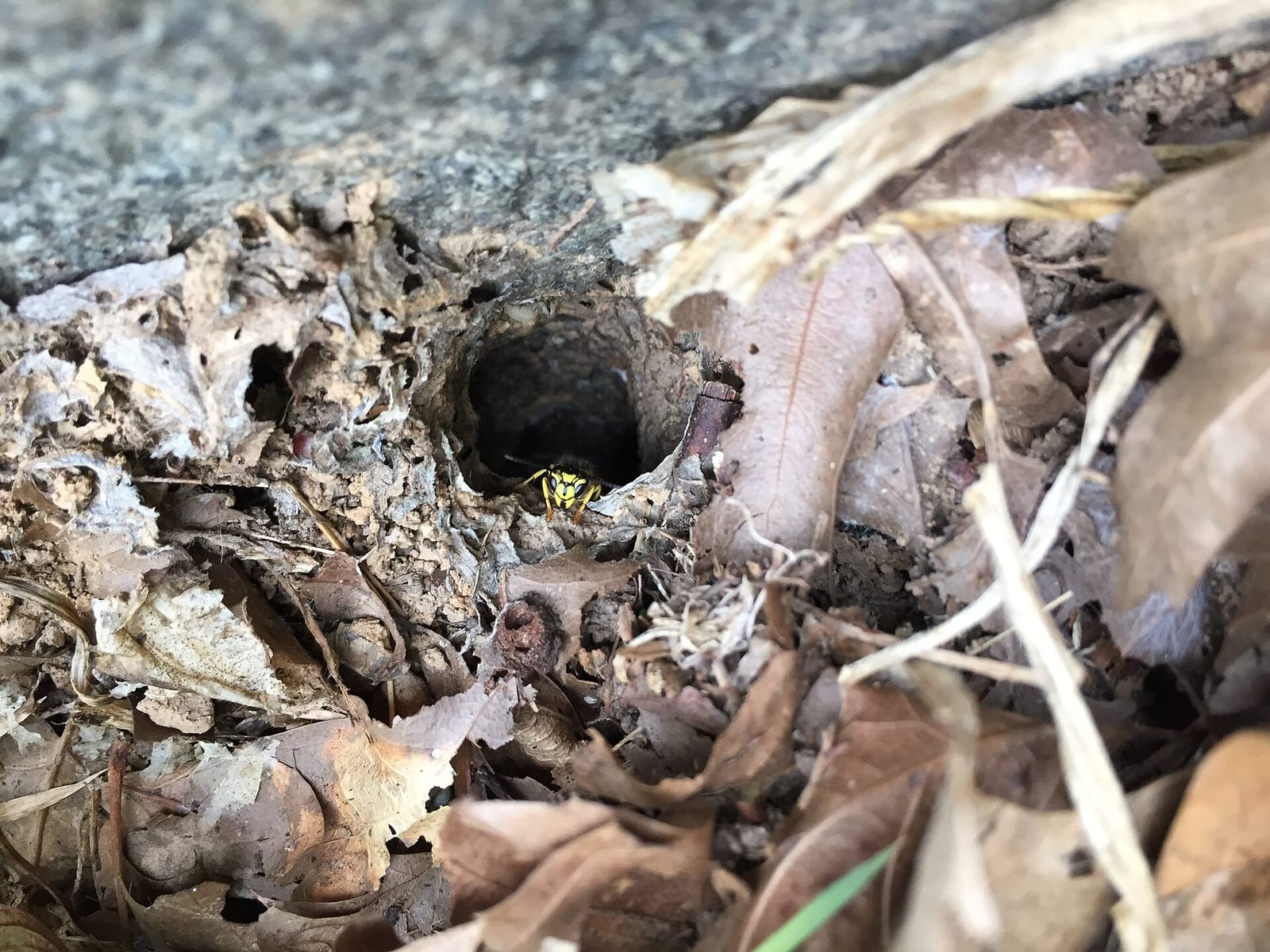
Nest. Enclosed paper nest, almost always underground in an old rodent burrow, or hidden in a wall void or compost heap. The only sign is a steady stream of wasps in and out of one small hole.
Temper. Defensive at the nest and increasingly pushy at food from August onward. This is the one that stings people mowing lawns.
Size. A few thousand workers by late summer in most of the country.
Here: Southern yellowjacket, Eastern yellowjacket.
Bald-faced hornets and aerial yellowjackets
Dolichovespula · 33 records in Louisiana
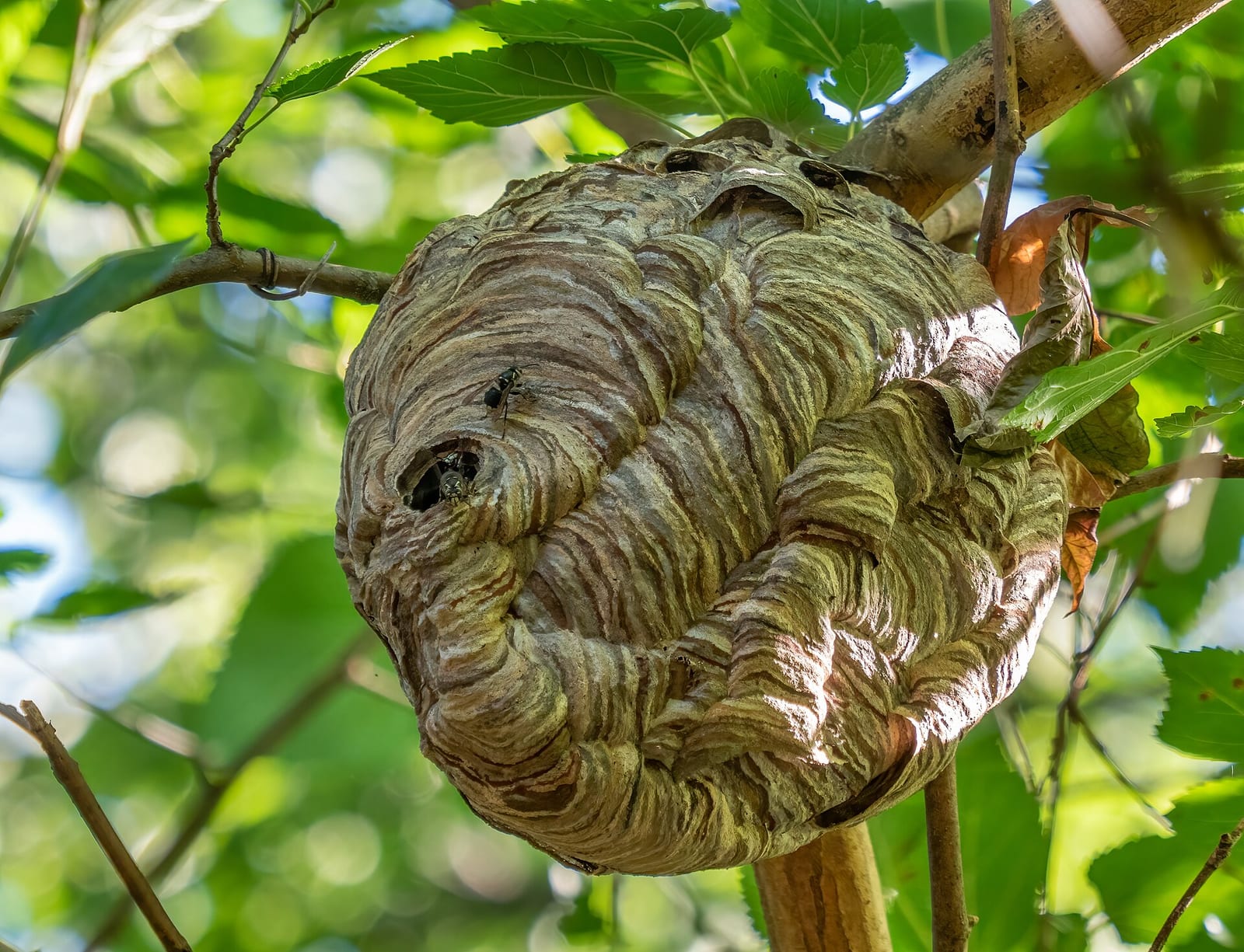
Nest. The grey, layered paper football hanging in a tree, shrub, or under an eave, with one entrance near the bottom.
Temper. Strongly defensive within a few metres of the nest and largely indifferent beyond it. They do not scavenge at picnics.
Size. Usually a few hundred workers. The nest looks far more alarming than the colony is.
Here: Bald-faced hornet.
Paper wasps
Polistes · 2,107 records in Louisiana
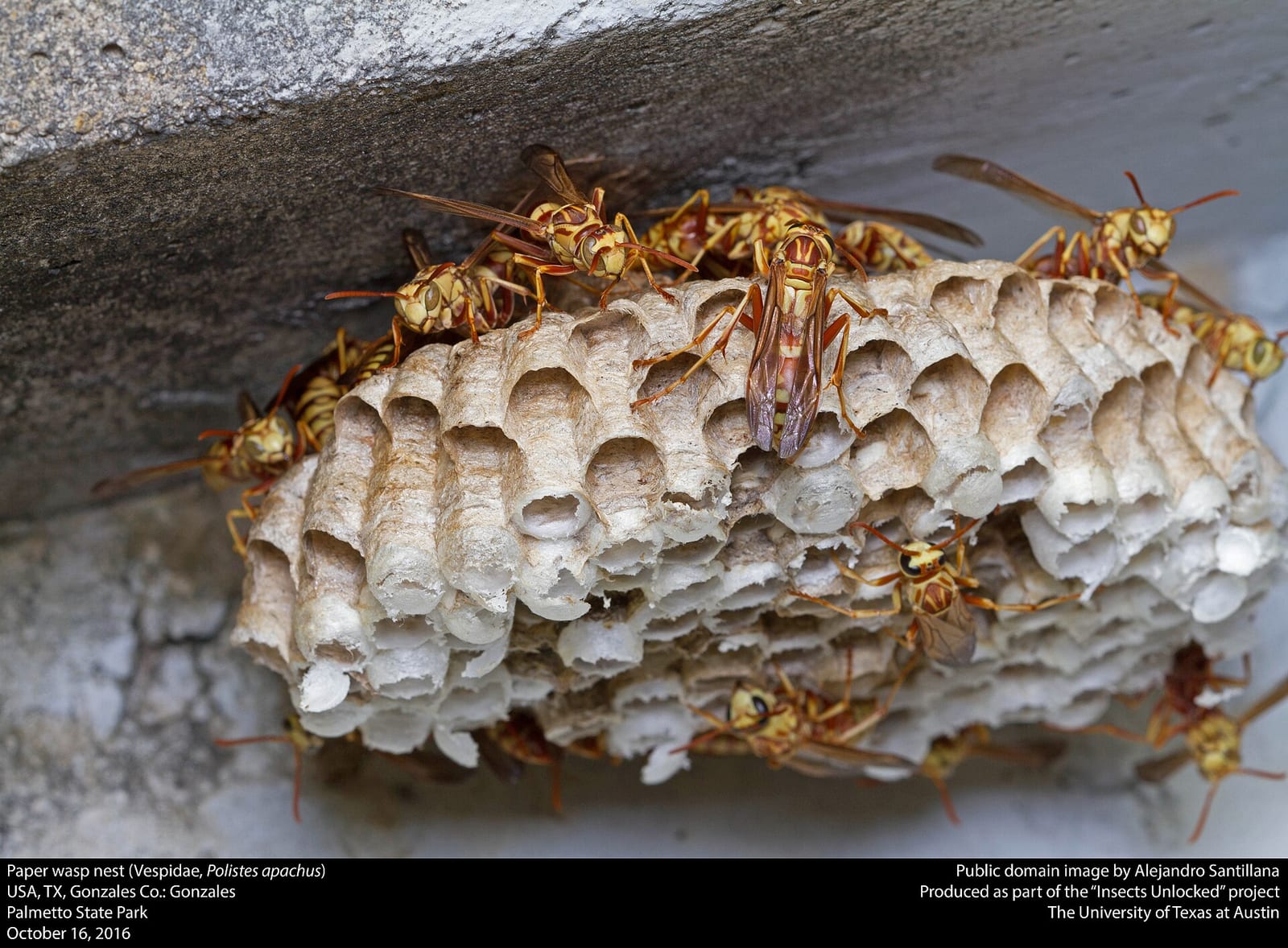
Nest. An open umbrella of bare hexagonal cells with no paper envelope, hung under an eave, a rail, a mailbox, or a grill lid.
Temper. The mildest of the three. They sting when the nest is touched or jarred and otherwise ignore people entirely.
Size. Rarely more than a few dozen wasps.
Here: Metric Paper Wasp, Hunter's Little Paper Wasp, Guinea Paper Wasp, Ringed Paper Wasp.
Where Louisiana nests actually turn up
In Louisiana, the places that produce nests are ground burrows on levees, lawns, and pasture edges, wall voids, soffits, and utility boxes, shrubs and low trees. The ground nest is the one that matters most: it is invisible until you are standing on it, and it is the reason so many stings happen during mowing, strimming, and gardening rather than at the picnic table.
Finding one before you mow it
Where each group has been recorded around Louisiana
Coloured cells are verified records, brighter where more have been logged. Switch between the three groups to see how differently they are distributed: yellowjackets follow people and food, paper wasps follow buildings, and aerial nests follow trees.
Coloured cells are verified Vespula records on iNaturalist, brighter where more have been logged. This is where people have found and photographed the species, so it thins out over roadless country and thickens around parks and towns. It is a record map, not a drawn range boundary. See the underlying records.
Sting first aid, and the part that is actually serious
A yellowjacket does not lose its sting the way a honeybee does, so one wasp can sting several times, and its alarm pheromone brings others. That is why step one is distance, not treatment.
One queen, one summer, one nest
Founding · from March 2 one queen
A single queen that spent winter under bark or in a wall crevice comes out as Louisiana warms past its last freeze. She builds a nest the size of a golf ball, lays the first eggs, and hunts for them herself. Almost nobody notices a colony at this stage, and destroying one now removes an entire season's worth of wasps.
Growth · early summer workers take over
The first workers emerge and the queen never leaves the nest again. Workers hunt caterpillars, flies, and other insects to feed the larvae, and get a sugary secretion back from the larvae in exchange. A colony at this stage is genuinely useful and almost entirely uninterested in you.
Peak · September 24 to November 26 the difficult weeks
The colony hits maximum size, and then the queen stops laying. No larvae means no sugar exchange, and thousands of workers with nothing to feed switch to scavenging anything sweet. This is the entire aggressive reputation of the species, and it lasts a few weeks.
Collapse · after November 26 the nest dies
New queens and males leave to mate, and the first hard freeze, around November 26 in Louisiana, kills every worker and the old queen. Only the mated new queens survive, hidden away until spring. The nest is never reused: an old one hanging in a tree in January is an empty shell.
Louisiana yellowjacket FAQ
The rest of your Louisiana late summer
More Southeast yellowjacket guides
Season windows are computed from NOAA 1991 to 2020 frost normals, because a yellowjacket colony is annual and a hard freeze ends it: colonies are founded around the median last spring freeze and peak in the weeks before the median first fall freeze. They are climatological typicals, not a forecast, and any year runs a couple of weeks either way. Activity curves and species mixes are research-grade observations from the iNaturalist API, read in your browser; they measure how often people find and photograph a wasp, not colony numbers. See every record behind this page. For a severe sting reaction, call emergency services. National picture: yellowjacket season by state →
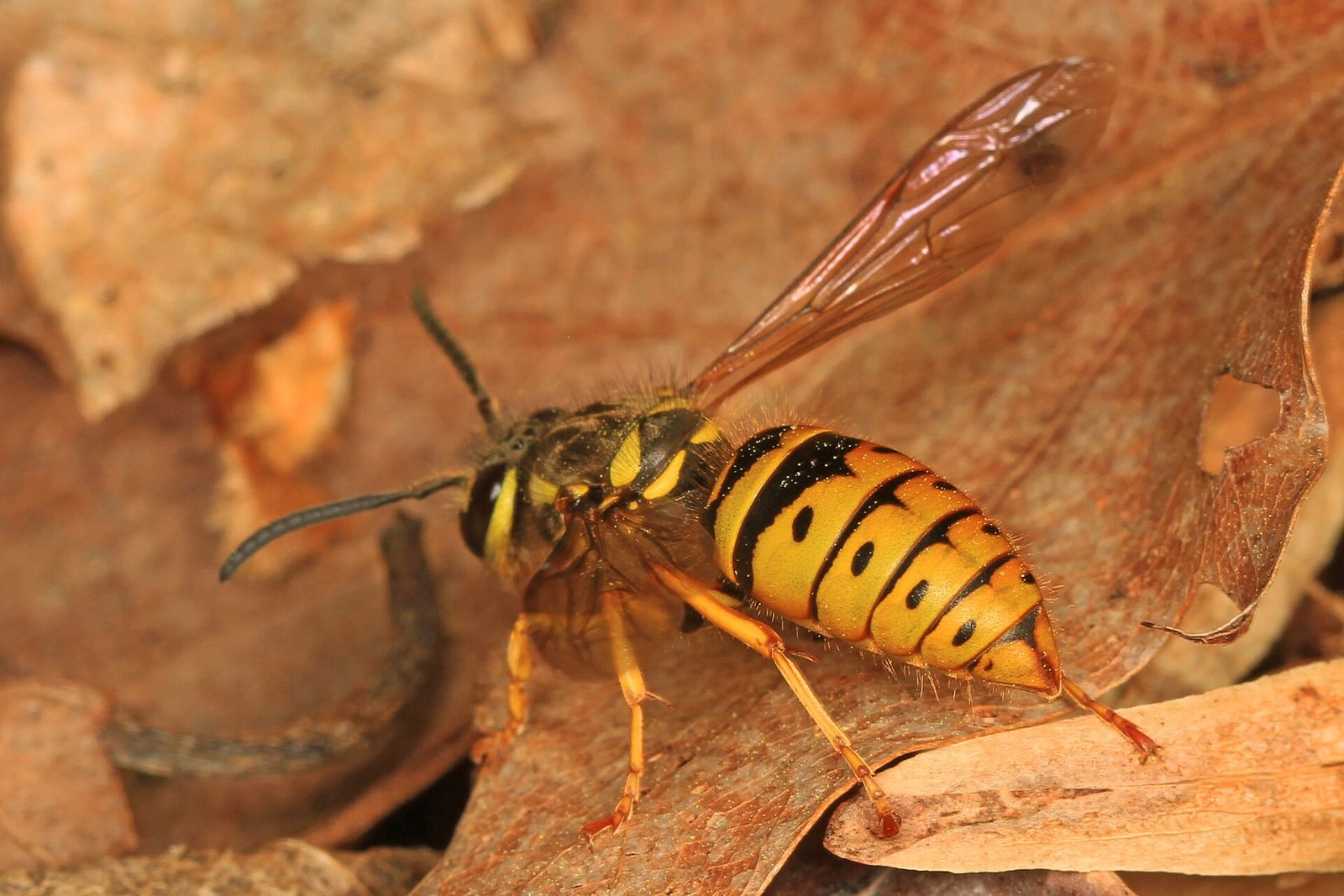
Hero image: “Eastern Yellowjacket, Vespula maculifrons, Leesylvania State Park, Woodbridge, Virginia” by Judy Gallagher, CC BY 2.0