Skip to content
North Carolina · This year's window has closed

North Carolina Firefly Season

The flashing display peaks around June 14 in North Carolina, with the busiest stretch from May 31 to July 12. Built from 2,951 research grade records of the flashing genera, counted by week and corrected for observer effort. Not a forecast: a climatology of when they have actually been recorded here.

June 14
Peak
week 24 of the year
May 31 to July 12
Busiest stretch
7 weeks
8
Flashing species here
recorded in this state
2,951
Records behind it
research grade
Right now

Are they out in North Carolina yet?

Reading this year’s North Carolina records from iNaturalist.
The light, on June 14

What time it gets dark in Charlotte

8:39 PM
Sunset
Some species are already flashing
9:08 PM
Civil dusk
Too dark to read outside
9:45 PM
Nautical dusk
The horizon is gone
10:26 PM
Full dark
Properly dark sky

Local time in North Carolina. It is 30 minutes from sunset to full civil twilight there, and 107 minutes to a properly dark sky. Which of those matters depends on the species: the Firefly Atlas says the common eastern firefly, the one over most lawns, has flash activity that “typically begins before and ends shortly after sunset”, while other species “become active only when it is fully dark and may continue courtship for a few hours”. Tonight the moon is a waxing moon, about 81% lit.

That second panel is arithmetic rather than a reading: sunset and the twilights for Charlotte on the peak date, in North Carolina time. It is on this page because the display is short and it starts when the light drops rather than at a clock time, and because the clock time it starts at moves by more than an hour across the covered states on the same night. In late June the sky over the Great Lakes is still bright at half past nine while the Gulf coast has been dark for an hour.

Advertisement
The record

When fireflies are recorded in North Carolina

Flashing firefly records in North Carolina, by month
05001.0k1.5k2.0kJanuary: 7 recordsJFebruary: 17 recordsFMarch: 53 recordsMApril: 112 recordsAMay: 402 recordsMJune: 1,520 recordsJJuly: 634 recordsJAugust: 148 recordsASeptember: 52 recordsSOctober: 4 recordsONovember: 1 recordsNDecember: 1 recordsD
Research grade records of Photinus, Photuris and Pyractomena in North Carolina, excluding the day active Winter Firefly.Source: iNaturalist, all years. 1,515 of these 2,951 records carry an adult life stage annotation. The published peak and window come from the same records counted by WEEK rather than by month, because a six week season inside twelve monthly buckets is three bars.

The monthly chart above is the shape; the week level read is where the dates on this page come from. In North Carolina the effort adjusted peak lands in week 24, which is exactly where the raw counts put it too. Correcting for how many people were outdoors barely moves the firefly curve, which is unusual on this site. The correction that mattered here was not observer effort at all. It was deciding which animals to count.

Fireflies come in three groups. The Firefly Atlas separates “flashing fireflies (or lightningbugs), day-active fireflies (which communicate with chemicals called pheromones), and glow-worms”. Only the first group puts on an evening show. Count the whole family instead and the results are nonsense: Massachusetts has 5,527 research grade firefly records, four fifths of them the Winter Firefly, which is day active, does not flash, and is photographed on tree bark in April. Every number on this page drops it.

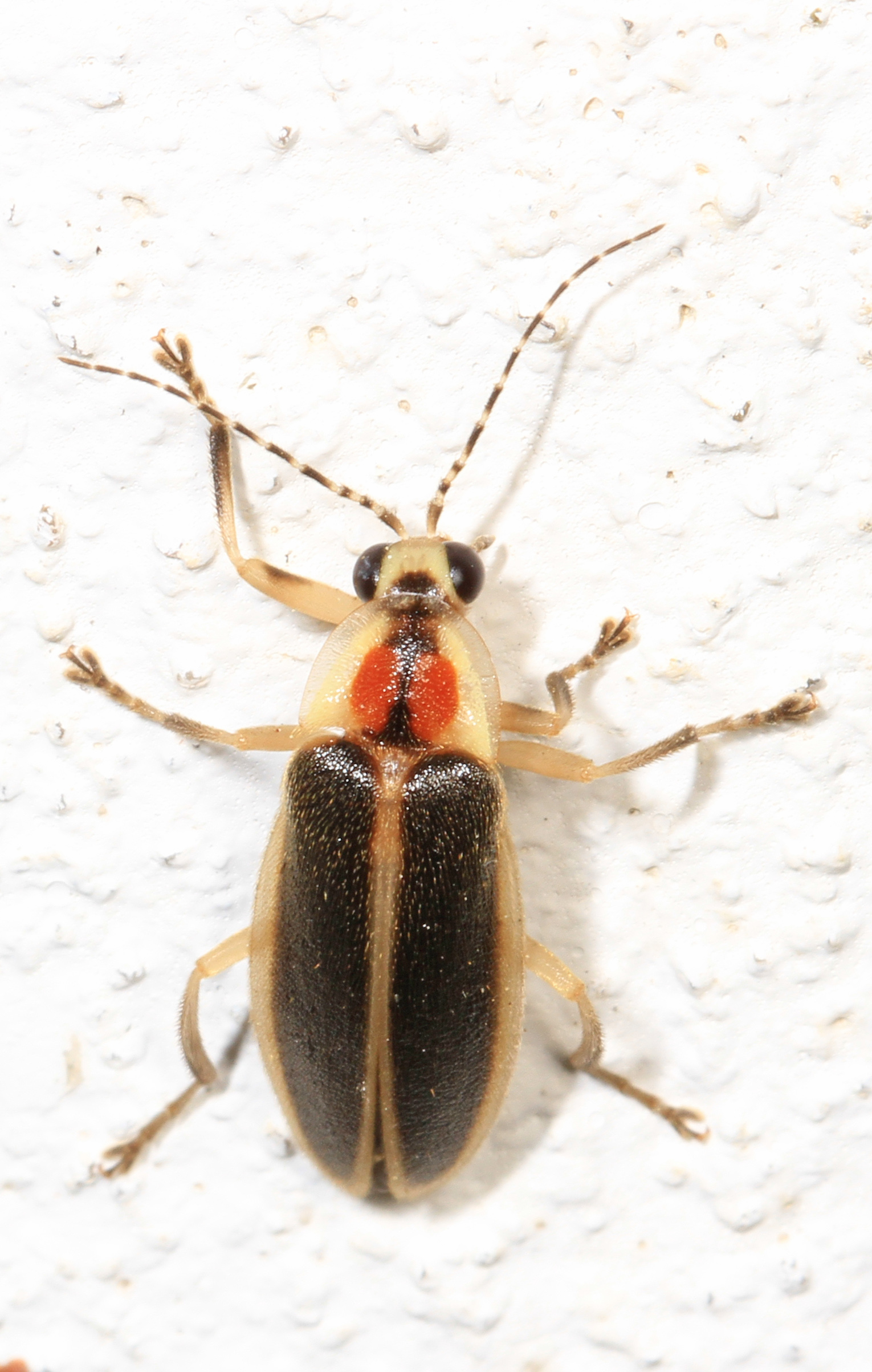
A spring treetop flasher firefly seen from above on white fabric, with yellow edged black wing covers
A spring treetop flasher firefly seen from above on white fabric, with yellow edged black wing covers. “Pyractomena borealis” — NCBioTeacher — CC0
The cast

Which flashing fireflies North Carolina actually has

Counts are research grade records, all years, and the names are iNaturalist’s own. They are a measure of what gets photographed and identified rather than of what is out there: Common Eastern Firefly dominates every state on this site partly because it is genuinely the most common lawn firefly in the eastern United States and partly because it flies early, low and slow enough to photograph. The Firefly Atlas records “172 described species and subspecies of fireflies in the USA and Canada”, so a state list of 8 is the visible fraction, not the whole fauna.

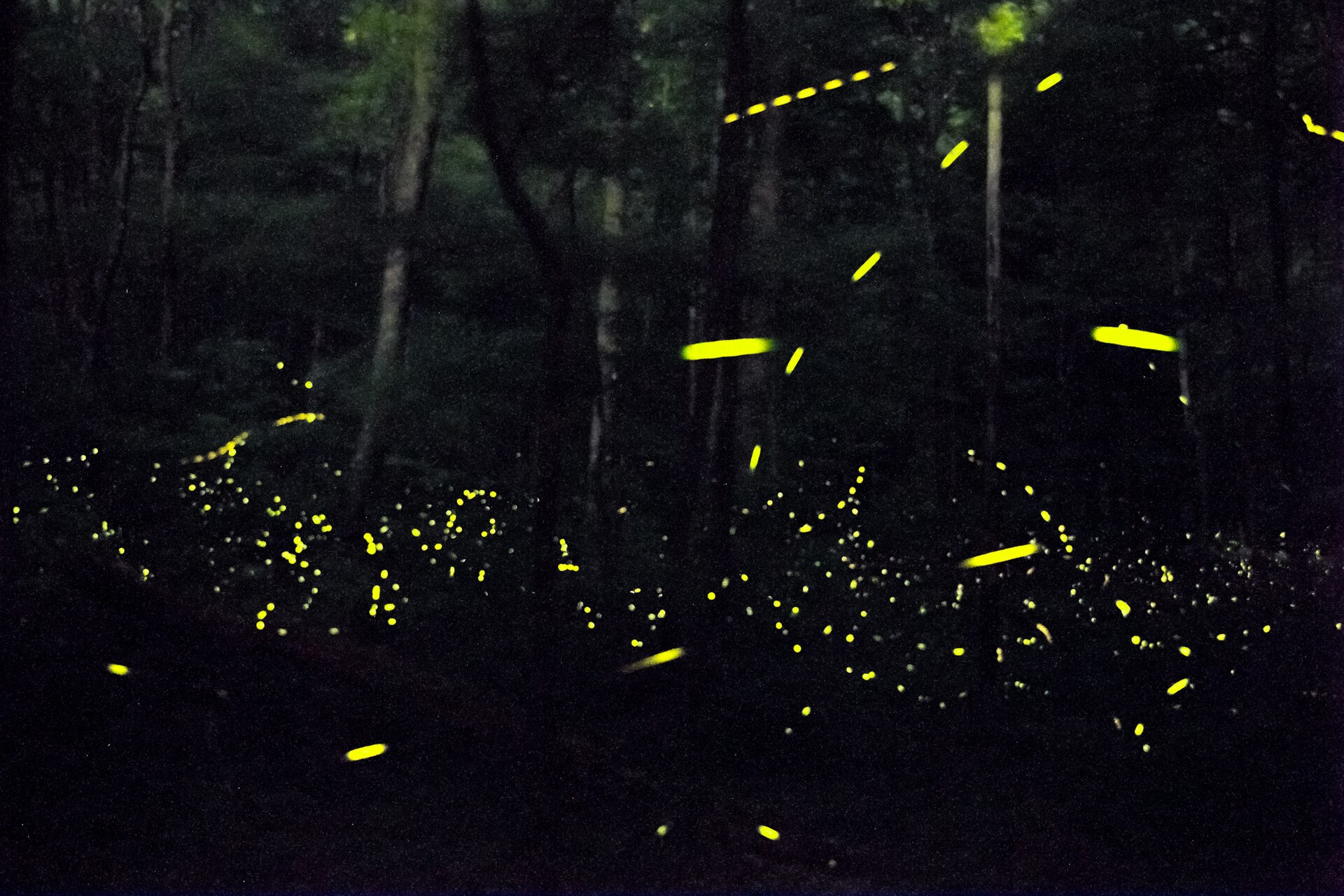
Long exposure photograph of synchronous fireflies in a dark forest in Great Smoky Mountains National Park, showing dashed yellow flight trails
Long exposure photograph of synchronous fireflies in a dark forest in Great Smoky Mountains National Park, showing dashed yellow flight trails. “Photinus carolinus Great Smoky Mountains” by Niemand für Polyphemus, CC BY 2.0
Managed access

Synchronous firefly viewing in North Carolina

North Carolina has a viewing event where access is limited and allocated in advance. The dates are set each year and they move: read the viewing column down rather than across. Because they move, this page carries the verified years, and the 2027 dates appear here once the park announces them. Previous years disagree by more than two weeks, so any 2027 date published today is an extrapolation.

Grandfather Glows

Grandfather Mountain, North Carolina. synchronous fireflies, blue ghost fireflies and glowworms (Photinus carolinus, Phausis reticulata, Orfelia fultoni).

Ticket lottery

Not announced yet. The 2027 dates are not yet announced. The organiser has historically posted them in spring, at https://grandfather.com/fireflies/. Previous years have moved by more than two weeks, so they are a guide to the month rather than the day.

10 species of fireflies or luminous insects

Grandfather Mountain, North Carolina
Worth correcting. Grandfather Mountain is a private nonprofit attraction, owned and operated by the Grandfather Mountain Stewardship Foundation. It is a different entity from Grandfather Mountain State Park, and the event has nothing to do with the Blue Ridge Parkway. Dates and prices for Grandfather Glows are published by the organiser at grandfather.com; the figures for recent years found elsewhere come from news coverage rather than from the organiser.

Rules, in their words

  • “Pets are not allowed”
Advertisement
The other twenty two months

What actually helps fireflies in a North Carolina yard

The adults you are waiting for in June are the short part of the life. The Xerces Society states that fireflies “spend most of their lives, up to two years, in the larval stage, hunting for soft-bodied invertebrate prey at or near the soil surface”. The Firefly Atlas adds that eggs and larvae “may be found in moss, on the soil surface, under duff and leaf litter, or in rotting wood”. So the things that decide whether there are fireflies over your grass next June are decisions about the ground, taken in October and February.

  • Leave the leaves down. Penn State Extension’s firefly guidance is explicit about this, alongside mowing to a height of three to four inches and turning outdoor lighting off during evening hours.
  • Lights off, or at least down. Xerces reports that in their Red List assessments light pollution was identified as a threat to 79 firefly species. A flashing signal competes with whatever else is lit.
  • The two sprays that matter most are the ordinary ones. Xerces singles out mosquito management and broadcast lawn treatments as particularly risky, because they cover large areas where fireflies are, and notes that mosquito treatments may be applied at dusk, when mosquitoes but also fireflies are most active. If you are timing mosquito control in North Carolina, our mosquito season pages are the other half of that decision.
  • Damp corners are the habitat. Larvae hunt snails, slugs and worms at the soil surface. A tidy dry lawn is a poor place to be a firefly for two years.
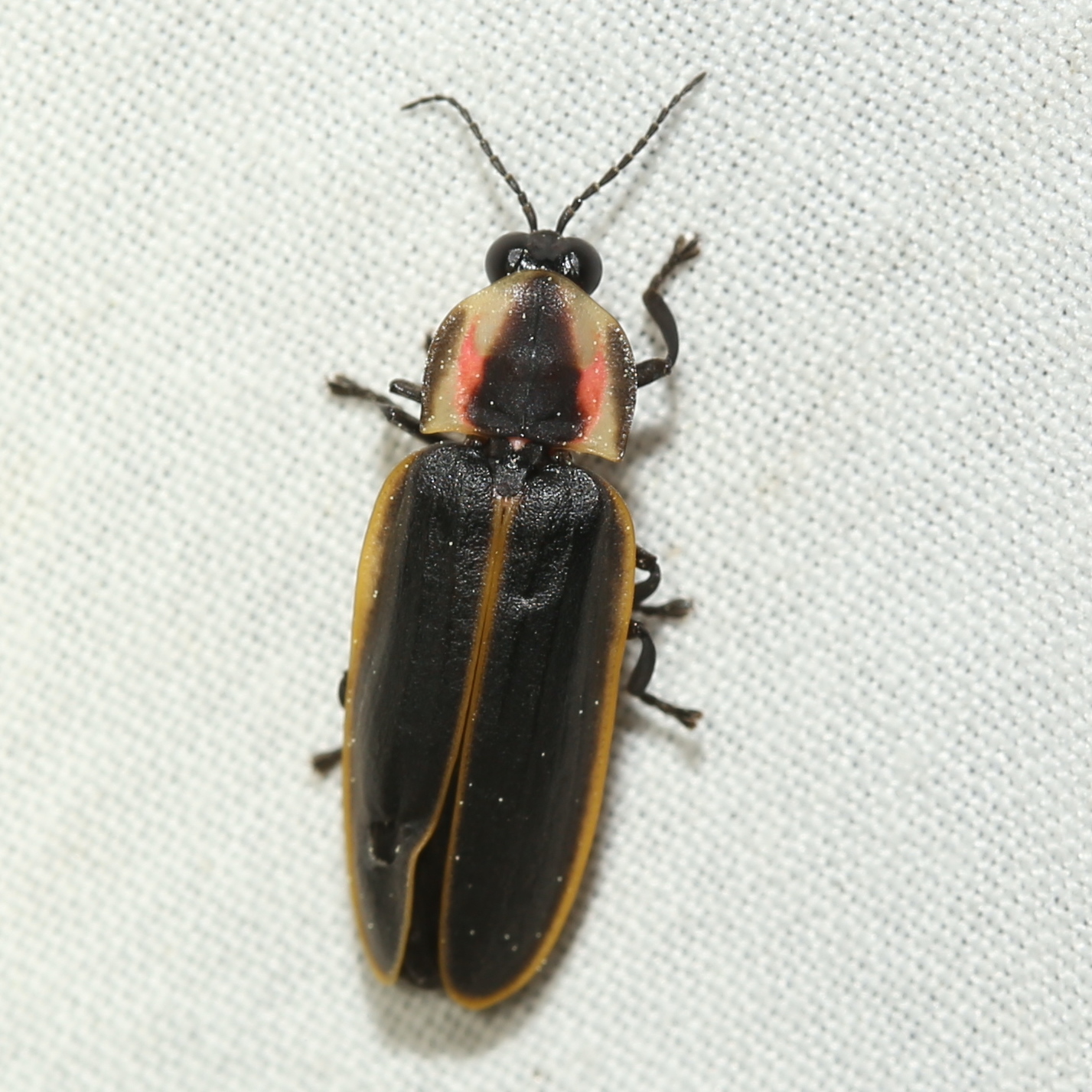
A Photuris firefly with long legs and an orange marked shield, resting on a white painted wall
A Photuris firefly with long legs and an orange marked shield, resting on a white painted wall. “366 - Firefly - Photuris species, Woodbridge, Virginia” by Judy Gallagher, CC BY 2.0
The wave

Where North Carolina sits in the season

The display walks north. Across the 27 covered states the peak week fits a straight line against latitude closely enough to be worth stating: about one week later for every three degrees north, from the last week of May on the Texas plains to the first week of July on the Great Lakes. 1 states peak before North Carolina. 20 peak after it. If you miss it at home you can usually drive to it.

  1. May 24
  2. Jun 14
  3. Jun 21
  4. Jun 28
  5. Jul 5
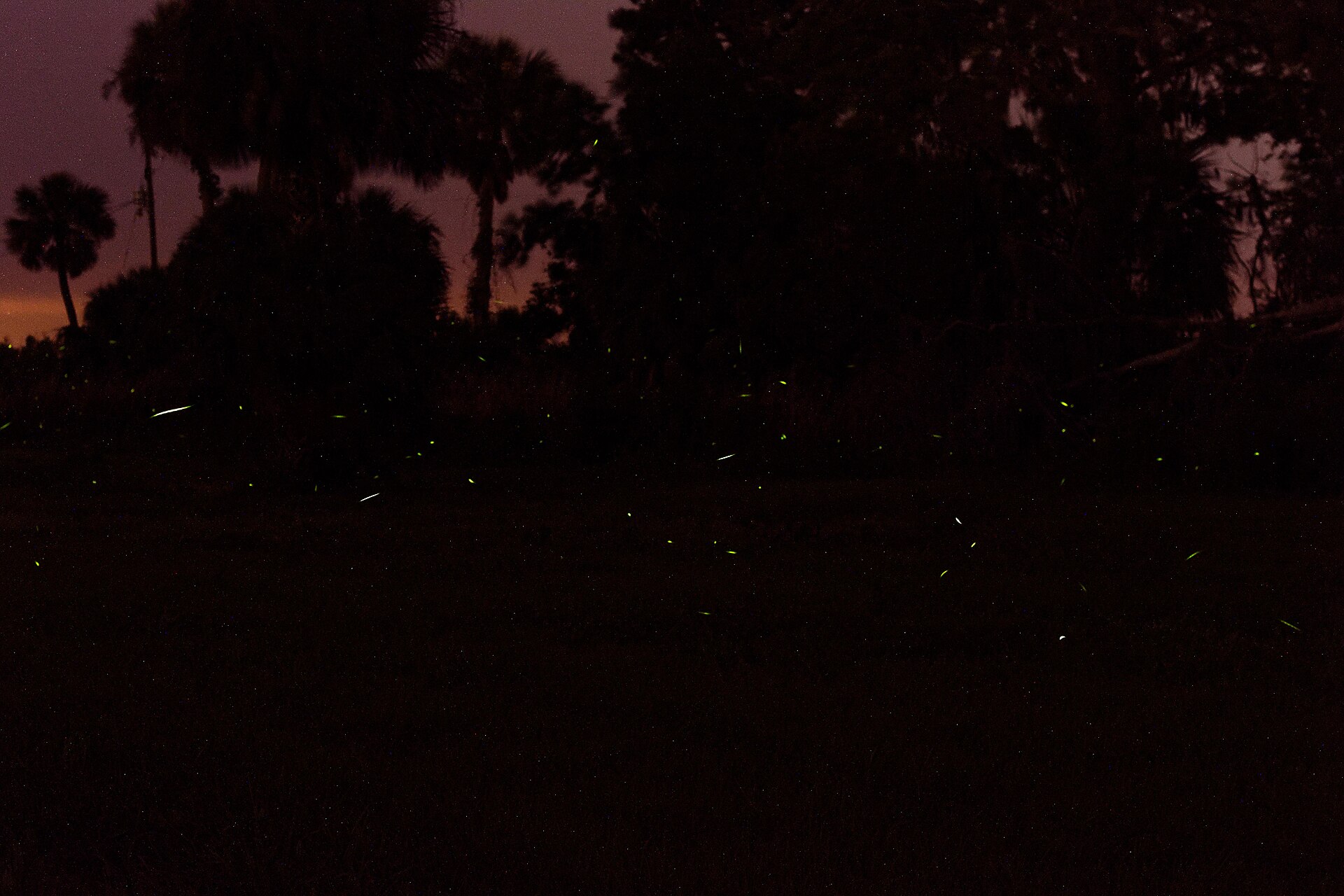
Long exposure photograph of dozens of green firefly flashes above dark grass at dusk, with palm silhouettes against a purple sky
Long exposure photograph of dozens of green firefly flashes above dark grass at dusk, with palm silhouettes against a purple sky. “Fireflies, 97-second exposure” by Jud McCranie, CC BY-SA 4.0
Questions

Fireflies in North Carolina, answered

Advertisement