
Pacific Flyway Duck Hunting Forecast
The week ahead across all 8 states in the corridor, each rated Slow to Prime for duck and goose movement from the snow on the ground, the freeze counted in days, the front, the wind and the barometer.
The Pacific Flyway week, north to south
The western corridor from Alaska down the coast states and Great Basin. Every state in it, ordered coldest first, with the best morning this week at its own NOAA reference points and the freeze date those normals give. A push shows up at the top of the list days before it reaches the bottom, which is the whole reason to read a flyway as one thing.
| State, north to south | Duck zones | Duck season spans | Freezes from | Coldest normal day |
|---|---|---|---|---|
| Alaska | 5 | Sep 1 to Jan 22 | Oct 7 | -9F at Fairbanks |
| Idaho | 3 | Oct 3 to Jan 31 | Dec 3 | 29F at Coeur d'Alene |
| Washington | 1 | Oct 17 to Jan 31 | Nov 26 | 26F at Spokane |
| Oregon | 2 | Oct 10 to Jan 31 | Dec 4 | 30F at Portland |
| Utah | 2 | Oct 3 to Jan 23 | Nov 22 | 22F at Logan |
| Nevada | 4 | Sep 26 to Jan 31 | Nov 22 | 25F at Elko |
| California | 5 | Oct 3 to Jan 31 | Nov 30 | 29F at Tahoe City |
| Arizona | 1 | Oct 23 to Jan 31 | Nov 30 | 29F at Flagstaff |
- Prime80 and up
- Great68 and up
- Good55 and up
- Fair40 and up
- Slow0 and up
Fairbanks and Sacramento this week
The same seven days at the top and the bottom of the corridor, rated side by side. Alaska sits at the cold end and Arizona at the mild end, and the gap between their two weeks is the push in transit.
| Reference point | Best morning this week | What carries it | Birds |
|---|---|---|---|
| Fairbanks, AK | Loads as you scroll | – | – |
| Sacramento, CA | Loads as you scroll | – | – |
The Pacific Flyway birds this year, from the federal surveys
The U.S. Fish and Wildlife Service flies the Waterfowl Breeding Population and Habitat Survey every May and publishes the counts in its annual Waterfowl Population Status report. Those numbers set how many birds are in the corridor to begin with; the week ahead decides when they move.
Alaska and the Yukon well under average
Alaska with the Yukon and Old Crow Flats counted 2.3 million ducks, level with 2025 and 37 percent below the long run average.
“In the Alaska—Yukon Territory—Old Crow Flats crea area, the total duck estimate was 2.3 ± 0.1 million. This estimate was similar to the 2025 estimate and 37% below the longterm average of 3.6 ± 0.02 million.”
Waterfowl Population Status, 2026, U.S. Fish and Wildlife Service, read 2026-11-01
Across the continent
The mallard count is a quarter under average
Mallards were counted at 5.9 million, down 11 percent on 2025 and 26 percent on the long run average.
“Estimated total mallard (Anas platyrhynchos) abundance was 5.9 ± 0.2 million, which was 11% below the 2025 estimate and 26% below the long-term average of 7.9 ± 0.04 million.”
Waterfowl Population Status, 2026, U.S. Fish and Wildlife Service, read 2026-11-01
Nine goose and swan populations trending down
Of 26 goose and tundra swan populations, nine showed a significant downward trend over the most recent ten years.
“Of the 26 goose and tundra swan (Cygnus columbianus) populations, the primary monitoring indices for 9 of these populations had significant (P < 0.05) negative trends (% change per year) during the most recent 10-year period”
Waterfowl Population Status, 2026, U.S. Fish and Wildlife Service, read 2026-11-01
Alaska is both a flyway state and a survey crew area.
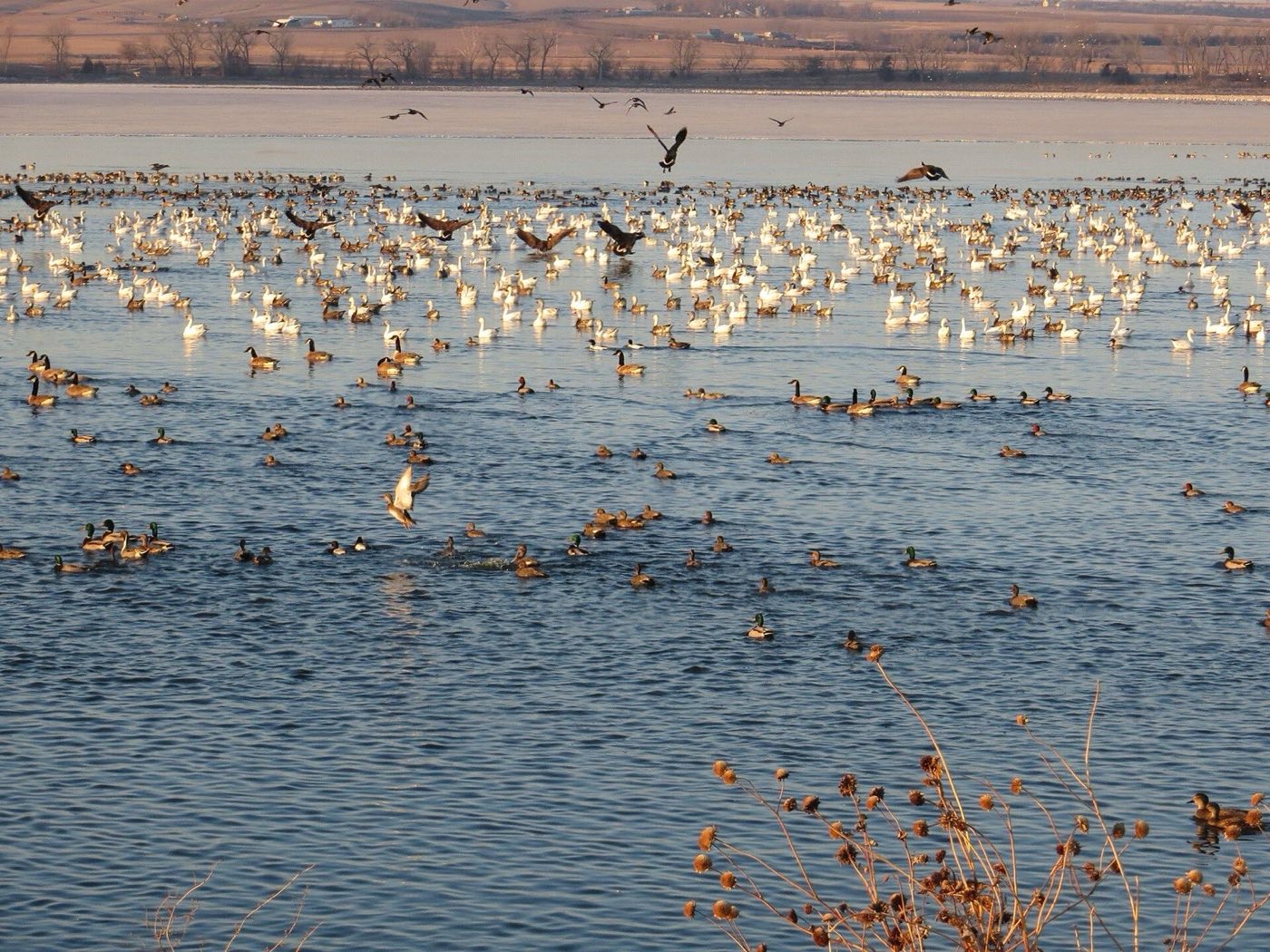
Every Pacific Flyway state, rated
Each state page carries the week at its own reference points, the duck zones open across those days, its freeze normals and its agency’s source.
- Washington: 1 duck zone, freezing from about Nov 26
- Oregon: 2 duck zones, freezing from about Dec 4
- California: 5 duck zones, freezing from about Nov 30
- Idaho: 3 duck zones, freezing from about Dec 3
- Utah: 2 duck zones, freezing from about Nov 22
- Nevada: 4 duck zones, freezing from about Nov 22
- Arizona: 1 duck zone, freezing from about Nov 30
- Alaska: 5 duck zones, freezing from about Oct 7
Pacific Flyway questions
The other three flyways
- Atlantic Flyway: The Atlantic Flyway runs the seaboard from Maine to Florida and reaches inland to West Virginia.
- Mississippi Flyway: The Mississippi Flyway follows the river system from the Great Lakes to the Gulf.
- Central Flyway: The Central Flyway runs the plains from the Dakotas and Montana down through Texas.
More for the season
Season dates and zones come from each state agency by way of the waterfowl season pages, the freeze dates from the NOAA 1991 to 2020 daily climate normals, read 2026-11-01, and the survey numbers from the U.S. Fish and Wildlife Service reports quoted above. The 2026-27 dates, zones, bag limits and shooting hours that govern are the ones on your own state agency’s page. A rating reads the weather, and food, habitat and hunting pressure move birds too. The forecast hub rates any ZIP code.