
Skip to content
Even odds for March to May, leaning dry on the water

Utah Spring Forecast 2027

Which way spring 2027 leans in Utah, what the last freeze normally does at 163 weather stations, how wide the window is between leaf-out and the end of freeze season, and a live reading for your own ZIP.

Even odds
Spring 2027 timing
50 of 100 on the outlook and the pattern
Leaning dry
Spring water
36 of 100 on the outlook, the pack and the deficit
May 11
Median last freeze
statewide median across 163 stations
59 days
Leaf-out to last freeze
a wide exposed window
Your own place

How spring is running where you are in Utah

A statewide number is a starting point, not an answer: Utah runs 104 days from one end of its freeze normals to the other. Enter a ZIP for the forecast lows from the National Weather Service, the last 30 days measured against the same days in recent years, and the soil temperature at the depth the planting guides use.

Utah

Utah normals, from the NOAA 1991 to 2020 Climate Normals
How it is runningEnter a ZIPthe last 30 days against the same days in recent years
Freeze in the forecastEnter a ZIPnothing at or below 32 F in the gridded forecast
The groundEnter a ZIPsoil temperature at 6 cm, the depth the planting guides use
Median last freezeMay 11the statewide median across 163 stations

Enter a ZIP code above for the live reading: the forecast lows, the last 30 days against recent years, and the soil temperature.

The outlook

Will spring 2027 be early or late in Utah?

Nothing in the outlook favors an early or a late spring here. Less spring water than usual is favored, or a deficit is already on the ground.

Timing

How Utah leans

Even odds 50 of 100

Nothing in the outlook favors an early or a late spring here.

  • March to May temperature outlook0 of 26CPC gives this state equal chances of a warm, near normal or cool spring.
  • February to April temperature outlook0 of 16The early window catches the warm tilt at its outer 33 percent contour, close to even odds.
Water

What spring brings Utah

Leaning dry 36 of 100

Less spring water than usual is favored, or a deficit is already on the ground.

  • March to May precipitation outlook0 of 30CPC gives this state equal chances of a wet, near normal or dry spring.
  • Drought already on the ground-14 of 14100 percent of the state was in moderate drought or worse on the Drought Monitor map behind this reading.
  • Rain onto a standing packliveThis state holds a spring snowpack, so a spring rain can fall on snow. The pack reading comes in live.

What the Climate Prediction Center put over Utah

March to May 2027 temperatureEqual chances
February to April 2027 temperaturewarm at the outer 33% contour, on the edge of the tilt
March to May 2027 precipitationEqual chances, on the edge of the tilt
February to April 2027 precipitationwet at 40 percent, on the edge of the tilt

Read off the Climate Prediction Center’s own outlook polygons for Utah, issued October 15, 2026. The outer 33% contour is the boundary of the shaded area, where the odds sit close to even and only the direction is on the map. On the edge of the tilt means the state straddles two probability bands, so one part of it carries the higher number.

A seasonal outlook is a probability, never a promise. NOAA’s Climate Prediction Center issued the March to May 2027 outlook on October 15, 2026 and shifts the odds between three categories, warmer than normal, near normal and cooler than normal, measured against 1991 to 2020. Equal chances means the outlook has no usable signal there.

Advertisement
The melt

The Utah snowpack, and when it comes off

Spring in Utah is a question about water before it is a question about warmth. These are the dates the USDA snow network’s 141 Utah stations normally peak and melt out, and the live reading underneath is where the pack stands against its own median for today.

  • April 5the median date the pack peaks across 141 stations
  • May 11the median date those stations melt out
  • 14.5 inmedian snow water equivalent at the peak
  • Snowbirddeepest station at peak, 43.8 inches at 9,170 feet

The pack is the water supply and the flood risk in one number. It melts from the bottom of the elevation band up, so a valley can be bare while Spectacle Lake at 11,050 feet is still holding its snow, and a warm rain on a standing pack adds its own water to what it melts. The National Weather Service office in Salt Lake City, UT issues the spring flood outlooks for Utah.

The live pack reading loads here.

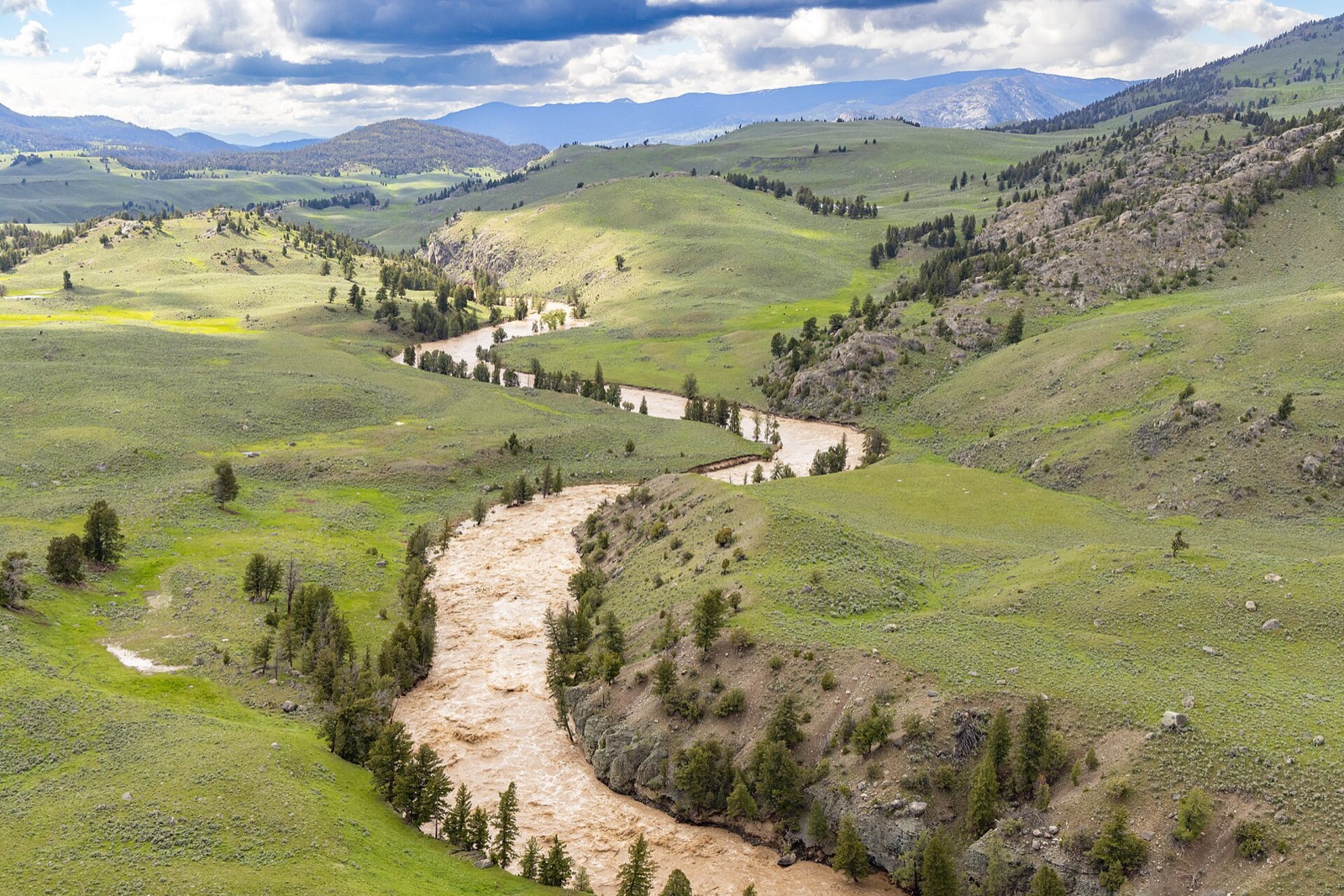
A wide river running brown and high between gravel banks under a mountain ridge
A mountain river carrying its melt. How fast a pack comes off matters as much as how deep it was: a slow cool melt feeds the summer, and a warm rain falling on standing snow sends the same water down in days.Yellowstone flood event 2022 Lamar River above the Confluence with the Yellowstone River, Yellowstone National Park (NPS), Public domain
The window

How risky an early warm spell is in Utah

A warm spell in March costs nothing by itself. It costs something when it pulls buds and blossom out ahead of the last freeze, because once a plant has broken dormancy the same 28 F night it shrugged off in February takes the crop. The two dates below are both normals, and the distance between them is the exposure.

Mar 13normal first leaf59 daysMay 11median last freeze

A wide exposed window. Leaf-out normally runs more than five weeks ahead of the last likely freeze.

In Utah the USA National Phenology Network’s Spring Leaf Index normally fires on March 13, and the freeze normals put the coin flip at May 11, with a 1 in 10 chance of a freeze still ahead on June 11. That gap is how long plants are normally out while a freeze is still on the table: 59 days to the coin flip, 90 to the 1 in 10 date. Both ends are published normals for 1991 to 2020. Neither is a forecast.

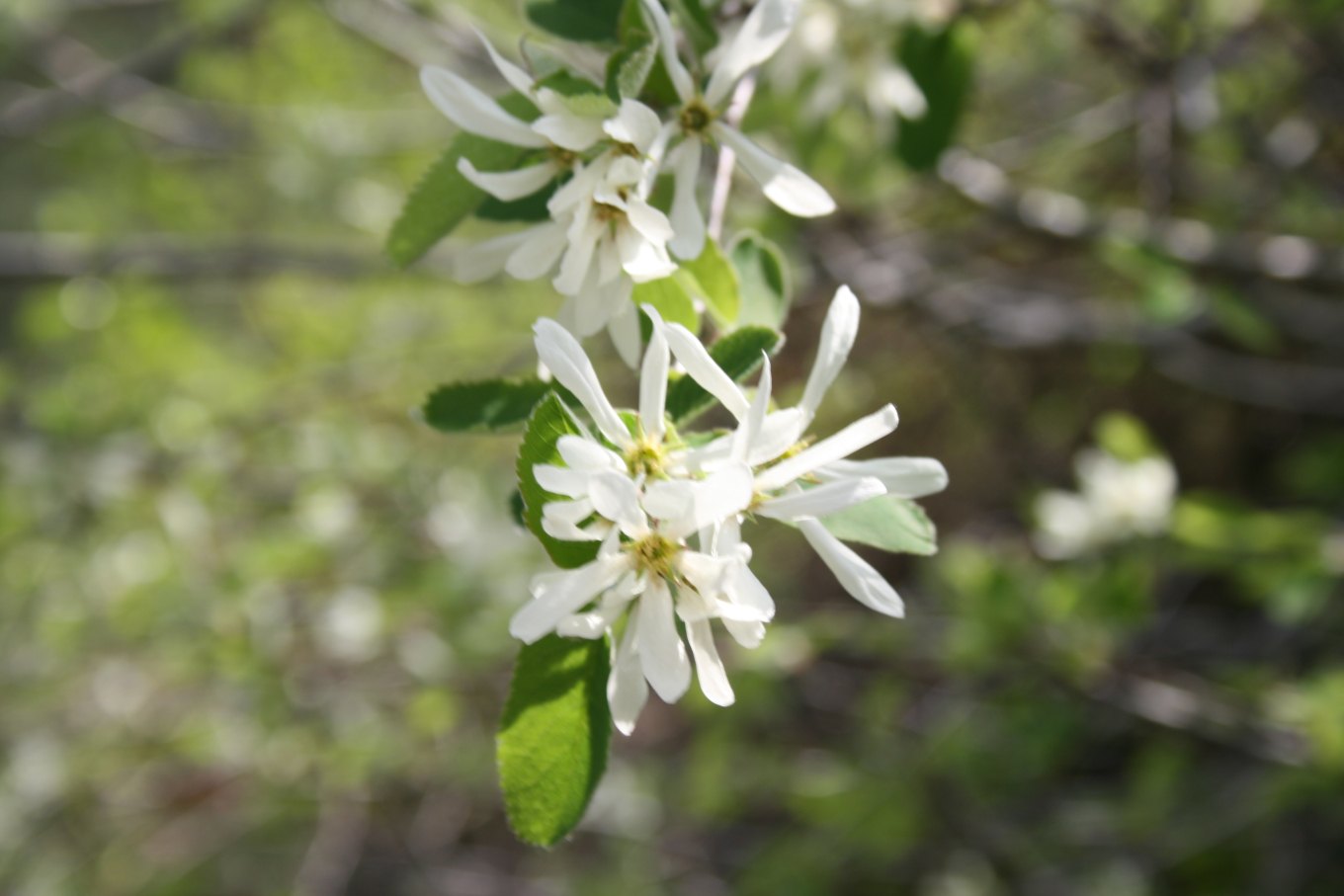
White serviceberry flowers open on a bare branch
Serviceberry opens early, ahead of its own leaves, which is what makes the shrub a calendar. The Spring Leaf Index tracks the same accumulated warmth that sets it off, and so does the clock on anything in the garden.Amelanchier-ovalis-flower, Sten Porse, CC BY-SA 3.0
The last freeze

When the last frost normally ends in Utah

Every date here is a 1991 to 2020 normal, which means it is what the station did over 30 years and not what it will do in 2027. The 1 in 10 column is the one a tender crop plants against.

The date a 32 F freeze has a 10, 50 and 90 percent chance of still being ahead, from the NOAA 1991 to 2020 Climate Normals.
StationElevation1 in 10 later thanMedian1 in 10 earlier than
St George, St. George2,857 ftApr 6Mar 14Feb 27
Salt Lake City Intl Airport, Salt Lake City4,225 ftApr 30Apr 8Mar 17
Wendover Airport4,237 ftMay 5Apr 18Mar 31
Moab Canyonland Airport4,561 ftMay 8Apr 22Apr 7
Logan Cache Airport, Logan4,454 ftMay 29May 8Apr 24

Read the median as the coin flip and the 1 in 10 column as the one to plant against. Across all 163 Utah stations in the normals the median runs from Mar 9 at Hite Ranger Station to Jun 21 at Brian Head, 9,770 feet up, a spread of 104 days inside one state.

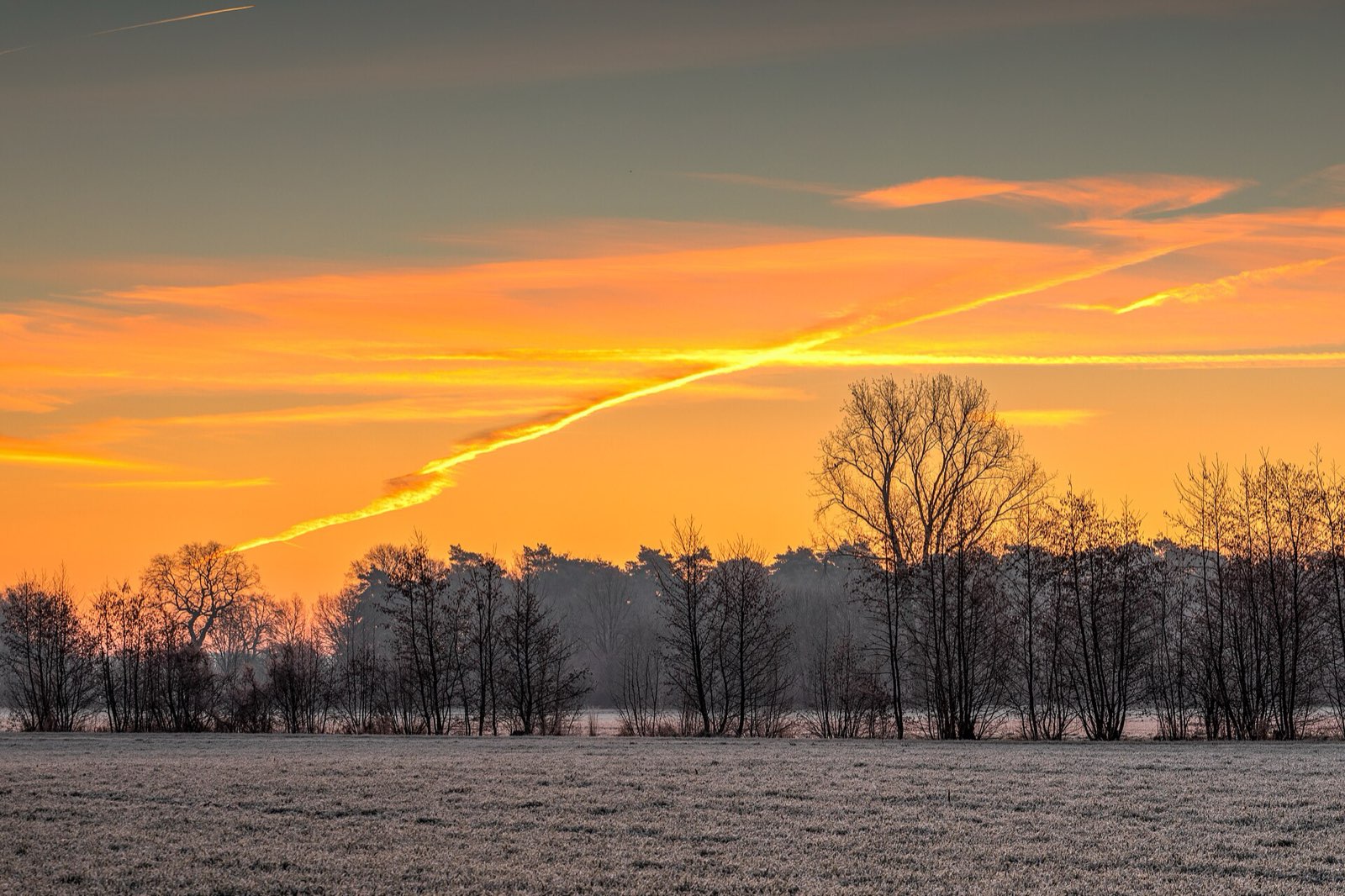
Frost on a grass meadow at sunrise, with low sun behind bare hedgerow trees
A clear calm night after a warm week is the one that does the damage. Radiational frost settles into low ground, so a reading taken at the airport can sit several degrees above the hollow a garden is in.Dülmen, Kirchspiel, Dernekamp, Sonnenaufgang -- 2023 -- 6308-12, Dietmar Rabich, CC BY-SA 4.0
What spring does here

Spring hazards in Utah

  • Snowmelt and runoff

    Utah’s mountain snow normally reaches its deepest around April 5 and is normally gone by May 11, read across 141 snow stations. How fast that water leaves depends on how warm the melt weeks run and whether rain falls on the pack. Salt Lake City, UT issues the hydrologic and flood statements for this ground.

  • A warm spell, then a freeze

    Leaf-out normally happens around March 13 in Utah, and a freeze still has an even chance of coming after it until about May 11. That is 59 days of plants being out while a freeze is still on the table, which is what makes an early warm spell here expensive rather than welcome.

  • A deficit going into spring

    On the Drought Monitor map for August 25, 2026, 100 percent of Utah was in moderate drought or worse, and 93 percent in severe drought or worse. Spring rain fills that hole before it does anything else, so a near normal spring can still leave the ground short.

  • Snow after spring starts

    Measurable snow normally falls in Utah as late as April 10, which is after the calendar says spring. A warm March does not close the door on it.

  • Spring arrives at different times inside the state

    Across 163 NOAA stations in Utah, Hite Ranger Station normally sees its last freeze by March 9 while Brian Head at 9,770 feet normally waits until June 21. That is 104 days between two ends of the same state.

Drought figures are the United States Drought Monitor map for August 25, 2026. Flood and snowmelt outlooks for Utah are issued by the National Weather Service office in Salt Lake City, UT.

Planting

When planting starts in Utah

Many vegetables are easier to grow using transplants that are started indoors several weeks before planting outdoors.

Counting from Utah’s statewide median last freeze of May 11, cool season seed goes in while the soil is at 50 F and warm season transplants wait for 60 F. The live reading above gives the soil temperature for your own ZIP at the depth the guides use.

Beaver (average last spring frost June 6)

  • Aprbroccoli, cabbage, onion, peas, spinach, cauliflower, lettuce, carrot
  • Maycucumber, sweet corn, beans
  • Juntomato, pepper, eggplant, melon

Castle Dale (average last spring frost May 25)

  • Aprbroccoli, cabbage, onion, peas, spinach, cauliflower, lettuce, carrot
  • Maytomato, pepper, eggplant, melon, cucumber, sweet corn, beans

Cedar City (average last spring frost May 21)

  • Aprbroccoli, cabbage, onion, peas, spinach, cauliflower, lettuce, carrot
  • Maycucumber, sweet corn, beans
  • Juntomato, pepper, eggplant, melon

Coalville (average last spring frost June 18)

  • Maytomato, pepper, eggplant, melon, broccoli, cabbage, onion, peas, spinach, cauliflower, lettuce, carrot
  • Juncucumber, sweet corn, beans

Duchesne (average last spring frost May 23)

  • Aprbroccoli, cabbage, onion, peas, spinach, cauliflower, lettuce, carrot
  • Maytomato, pepper, eggplant, melon
  • Juncucumber, sweet corn, beans

Farmington (average last spring frost May 5)

  • Marbroccoli, cabbage, onion, peas, spinach, cauliflower, lettuce, carrot
  • Maytomato, pepper, eggplant, melon, cucumber, sweet corn, beans

Fillmore (average last spring frost May 16)

  • Marbroccoli, cabbage, onion, peas, spinach
  • Aprcauliflower, lettuce, carrot
  • Maycucumber, sweet corn, beans
  • Juntomato, pepper, eggplant, melon

Heber (average last spring frost June 11)

  • Aprbroccoli, cabbage, onion, peas, spinach
  • Maytomato, pepper, eggplant, melon, cauliflower, lettuce, carrot
  • Juncucumber, sweet corn, beans

Kanab (average last spring frost May 7)

  • Marbroccoli, cabbage, onion, peas, spinach
  • Aprcauliflower, lettuce, carrot, cucumber, sweet corn, beans
  • Maytomato, pepper, eggplant, melon

Laketown (average last spring frost June 15)

  • Maybroccoli, cabbage, onion, peas, spinach, cauliflower, lettuce, carrot
  • Juntomato, pepper, eggplant, melon, cucumber, sweet corn, beans

Loa (average last spring frost June 15)

  • Maybroccoli, cabbage, onion, peas, spinach, cauliflower, lettuce, carrot
  • Juntomato, pepper, eggplant, melon, cucumber, sweet corn, beans

Logan - SW Farm (average last spring frost May 23)

  • Aprbroccoli, cabbage, onion, peas, spinach, cauliflower, lettuce, carrot
  • Maycucumber, sweet corn, beans
  • Juntomato, pepper, eggplant, melon

Logan - USU (average last spring frost May 7)

  • Aprbroccoli, cabbage, onion, peas, spinach, cauliflower, lettuce, carrot
  • Maytomato, pepper, eggplant, melon, cucumber, sweet corn, beans

Manila (average last spring frost June 2)

  • Marbroccoli, cabbage, onion, peas, spinach
  • Aprcauliflower, lettuce, carrot
  • Maycucumber, sweet corn, beans
  • Juntomato, pepper, eggplant, melon

Manti (average last spring frost May 24)

  • Maybroccoli, cabbage, onion, peas, spinach, cauliflower, lettuce, carrot, cucumber, sweet corn, beans
  • Juntomato, pepper, eggplant, melon

Marysvale (average last spring frost June 3)

  • Maytomato, pepper, eggplant, melon, broccoli, cabbage, onion, peas, spinach, cauliflower, lettuce, carrot, cucumber, sweet corn, beans

Midvale (average last spring frost May 13)

  • Marbroccoli, cabbage, onion, peas, spinach
  • Aprcauliflower, lettuce, carrot
  • Maytomato, pepper, eggplant, melon, cucumber, sweet corn, beans

Moab (average last spring frost April 18)

  • Marbroccoli, cabbage, onion, peas, spinach
  • Aprcauliflower, lettuce, carrot, cucumber, sweet corn, beans
  • Maytomato, pepper, eggplant, melon

Monticello (average last spring frost May 28)

  • Aprbroccoli, cabbage, onion, peas, spinach, cauliflower, lettuce, carrot
  • Maytomato, pepper, eggplant, melon
  • Juncucumber, sweet corn, beans

Morgan (average last spring frost June 6)

  • Marbroccoli, cabbage, onion, peas, spinach
  • Aprcauliflower, lettuce, carrot
  • Maycucumber, sweet corn, beans
  • Juntomato, pepper, eggplant, melon

Nephi (average last spring frost May 16)

  • Marbroccoli, cabbage, onion, peas, spinach
  • Aprcauliflower, lettuce, carrot
  • Maycucumber, sweet corn, beans
  • Juntomato, pepper, eggplant, melon

Ogden (average last spring frost May 3)

  • Marbroccoli, cabbage, onion, peas, spinach, cauliflower, lettuce, carrot
  • Maytomato, pepper, eggplant, melon, cucumber, sweet corn, beans

Panguitch (average last spring frost June 21)

  • Maybroccoli, cabbage, onion, peas, spinach, cauliflower, lettuce, carrot
  • Juntomato, pepper, eggplant, melon, cucumber, sweet corn, beans

Price (average last spring frost May 12)

  • Marbroccoli, cabbage, onion, peas, spinach
  • Aprcauliflower, lettuce, carrot
  • Maytomato, pepper, eggplant, melon, cucumber, sweet corn, beans

Provo - BYU (average last spring frost May 1)

  • Marbroccoli, cabbage, onion, peas, spinach, cauliflower, lettuce, carrot
  • Maytomato, pepper, eggplant, melon, cucumber, sweet corn, beans

Provo - Airport (average last spring frost May 21)

  • Aprbroccoli, cabbage, onion, peas, spinach, cauliflower, lettuce, carrot
  • Maycucumber, sweet corn, beans
  • Juntomato, pepper, eggplant, melon

Richfield (average last spring frost May 28)

  • Aprbroccoli, cabbage, onion, peas, spinach, cauliflower, lettuce, carrot
  • Maycucumber, sweet corn, beans
  • Juntomato, pepper, eggplant, melon

Salt Lake Int'l Airport (average last spring frost April 26)

  • Marbroccoli, cabbage, onion, peas, spinach, cauliflower, lettuce, carrot
  • Aprcucumber, sweet corn, beans
  • Maytomato, pepper, eggplant, melon

Salt Lake County- Cottonwood Weir (average last spring frost April 30)

  • Marbroccoli, cabbage, onion, peas, spinach, cauliflower, lettuce, carrot
  • Aprcucumber, sweet corn, beans
  • Maytomato, pepper, eggplant, melon

Santaquin (average last spring frost May 14)

  • Marbroccoli, cabbage, onion, peas, spinach
  • Aprcauliflower, lettuce, carrot
  • Maycucumber, sweet corn, beans
  • Juntomato, pepper, eggplant, melon

St George (average last spring frost March 30)

  • Febbroccoli, cabbage, onion, peas, spinach
  • Marcauliflower, lettuce, carrot, cucumber, sweet corn, beans
  • Aprtomato, pepper, eggplant, melon

Tooele (average last spring frost May 7)

  • Marbroccoli, cabbage, onion, peas, spinach, cauliflower, lettuce, carrot
  • Maytomato, pepper, eggplant, melon, cucumber, sweet corn, beans

Tremonton (average last spring frost May 3)

  • Marbroccoli, cabbage, onion, peas, spinach, cauliflower, lettuce, carrot
  • Maytomato, pepper, eggplant, melon, cucumber, sweet corn, beans

Vernal (average last spring frost May 27)

  • Aprbroccoli, cabbage, onion, peas, spinach, cauliflower, lettuce, carrot
  • Maytomato, pepper, eggplant, melon
  • Juncucumber, sweet corn, beans

West Jordan Conservation Garden (average last spring frost May 10)

  • Marbroccoli, cabbage, onion, peas, spinach
  • Aprcauliflower, lettuce, carrot
  • Maytomato, pepper, eggplant, melon, cucumber, sweet corn, beans

Woodruff (average last spring frost June 26)

  • Maybroccoli, cabbage, onion, peas, spinach
  • Juncauliflower, lettuce, carrot

Planting dates are Utah State University Extension’s. Its yard and garden pages carry the full guides, by crop and by region.

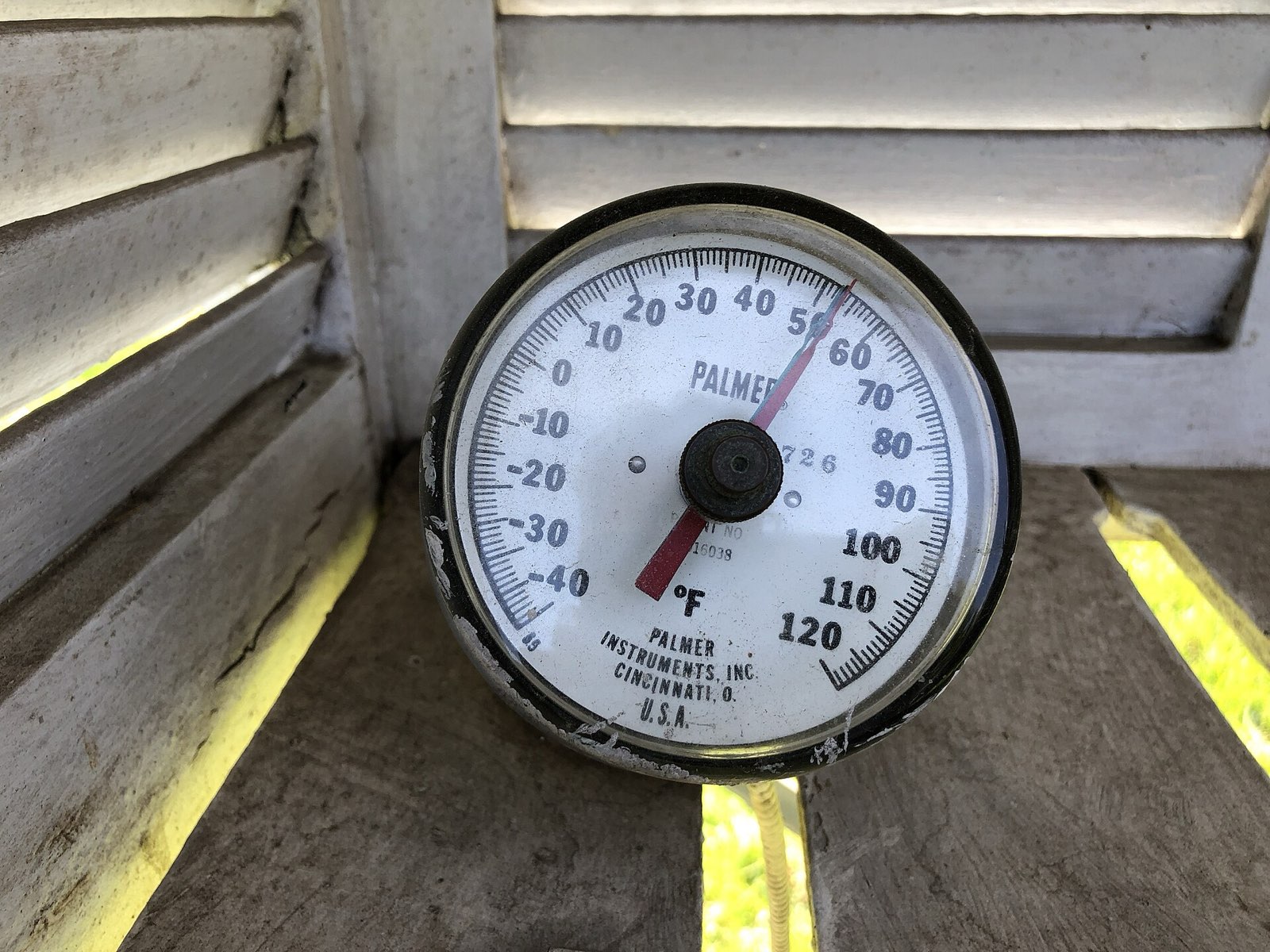
A dial soil thermometer pushed into bare ground at a weather station
The number that decides planting is not the air temperature. Cool season seed germinates with the soil near 50 F and warm season transplants want 60 F, both measured a few inches down and read in the morning.2024-04-26 14 45 08 A Palmer soil thermometer at the weather station at the Rutgers Gardens in North Brunswick Township, Middlesex County, New Jersey, Famartin, CC BY-SA 4.0
The research

What decides how early spring arrives

Four things move the reading at the top of this page. The forecast hub carries all of them with every quote behind them, including the snowpack and the drought.

The March to May temperature outlook

CPC’s official call on the season spring happens in. A warm tilt moves leaf-out and the last freeze earlier; equal chances move nothing.

  • The temperature outlook holds its winter shape into spring, so the March to May map is not a new pattern but the winter one carried forward.

    The evolution of the Temperature Outlooks from Dec-Jan-Feb (DJF) 2026-2027 through MAM 2027 maintain the NDJ forecast pattern in large order and are consistent with strong El Nino events through these seasons with additional attention paid to some of the historically strong events.

  • A white area on the outlook map is not a forecast of normal. It means the three categories are near their climatological odds and the outlook has no usable signal there.

    Equal chances (EC, white areas) are forecast for areas where probabilities for each category of seasonal mean temperatures and accumulated precipitation amounts are forecast to be similar to climatological probabilities.

  • CPC writes these outlooks to be read before the season starts, which is what makes a spring outlook read in autumn the right document and not a stale one.

    These climate outlooks are intended for use prior to the start of their valid period.

The ENSO state

An El Nino advisory is in effect and favored to hold through spring. It is the reason the outlook maps look the way they do, and it tilts odds rather than setting outcomes.

  • CPC has an El Nino advisory in effect and favors the event continuing through spring 2027, which is why the spring outlook looks the way it does.

    The ongoing El Nino event continues to strengthen, and an El Nino advisory remains in effect and is favored to continue through Spring 2027.

  • CPC puts an 80 percent chance on at least a strong El Nino holding through January to March, and favors an El Nino of some strength through March to May 2027.

    The official CPC ENSO Outlook forecasts high probabilities (80%) for at least a strong El Nino event to continue through the Jan-Feb-Mar (JFM) 2027 season and favors an El Nino event of any strength to continue through the Mar-Apr-May (MAM) 2027.

  • The advisory puts the chance of a strong to very strong El Nino through January to March above 83 percent.

    El Niño continues to strengthen, with a strong-to-very strong El Niño likely through January-March 2027 (remaining greater than an 83% chance).

  • A strong event raises the odds of the usual El Nino outcomes without guaranteeing any of them, which is the whole reason a tilt is not a forecast.

    With an event of this magnitude, the chances of experiencing impacts consistent with El Niño are larger, though not guaranteed (see CPC outlooks for probabilities of seasonal anomalies).

  • In an El Nino the storm track sits south of mainland Alaska, which is the mechanism behind the dry tilt there.

    The Pacific Jet is shifted southward and eastward during El Nino events and so the storm track and associated precipitation tends to be located south of most of mainland Alaska.

A pack holding the ground cold

Snow cover keeps the air above it cool and pushes warming later, which is a brake on spring the temperature outlook does not carry on its own.

  • Widespread snow cover keeps the air above it cooler and pushes spring warming later, then makes the melt faster when it comes.

    Also, when snow cover is widespread, it usually keeps air temperatures cooler and delays spring warming, which increases the potential for more rapid snowmelt.

  • A snowpack is water held in place until the thaw, so a spring that starts with a deep pack starts with its runoff already banked.

    Unlike rainfall that can reach the soil almost immediately, the snowpack can store the water for an extended amount of time until temperatures rise above freezing and the snow melts.

The gap between leaf-out and the last freeze

Both ends are published normals for the same 30 years, so the days between them are a climatology of how long plants are normally out while a freeze is still likely.

  • The First Leaf and First Bloom Indices are modeled from recent temperatures, not counted from observed plants, so a date from them is a model output.

    The First Leaf and First Bloom Indices are synthetic measures of these early season events in plants, based on recent temperature conditions.

  • The indices exist to follow spring moving across the country, which is what makes a normal leaf-out date comparable between states.

    These models allow us to track the progression of spring onset across the country.

  • The Late Bloom Index marks the tail of the season, so a state has a modeled start and a modeled end to its spring.

    The Late Bloom Index indicates when plants that bloom at the tail end of the season are flowering, effectively representing the end of the spring season.

  • NCEI describes its normals as a ruler for today and a predictor of the near future, which is exactly the job a last freeze date does.

    Normals act both as a ruler to compare today’s weather and tomorrow’s forecast, and as a predictor of conditions in the near future.

  • The normals come from a uniform 30 year period across almost 15,000 stations, which is why a station a county away can carry a different last freeze date.

    The official normals are calculated for a uniform 30 year period, and consist of annual/seasonal, monthly, daily, and hourly averages and statistics of temperature, precipitation, and other climatological variables from almost 15,000 U.S. weather stations.

  • Every tilt is measured against the 1991 to 2020 period, the same 30 years the frost dates and spring indices on these pages use.

    The Climatic normals are based on conditions between 1991 and 2020, following the World Meterological Organization convention of using the most recent 3 complete decades as the climatic reference period.

Utah spring 2027 questions

Advertisement

More for Utah this spring

Spring forecasts in other states

The March to May 2027 outlook was issued by NOAA’s Climate Prediction Center on October 15, 2026 and shifts the odds between three categories. It is a probability, never a promise. Freeze and frost dates come from NOAA NCEI U.S. Climate Normals 1991-2020, annual/seasonal, by station (v1.0.1), a 30 year average rather than a forecast for one year. Live readings come from the National Weather Service forecast for the ZIP you enter, and the Salt Lake City, UT office issues the warnings that govern. Salt Lake City is the reference city used in the headline figures on this page.