
Venomous Snakes in Alaska: What Actually Lives Here
Alaska is one of the few states with none at all. Here is what you are actually looking at, and why it is worth leaving alone.
No venomous snakes recorded in AlaskaSnakes in Alaska, by the numbers
Verified records, not folkloreAlaska has no snakes at all, venomous or otherwise. There are no established terrestrial snake populations anywhere in the state, and iNaturalist holds zero research-grade snake records for it.
There are no venomous snakes in Alaska
Not “almost none” and not “only in one corner”. Zero venomous snake species have verified records in Alaska, and no snake species of any kind are recorded here at all.
Alaska has no snakes at all, venomous or otherwise. There are no established terrestrial snake populations anywhere in the state, and iNaturalist holds zero research-grade snake records for it.
That does not make a snake safe to handle. Any snake will bite if you grab it, and a bite from a harmless species can still get infected. It does mean that the correct response to finding one in Alaska is to step back and let it go about its day.
The harmless snakes people kill by mistake
Nothing below lives in Alaska, and that is exactly why it is here: these four pairs are what to know before you travel, and they are the reason people elsewhere kill harmless snakes on sight. Most “venomous snake in my yard” calls anywhere turn out to be one of the harmless species on the right.
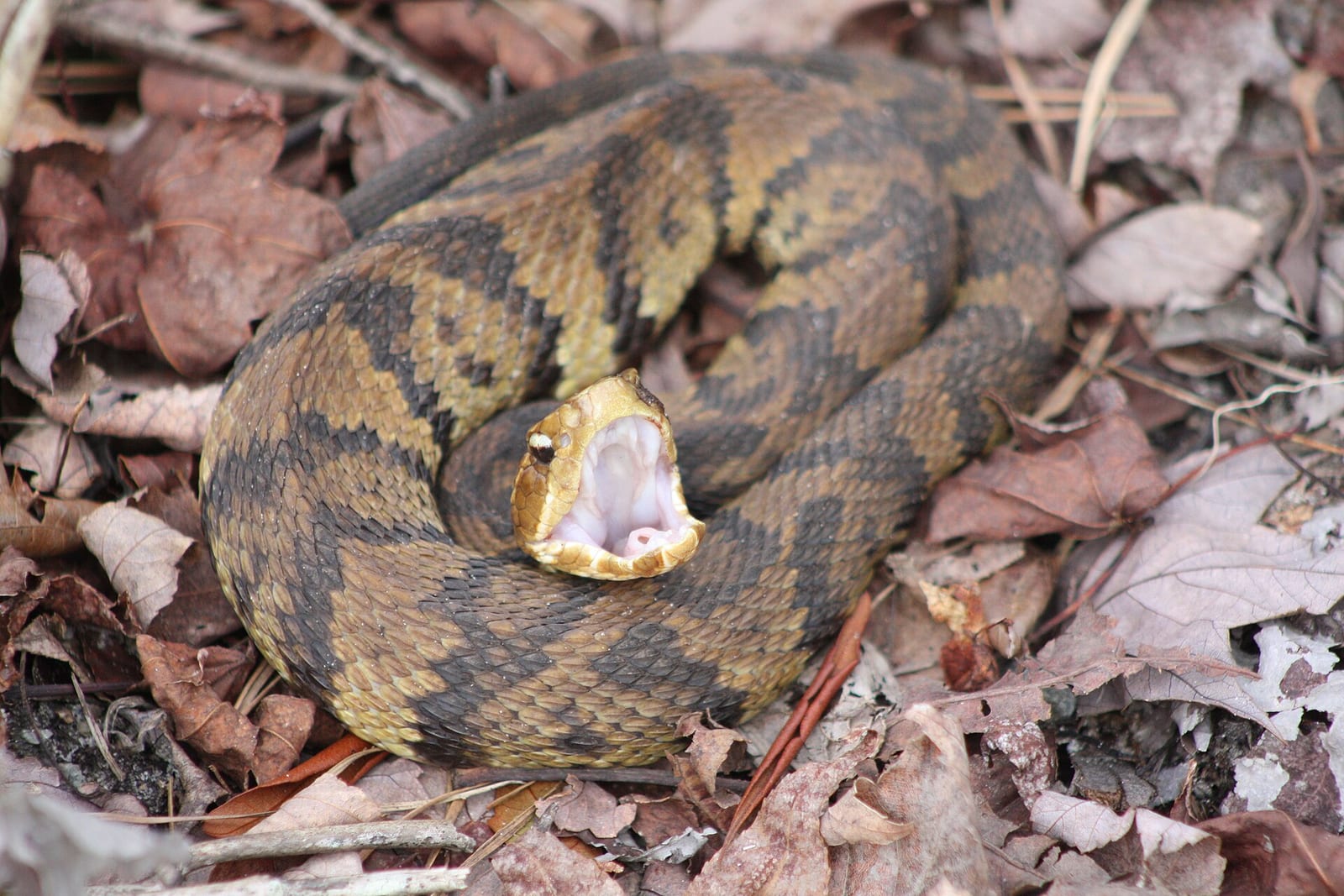
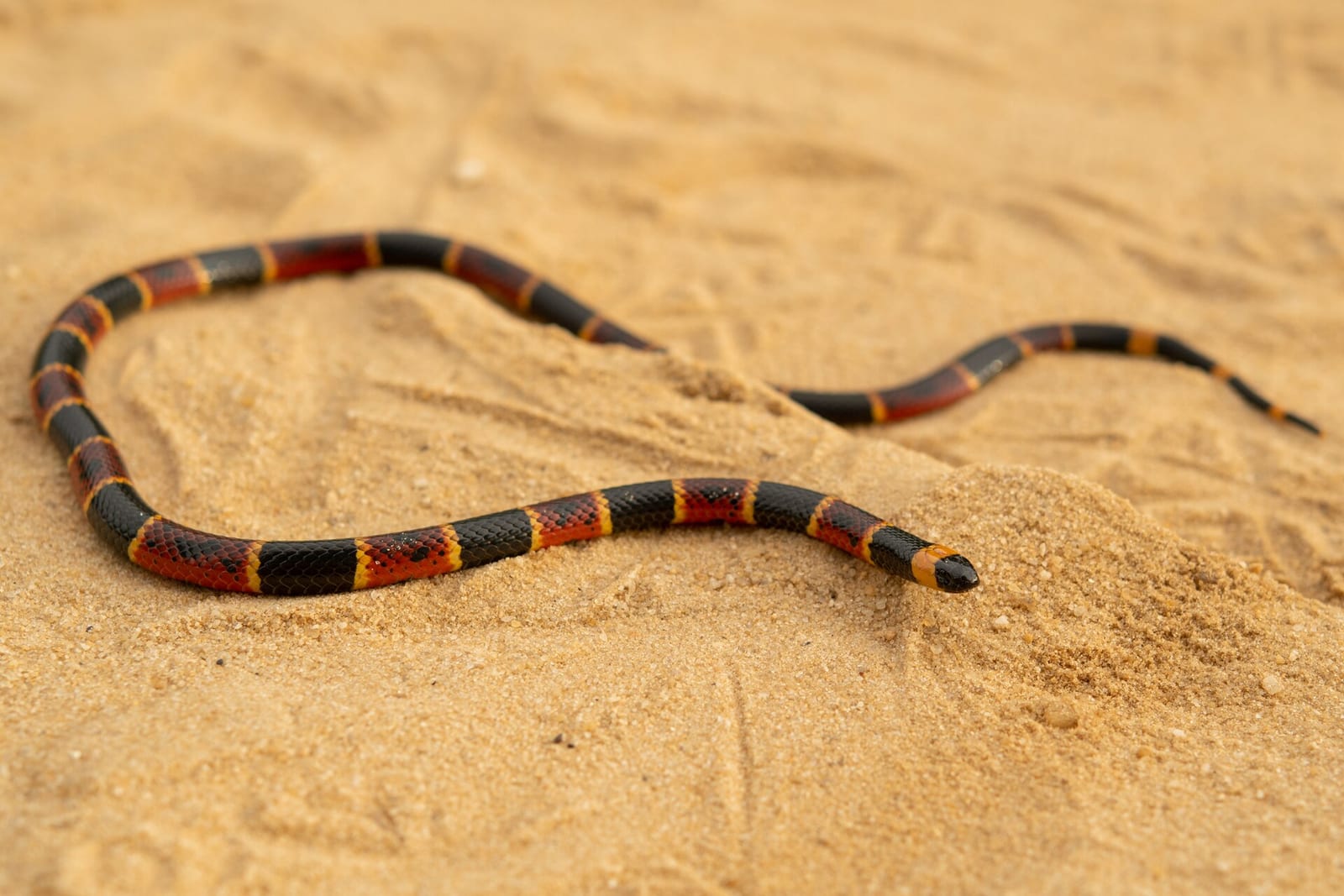
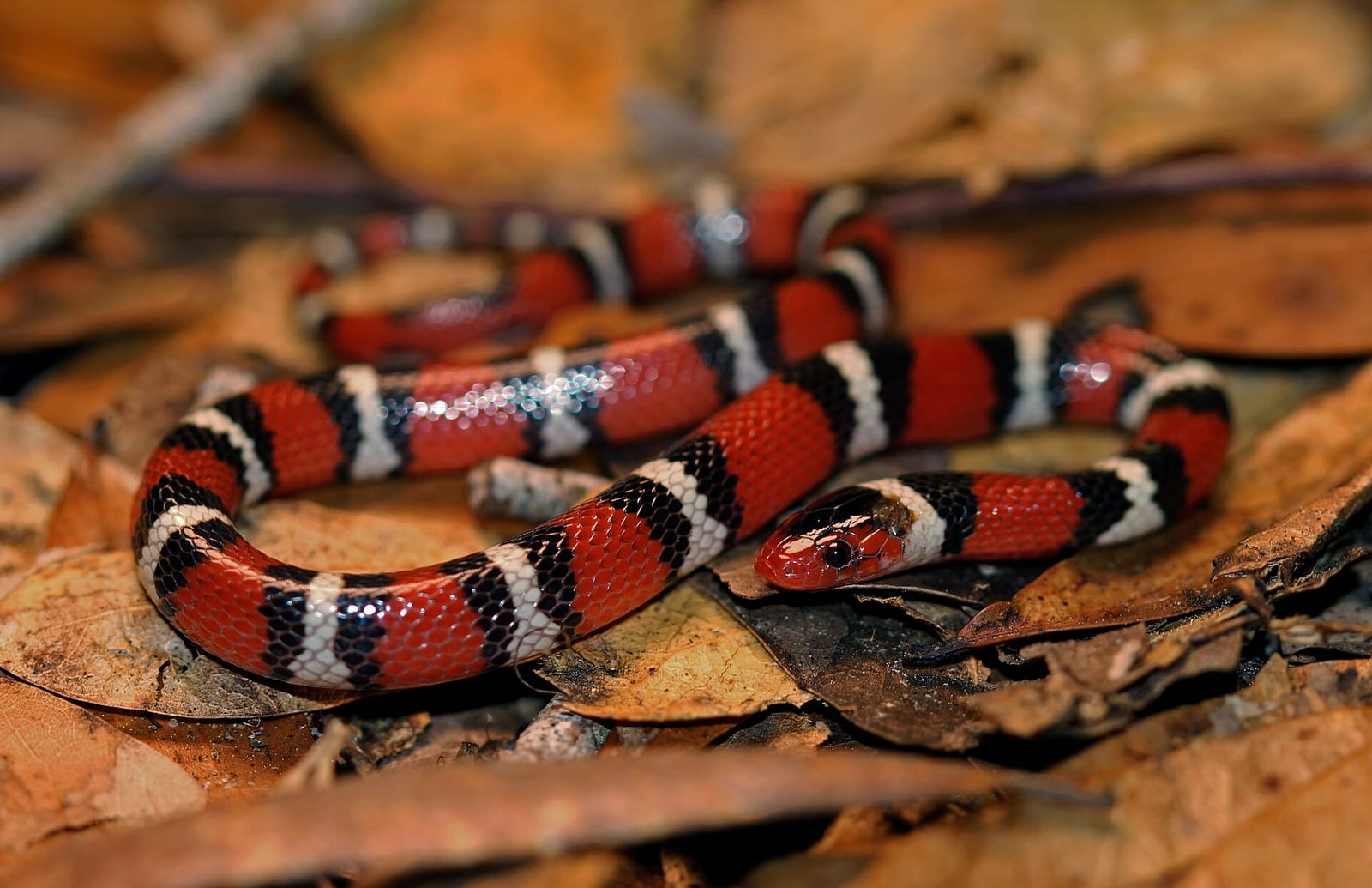
In the United States, a rattle is a rattle: if it has one, it is a rattlesnake. Coral snakes are the only banded red-yellow-black snake in the country where red touches yellow. Head shape and pupil shape are unreliable. Plenty of harmless snakes flatten their heads into a triangle when frightened, and you should never be close enough to a snake to check its pupils.
Confused with the copperhead
Juvenile eastern ratsnake
Pantherophis alleghaniensis
Young ratsnakes are grey with dark blotches and get called copperheads constantly. Copperhead crossbands are chestnut, hourglass-shaped, and narrow across the spine; ratsnake blotches are grey-brown squares that are widest on the back.
Eastern milk snake
Lampropeltis triangulum
Blotches are outlined in black and the belly is a chequerboard. A copperhead has no black outlines and a plain, unmarked underside.
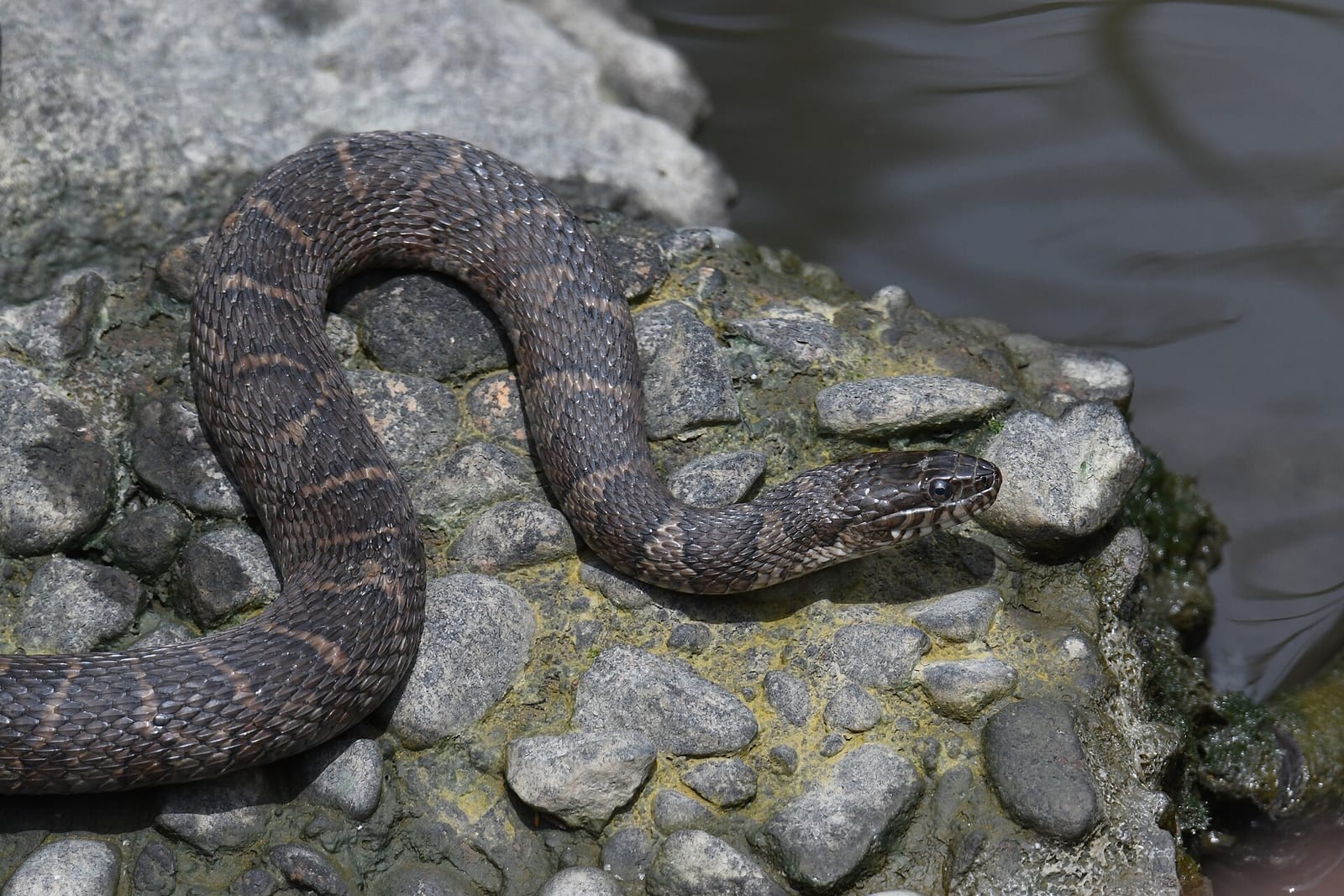
Northern watersnake
Nerodia sipedon
Dries to a dull brown and is the single most common copperhead misidentification near water. Its bands break up into blotches toward the tail; a copperhead's do not.
Confused with the rattlesnake
Gopher snake or bullsnake
Pituophis catenifer
Hisses loudly, flattens its head into a triangle, and vibrates its tail in dry leaves to fake a rattle. It has no rattle, round pupils, and a much longer, more tapered tail.
Eastern hognose snake
Heterodon platirhinos
Flares its neck like a cobra, hisses, and then plays dead upside down with its tongue out. The upturned pig snout gives it away, and it has no rattle.
If you meet one
Venomous snakebite is rare in the United States, treatable, and rarely fatal when someone gets to a hospital. The national bite and death figures that circulate all trace back to a single agency page.
Alaska venomous snake FAQ
The rest of your Alaska summer
More West snake guides
Species lists, record counts, and monthly curves are research-grade observations from the iNaturalist API, read in your browser. They measure how often people find and photograph a species, not how many there are, and a species with no record here may still live here. Season windows are derived from those curves and are climatological typicals, not a forecast. If someone is bitten, go to a hospital. National picture: venomous snakes by state →
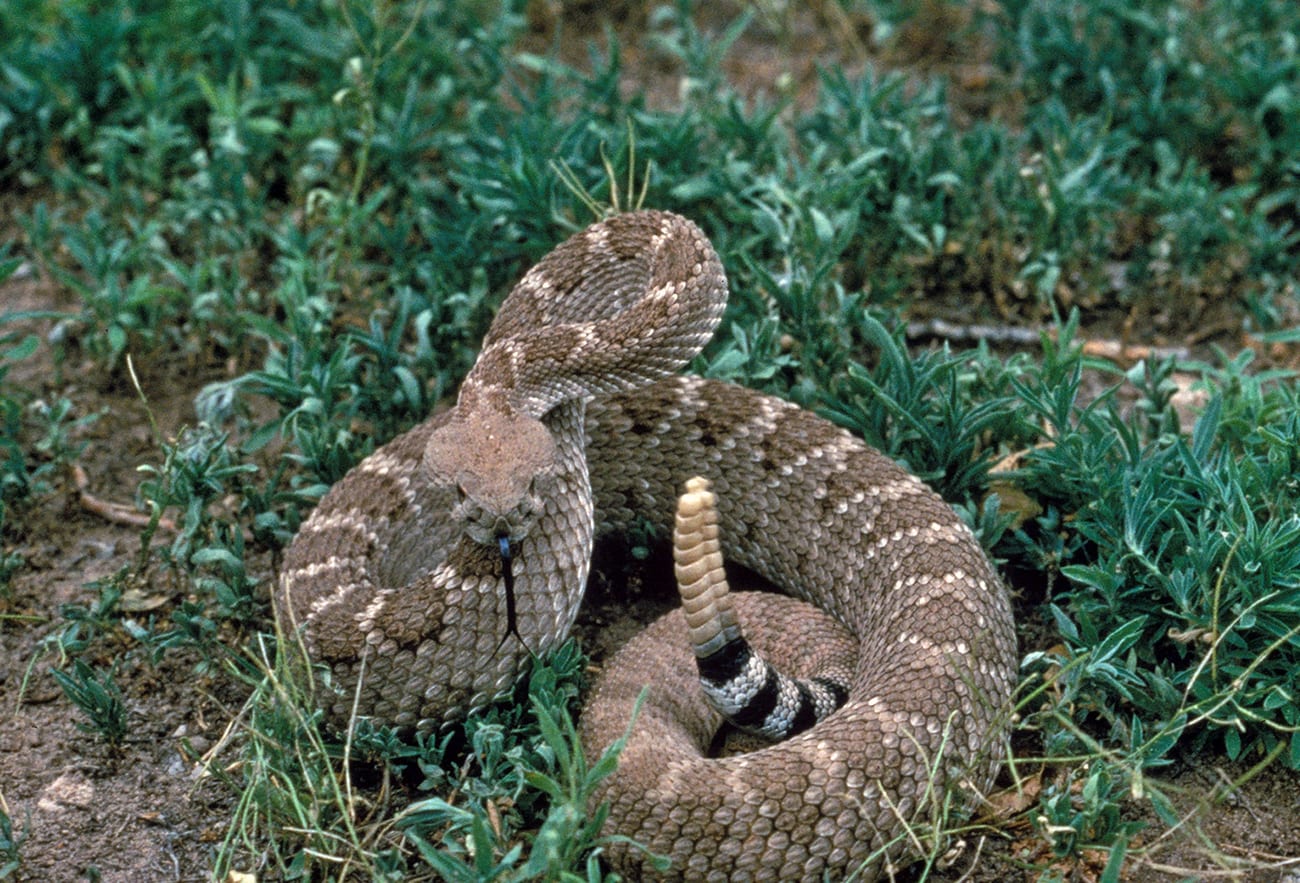
Hero image: “Western Diamondback Rattlesnake (Crotalus atrox)” — Gary Stolz, USFWS — Public domain