
Venomous Snakes in Virginia: What Actually Lives Here
3 venomous species out of 34 snakes recorded in the state. Live range maps, the real season, and the harmless lookalikes people kill by mistake.
3 venomous species in Virginia and roughly 91% of its snakes are harmlessSnakes in Virginia, by the numbers
Verified records, not folkloreVirginia is where cottonmouth range stops. North and west of the Dismal Swamp and the lower James, a dark snake in the water is a watersnake, and the state wildlife agency has spent decades saying so.
The 3 venomous snakes of Virginia
Every species below has verified, photograph-backed records in Virginia. The record counts come from iNaturalist and measure how often people find and photograph each snake, not how many there are: a species living in roadless country will always look rarer than one living in suburbs.
| Species | Group | Verified records |
|---|---|---|
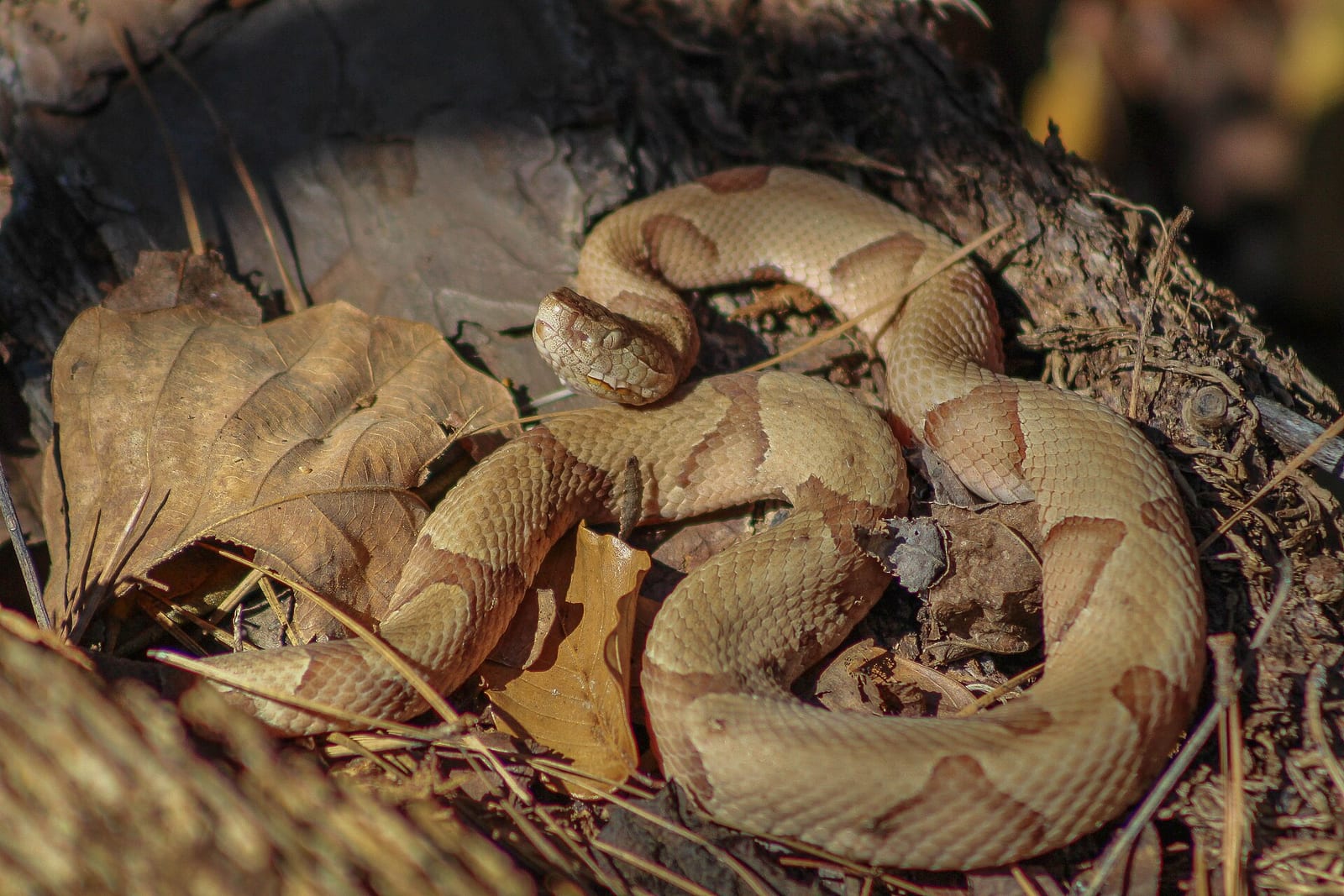
| Eastern copperhead Agkistrodon contortrix | Copperhead | 2,274 |
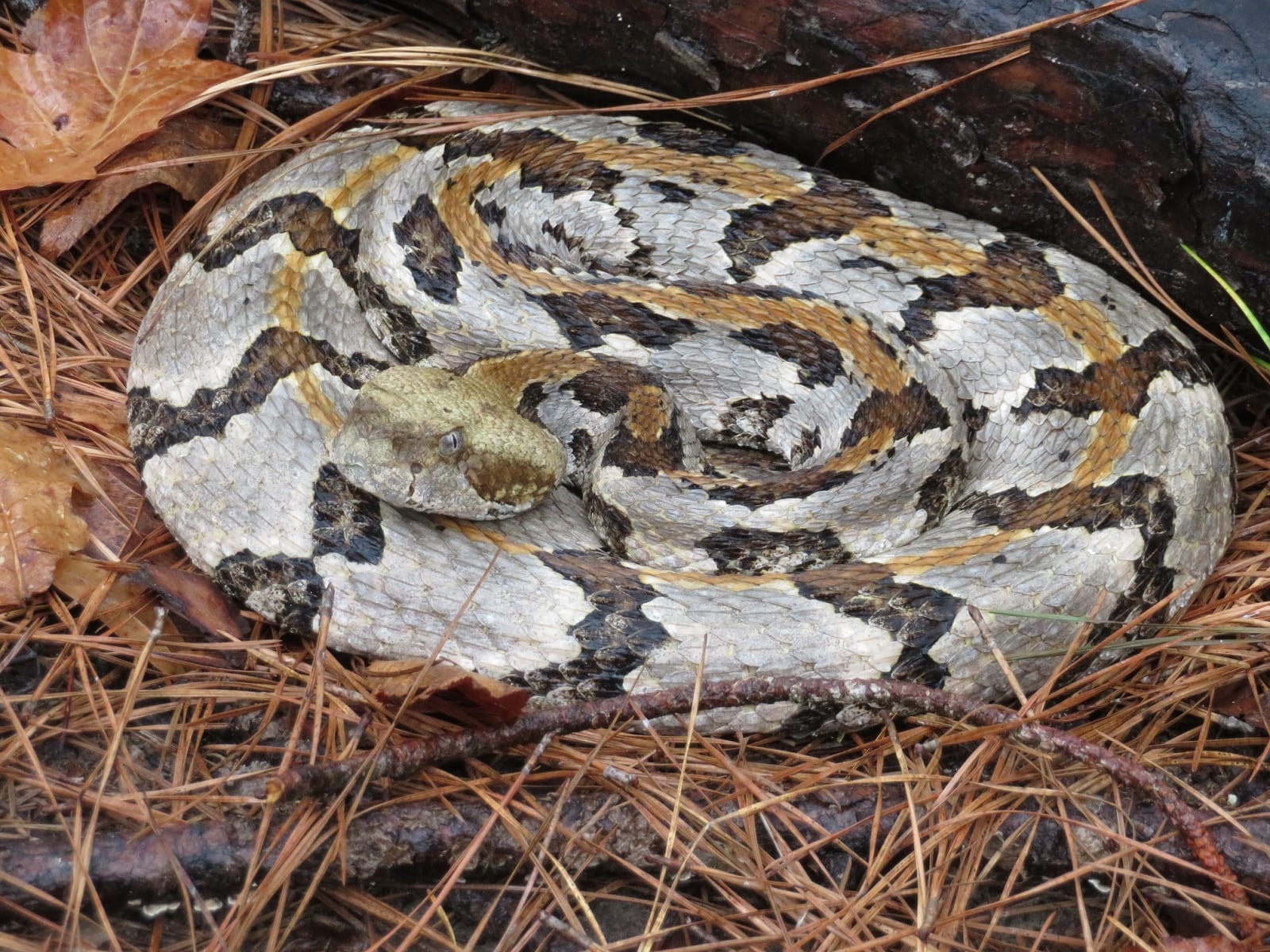
| Timber rattlesnake Crotalus horridus | Rattlesnake | 880 |
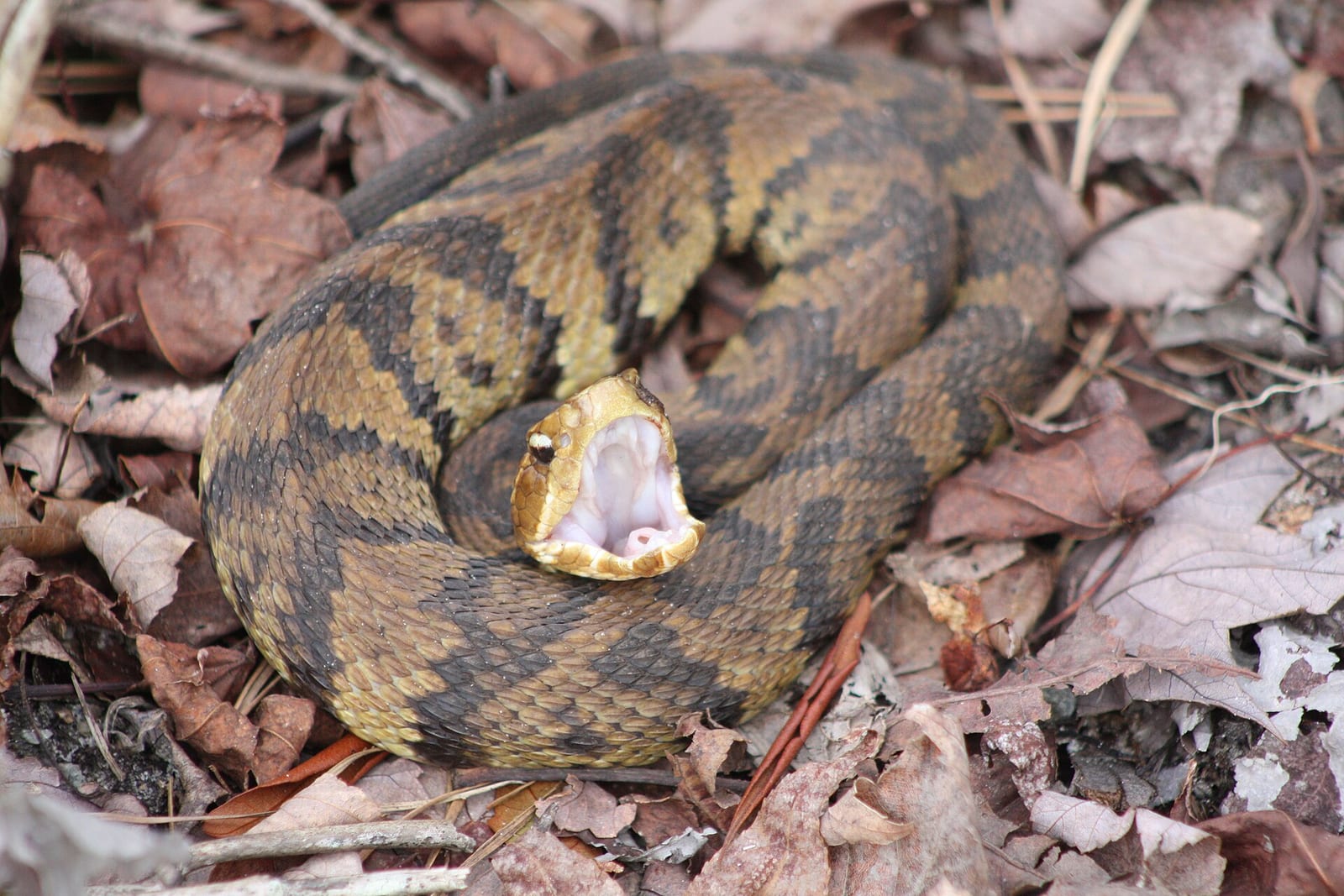
| Northern cottonmouth Agkistrodon piscivorus | Cottonmouth | 857 |
Where each species has actually been found
Most pages about snake range publish the same drawn map, redrawn from a book. This one is built from verified records: pick a species and the coloured cells are places where somebody photographed one and an expert confirmed the identification. It updates as people keep logging records.
Coloured cells are verified Agkistrodon contortrix records on iNaturalist, brighter where more have been logged. This is where people have found and photographed the species, so it thins out over roadless country and thickens around parks and towns. It is a record map, not a drawn range boundary. See the underlying records.
When Virginia snakes are actually out
Records climb through spring as snakes leave winter dens, hold through summer, and fall away with the first cold nights. On hot summer days the snakes are still there, they have just moved to dawn, dusk, and after dark.
What the chart counts. It counts records, and a record needs a snake and a person with a camera. April spikes in some states are a late-April bioblitz, not snakes. Switch the chart to the effort-adjusted view and each month is divided by all the research-grade observations logged in Virginia that month, which strips most of that out. Neither view is a population estimate.
The autumn rebound is real in Virginia
Local news across the copperhead states runs the same story every autumn: “baby copperhead season”, a second wave of young snakes in late summer. It gets asserted constantly and almost never shown. In Virginia’s own copperhead records it is visible. Records dip to 338 in August, below July’s 442, and then climb to 396 in September, a rise of about 17%.
Nationally the shape is the same: US copperhead records run 4,281 in April and 5,854 in May, sag to 3,129 in August, then rebound to 3,983 in September. September beats August. Copperheads give birth to live young in late August and September, so a genuine pulse of small, inexperienced snakes appears exactly when the curve turns back up.
What else moves the curve. Part of the rebound is people: August is hot and nobody is outside, September is pleasant and everybody is. Autumn movement toward denning areas adds to it as well, and in a few states, Illinois most obviously, that migration is the larger effect. What supports the biological reading is the timing: the climb lands on a known birthing season rather than on a holiday weekend. The practical version is simple. Watch your step in the yard in September, and remember that a juvenile is not more dangerous than an adult, just smaller and harder to see.
The harmless snakes people kill by mistake
This is the part worth reading. Most “venomous snake in my yard” calls turn out to be a harmless species, and most bites happen to people trying to kill or move a snake rather than to people walking past one. Learning three lookalikes removes almost all of the risk and all of the panic.
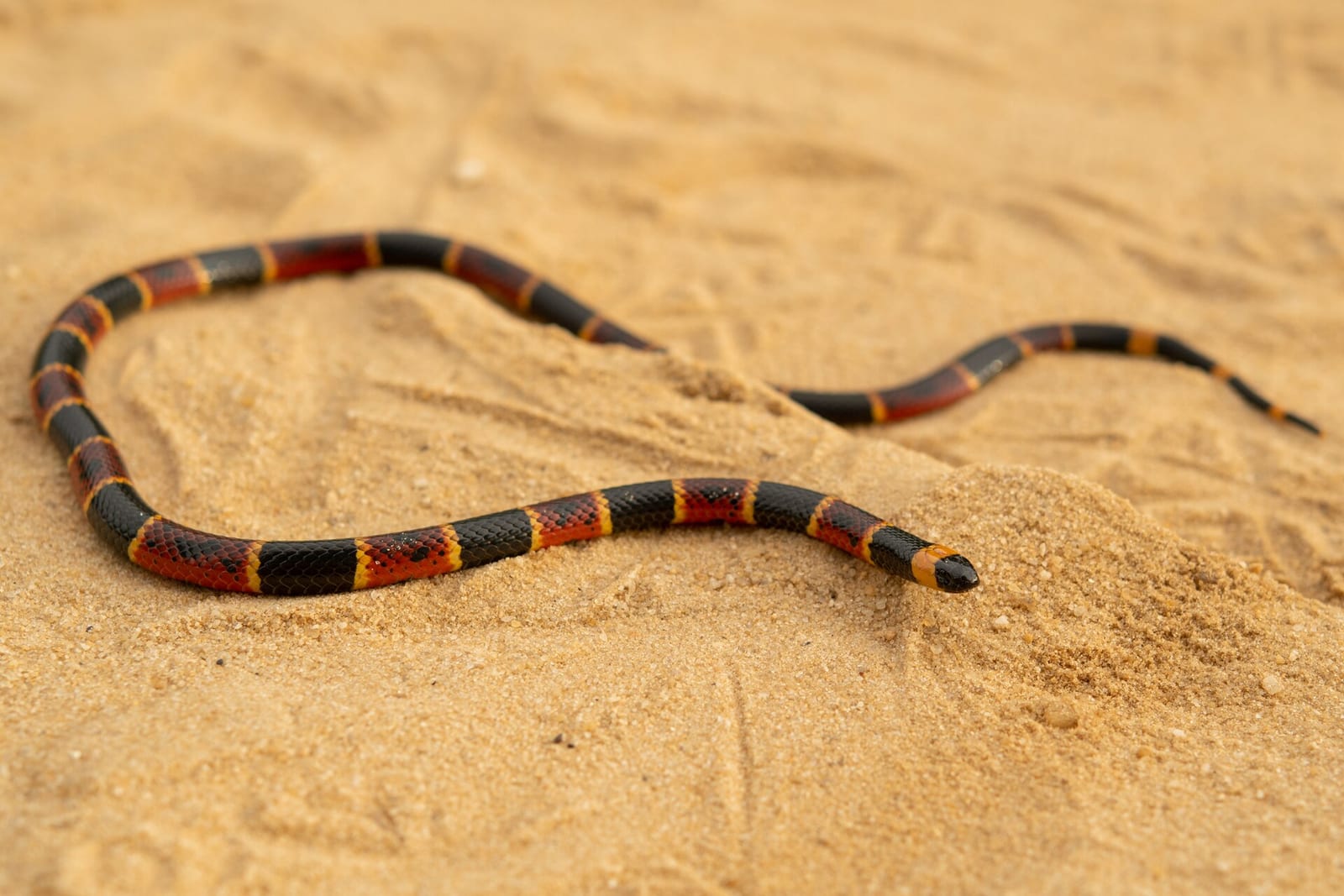
In the United States, a rattle is a rattle: if it has one, it is a rattlesnake. Coral snakes are the only banded red-yellow-black snake in the country where red touches yellow. Head shape and pupil shape are unreliable. Plenty of harmless snakes flatten their heads into a triangle when frightened, and you should never be close enough to a snake to check its pupils.
Confused with the copperhead
Juvenile eastern ratsnake
Pantherophis alleghaniensis
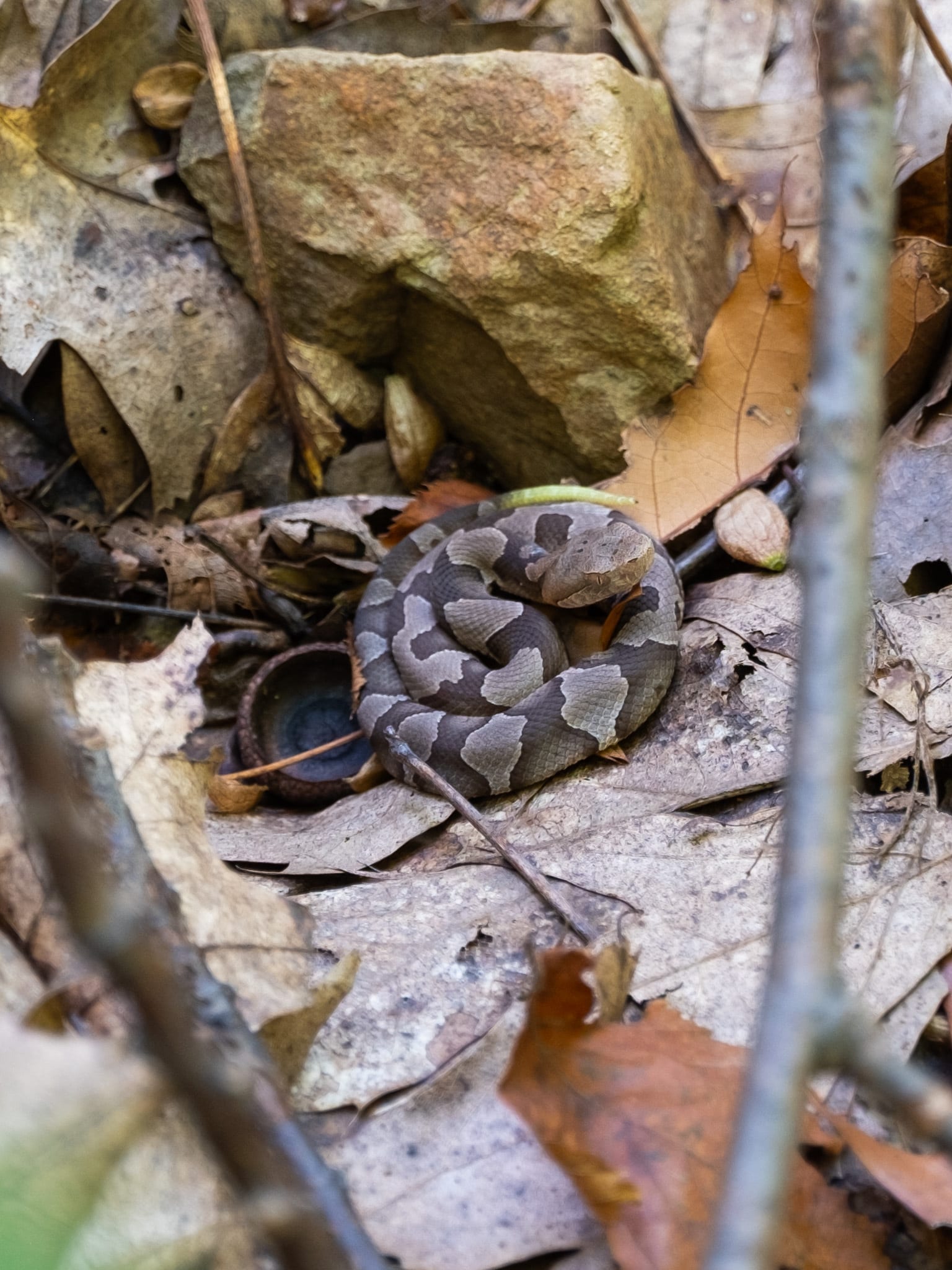
Young ratsnakes are grey with dark blotches and get called copperheads constantly. Copperhead crossbands are chestnut, hourglass-shaped, and narrow across the spine; ratsnake blotches are grey-brown squares that are widest on the back.
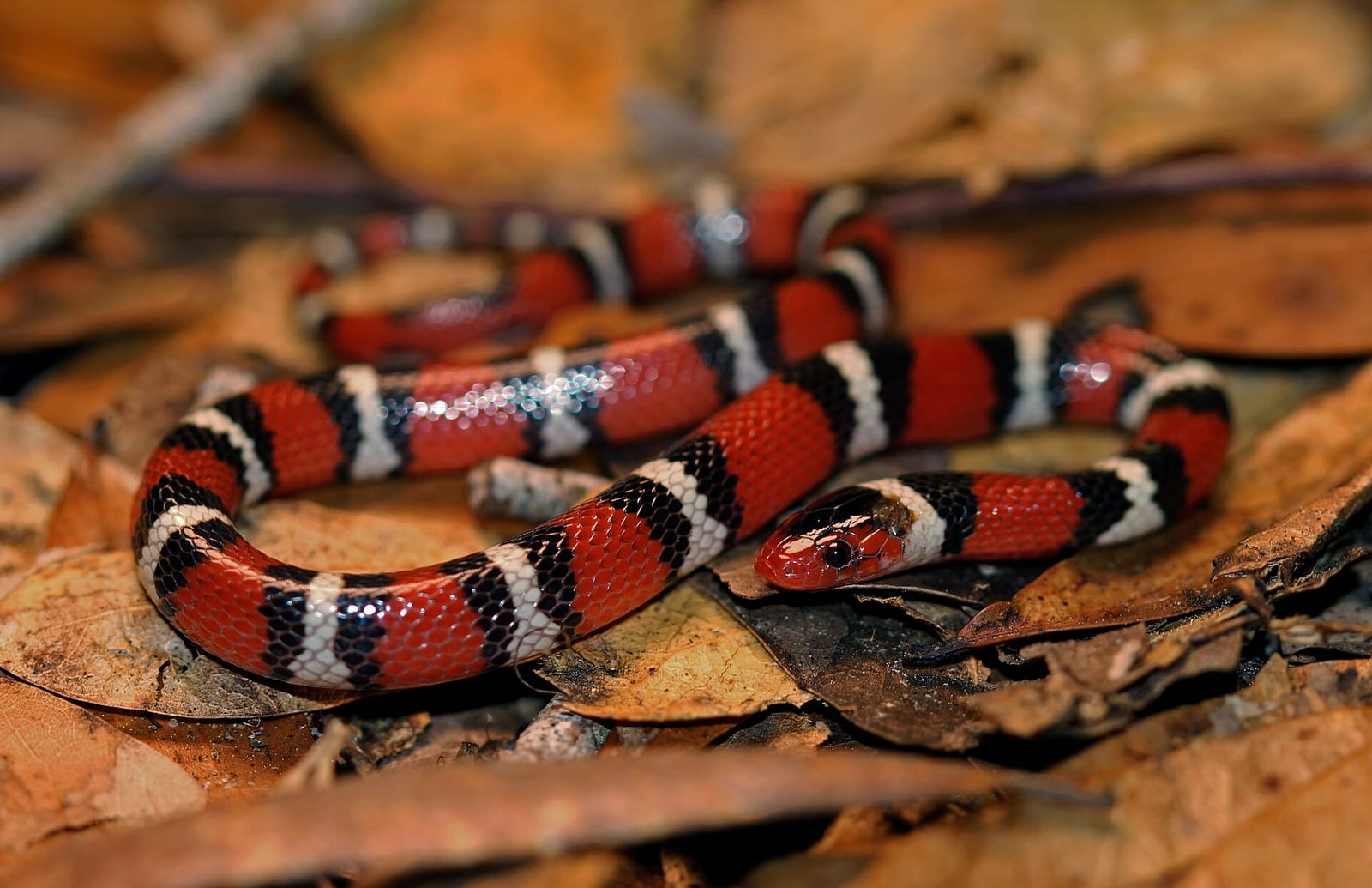
Eastern milk snake
Lampropeltis triangulum
Blotches are outlined in black and the belly is a chequerboard. A copperhead has no black outlines and a plain, unmarked underside.
Northern watersnake
Nerodia sipedon
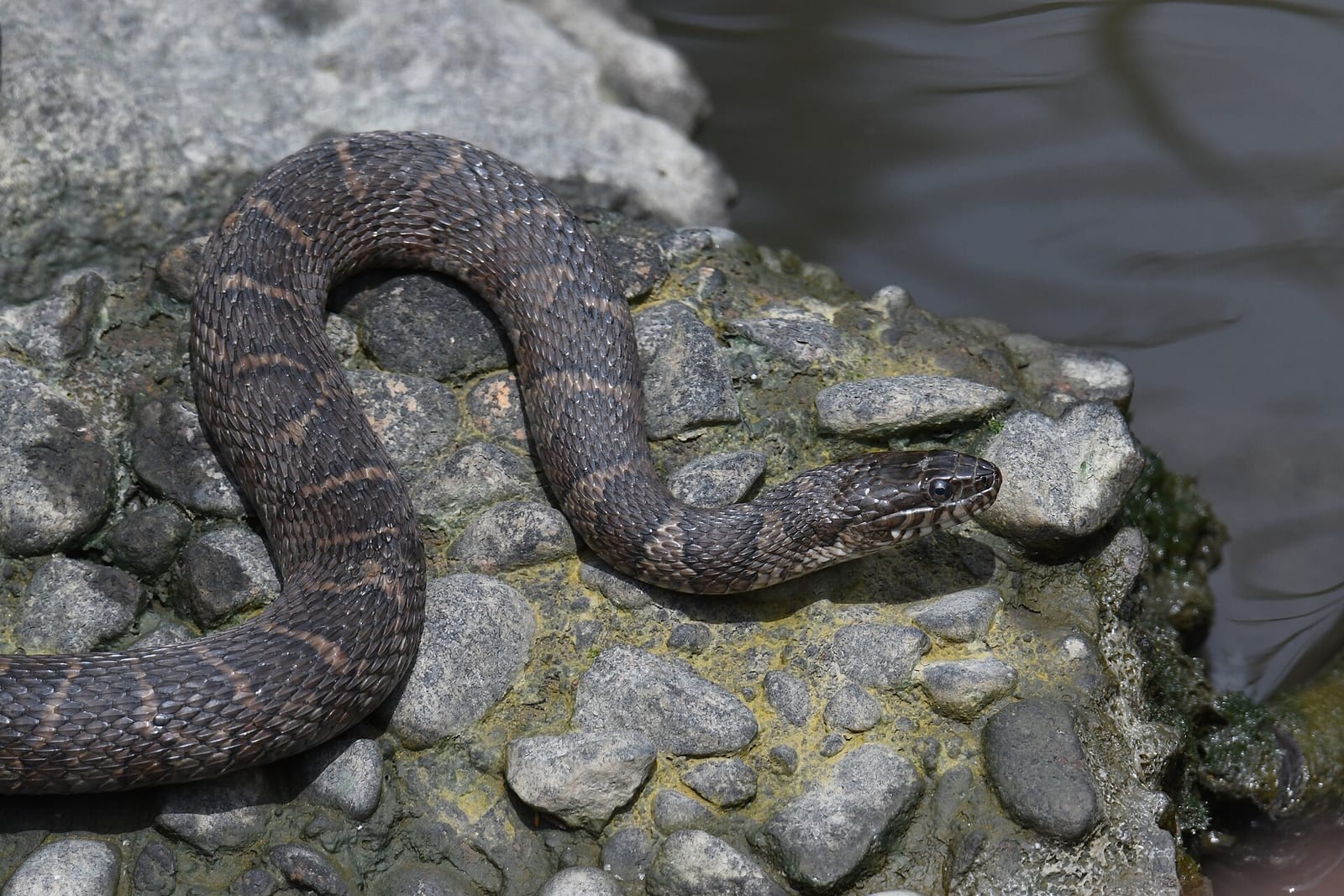
Dries to a dull brown and is the single most common copperhead misidentification near water. Its bands break up into blotches toward the tail; a copperhead's do not.
Confused with the rattlesnake
Gopher snake or bullsnake
Pituophis catenifer
Hisses loudly, flattens its head into a triangle, and vibrates its tail in dry leaves to fake a rattle. It has no rattle, round pupils, and a much longer, more tapered tail.
Eastern hognose snake
Heterodon platirhinos
Flares its neck like a cobra, hisses, and then plays dead upside down with its tongue out. The upturned pig snout gives it away, and it has no rattle.
Confused with the cottonmouth
Northern watersnake
Nerodia sipedon
Swims with only its head out of the water and its body below the surface; a cottonmouth floats high, body and all. A watersnake will flatten its head and strike wildly when cornered, which is exactly why it gets killed by mistake.
Banded watersnake
Nerodia fasciata
Bands are widest across the back and narrow on the sides. A cottonmouth's bands do the opposite, wide on the sides and pinched over the spine, and it has a dark cheek stripe with a pale border above it.
Where venomous snakes live in Virginia
Snakes are creatures of edges and cover: rock with crevices, water with banks, litter with rodents underneath. In Virginia the habitats that matter are rocky Piedmont and Blue Ridge hillsides with heavy leaf litter, high talus and boulder fields on the Appalachian ridges, coastal plain swamps and blackwater creeks in the southeast.
Blue Ridge and Shenandoah ridges
Timber rattlesnake habitat on rocky, open ridge tops, where hikers most often meet one basking on a trail rock.
Piedmont woodlots and suburban edges
Copperheads are genuinely common in wooded Richmond and Northern Virginia neighbourhoods, in leaf litter and mulch beds.
Great Dismal Swamp
The northern edge of cottonmouth range in the United States, which effectively ends at southeastern Virginia.
Making a yard less interesting to them
A snake in a yard is following food and cover. Take away the cover and the food follows: keep grass short at the edges, stack firewood off the ground and away from the house, close gaps under steps and sheds, and do not leave pet food or birdseed out overnight, because both feed the rodents that feed the snakes. Snake repellent powders and sonic stakes have repeatedly failed to work in trials; a tidy woodpile does.
If you meet one
Venomous snakebite is rare in the United States, treatable, and rarely fatal when someone gets to a hospital. The national bite and death figures that circulate all trace back to a single agency page.
Virginia venomous snake FAQ
The rest of your Virginia summer
More Southeast snake guides
Species lists, record counts, and monthly curves are research-grade observations from the iNaturalist API, read in your browser. They measure how often people find and photograph a species, not how many there are, and a species with no record here may still live here. Season windows are derived from those curves and are climatological typicals, not a forecast. See every record behind this page. If someone is bitten, go to a hospital. National picture: venomous snakes by state →
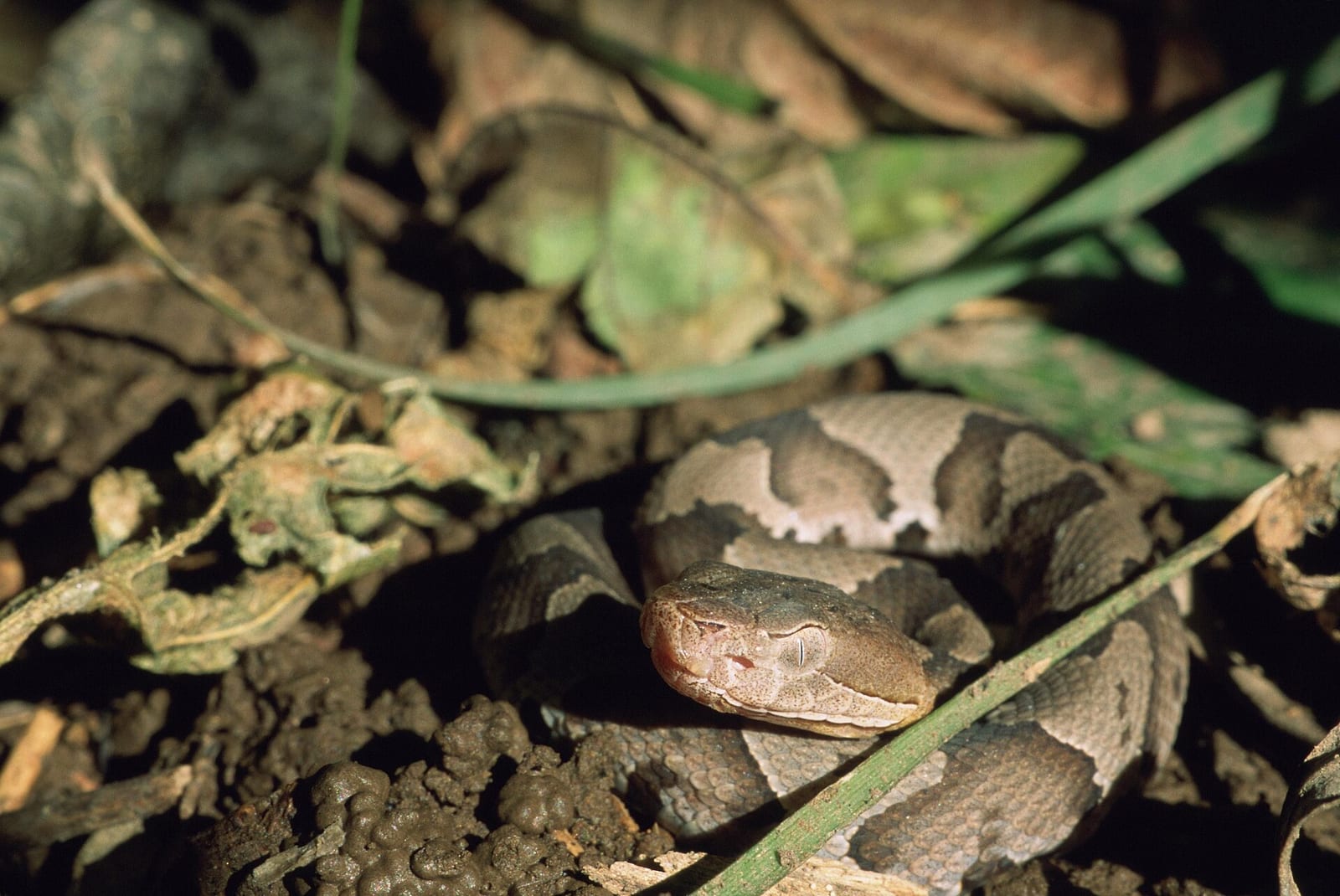
Hero image: “Close up of coiled copperhead snake” — Ryan Hagerty — Public domain