
Venomous Snakes in South Dakota: What Actually Lives Here
1 venomous species out of 15 snakes recorded in the state. Live range maps, the real season, and the harmless lookalikes people kill by mistake.
1 venomous species in South Dakota and roughly 93% of its snakes are harmlessSnakes in South Dakota, by the numbers
Verified records, not folkloreSouth Dakota has one venomous species, the prairie rattlesnake, and it is functionally a West River animal. Fifteen snake species are recorded statewide, so fourteen in fifteen are harmless.
The one venomous snake of South Dakota
Every species below has verified, photograph-backed records in South Dakota. The record counts come from iNaturalist and measure how often people find and photograph each snake, not how many there are: a species living in roadless country will always look rarer than one living in suburbs.
| Species | Group | Verified records |
|---|---|---|
| Prairie rattlesnake Crotalus viridis | Rattlesnake | 327 |
Where each species has actually been found
Most pages about snake range publish the same drawn map, redrawn from a book. This one is built from verified records: pick a species and the coloured cells are places where somebody photographed one and an expert confirmed the identification. It updates as people keep logging records.
Coloured cells are verified Crotalus viridis records on iNaturalist, brighter where more have been logged. This is where people have found and photographed the species, so it thins out over roadless country and thickens around parks and towns. It is a record map, not a drawn range boundary. See the underlying records.
When South Dakota snakes are actually out
Records climb through spring as snakes leave winter dens, hold through summer, and fall away with the first cold nights. On hot summer days the snakes are still there, they have just moved to dawn, dusk, and after dark.
What the chart counts. It counts records, and a record needs a snake and a person with a camera. April spikes in some states are a late-April bioblitz, not snakes. Switch the chart to the effort-adjusted view and each month is divided by all the research-grade observations logged in South Dakota that month, which strips most of that out. Neither view is a population estimate.
The harmless snakes people kill by mistake
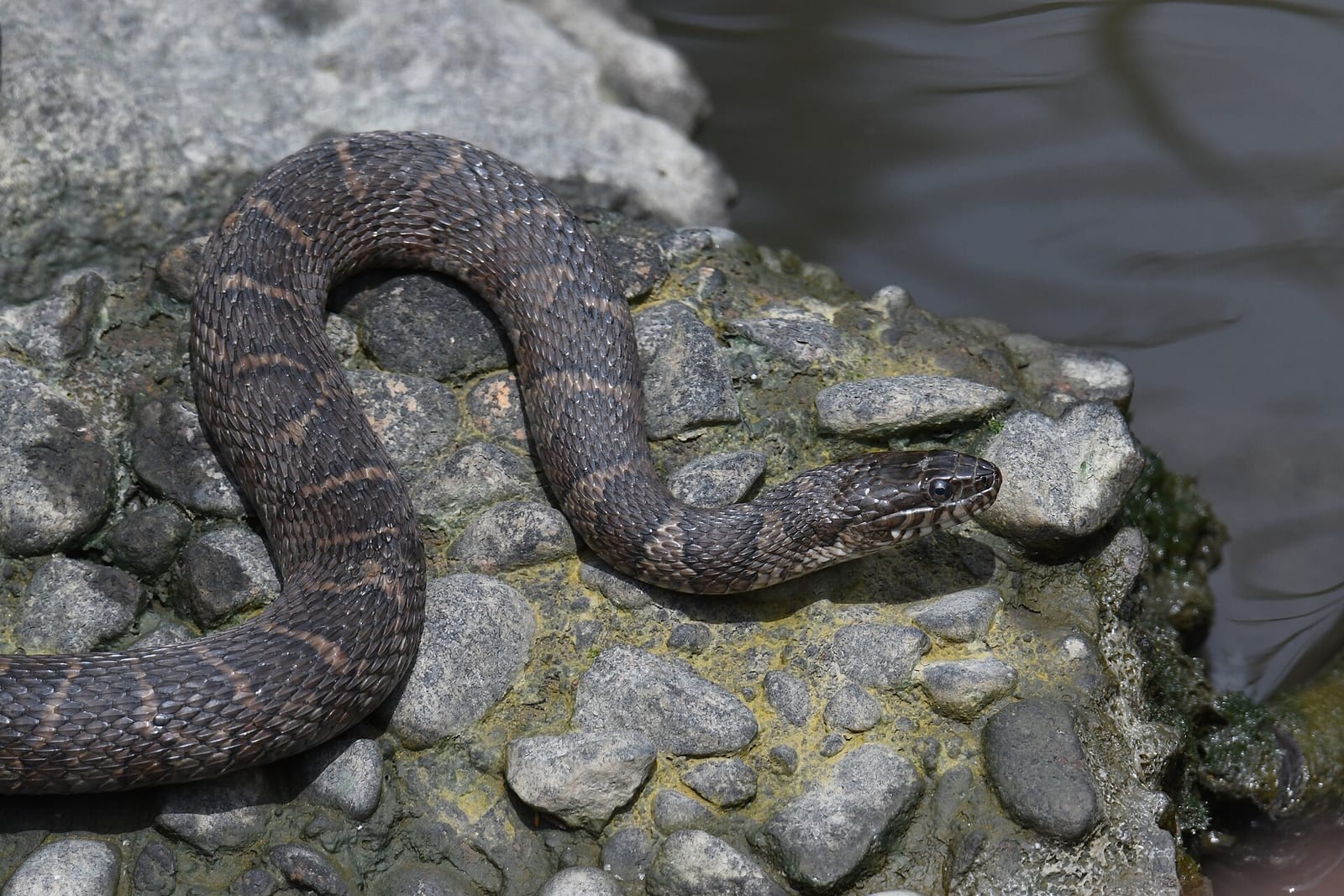
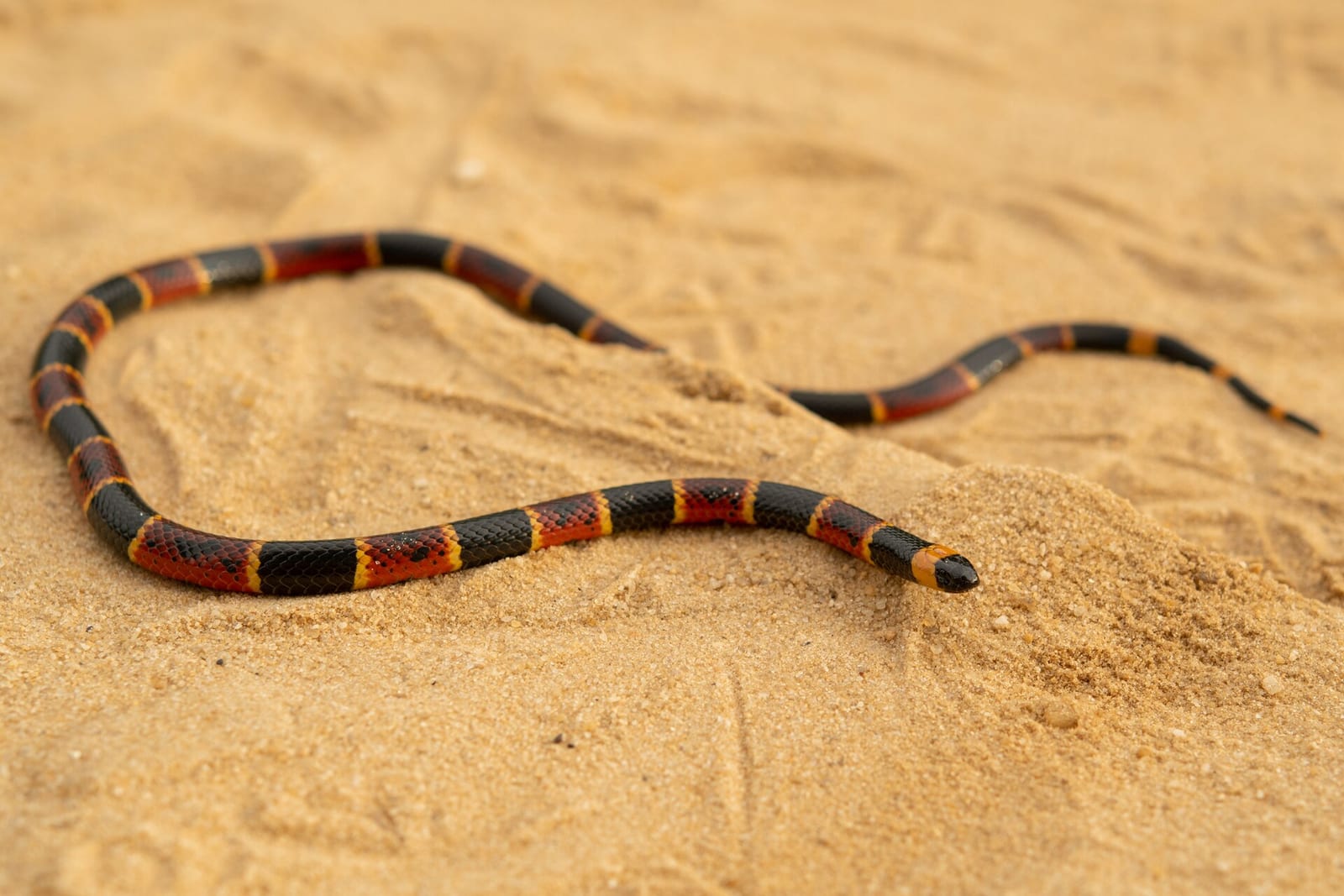
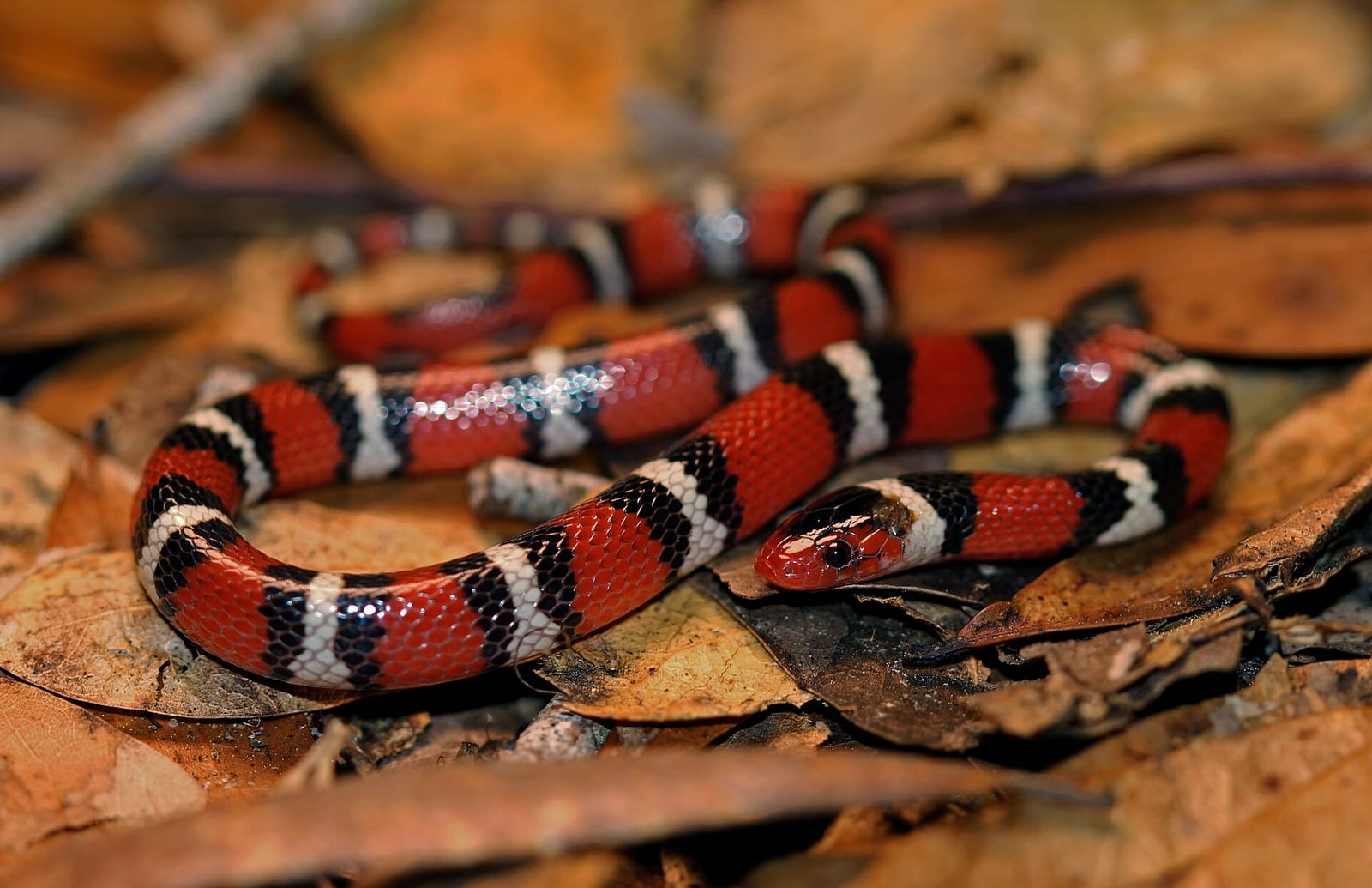
This is the part worth reading. Most “venomous snake in my yard” calls turn out to be a harmless species, and most bites happen to people trying to kill or move a snake rather than to people walking past one. Learning three lookalikes removes almost all of the risk and all of the panic.
In the United States, a rattle is a rattle: if it has one, it is a rattlesnake. Coral snakes are the only banded red-yellow-black snake in the country where red touches yellow. Head shape and pupil shape are unreliable. Plenty of harmless snakes flatten their heads into a triangle when frightened, and you should never be close enough to a snake to check its pupils.
Confused with the rattlesnake
Gopher snake or bullsnake
Pituophis catenifer
Hisses loudly, flattens its head into a triangle, and vibrates its tail in dry leaves to fake a rattle. It has no rattle, round pupils, and a much longer, more tapered tail.
Eastern hognose snake
Heterodon platirhinos
Flares its neck like a cobra, hisses, and then plays dead upside down with its tongue out. The upturned pig snout gives it away, and it has no rattle.
Where venomous snakes live in South Dakota
Snakes are creatures of edges and cover: rock with crevices, water with banks, litter with rodents underneath. In South Dakota the habitats that matter are Missouri River breaks and rocky canyon rims, badlands buttes and prairie-dog towns, shortgrass prairie with rock outcrops and abandoned burrows.
Badlands National Park
Prairie rattlesnake country, with dens in the buttes and animals crossing the road on warm evenings.
Missouri River breaks
Rocky, broken slopes that give rattlesnakes both winter dens and summer hunting.
East River farmland
Essentially rattlesnake-free: prairie rattlesnakes barely cross the Missouri River eastward.
Making a yard less interesting to them
A snake in a yard is following food and cover. Take away the cover and the food follows: keep grass short at the edges, stack firewood off the ground and away from the house, close gaps under steps and sheds, and do not leave pet food or birdseed out overnight, because both feed the rodents that feed the snakes. Snake repellent powders and sonic stakes have repeatedly failed to work in trials; a tidy woodpile does.
If you meet one
Venomous snakebite is rare in the United States, treatable, and rarely fatal when someone gets to a hospital. The national bite and death figures that circulate all trace back to a single agency page.
South Dakota venomous snake FAQ
The rest of your South Dakota summer
More Midwest snake guides
Species lists, record counts, and monthly curves are research-grade observations from the iNaturalist API, read in your browser. They measure how often people find and photograph a species, not how many there are, and a species with no record here may still live here. Season windows are derived from those curves and are climatological typicals, not a forecast. See every record behind this page. If someone is bitten, go to a hospital. National picture: venomous snakes by state →
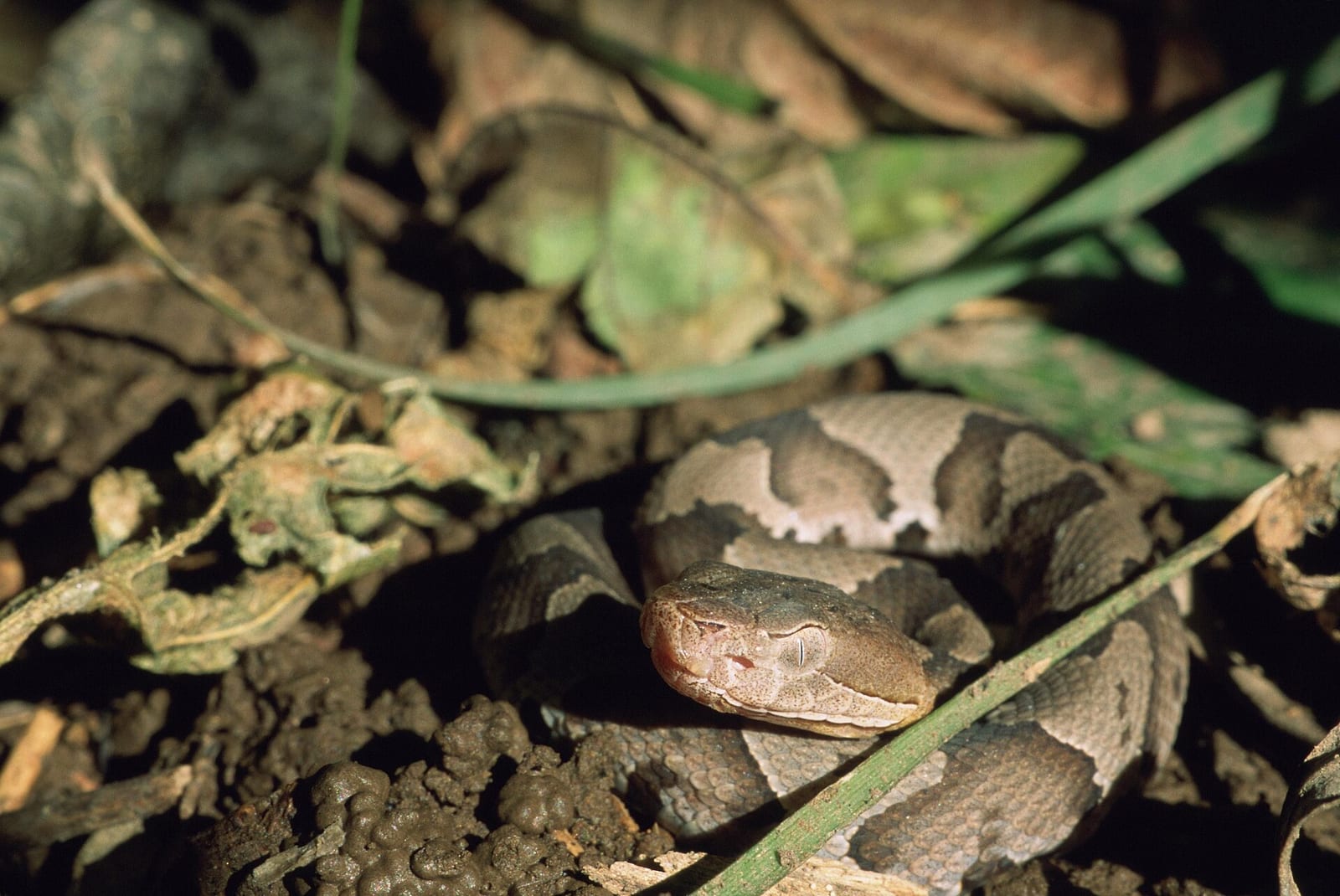
Hero image: “Close up of coiled copperhead snake” — Ryan Hagerty — Public domain