Great Falls of the Potomac
Rain fedThe Maryland side of the East's wildest urban whitewater, viewed from the Olmsted Island boardwalk off the C&O Canal towpath.

Maryland's Catoctin Mountain cascade, called McAfee Falls by the state's own page, sliding down mossy rock near Thurmont with strictly no swimming or climbing.
Trail status, closures and safety rules belong to each falls' managing agency, named and linked on every page.
The Catoctin ridge sheds its snowmelt and spring rain through Big Hunting Creek, making March through May the cascade's full season and late summer its quiet one. Maryland DNR's page is more interested in rules than in flow, and its rules are quoted here verbatim because they are the visit.
Typical best flow: March through May
Swimming is prohibited and climbing is not advised at the falls. This policy is in place for the safety and protection of both the visitors and of the natural resource.
The Lower Trail is the shortest and easiest access to the falls, per Maryland DNR, with the rugged Cliff Trail as the strenuous option; park hours run 8 am to sunset April through October and 10 am to sunset in winter.
Current access and closures: Cunningham Falls State Park (Maryland DNR).
The Maryland side of the East's wildest urban whitewater, viewed from the Olmsted Island boardwalk off the C&O Canal towpath.
Maryland's big one: a crashing 53 foot falls in Swallow Falls State Park's old-growth hemlock corner, with a USGS gauge on the Youghiogheny essentially at the park.
Make a trip of it
Things to doGuided trips and experiences from local operators.
Browse on Viator Places to stay
Vacation rentals and cabins close to the water.
Browse on VrboWe may earn a commission on bookings made through these links.
Flow windows are typical-year climatology drawn from the driver and the agency language quoted above, not forecasts. Live readings and per-date percentiles are U.S. Geological Survey data, public domain; the above-or-below-typical line is our comparison and is labelled as such. Access, trail and safety information belongs to Cunningham Falls State Park (Maryland DNR). National picture: waterfall season across the US →
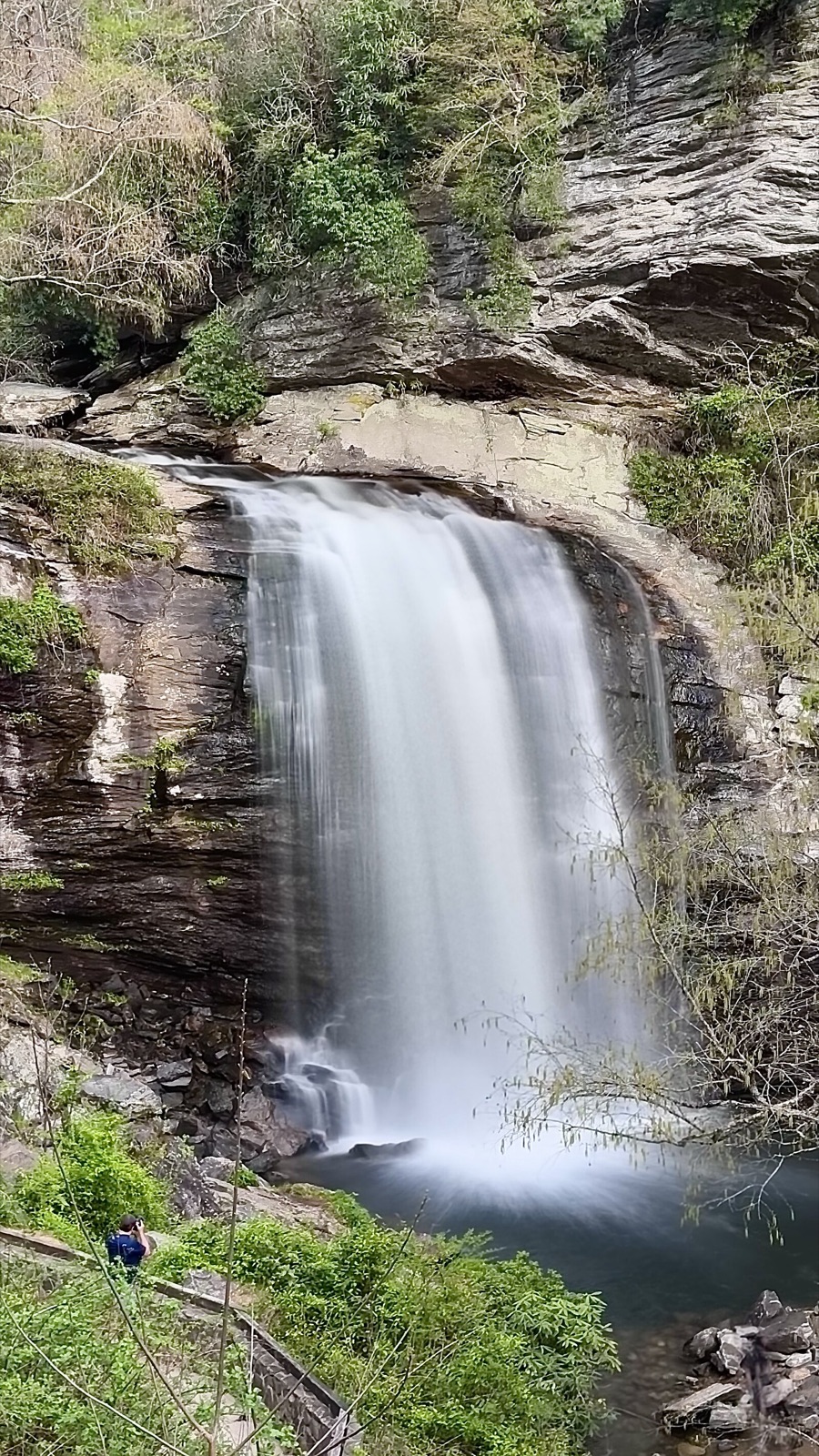
Hero image: “Looking Glass Falls, North Carolina, April 2025” by Bill McMannis, CC BY 2.0