
Cold Snap Forecast: When Is the Next Cold Front Near You?
The next 7 nights for your ZIP, each low set against the normal low at the nearest of 204 weather stations, with the outlook two weeks out.
Each card runs the forecast for that city against its own NOAA normals.
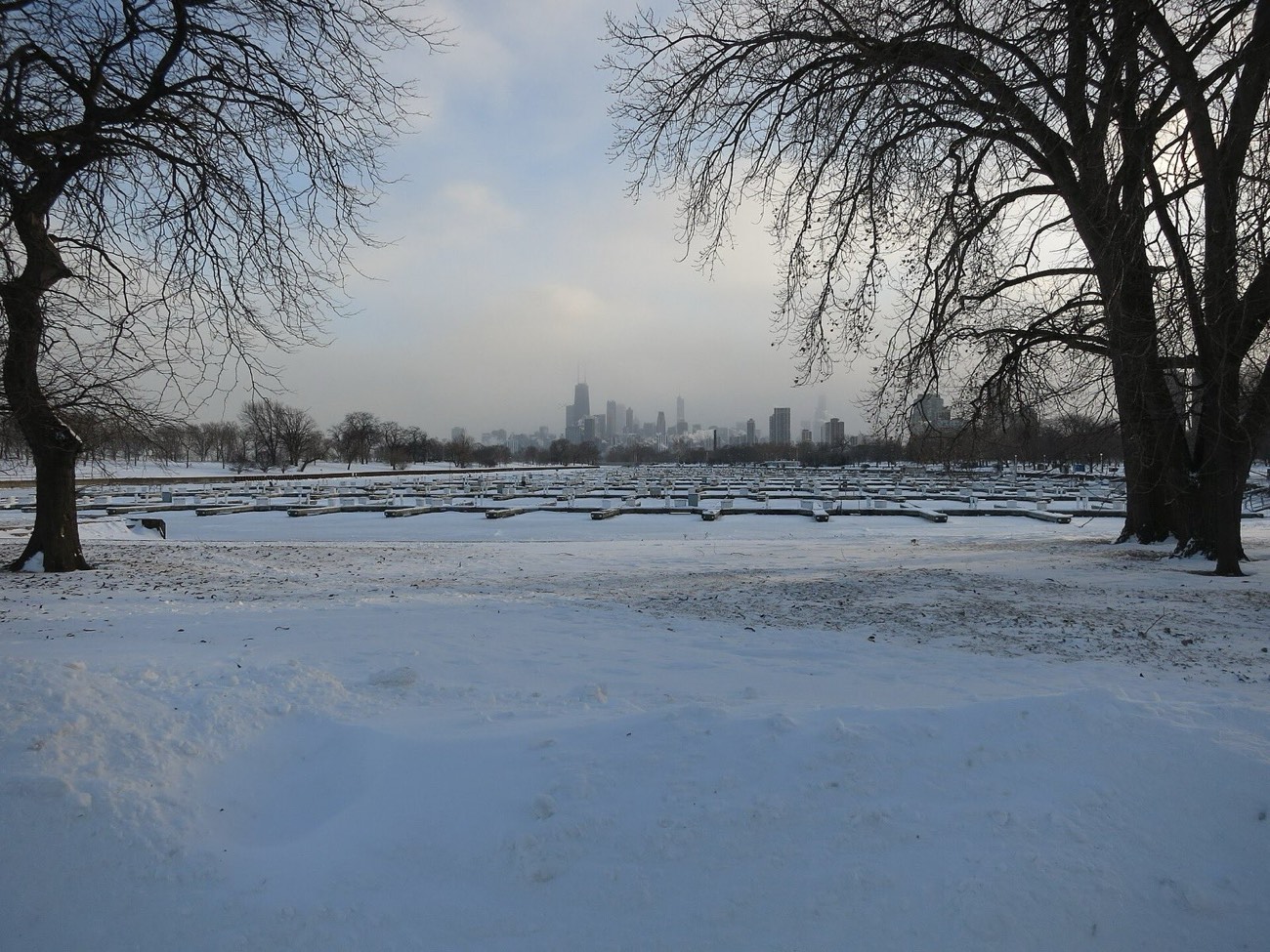
Photo: “Chicago during the Polar Vortex (11808942863)” by edward stojakovic, CC BY 2.0
Every state’s cold, measured the same way
NOAA 1991 to 2020 normals and 10 winters of lowsEach state page lists its reference stations with the coldest week, the coldest night of the last 10 winters, the first freeze and the record low.
When each state’s coldest week comes, and how cold it runs
The week of the year with the lowest normal low at each state’s biggest city, coldest first. Fargo leads at −1°F from Jan 19 to 25; Los Angeles is mildest at 49°F, and only Honolulu, at 67°F, runs warmer. Elsewhere in a state the numbers can run colder: Utqiagvik, Alaska, has the lowest of any station here, −19°F from Mar 2 to 8.
| Rank | State | City | Coldest week | Normal low |
|---|---|---|---|---|
| 1 | North DakotaFargo | Fargo | Jan 19 to 25 | −1°F |
| 2 | MinnesotaMinneapolis | Minneapolis | Jan 19 to 25 | 8°F |
| 3 | South DakotaSioux Falls | Sioux Falls | Jan 15 to 21 | 8°F |
| 4 | AlaskaAnchorage | Anchorage | Jan 9 to 15 | 10°F |
| 5 | VermontBurlington | Burlington | Jan 24 to 30 | 12°F |
| 6 | IowaDes Moines | Des Moines | Jan 18 to 24 | 13°F |
| 7 | MainePortland | Portland | Jan 23 to 29 | 15°F |
| 8 | NebraskaOmaha | Omaha | Jan 14 to 20 | 15°F |
| 9 | New HampshireManchester | Manchester | Jan 21 to 27 | 16°F |
| 10 | WisconsinMilwaukee | Milwaukee | Jan 20 to 26 | 16°F |
| 11 | MontanaBillings | Billings | Dec 29 to Jan 4 | 17°F |
| 12 | WyomingCheyenne | Cheyenne | Dec 17 to 23 | 17°F |
| 13 | ColoradoDenver | Denver | Dec 17 to 23 | 18°F |
| 14 | ConnecticutHartford | Hartford | Jan 21 to 27 | 18°F |
| 15 | IllinoisChicago | Chicago | Jan 20 to 26 | 18°F |
| 16 | MichiganDetroit | Detroit | Jan 22 to 28 | 18°F |
| 17 | MissouriKansas City | Kansas City | Jan 15 to 21 | 19°F |
| 18 | IndianaIndianapolis | Indianapolis | Jan 18 to 24 | 20°F |
| 19 | OhioColumbus | Columbus | Jan 20 to 26 | 21°F |
| 20 | Rhode IslandProvidence | Providence | Jan 21 to 27 | 21°F |
| 21 | KansasWichita | Wichita | Jan 11 to 17 | 22°F |
| 22 | MassachusettsBoston | Boston | Jan 21 to 27 | 22°F |
| 23 | UtahSalt Lake City | Salt Lake City | Dec 31 to Jan 6 | 24°F |
| 24 | IdahoBoise | Boise | Dec 24 to 30 | 24°F |
| 25 | New JerseyNewark | Newark | Jan 21 to 27 | 25°F |
| 26 | MarylandBaltimore | Baltimore | Jan 21 to 27 | 25°F |
| 27 | DelawareWilmington | Wilmington | Jan 21 to 27 | 25°F |
| 28 | PennsylvaniaPhiladelphia | Philadelphia | Jan 21 to 27 | 25°F |
| 29 | New MexicoAlbuquerque | Albuquerque | Dec 25 to 31 | 26°F |
| 30 | West VirginiaCharleston | Charleston | Jan 16 to 22 | 26°F |
| 31 | OklahomaOklahoma City | Oklahoma City | Jan 10 to 16 | 27°F |
| 32 | KentuckyLouisville | Louisville | Jan 17 to 23 | 27°F |
| 33 | New YorkNew York City | New York City | Jan 20 to 26 | 27°F |
| 34 | TennesseeNashville | Nashville | Jan 17 to 23 | 30°F |
| 35 | ArkansasLittle Rock | Little Rock | Jan 11 to 17 | 31°F |
| 36 | North CarolinaCharlotte | Charlotte | Jan 12 to 18 | 32°F |
| 37 | VirginiaNorfolk | Norfolk | Jan 20 to 26 | 33°F |
| 38 | South CarolinaColumbia | Columbia | Jan 9 to 15 | 34°F |
| 39 | AlabamaBirmingham | Birmingham | Jan 15 to 21 | 35°F |
| 40 | GeorgiaAtlanta | Atlanta | Jan 13 to 19 | 35°F |
| 41 | OregonPortland | Portland | Dec 21 to 27 | 36°F |
| 42 | MississippiJackson | Jackson | Jan 13 to 19 | 36°F |
| 43 | WashingtonSeattle | Seattle | Dec 16 to 22 | 37°F |
| 44 | NevadaLas Vegas | Las Vegas | Dec 18 to 24 | 39°F |
| 45 | FloridaJacksonville | Jacksonville | Jan 11 to 17 | 43°F |
| 46 | TexasHouston | Houston | Jan 8 to 14 | 43°F |
| 47 | ArizonaPhoenix | Phoenix | Dec 20 to 26 | 44°F |
| 48 | LouisianaNew Orleans | New Orleans | Jan 10 to 16 | 46°F |
| 49 | CaliforniaLos Angeles | Los Angeles | Dec 18 to 24 | 49°F |
| 50 | HawaiiHonolulu | Honolulu | Jan 15 to 21 | 67°F |
What the polar vortex has to do with a cold snap
The name gets attached to every cold wave, but NOAA’s climate scientists use it for something specific, high above the weather we feel:
“The Arctic polar vortex is a band of strong westerly winds that forms in the stratosphere between about 10 and 30 miles above the North Pole every winter.”
NOAA Climate.gov, Understanding the Arctic polar vortex
The article’s highlights add:
“Disruptions of the vortex often lead to cold air outbreaks in the mid-latitudes.”
NOAA Climate.gov, Understanding the Arctic polar vortex
Then it turns to NOAA stratosphere expert Amy Butler:
“On the other hand, she said, plenty of Arctic cold air outbreaks happen in a given winter without any help from the polar vortex.”
NOAA Climate.gov, Understanding the Arctic polar vortex
And the weather of an ordinary week is steered lower down:
“It’s the polar jet stream that plays such a big role in our day-to-day winter weather in the mid-latitudes, not the polar vortex.”
NOAA Climate.gov, Understanding the Arctic polar vortex
The tool above reads the National Weather Service forecast for the 7 nights ahead at your ZIP, whatever is driving them.
Arctic blast, cold snap or just winter
A 25°F night is a cold snap in Atlanta, where the coldest week has a normal low of 35°F, and a mild one in Minneapolis, where it is 8°F. So every night is measured against the normal low for that date at the nearest reference station, from NOAA’s 1991 to 2020 daily normals. The coldest night against normal sets the call:
- Arctic blast A night 20 or more degrees below normal, or below zero where the normal low is 10° or warmer.
- Cold snap A night 10 to 19 degrees below normal.
- Colder than normal A night 5 or more below, or a week averaging 3 or more below.
- Mild A week averaging 5 or more degrees above normal.
The night lows are the National Weather Service’s own 7 day forecast for the point, read when you look. Past a week the Climate Prediction Center’s 6 to 10 and 8 to 14 day outlooks give the odds of a colder or warmer stretch, shown as one line. The coldest nights of recent winters, the first freezes and the records come from each station’s daily lows in GHCN-Daily.
Along the Gulf and in the desert Southwest the first front matters more than the coldest week, so those states lead with the first night of 50°F or colder.
Four things to check before the cold arrives
- Frozen pipes How often the air reaches 20°F where you live and how long it stays there, from NOAA records.
- Heating season When the heating season opens and closes in every state, how many degree days it asks for and how cold the nights get.
- Heating assistance What the federal heating grant is called where you live, when its season opens and what to do when the heat is about to go off.
- Winter shutoff protection Whether your state stops a utility shutting the heat off in winter and what switches the protection on.
Cold snap forecast for every state
Pick a state for its reference stations, the coldest week and the coldest recent nights at each, and a ZIP lookup that stays inside the state.