
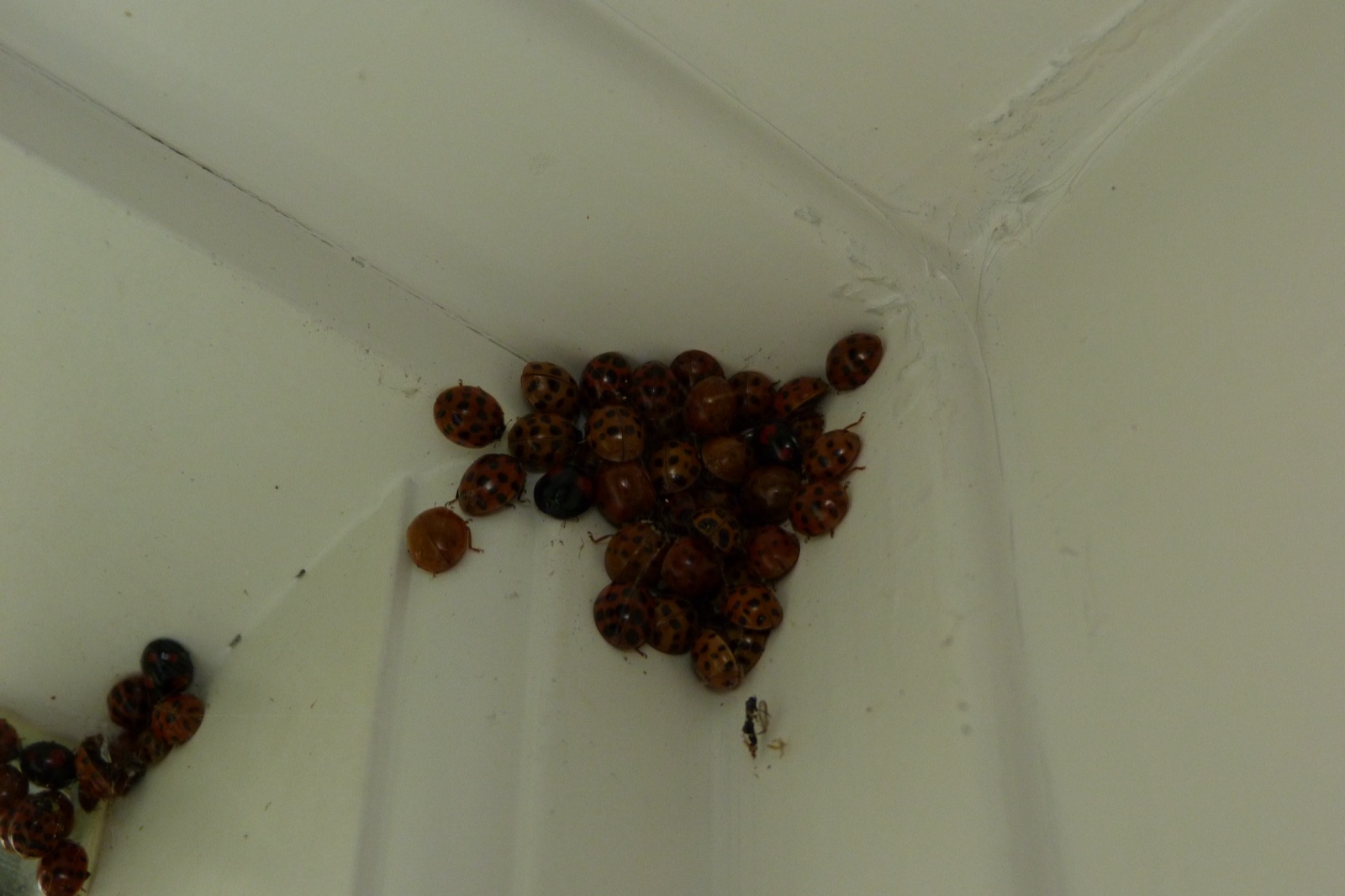
Fall Home Invaders in Hawaii: 2026 Timing
Hawaii has no freeze to shelter from, so the autumn flight that fills houses on the mainland does not happen here.
Hawaii has no overwintering season for these insectsThe Hawaii indoor season at a glance
ReferenceHawaii has no winter to shelter from, so none of the mainland fall invaders have an overwintering season here and there is nothing to seal up against in October.
The Hawaii cast
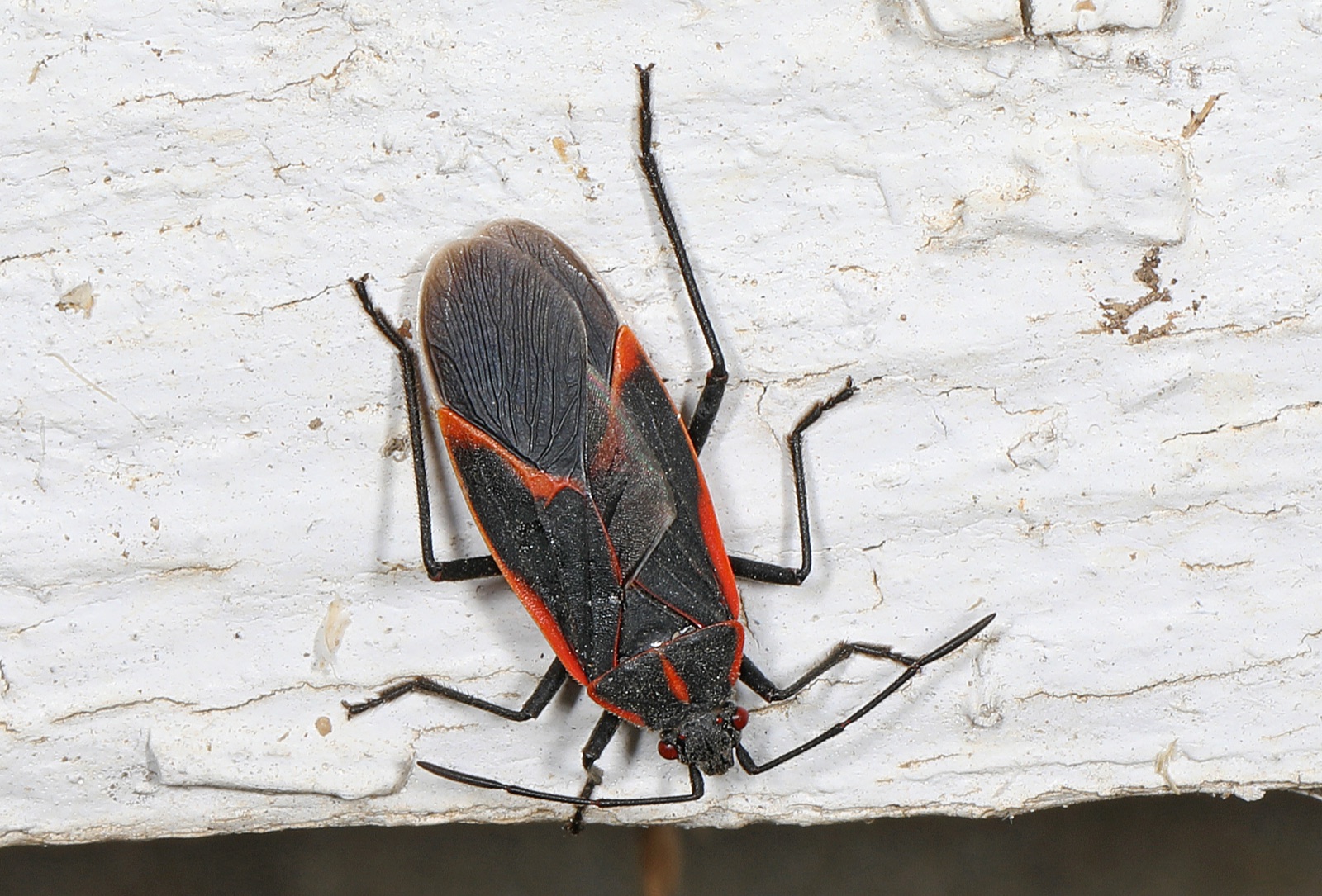
There is not enough evidence to rank the species here. Across all years there is a single research-grade iNaturalist record of these five species in Hawaii, which is too few to say anything useful about which of them is commonest.
Where Hawaii sits on the national stink bug map
The StopBMSB working group, funded through USDA NIFA, maintains the reference status map for the brown marmorated stink bug. On its most recent edition, dated 10 March 2021, Hawaii is in the “BMSB detected or intercepted” category: Detected or intercepted, but no evidence of established populations at the time the map was drawn.
That map is five years old, and this is where the observation record is useful. There is now one research-grade iNaturalist record of the species in Hawaii. The two broadly agree.
Asian lady beetle or native ladybug?
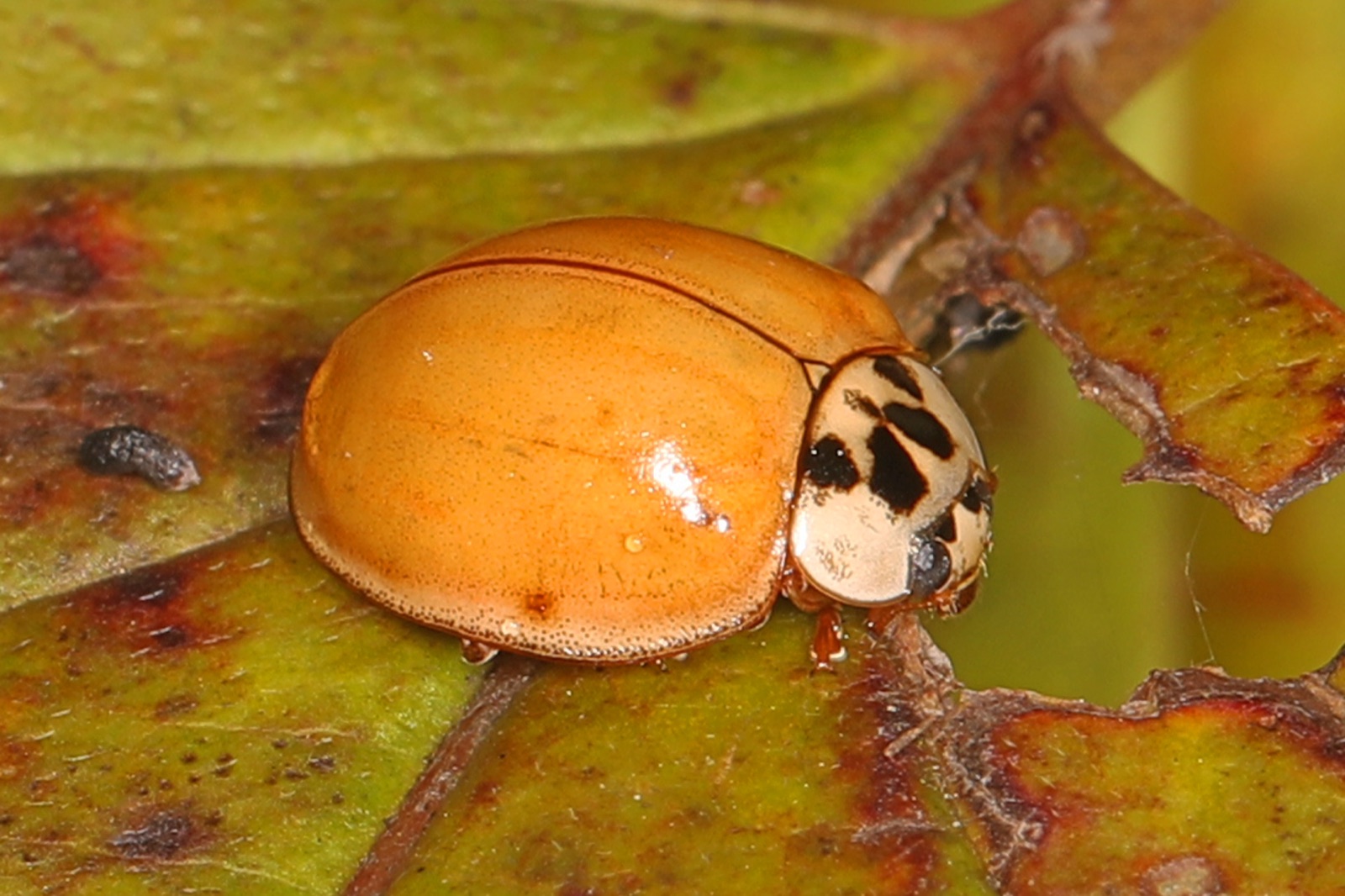
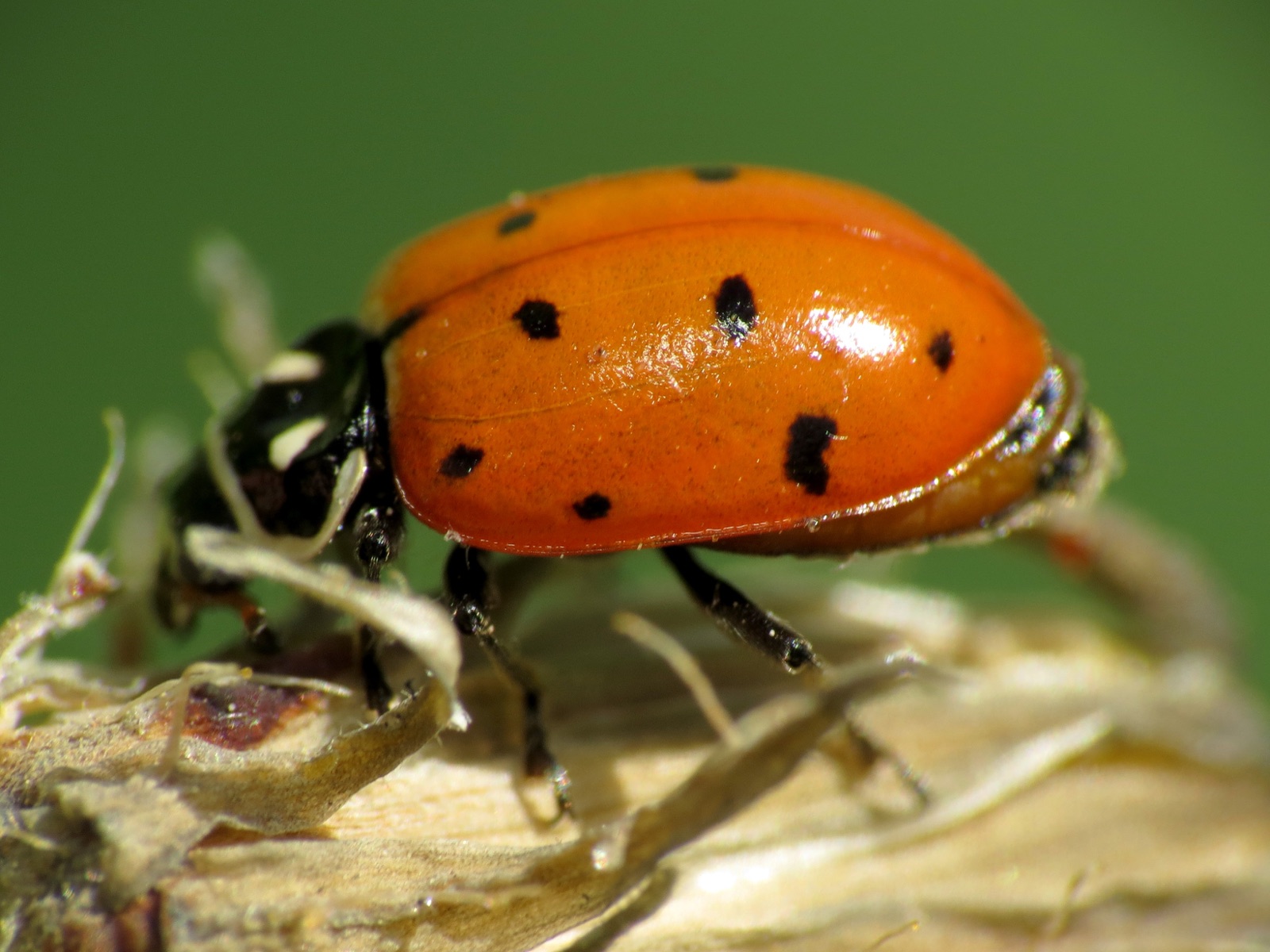
This is the single most common confusion of the whole subject, and the answer is not the spots. One Harmonia axyridis can have none and the next nineteen, and the colour runs from pale straw through orange to deep red. Look behind the head instead.
| Asian lady beetle | Native ladybugs | |
|---|---|---|
| Shield behind the head | Whitish, with a black M, or a W if you look at it the other way up | Dark, often with two pale spots or converging pale marks, never a white field with an M |
| Spots | Zero to nineteen, unreliable | Usually a fixed number for the species: seven for the seven spotted, thirteen for the convergent |
| Colour | Pale yellow to orange to deep red, varies within one cluster | Consistent within a species |
| Size | Slightly larger, noticeably more domed | Slightly smaller and flatter |
| Comes indoors in autumn | Yes, in large aggregations | Rarely, and not in numbers |
| Bites | Can pinch, and does so more readily than native species | Very rarely |
And the brown ones
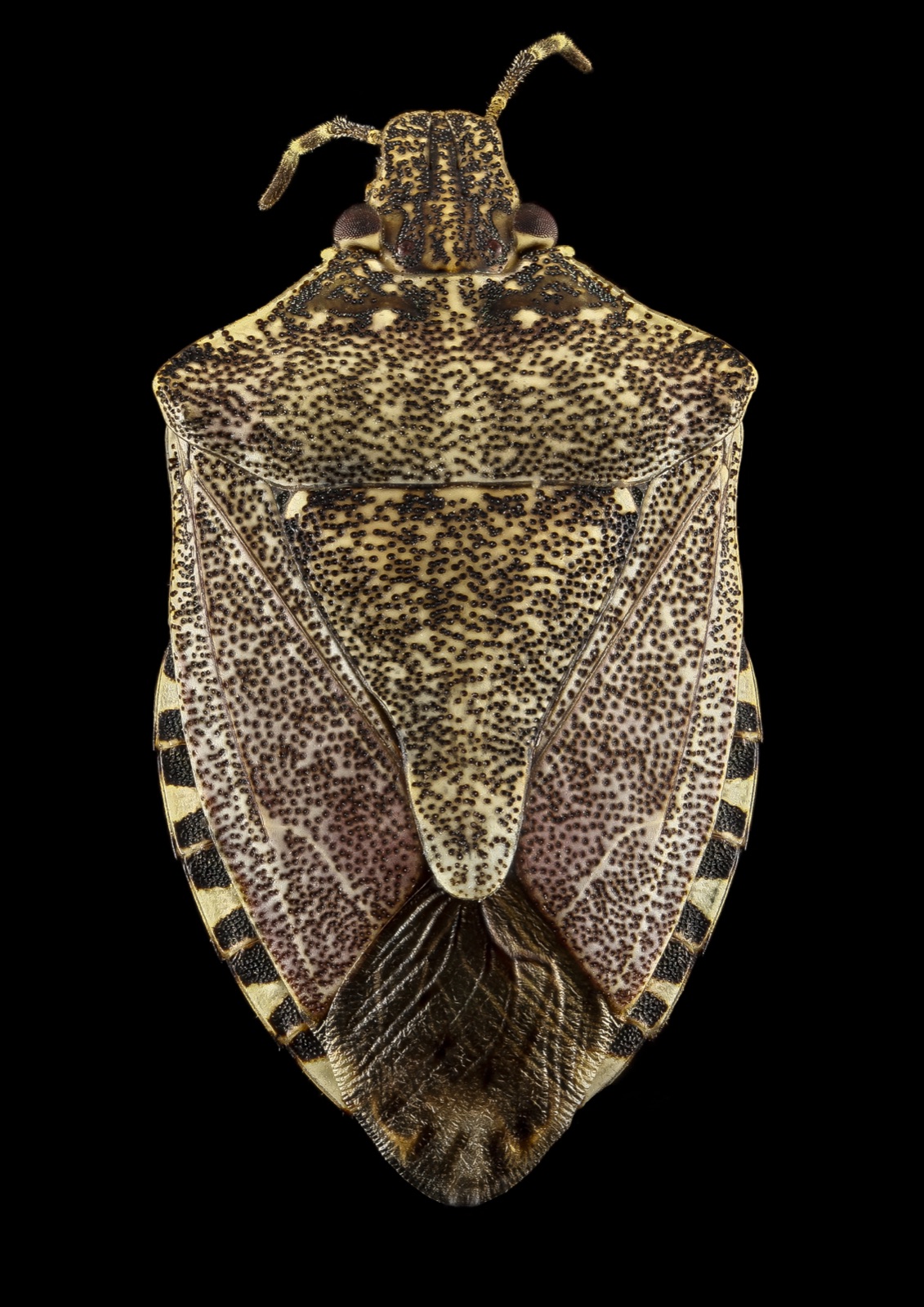
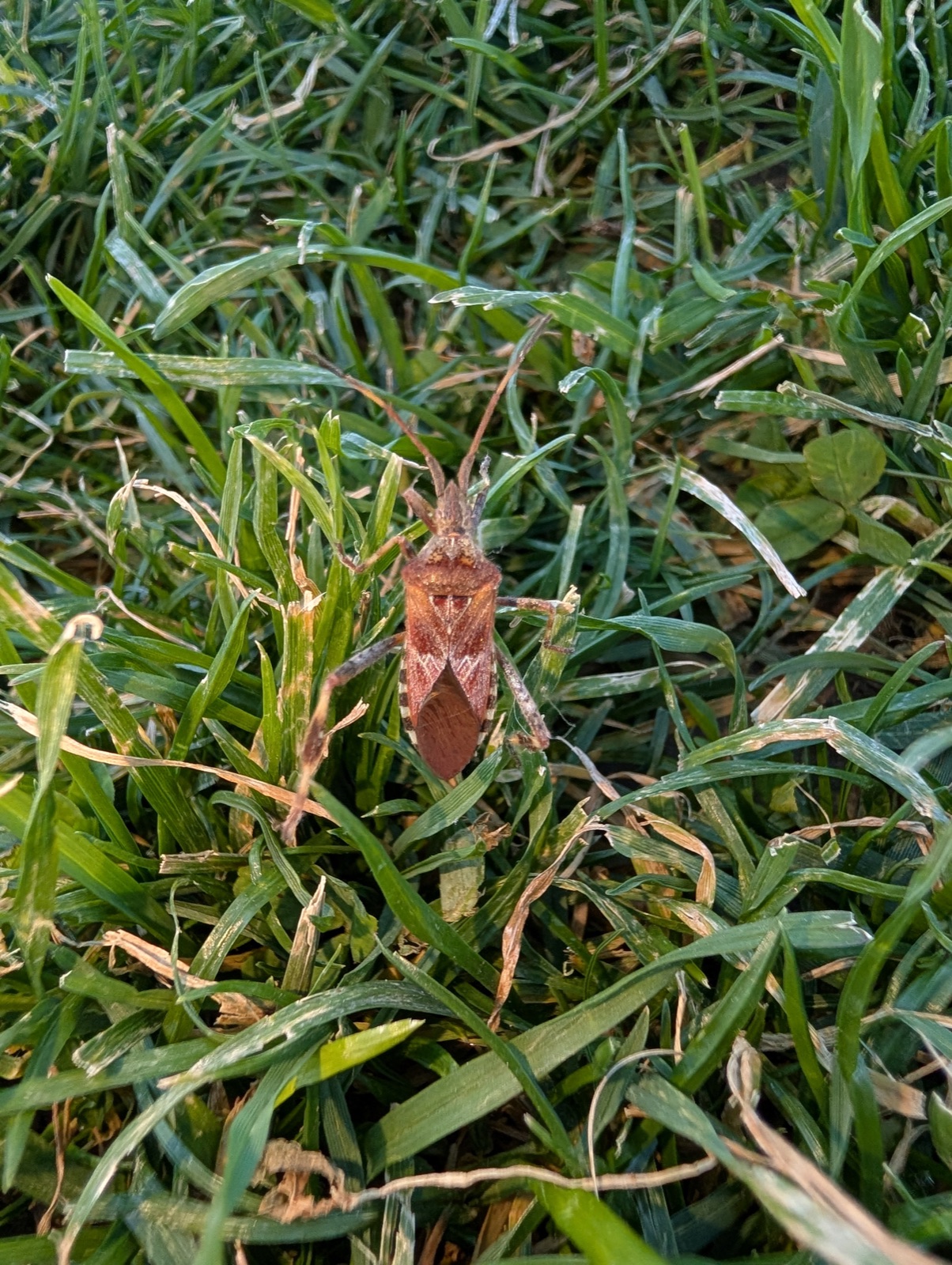
A brown shield shaped bug is a stink bug, but not necessarily the stink bug. The brown marmorated has white bands on its antennae and alternating light and dark bands along the exposed edge of the abdomen. A long brown bug with flattened, leaf shaped hind legs is a western conifer seed bug, which is native, harmless, and by the observation record the commonest autumn nuisance in several northern and western states. Neither bites.
Hawaii fall invader FAQ
The rest of the Hawaii calendar
More West fall invader timing
Biology, exclusion advice and the flight threshold on this page come from published extension and land grant guidance: Penn State Extension, Ohio State University Extension and Ohioline, University of Kentucky Entomology, University of Minnesota Extension, University of Maryland Extension, Cornell and the New York State IPM Program, University of New Hampshire Extension, Wisconsin Horticulture, and the USDA NIFA funded StopBMSB working group. The dates are ours: computed from day length at the state’s reference city and NOAA 1991 to 2020 first freeze normals, and they are climatological typicals rather than a forecast. The weekly panel is modelled in your browser from the National Weather Service gridpoint forecast and is not an official product. Observation counts are research-grade records from iNaturalist, aggregate counts only. National picture: when fall invaders come indoors across the US →
Hero image: “Harmonia axyridis (8104645257)” by Donald Hobern, CC BY 2.0