
Texas Red Tide Status
What Texas Parks and Wildlife Department is reporting today, reproduced as issued, and when blooms normally happen on this coast.
No agency is reporting a bloom category in Texas right nowTexas bloom status at a glance
Live · agency status, as issuedTPWD says outright that red tide blooms are not usually present in Texas coastal waters and that its status page is only updated when a bloom is confirmed, so no update means no confirmed bloom. This page carries when Texas blooms have happened, who confirms them, and which number to ring.
What the agencies are reporting in Texas right now
Every value below is reproduced from the agency that issued it, exactly as that agency wrote it, with the time attached. On a health subject the official category is the answer, and it can change from one sampling site to the next a few miles down the same coast.
NOAA beach respiratory irritation forecast
NOAA’s National Centers for Coastal Ocean Science runs a separate forecast at named beaches, combining the latest cell counts with forecast wind to say what people standing on that specific sand are likely to feel. It is a different scale from the FWC cell counts and it measures a different thing, so the two are shown separately and each is labelled with the agency that issued it. NOAA only runs stations where it has something to forecast, so this list changes.
This model run carries no readable timestamp. Check it directly with NOAA NCCOS before relying on it.
Reading the NOAA respiratory irritation forecast…
When blooms normally happen in Texas
“Texas red tides have occurred from August through February.”Texas Parks and Wildlife Department, source
TPWD gives the Texas window as August through February, which is close to the Florida pattern and for the same reason: it is the same organism arriving from the same Gulf. Unlike Florida it is episodic rather than near annual, so most years in that window produce nothing at all.
How often the agency samples
“Status updates will be posted here as they become available. Please note that red tide blooms are not usually present in Texas coastal waters. Therefore this page will only be updated in the event of a confirmed red tide algal bloom.”Texas Parks and Wildlife Department, source
The sentence Texas Parks and Wildlife Department most wants you to read
Reproduced verbatim, in the agency’s own words.
“Red tide has happened before, and the Texas marine environment has always recovered.”Texas Parks and Wildlife Department, source
Which part of the Texas coast, and what you would notice
What people actually notice
- A dry cough and burning eyes on an onshore wind, the same brevetoxin effect Florida gets, since it is the same organism
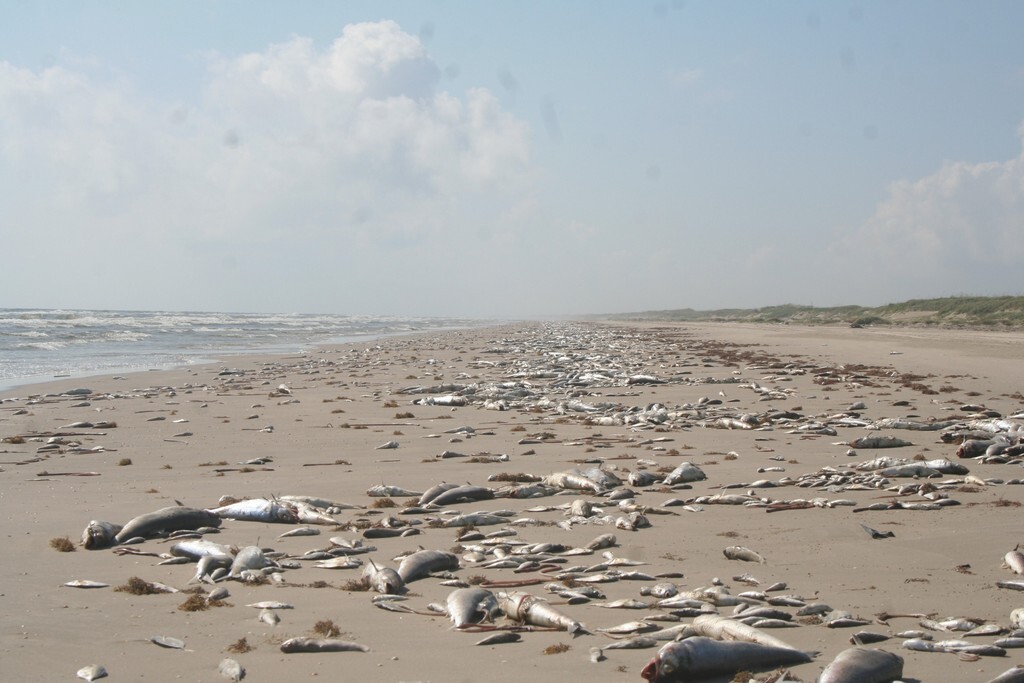
- Dead fish along the wrack line, which is often what triggers the sampling that confirms a Texas bloom
- No update at all on the TPWD status page, which TPWD says means no bloom has been confirmed rather than that nobody has looked
- Water discoloration, which arrives late rather than early and is not the threshold for anything
Beaches worth checking the status for
South Padre Island
Cameron County. The southernmost Texas beach town and the one most often named in TPWD status updates when a bloom reaches the lower coast.
Padre Island National Seashore
Kleberg and Kenedy Counties. Sixty miles of undeveloped Gulf beach where the National Park Service has photographed harmful algal bloom fish kills.
Mustang Island and Port Aransas
Nueces County. The beach nearest the Texas coastal research labs, which is part of why bloom reports here get sampled quickly.
Corpus Christi and North Beach
Nueces County. An urban Gulf beach in the middle of the stretch where Texas blooms are most often confirmed.
Galveston Island
Galveston County. The busiest beach on the upper Texas coast, far enough north that a bloom reaching it is a notable event rather than a routine one.
Texas shellfish harvest closures
Shellfish harvest closures
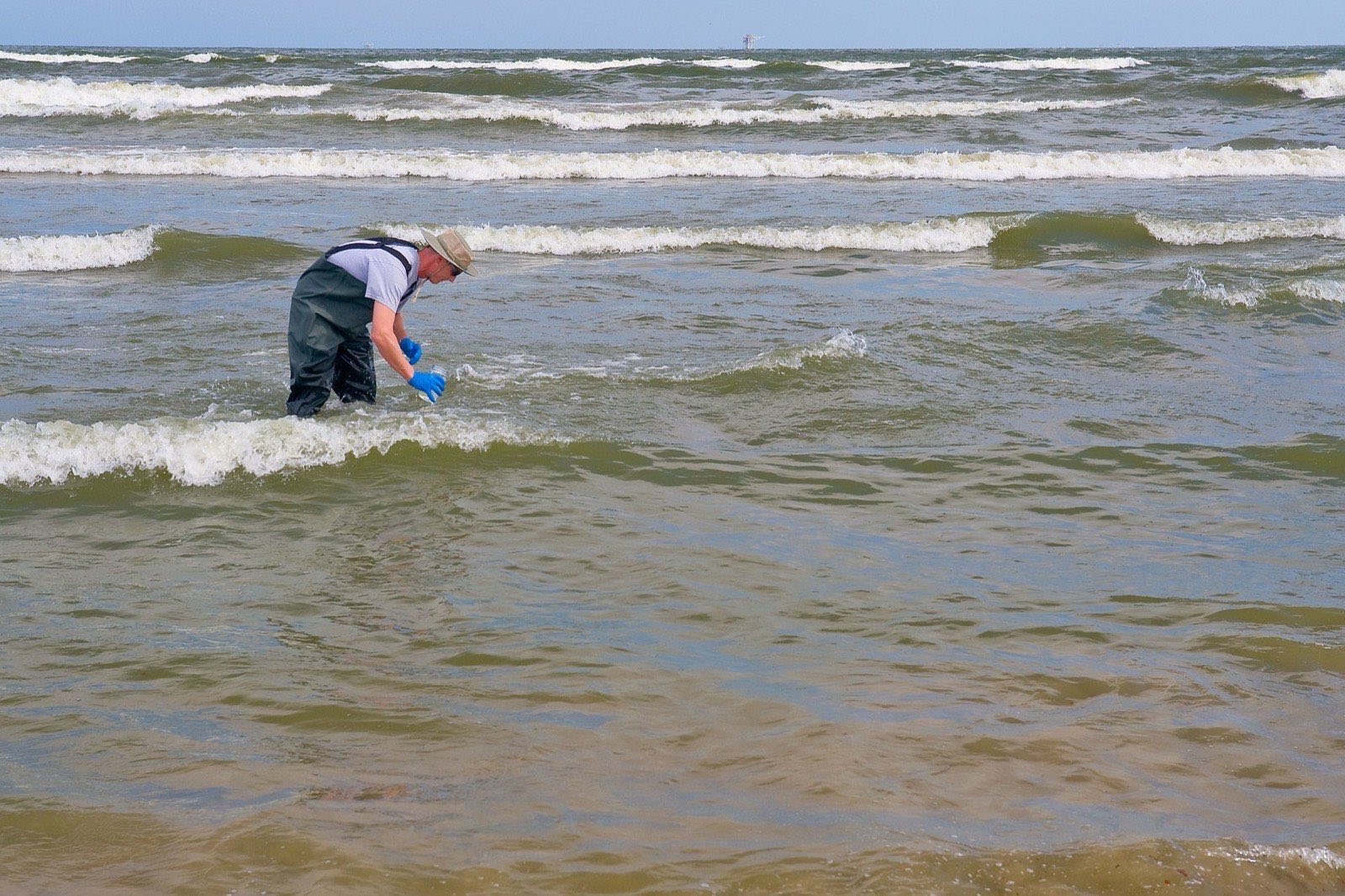
Harvest closures are legal orders issued by a state health or agriculture department, and they change without warning. The current closure status is published by the agency below. Check it directly, every time, on the day you are going.
Texas closures come in more than one flavour. TPWD has pointed out that at least one closure was driven by rainfall rather than by red tide, so a closed bay does not tell you a bloom is running and an open one does not tell you it is not.
Texas Department of State Health Services, Seafood and Aquatic Life Group · Official closure information · 800-685-0361
Who to contact in Texas
Health questions, whether a specific beach is open, and anything to do with harvesting are answered by these agencies. Each is linked, with a phone number where one is published.
Texas Parks and Wildlife Department
Confirms and reports red tide blooms on the Texas coast, and runs the red tide status page. TPWD states plainly that the page is only updated when a bloom is confirmed, so no update means no confirmed bloom rather than no news.
Event driven. TPWD posts a status update only when a bloom is confirmed.
TPWD 24 hour communications centre
Takes reports of fish kills and suspected red tide outside business hours. A public report is often the trigger for the sampling that confirms a bloom in the first place.
Texas Department of State Health Services, Seafood and Aquatic Life Group
Issues shellfish harvesting closures and consumption advisories in Texas. A DSHS closure is not automatically a red tide closure: TPWD has noted closures caused by rainfall rather than by biotoxin, so read the order rather than assuming the cause.
NOAA NCCOS harmful algal bloom forecast
NCCOS describes its beach level respiratory irritation forecast as covering the Florida and Texas coasts. It runs Texas stations when there is a bloom to forecast, so an empty station list here is the normal state of affairs.
What each organism here does
- Karenia brevis, Texas red tide, the same organism as Florida red tide. Produces brevetoxins, which agencies associate with respiratory irritation, and neurotoxic shellfish poisoning from contaminated shellfish.
Texas red tide FAQ
More for a Texas coast day
Red tide and algal blooms in other states
The beach respiratory irritation forecast is reproduced from the NOAA National Centers for Coastal Ocean Science station product, released by NOAA under CC0 1.0. Season windows are climatological typicals drawn from the agency quotations above, not forecasts. Whether a beach is open and whether shellfish can be harvested are answered by the agencies named above. National picture: red tide and algal bloom status across the country →
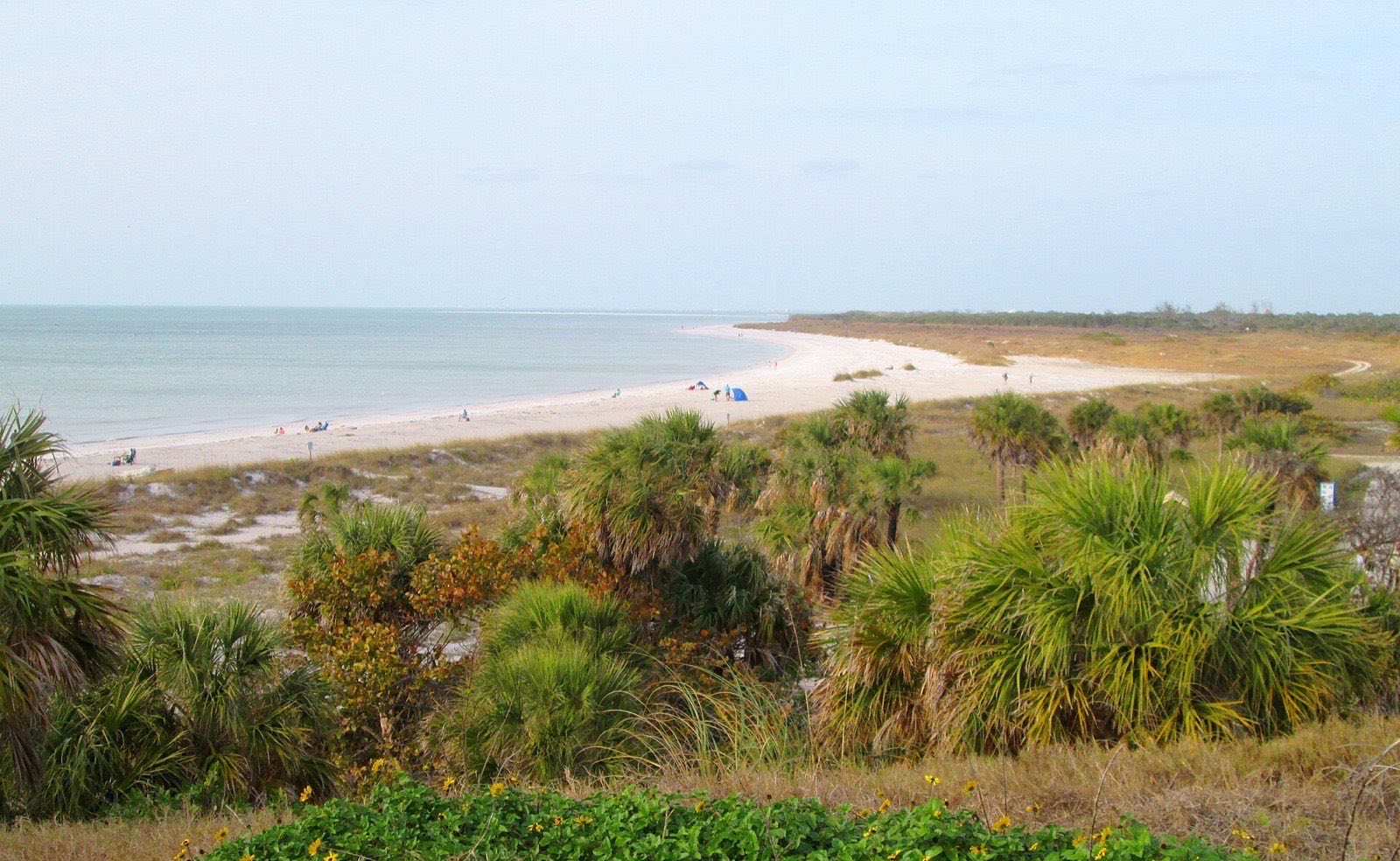
Hero image: “2018 Fort De Soto - South Beach” by Beyond My Ken, CC BY-SA 4.0