
New York Bear Season 2026-27
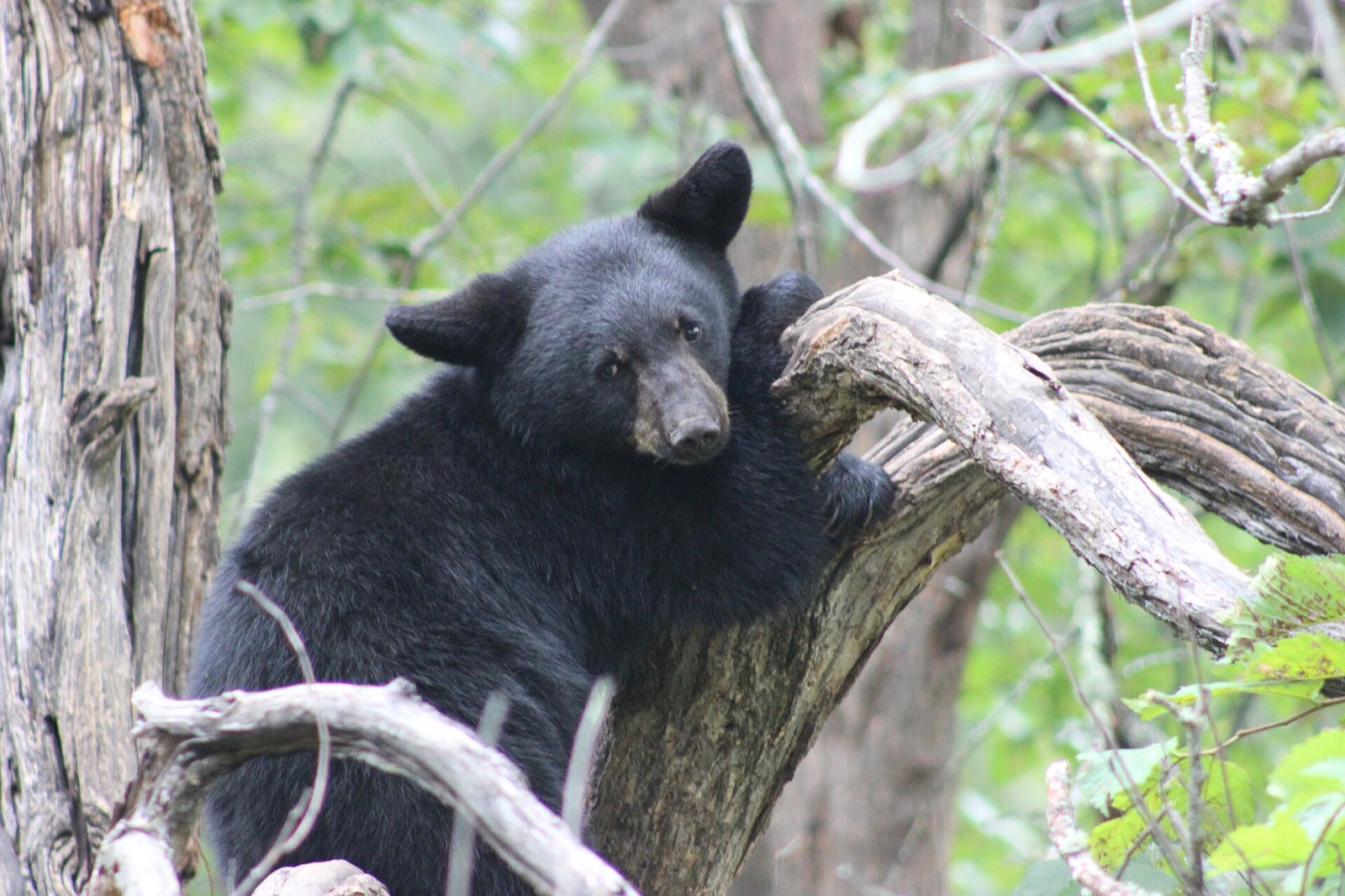
In late summer and early fall bears eat assorted berries, jewelweed, choke cherries, black cherries, wild apples, beechnuts, acorns, and crops such as corn. Beechnuts, black cherries and acorns are commonly referred to as hard mast foods. The quantity, quality and distribution of these foods vary tremendously from year to year. Places where food is abundant, such as stands of mast producing trees, will often attract bears from surrounding areas.
New York State Department of Environmental ConservationRegular: September 12, 2026 to December 31, 2026. People report black bears in New York most in June, and 21 percent of all reports fall in September, October and November. Everything below is New York State Department of Environmental Conservation’s own words and dates, read on September 19, 2026, beside the record of what people reported.
When black bears are most active in New York
The department puts the population at a minimum of 6,000 to 8,000 bears in the areas open to hunting, with 50 to 60 percent of them in the Adirondacks, 30 to 35 percent in the Catskills and 10 to 15 percent in the central-western part of the state. It describes bears as well established beyond those three strongholds, in the Tug Hill, the Hudson Valley and across the Southern Tier, and says transient bears turn up routinely on the Lake Ontario Plains and in the Mohawk and St. Lawrence valleys. Outside Tug Hill those outer areas carry more farmland or more people, which the department notes makes them less suitable for bears.
The bars count research grade American black bear observations people uploaded to iNaturalist for New York, by calendar month, across every year the platform holds. The busiest month in the record is June, and reports drop below 40 percent of that peak by October. The drop into winter reflects bears denning and fewer people outdoors in equal measure, which is why the agency’s sentences below, not the curve, carry the timing.
2,165 research grade American black bear observations have been uploaded to iNaturalist for New York across every year the platform holds, and 21 percent of them fall in the three shaded fall months. The busiest month in the record is June, and reports drop below 40 percent of that peak by October. These are counts of what people reported, so they measure observers as well as bears; they are not a population, not a survey and not a statement about this autumn. See the records on iNaturalist.
Research grade black bear reports uploaded for New York by year, 2016 to 2025: 15 in 2016 and 457 in 2025. Most of the climb is the platform itself growing, and every species on it shows the same shape, so this is a record of reporting rather than a population trend.
What New York State Department of Environmental Conservation says
Fall feeding
In late summer and early fall bears eat assorted berries, jewelweed, choke cherries, black cherries, wild apples, beechnuts, acorns, and crops such as corn. Beechnuts, black cherries and acorns are commonly referred to as hard mast foods. The quantity, quality and distribution of these foods vary tremendously from year to year. Places where food is abundant, such as stands of mast producing trees, will often attract bears from surrounding areas.New York State Department of Environmental Conservation, read September 19, 2026. Read it at the source
Denning
Bears may den later in the season during a good mast year, unless there is deep snow cover. They also may den earlier in the fall in years with a poor mast crop.New York State Department of Environmental Conservation, read September 19, 2026. Read it at the source
When conflicts and sightings rise
Bears will readily utilize human-created food sources and repeat access can make bears bolder. This can lead to an increase in human-bear conflicts around homes and residential areas, especially when natural food sources are scarce.New York State Department of Environmental Conservation, read September 19, 2026. Read it at the source
New York bear seasons, 2026-27
New York State Department of Environmental Conservation dates American black bear seasons under its own names, and each is below under that name with the zone rows exactly as the agency lists them, the source page linked beside each table, and the date it was read.
Regular
publishedRegular is OPEN now in the Northern Zone, Wildlife Management Units 5A, 5C, 5F, 5G, 5H, 5J, 6C, 6F, 6H and 6J, through December 6, 2026, with 2 zone segments open.
| Zone | Opens | Closes | Notes |
|---|---|---|---|
| Northern Zone, Wildlife Management Units 5A, 5C, 5F, 5G, 5H, 5J, 6C, 6F, 6H and 6J | September 19, 2026 | December 6, 2026 | The Adirondack core, and the longest single bear window in the state at eleven weeks. |
| Northern Zone, Wildlife Management Units 6A, 6G, 6K and 6N | October 24, 2026 | December 6, 2026 | The western edge of the Northern Zone closes on the same December day but opens five weeks later. |
| Southern Zone, Wildlife Management Units 3A, 3C, 3H, 3J, 3K, 3M, 3P, 3R, 4P, 4R and 4W (segment 1) | September 12, 2026 | September 27, 2026 | These eleven units, the Catskills and the country just west of them, are the only ones with an early September window. |
| Southern Zone, Wildlife Management Units 3A, 3C, 3H, 3J, 3K, 3M, 3P, 3R, 4P, 4R and 4W (segment 2) | November 21, 2026 | December 13, 2026 | |
| Southern Zone, the open units outside that group of eleven | November 21, 2026 | December 13, 2026 | |
| Westchester County, Wildlife Management Unit 3S | October 1, 2026 | December 31, 2026 | Westchester runs on its own calendar, one unbroken window from October into the new year. |
Dates read from Bear Hunting Season Dates, New York Hunting and Trapping Regulations Guide, New York State Department of Environmental Conservation, accessed 2026-09-19.
New York dates bears by Wildlife Management Unit, and the map in the department's guide colours them into five groups. The Northern Zone splits in two: a yellow Adirondack block that opens in mid September and an orange western block that waits until late October. The Southern Zone opens for a fortnight in September in eleven units and then, everywhere it is open at all, for three weeks either side of Thanksgiving. Westchester County is its own case. The units the map leaves white, Long Island among them, are closed to bear hunting altogether.
Bowhunting
publishedBowhunting is OPEN now in the Northern Zone, Wildlife Management Units 6A, 6G, 6K and 6N, through October 23, 2026, with 2 zone segments open.
| Zone | Opens | Closes | Notes |
|---|---|---|---|
| Northern Zone, Wildlife Management Units 6A, 6G, 6K and 6N | September 19, 2026 | October 23, 2026 | |
| Southern Zone (segment 1) | October 1, 2026 | November 20, 2026 | The department calls these the early and late bowhunting windows; together they book-end the regular season. |
| Southern Zone (segment 2) | December 14, 2026 | December 22, 2026 |
Dates read from Bear Hunting Season Dates, New York Hunting and Trapping Regulations Guide, New York State Department of Environmental Conservation, accessed 2026-09-19.
Only the orange western block of the Northern Zone carries a separate bowhunting window; the Adirondack units run one season for everybody. The Southern Zone's seven-week October window is the longest stretch of bear season anywhere south of the Adirondacks.
Spring bear season
no seasonNew York holds no spring bear season. New York prints no spring bear season. Every dated bear window in the guide falls between the middle of September and the last day of December, and the department's own booklet describes bears emerging from dens in late March or early April, well after the last of them closes. Source: New York State Department of Environmental Conservation.
Other New York bear seasons the agency names
Muzzleloading
publishedMuzzleloading opens in 7 days, on October 17, 2026 (Northern Zone, Wildlife Management Units 6A, 6G, 6K and 6N).
| Zone | Opens | Closes | Notes |
|---|---|---|---|
| Northern Zone, Wildlife Management Units 6A, 6G, 6K and 6N | October 17, 2026 | October 23, 2026 | |
| Southern Zone | December 14, 2026 | December 22, 2026 |
Dates read from Bear Hunting Season Dates, New York Hunting and Trapping Regulations Guide, New York State Department of Environmental Conservation, accessed 2026-09-19.
A week in the Northern Zone's western block that ends the day before its regular season opens, and nine days in the Southern Zone that run alongside late bowhunting after the regular season closes.
Youth Firearms
publishedYouth Firearms is OPEN now in the Northern Zone and Southern Zone, through October 12, 2026.
| Zone | Opens | Closes | Notes |
|---|---|---|---|
| Northern Zone and Southern Zone | October 10, 2026 | October 12, 2026 |
Dates read from Bear Hunting Season Dates, New York Hunting and Trapping Regulations Guide, New York State Department of Environmental Conservation, accessed 2026-09-19.
Three days over Columbus Day weekend, the one set of bear dates the department runs the same way in both zones.
The agency's own season sentence
For many, black bears symbolize wilderness and wildness, but increasingly, bears can be found in semi-rural environments, agricultural areas, and occasionally in urban centers.New York State Department of Environmental Conservation, read September 19, 2026. Read it at the source
Current New York regulations
Permit and tag requirements, zone maps, permitted methods, tagging and reporting, and everything else a bear hunter is bound by for New York are set by New York State Department of Environmental Conservation, are legally binding and change annually. Its current regulations page is linked here.
New York State Department of Environmental Conservation: current regulations
Bear season in other states
New York bear season questions
This page covers the 2026-27 season year with agency data read on September 19, 2026 and an iNaturalist record to September 19, 2026. Every sentence about bear behaviour is New York State Department of Environmental Conservation’s own, quoted exactly with a link to its page; every season window is republished from the agency page linked beside it, and windows the agency had not yet published are labelled not yet published. The month bars count what members of the public reported and are not a population. See also the national bear season guide.