
New Hampshire Bear Season 2026-27
Hard mast -- beechnuts, acorns, and hickory nuts -- are the staple fall food source. When natural foods are not abundant, black bears will seek alternative foods such as agricultural crops, bees from commercial hives, garbage, suet and sometimes livestock.
New Hampshire Fish and Game DepartmentGeneral Season: September 1, 2026 to November 30, 2026. People report black bears in New Hampshire most in May, and 16 percent of all reports fall in September, October and November. Everything below is New Hampshire Fish and Game Department’s own words and dates, read on September 19, 2026, beside the record of what people reported.
When black bears are most active in New Hampshire
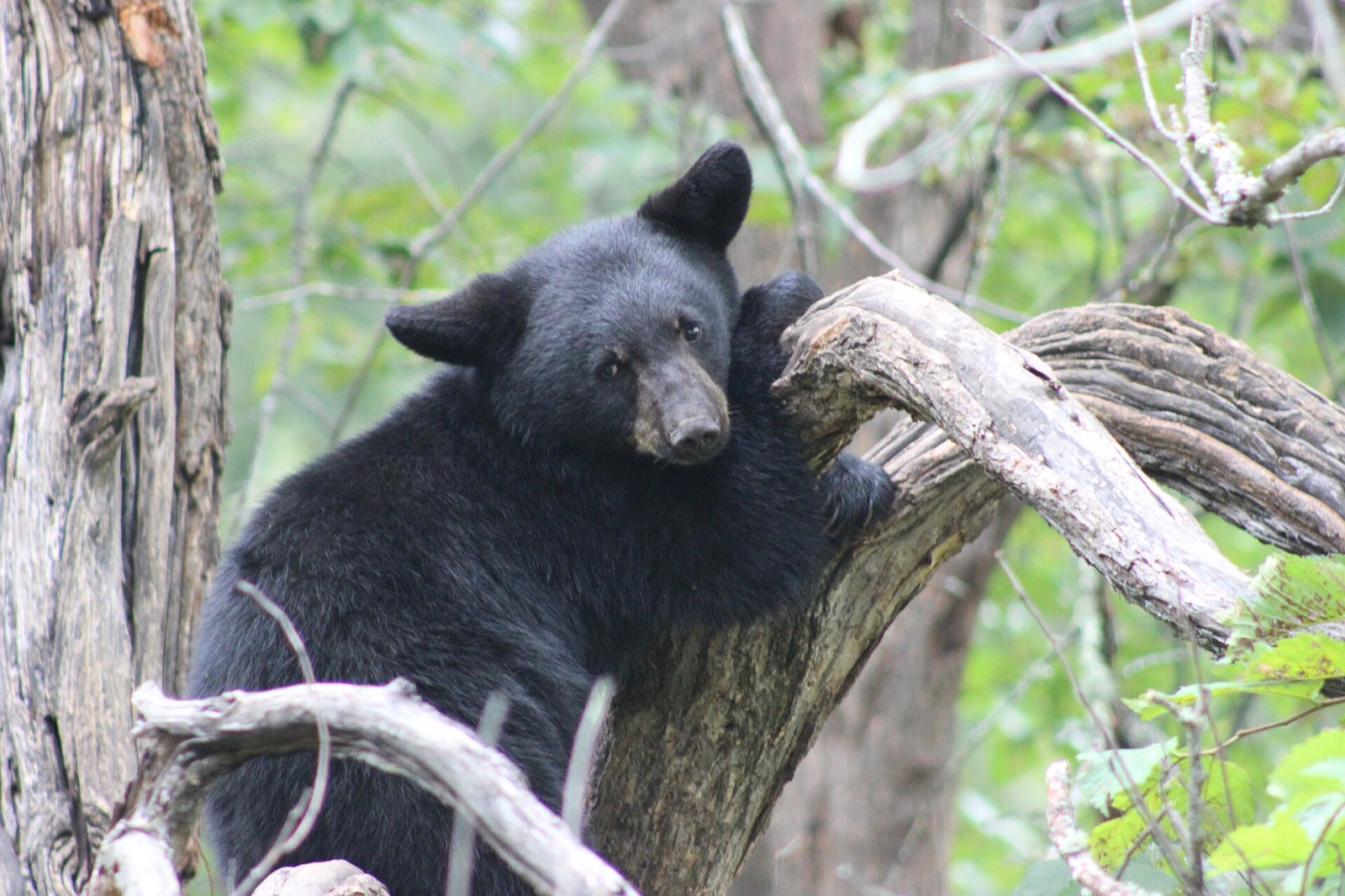
NH Fish and Game says the black bear is the only bear species in New Hampshire, with population estimates of 4,800 to 5,000 bears statewide, found statewide with the highest densities in central New Hampshire and the White Mountains.
The bars count research grade American black bear observations people uploaded to iNaturalist for New Hampshire, by calendar month, across every year the platform holds. The busiest month in the record is May, and reports drop below 40 percent of that peak by September. The drop into winter reflects bears denning and fewer people outdoors in equal measure, which is why the agency’s sentences below, not the curve, carry the timing.
987 research grade American black bear observations have been uploaded to iNaturalist for New Hampshire across every year the platform holds, and 16 percent of them fall in the three shaded fall months. The busiest month in the record is May, and reports drop below 40 percent of that peak by September. These are counts of what people reported, so they measure observers as well as bears; they are not a population, not a survey and not a statement about this autumn. See the records on iNaturalist.
Research grade black bear reports uploaded for New Hampshire by year, 2016 to 2025: 18 in 2016 and 185 in 2025. Most of the climb is the platform itself growing, and every species on it shows the same shape, so this is a record of reporting rather than a population trend.
What New Hampshire Fish and Game Department says
Fall feeding
Hard mast -- beechnuts, acorns, and hickory nuts -- are the staple fall food source. When natural foods are not abundant, black bears will seek alternative foods such as agricultural crops, bees from commercial hives, garbage, suet and sometimes livestock.New Hampshire Fish and Game Department, read September 19, 2026. Read it at the source
Denning
In New Hampshire, bears typically enter dens between mid-October and late November and emerge from dens during late March or early April. During periods of winter thaws, male bears may occasionally get up and move around until cold weather returns.New Hampshire Fish and Game Department, read September 19, 2026. Read it at the source
When conflicts and sightings rise
The Granite State's black bears are emerging from their winter dens and beginning to actively search for any available food sources. Because of the limited menu of options during this time of the year, bears will be easily enticed by a wide variety of human-produced food sources, especially bird feeders, backyard poultry, and unsecured garbage.New Hampshire Fish and Game Department, read September 19, 2026. Read it at the source
New Hampshire bear seasons, 2026-27
New Hampshire Fish and Game Department dates American black bear seasons under its own names, and each is below under that name with the zone rows exactly as the agency lists them, the source page linked beside each table, and the date it was read.
General Season
publishedGeneral Season is OPEN now in the WMUs A, B, C2, D1, H1, I2, through November 10, 2026, with 2 zone segments open.
| Zone | Opens | Closes | Notes |
|---|---|---|---|
| WMUs A, B, C2, D1, H1, I2 | September 1, 2026 | November 10, 2026 | |
| WMUs C1, D2, E, F, G, I1, J1, J2, L, M, H2, K | September 1, 2026 | November 30, 2026 |
Dates read from Bear Hunting Seasons, New Hampshire Hunting Digest, NH Fish and Game, accessed 2026-09-19.
New Hampshire's general (stalking) bear season opens statewide on September 1 and closes on one of two dates depending on the Wildlife Management Unit group. The baiting and dog seasons are separate windows inside it and are listed under other seasons.
Archery bear season
no seasonNew Hampshire holds no separately dated archery bear season. New Hampshire dates no separate archery bear season. The department describes three bear seasons only, the general (stalking) season, the baiting season and the dog season, and the 2026 digest table carries no archery window. Source: New Hampshire Fish and Game Department.
Spring bear season
no seasonNew Hampshire holds no spring bear season. New Hampshire holds no spring bear season. The 2026 Bear Hunting Seasons table in the state digest lists only the fall general, baiting and dog windows, all opening in September. Source: New Hampshire Fish and Game Department.
Other New Hampshire bear seasons the agency names
Baiting Season
publishedBaiting Season has closed for the season year; the last segment ended October 5, 2026.
| Zone | Opens | Closes | Notes |
|---|---|---|---|
| WMUs A, B, C2, D1, H1, H2, I2, K, L, M | September 1, 2026 | September 28, 2026 | |
| WMUs C1, D2, E, F, G, I1, J1, J2 | September 1, 2026 | October 5, 2026 |
Dates read from Bear Hunting Seasons, New Hampshire Hunting Digest, NH Fish and Game, accessed 2026-09-19.
The baiting season opens with the general season and runs about four to five weeks depending on the WMU group, per the 2026 digest table.
Dog Season
publishedDog Season is OPEN now in the WMUs A, B, C1, C2, D1, D2, E, F, G, H1, I1, I2, J1, J2, through November 10, 2026.
| Zone | Opens | Closes | Notes |
|---|---|---|---|
| WMUs A, B, C1, C2, D1, D2, E, F, G, H1, I1, I2, J1, J2 | September 21, 2026 | November 10, 2026 | The digest lists the dog season as closed in WMUs H2, K, L and M |
Dates read from Bear Hunting Seasons, New Hampshire Hunting Digest, NH Fish and Game, accessed 2026-09-19.
The dog season opens three weeks after the general season and is closed in the four southeastern units H2, K, L and M, per the 2026 digest table.
The agency's own season sentence
New Hampshire's bear hunters can take advantage of three seasons: stalking ("general"), dog season, and baiting season. Bears are found statewide, with the highest densities in central NH and the White Mountains.New Hampshire Fish and Game Department, read September 19, 2026. Read it at the source
Current New Hampshire regulations
Permit and tag requirements, zone maps, permitted methods, tagging and reporting, and everything else a bear hunter is bound by for New Hampshire are set by New Hampshire Fish and Game Department, are legally binding and change annually. Its current regulations page is linked here.
New Hampshire Fish and Game Department: current regulations
Bear season in other states
New Hampshire bear season questions
This page covers the 2026-27 season year with agency data read on September 19, 2026 and an iNaturalist record to September 19, 2026. Every sentence about bear behaviour is New Hampshire Fish and Game Department’s own, quoted exactly with a link to its page; every season window is republished from the agency page linked beside it, and windows the agency had not yet published are labelled not yet published. The month bars count what members of the public reported and are not a population. See also the national bear season guide.