
North Carolina Bear Season 2026-27
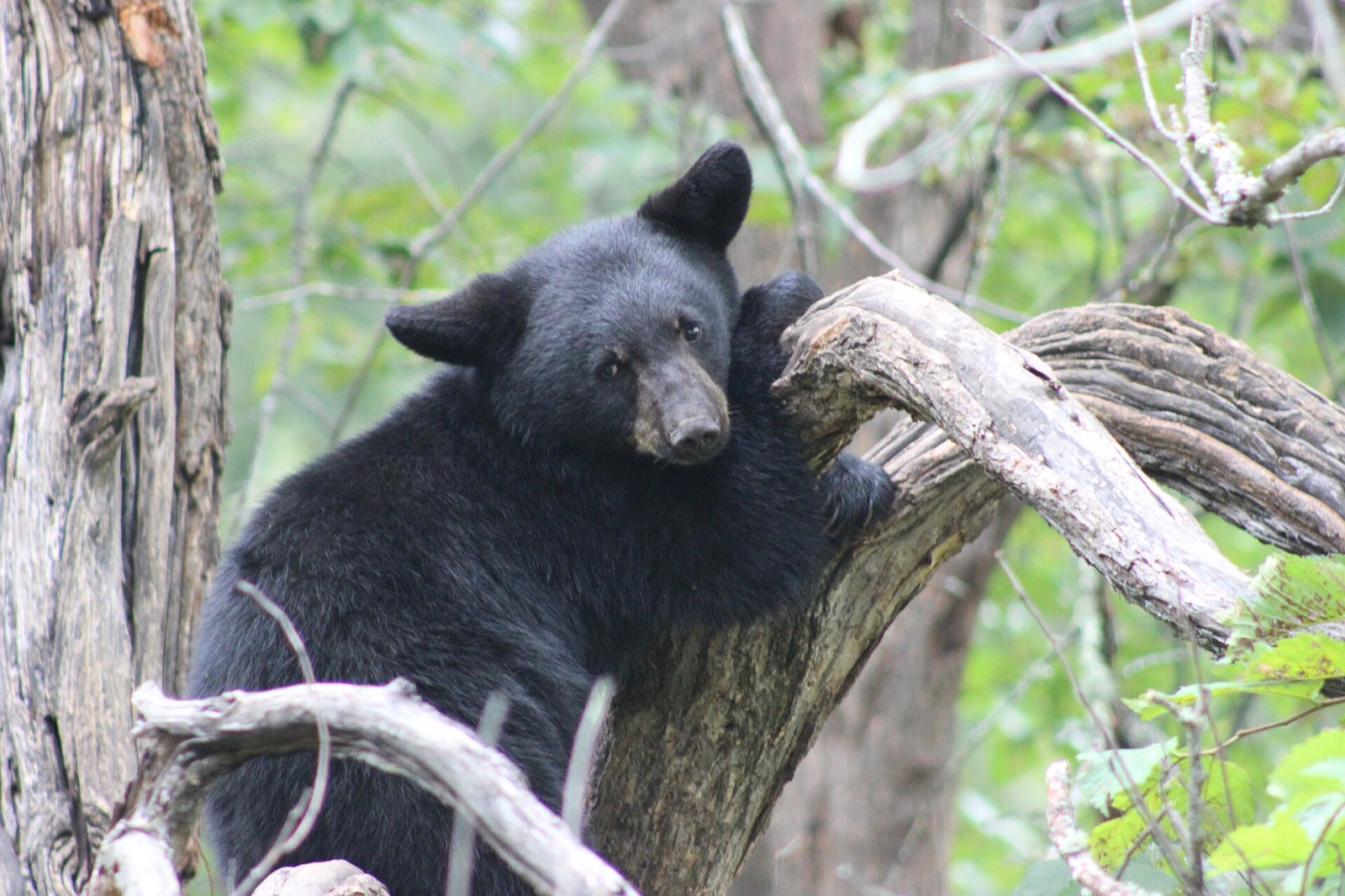
Bears put on additional weight in autumn to prepare for winter denning.
North Carolina Wildlife Resources CommissionBear Seasons: October 3, 2026 to January 1, 2027. People report black bears in North Carolina most in June, and 25 percent of all reports fall in September, October and November. Everything below is North Carolina Wildlife Resources Commission’s own words and dates, read on September 19, 2026, beside the record of what people reported.
When black bears are most active in North Carolina
The Commission's species page says black bears are found on approximately 60% of the total land area of North Carolina, common in the coastal and mountain regions and uncommon in the Piedmont, where most bears are transient.
The bars count research grade American black bear observations people uploaded to iNaturalist for North Carolina, by calendar month, across every year the platform holds. The busiest month in the record is June, and reports drop below 40 percent of that peak by November. The drop into winter reflects bears denning and fewer people outdoors in equal measure, which is why the agency’s sentences below, not the curve, carry the timing.
3,697 research grade American black bear observations have been uploaded to iNaturalist for North Carolina across every year the platform holds, and 25 percent of them fall in the three shaded fall months. The busiest month in the record is June, and reports drop below 40 percent of that peak by November. These are counts of what people reported, so they measure observers as well as bears; they are not a population, not a survey and not a statement about this autumn. See the records on iNaturalist.
Research grade black bear reports uploaded for North Carolina by year, 2016 to 2025: 54 in 2016 and 719 in 2025. Most of the climb is the platform itself growing, and every species on it shows the same shape, so this is a record of reporting rather than a population trend.
What North Carolina Wildlife Resources Commission says
Fall feeding
Bears put on additional weight in autumn to prepare for winter denning.North Carolina Wildlife Resources Commission, read September 19, 2026. Read it at the source
Denning
In North Carolina, den entry can occur as early as November or as late as January, though male bears in the coastal plain region may be active throughout the winter.North Carolina Wildlife Resources Commission, read September 19, 2026. Read it at the source
When conflicts and sightings rise
Reports of bear sightings spike from Memorial Day weekend through early summer.North Carolina Wildlife Resources Commission, read September 19, 2026. Read it at the source
North Carolina bear seasons, 2026-27
North Carolina Wildlife Resources Commission dates American black bear seasons under its own names, and each is below under that name with the zone rows exactly as the agency lists them, the source page linked beside each table, and the date it was read.
Bear Seasons
publishedBear Seasons is OPEN now in the Mountain Bear Management Unit (in and west of Surry, Wilkes, Caldwell, Burke, and Cleveland), through November 21, 2026.
| Zone | Opens | Closes | Notes |
|---|---|---|---|
| Mountain Bear Management Unit (in and west of Surry, Wilkes, Caldwell, Burke, and Cleveland) (segment 1) | October 3, 2026 | November 21, 2026 | |
| Mountain Bear Management Unit (in and west of Surry, Wilkes, Caldwell, Burke, and Cleveland) (segment 2) | December 12, 2026 | January 1, 2027 | |
| Piedmont Bear Management Unit: Franklin, Harnett, Hoke, Johnston, Moore, Richmond, Scotland, Vance, Wake, and Warren | October 17, 2026 | January 1, 2027 | |
| Piedmont Bear Management Unit: Alamance, Anson, Cabarrus, Caswell, Chatham, Davidson, Durham, Granville, Guilford, Lee, Mecklenburg, Montgomery, Orange, Person, Randolph, Rockingham, Rowan, Stanly, and Union | November 14, 2026 | January 1, 2027 | |
| Piedmont Bear Management Unit: Alexander, Catawba, Davie, Forsyth, Gaston, Iredell, Lincoln, Stokes, and Yadkin | November 21, 2026 | January 1, 2027 | |
| Coastal Bear Management Unit Zone 1: Dare, Hyde, and Tyrrell (segment 1) | November 14, 2026 | November 29, 2026 | |
| Coastal Bear Management Unit Zone 1: Dare, Hyde, and Tyrrell (segment 2) | December 12, 2026 | December 27, 2026 | |
| Coastal Bear Management Unit Zone 2: Currituck, Gates, and Perquimans (segment 1) | November 14, 2026 | November 22, 2026 | |
| Coastal Bear Management Unit Zone 2: Currituck, Gates, and Perquimans (segment 2) | December 12, 2026 | December 27, 2026 | |
| Coastal Bear Management Unit Zone 2: Camden, Chowan, and Pasquotank (segment 1) | November 13, 2026 | November 22, 2026 | |
| Coastal Bear Management Unit Zone 2: Camden, Chowan, and Pasquotank (segment 2) | December 12, 2026 | December 27, 2026 | |
| Coastal Bear Management Unit Zone 3: Beaufort, Bertie, Craven, Hertford, Jones, Martin, and Washington (segment 1) | November 14, 2026 | November 22, 2026 | |
| Coastal Bear Management Unit Zone 3: Beaufort, Bertie, Craven, Hertford, Jones, Martin, and Washington (segment 2) | December 12, 2026 | December 27, 2026 | |
| Coastal Bear Management Unit Zone 4: Edgecombe, Greene, Halifax, Lenoir, Nash, Northampton, Pitt, Wayne, and Wilson | November 21, 2026 | December 20, 2026 | |
| Coastal Bear Management Unit Zone 5: Bladen, Brunswick, Carteret, Columbus, Cumberland, Duplin, New Hanover, Onslow, Pamlico, Pender, Robeson, and Sampson | November 9, 2026 | January 1, 2027 |
Dates read from Hunting and Trapping Season Dates for July 1, 2026, through June 30, 2027, NC Wildlife Resources Commission, accessed 2026-09-19.
North Carolina dates its bear season by Bear Management Unit. The Mountain unit runs a split fall and December season, the Piedmont unit opens on three different dates by county group, and the Coastal unit is cut into five zones with windows from a two week November opener to a season that runs to New Year's Day.
Archery bear season
no seasonNorth Carolina holds no separately dated archery bear season. The Commission's 2026-27 season dates sheet lists one bear season per Bear Management Unit and no separately dated archery bear season anywhere in the state. Source: North Carolina Wildlife Resources Commission.
Spring bear season
no seasonNorth Carolina holds no spring bear season. North Carolina's bear seasons all fall between October and New Year's Day; the Commission's 2026-27 season dates sheet lists no spring bear season. Source: North Carolina Wildlife Resources Commission.
The agency's own season sentence
Mountain Bear Management Unit In and west of Surry, Wilkes, Caldwell, Burke, and Cleveland: Oct. 3 – Nov. 21, 2026 and Dec. 12, 2026 – Jan. 1, 2027North Carolina Wildlife Resources Commission, read September 19, 2026. Read it at the source
Current North Carolina regulations
Permit and tag requirements, zone maps, permitted methods, tagging and reporting, and everything else a bear hunter is bound by for North Carolina are set by North Carolina Wildlife Resources Commission, are legally binding and change annually. Its current regulations page is linked here.
North Carolina Wildlife Resources Commission: current regulations
Bear season in other states
North Carolina bear season questions
This page covers the 2026-27 season year with agency data read on September 19, 2026 and an iNaturalist record to September 19, 2026. Every sentence about bear behaviour is North Carolina Wildlife Resources Commission’s own, quoted exactly with a link to its page; every season window is republished from the agency page linked beside it, and windows the agency had not yet published are labelled not yet published. The month bars count what members of the public reported and are not a population. See also the national bear season guide.